BY ANY MEANS NECESSARY:
THE BLACK PANTHER PARTY'S IMPACT ON THE CIVIL RIGHTS MOVEMENT
BY ANY MEANS NECESSARY:
THE BLACK PANTHER PARTY'S IMPACT ON THE CIVIL RIGHTS MOVEMENT
COMMUNITY PROGRAMS
The Party's leaders shifted their focus towards community service programs to help impoverished black communities, which were still underfunded and lacked basic resources compared to white communities.
These programs included the free breakfast program for children, the Sickle-Cell Anemia Research Foundation, the Intercommunal Youth Institute, and the Intercommunal News Service.
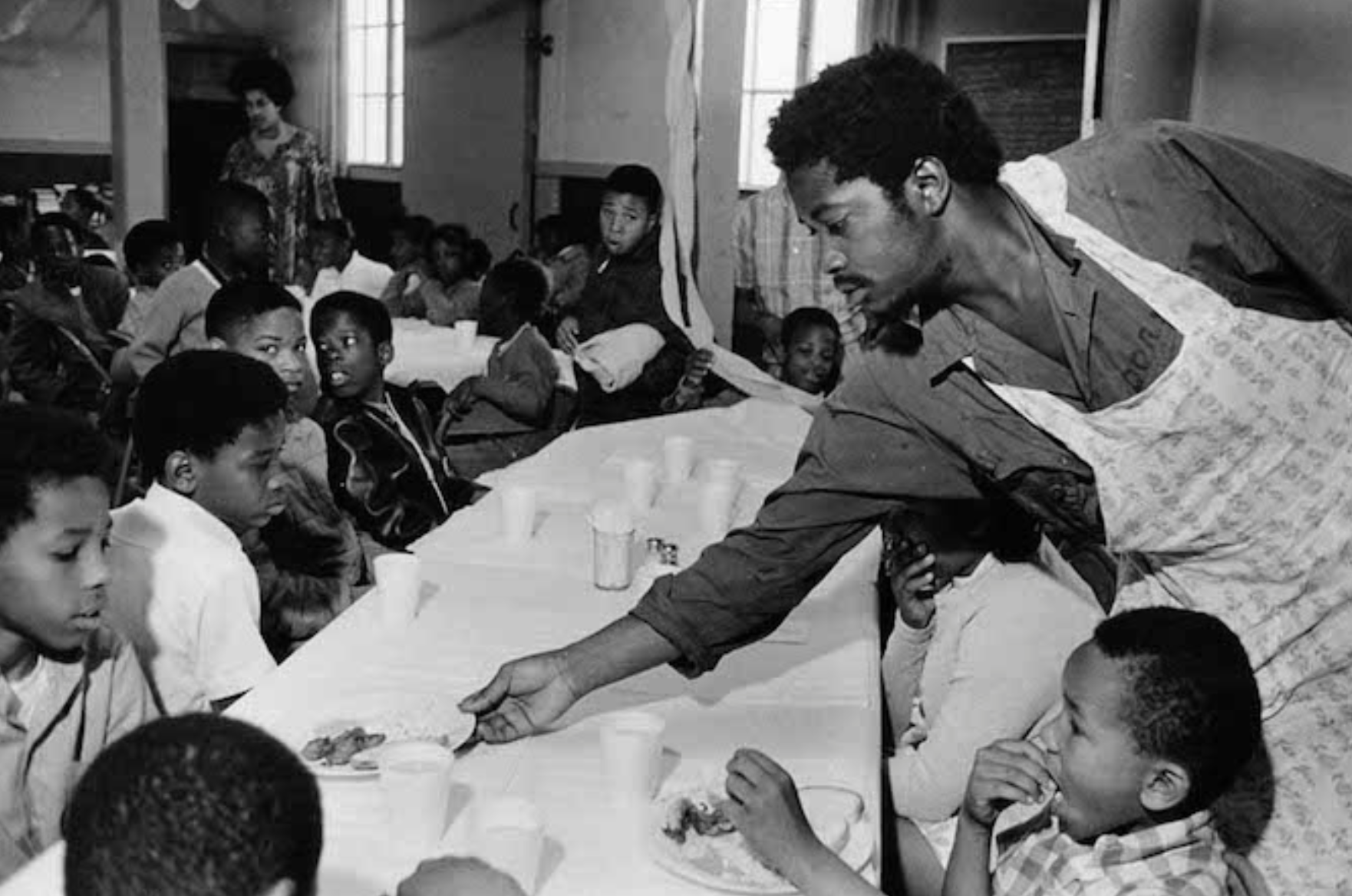
"A Panther serving breakfast to a group of youngers. Billy X Jennings, a former Panther who now serves as the party’s archivist, worked at the original breakfast program at St Augustine’s. “Every office was required to send two people to learn how it ran so you can open one in your area,” he said. Jennings would work at St Augustine’s early in the morning before heading to class at Laney College. Soon after, the breakfast service expanded to 23 locations around Oakland"
[Source: Great-wall-institute]
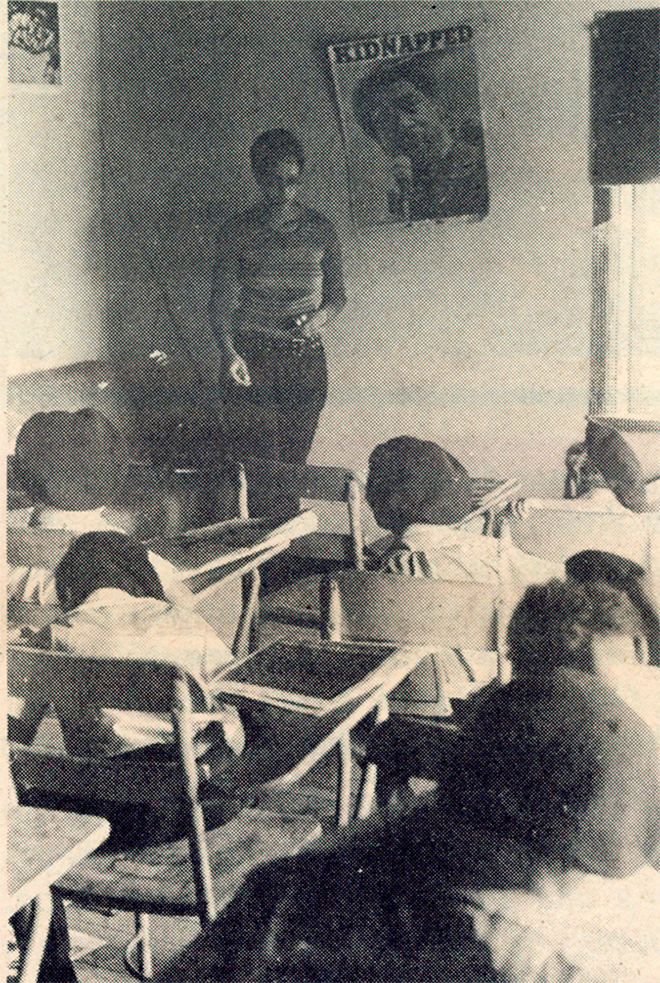
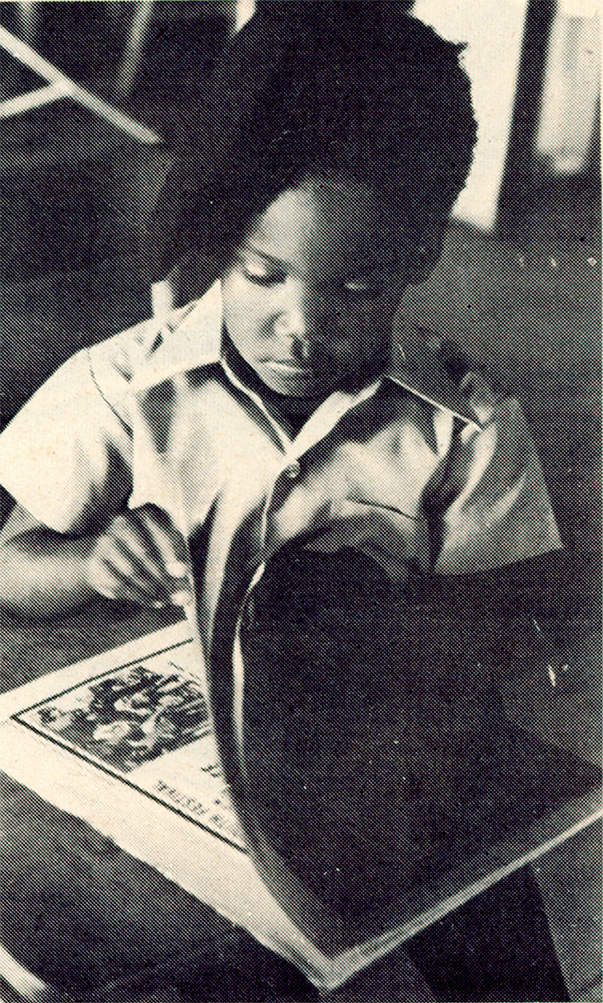
"Students at the Black Panther Party's Intercommunal Youth Institute, the organization's first full-time elementary school: With earlier, smaller-scale iterations in Berkeley and later San Francisco, the Party opened its first full-time liberation school in Oakland in 1971, naming it the Intercommunal Youth Institute (IYI). Under the directorship of Brenda Bay, and later, Ericka Huggins, the IYI facilitated classes for twenty-eight enrollees in its first year, most of whom came from Panther families."
[Source: The Alliance for Networking Visual Culture]
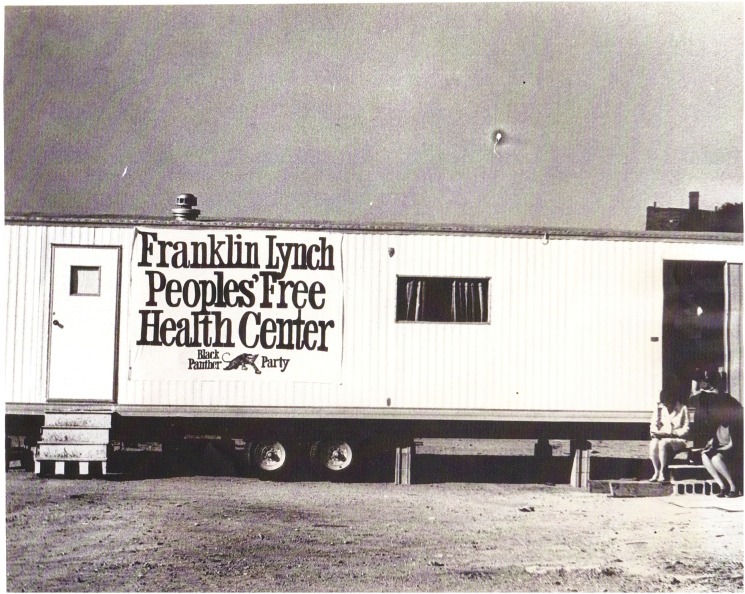
"The Black Panther Party’s Franklin Lynch Peoples’ Free Health Center, circa 1970, Boston, MA."
[Source: It’s About Time Archives]
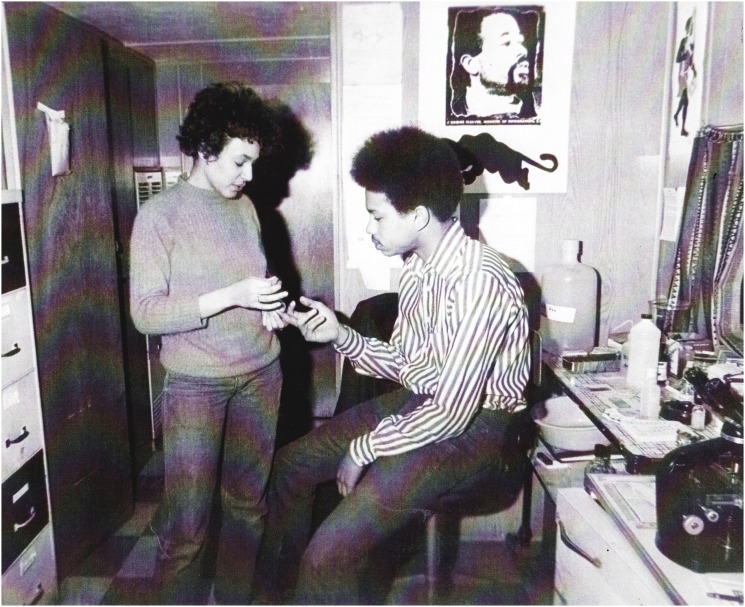
"Mary T. Bassett (left) demonstrating a finger stick for sickle cell screening at the Black Panther Party's Franklin Lynch Peoples' Free Health Center, circa 1970, Boston, MA."
[Source: It’s About Time Archives]