CIVIL RIGHTS MOVEMENT
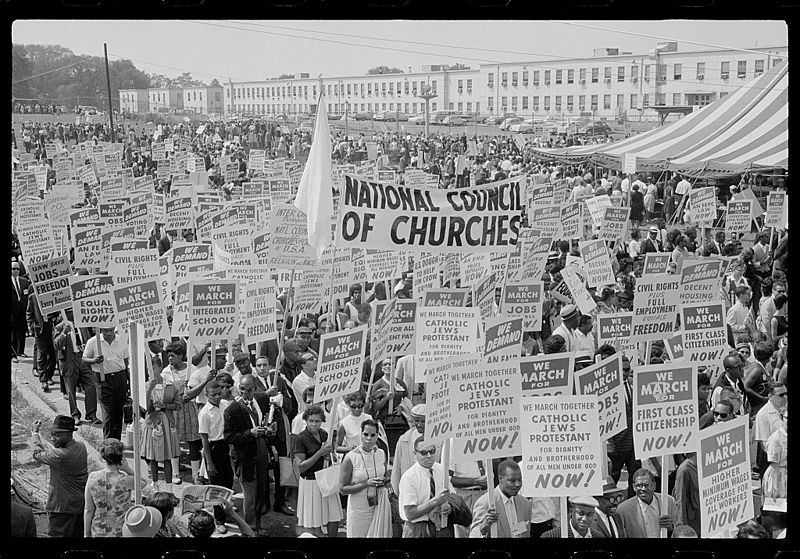
[Source: Libary of Congress]
Significant events like Red Summer, the bombing of a Birmingham church, and Bloody Sunday, where peaceful protesters were attacked by police, all played a role in shaping the political and social climate leading up to the formation of the Black Panther Party.
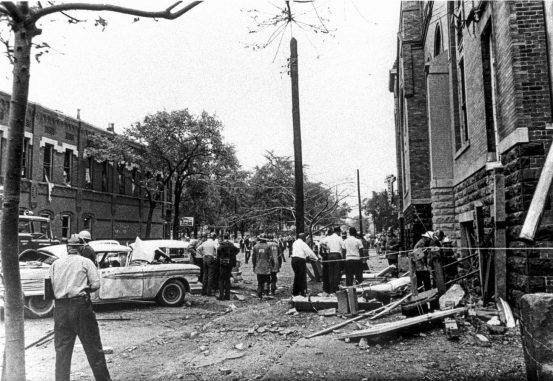
“The Ku Klux Klan bombed the Sixteenth Street Baptist Church in Birmingham on September 15, 1963, killing four young African American girls.”
[Source: Encyclopedia of Alabama]
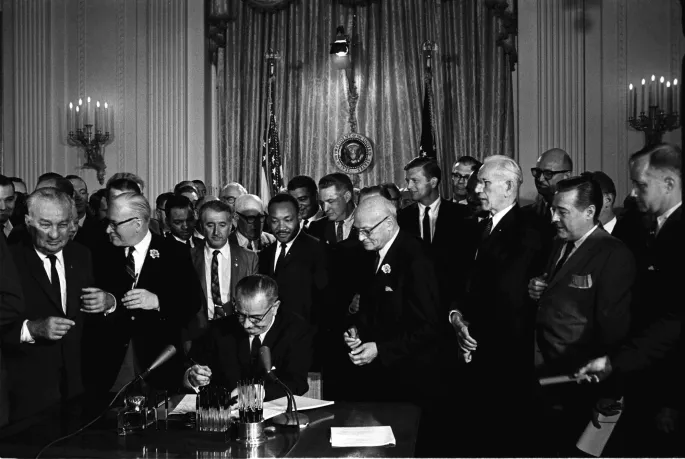
Caption: “President Lyndon B. Johnson signs the 1964 Civil Rights Act as Martin Luther King, Jr., others look on”
[Source: National Archives]
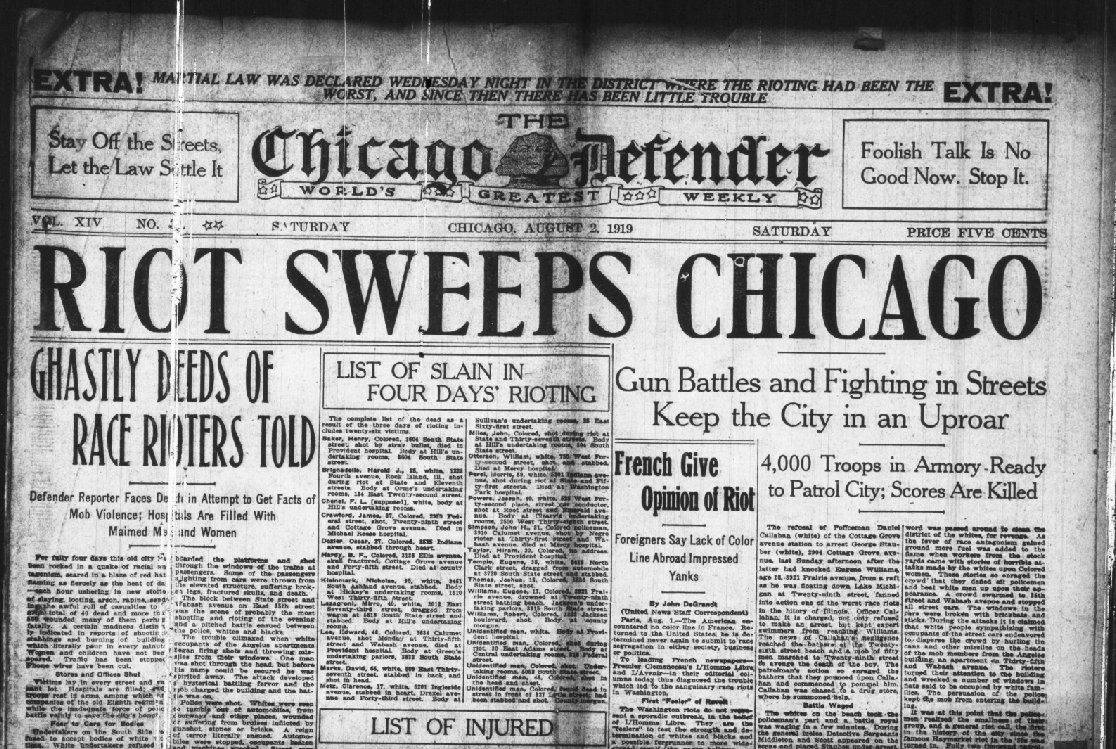
“The front page of the Chicago Defender on August 2, 1919, announced the turmoil in the city and listed the names of those who were slain and injured.”
[Source: Chicago History Museum]
While it is often considered to be the most important law on civil rights since the Reconstruction era and is a defining moment in the American civil rights movement, the passing of the Civil Rights Act of 1964, there were still disparities in funding, representation, and other opportunities that perpetuated racial division. The act did help to mitigate disparities in voting and public funding.
“We adopt the means of nonviolence because our end is a community at peace with itself. We will try to persuade with our words, but if our words fail, we will try to persuade with our acts.”
-Martin Luther King Jr.
“In spite of temporary victories, violence never brings permanent peace.”
-Martin Luther King Jr.
Early civil rights leaders, such as Martin Luther King Jr. initially embraced a philosophy of nonviolent protest to achieve equality through racial integration.
Other leaders such as Malcolm X advocated for a more radical approach, favoring black separatism as a means of overcoming entrenched white authority and achieving true equality.
“Segregation is that which is forced upon an inferior by a superior. Separation is done voluntarily by two equals.”
-Malcolm X
“The economic philosophy of Black Nationalism only means that we should own, and operate, and control the economy of our community. You can’t open up a black store in a white community. White men won’t even patronize you. And he’s not wrong! He’s got sense enough to look out for himself. It’s you who don’t have sense enough to look out for yourself.”
-Malcolm X; The Ballot or the Bullet Speech (06:52)
These two competing philosophies laid the foundation for both the Civil Rights Act of 1964 and the philosophical beliefs of the Black Panther Party.