1897 to 1909


​​​​​​​The Beets of Betrayal: Mexican Repatriation and Exploitation of Betabeleros in the 1930s

The Dingley Tariff Bill


The Dingley Tariff Bill created the need for mass immigration of Mexican immigrants like the betabelaros.

“Six [sugar beet] factories had been built prior to 1897. Within about two years after the passage of the Dingley bill, twenty-four new factories were erected…from 1902 to 1906, inclusive, thirty-seven new factories were erected…The average price paid the farmers for beets in the United States, as reported by the Department of Agriculture, has increased from about $4.10 per short ton in 1897 to about $5.80 at the present time."

Roy G. Blakey, 1912
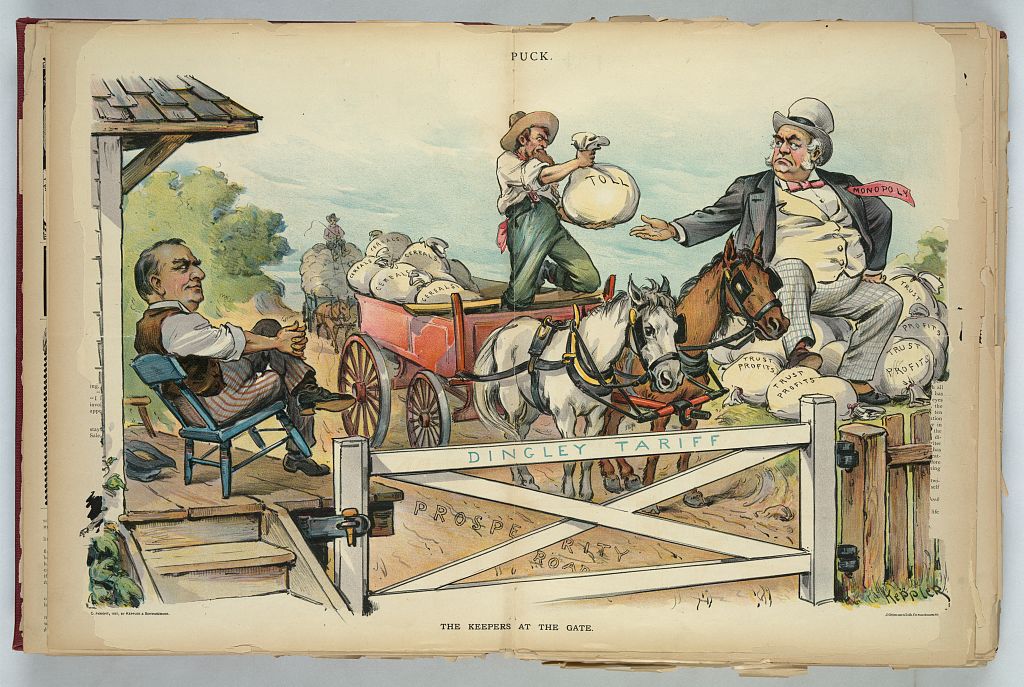
The Keepers at the Gate: Courtesy of the Library of Congress, 1897 

It changed the tax structure, raised the rate at which foreign sugar was taxed, provided the government with a reliable source of income, and made the sugar beet market more domestic (Porter, 1897). Michigan’s low wage rates compared to other sugar-producing states and lack of irrigation expenses made it crucial in the boom of sugar beet production (Blakey, 1912).​​​​​​​​​​​​​