Amelia Earhart: Airborne Feminist
Women in Aviation
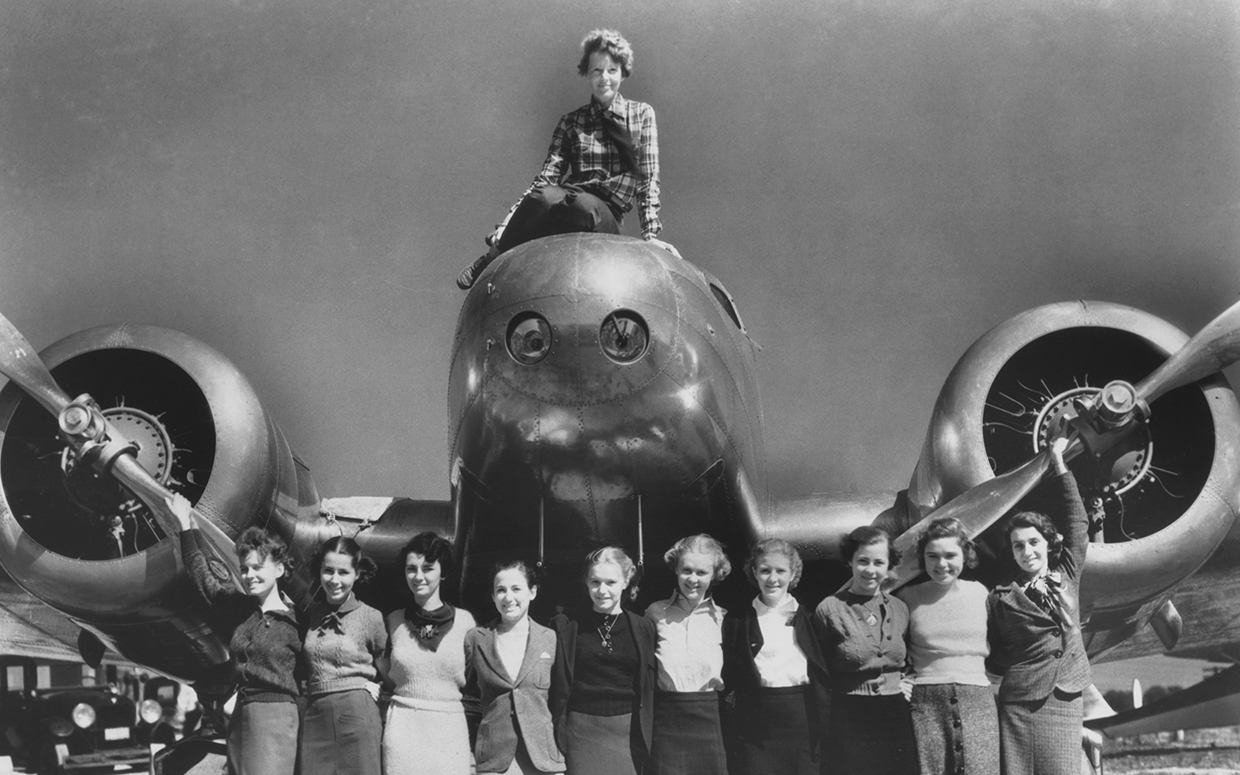
(Amelia Earhart Birthplace Museum, 1930)
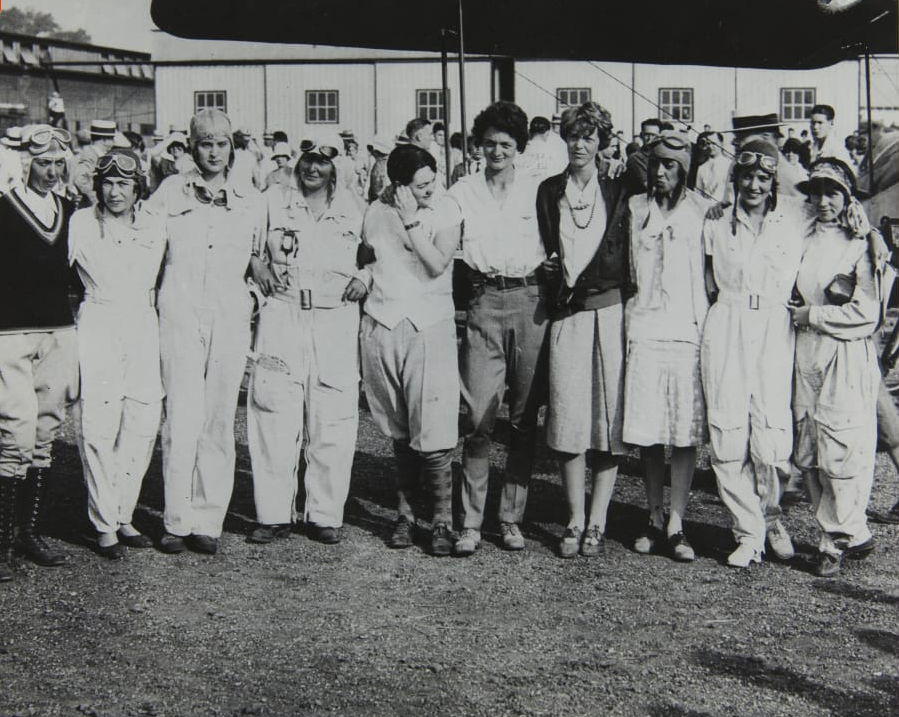
(Saint Louis University Libraries, 1930)
When Amelia Earhart entered the field of aviation, it was dominated by men. When Earhart earned her pilot’s license from the FAA in 1923, only 16 other licenses had been given to women. Many people said that the dangerous sport of aviation wasn't a place for women, but Earhart and many others sought out to prove them wrong. Some men would even write articles mocking the females in aviation, calling them Sweethearts of the Air, Petticoat Pilots, or Ladybirds. Many women also struggled to get hired in real aviation jobs, as companies believed that women did not have the mechanical skills or the desire to learn that was needed to operate a plane.
“We are still trying to get ourselves called just ‘pilots.’”
~ Amelia Earhart, 1932
Famous Women in Aviation
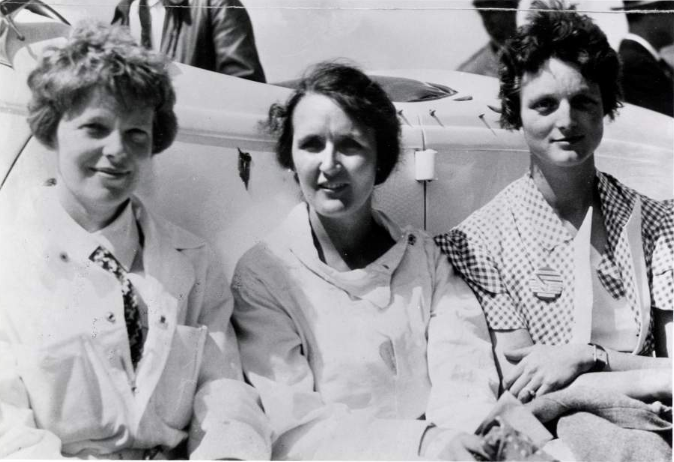
(Earhart, Nichols, and Thaden, Smithsonian National Air and Space Museum, 1931)
Many other women started the process of breaking barriers in aviation, allowing Amelia Earhart to finally break the barriers by breaking records and achieving international notoriety through her famous flights. Harriet Quimby was the first American woman with a pilot's license in 1911 and the first woman to fly solo across the English Channel in 1912. Bessie Coleman became the first African American woman to get a pilot's license, but had to travel to Paris to obtain a license in 1920. Amelia Earhart also made many friends and rivals in the skies, such as Louise Thaden, a record setting pilot from Arkansas, and Ruth Nichols, as they both wanted to be the first to fly across the ocean. Neta Snook was the first licensed woman in Iowa and gave Earhart some of her first flying lessons which inspired Earhart to keep flying.
“We knew that the men looked down on us, [but] you knew what you could do.”
- Louise Thaden