The Gilded Age of the late 19th century in the United States introduced a new era of what some called moral reconstruction; progressives projected their beliefs onto society and felt it necessary to regulate morality. Personal choice became a concern of public decency. Additionally, "[Christianity] became a powerful force in American politics. [Christians] believed that the government had become hostile to religion and that Americans had lost their way in a secular society that denigrated religious belief and promoted sinful personal behavior..." (Gaines Foster, 2003). This new era of policing personal morality is what brought upon trends of chastity laws such as the Comstock Act of 1873; the law prohibited any actions that were deemed or promoted "obscene and illicit" behaviors. "The law didn’t explicitly define 'obscenity,' but violating the measure could be punished with jail time, hard labor and fines up to $2,000. The ban covered pornographic materials, in addition to anything related to 'the prevention of conception or procuring of abortion.'" (Ellen Wexler, 2023)
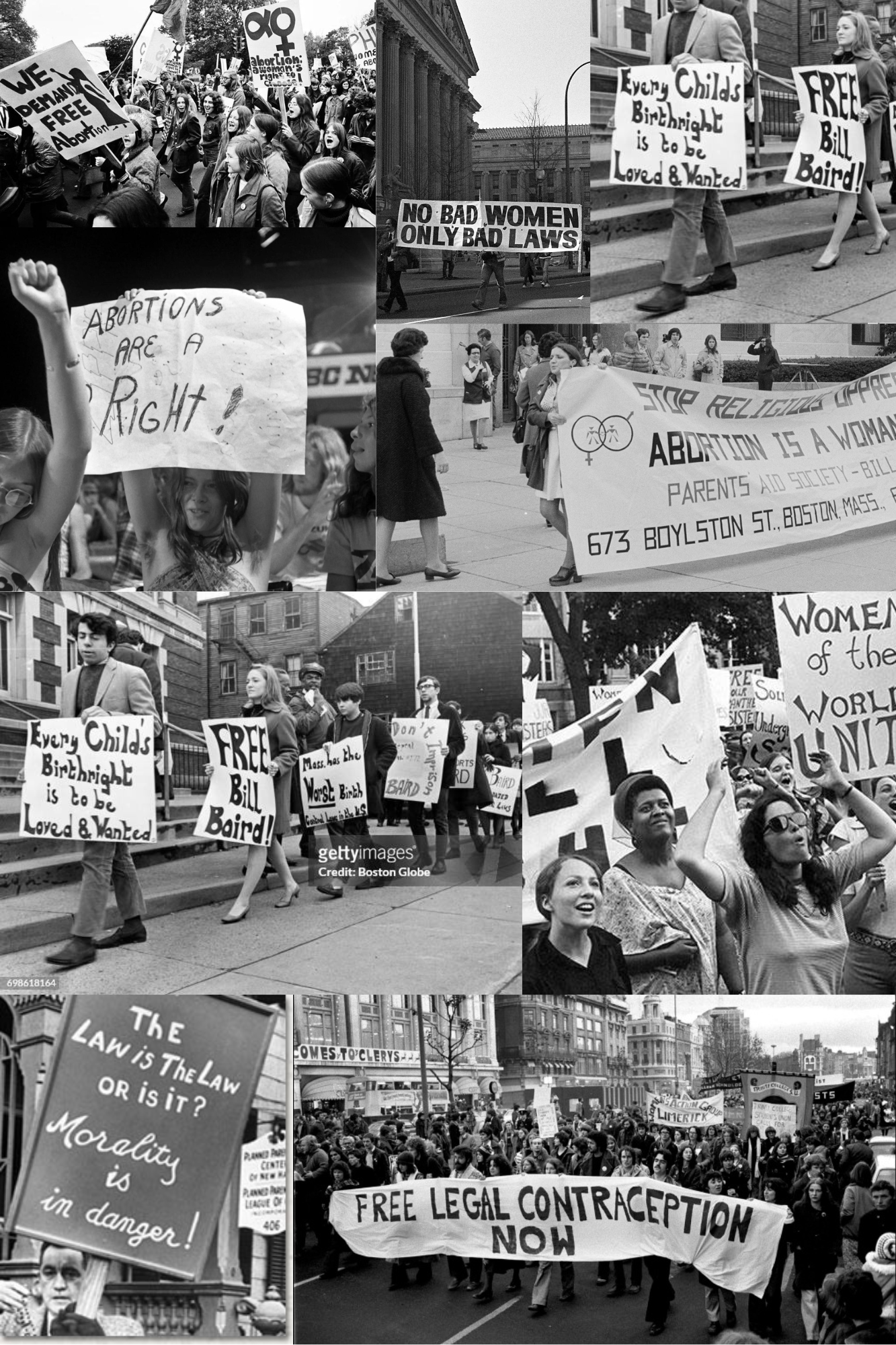
HISTORICAL CONTEXT
Morality and The Gilded Age
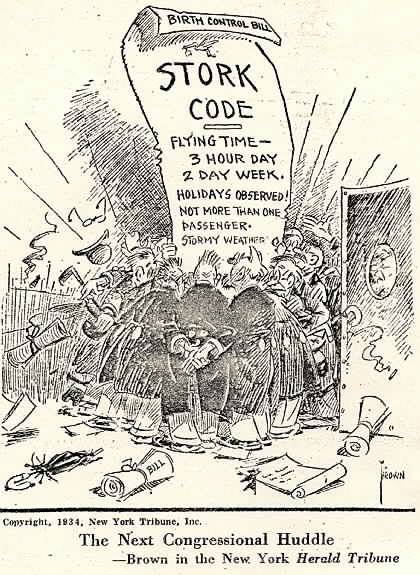
A political cartoon criticizing male Congress members debating obscenity laws. 1934, New York Times.
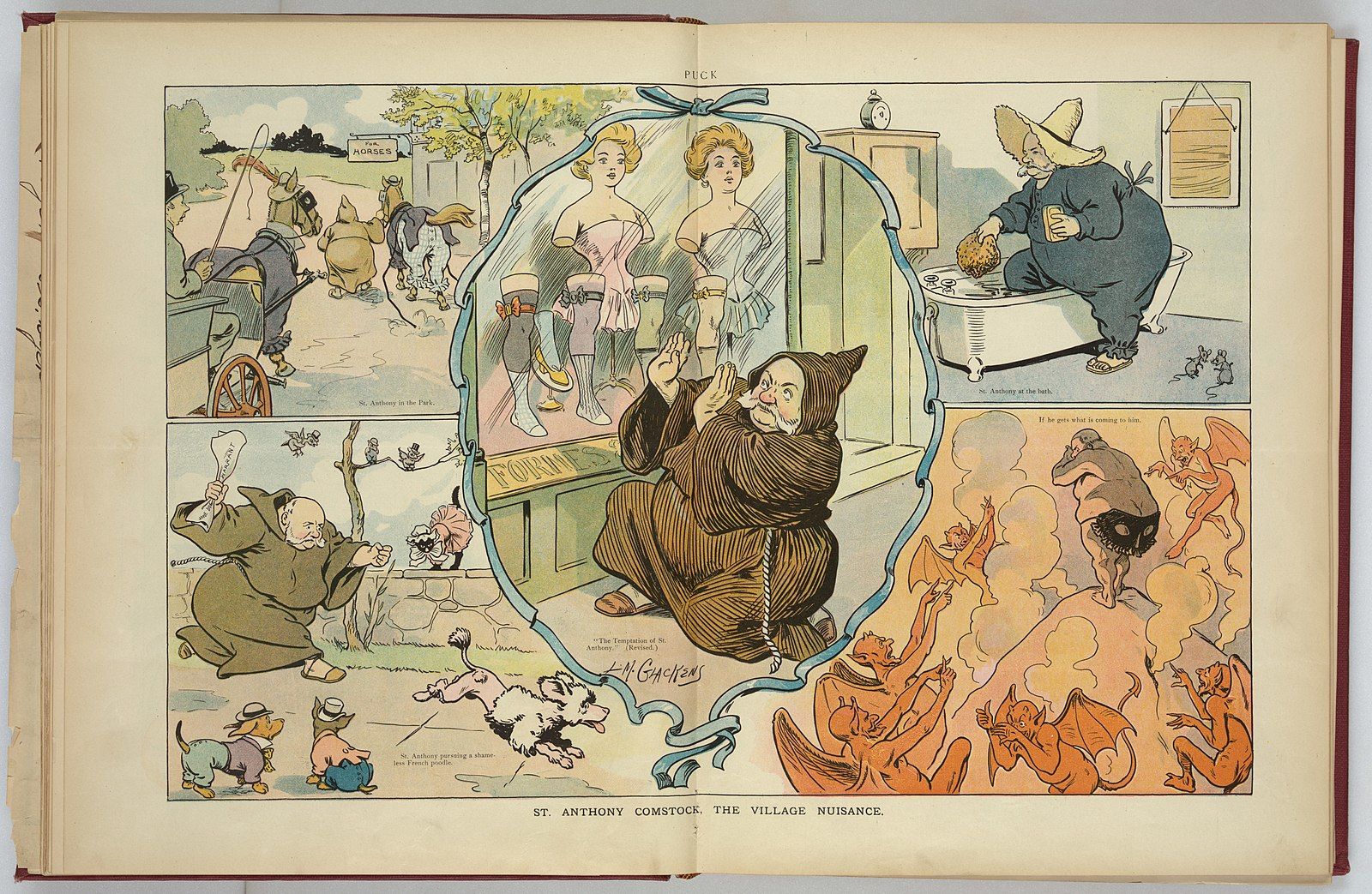
A satirical cartoon of Anthony Comstock. 1906, Puck Magazine.
"Every paper, writing advertisement, or representation that any article, instrument, substance, drug, medicine, or thing may, or can, be used or applied for producing abortion, or for any indecent or immoral purpose... is declared to be non-mailable matter and shall not be conveyed in the mails or delivered from any post office or by any letter carrier.” ~ 18 U.S. Code § 1461
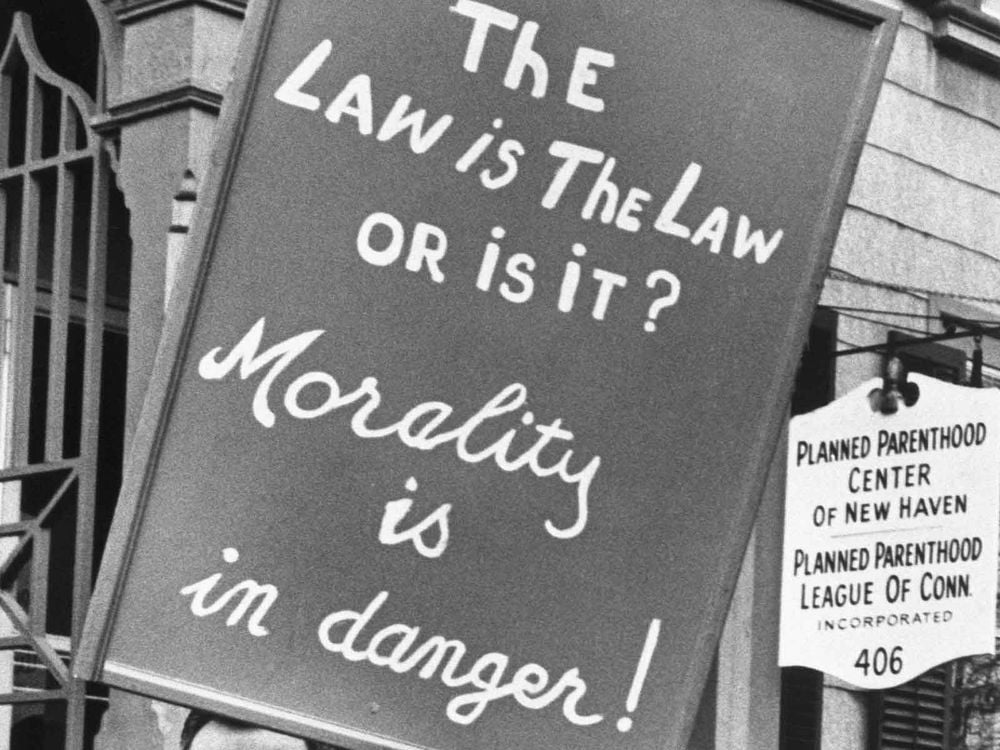
Bettman, circa 1960, Getty Images.
"On May 10, 1872, Victoria C. Woodhull became the first female candidate for the Presidency of the United States... That same year, Anthony Comstock, a man devoted to preserving the legacy of Victorian morality, arranged for Woodhull's arrest on charges of obscenity following her publication of an article regarding an adulterous affair between Elizabeth Tilton and a Protestant minister. Anthony Comstock's tireless crusade against obscenity would continue into 1873, when his influence and political pull would result in the enactment of the Comstock Act, which made it illegal to proliferate information 'for the prevention of conception, or for causing unlawful abortion,' through the mail."
~ Elisa Perez-Selsky, 2018
Contraceptives and Breaking Barriers
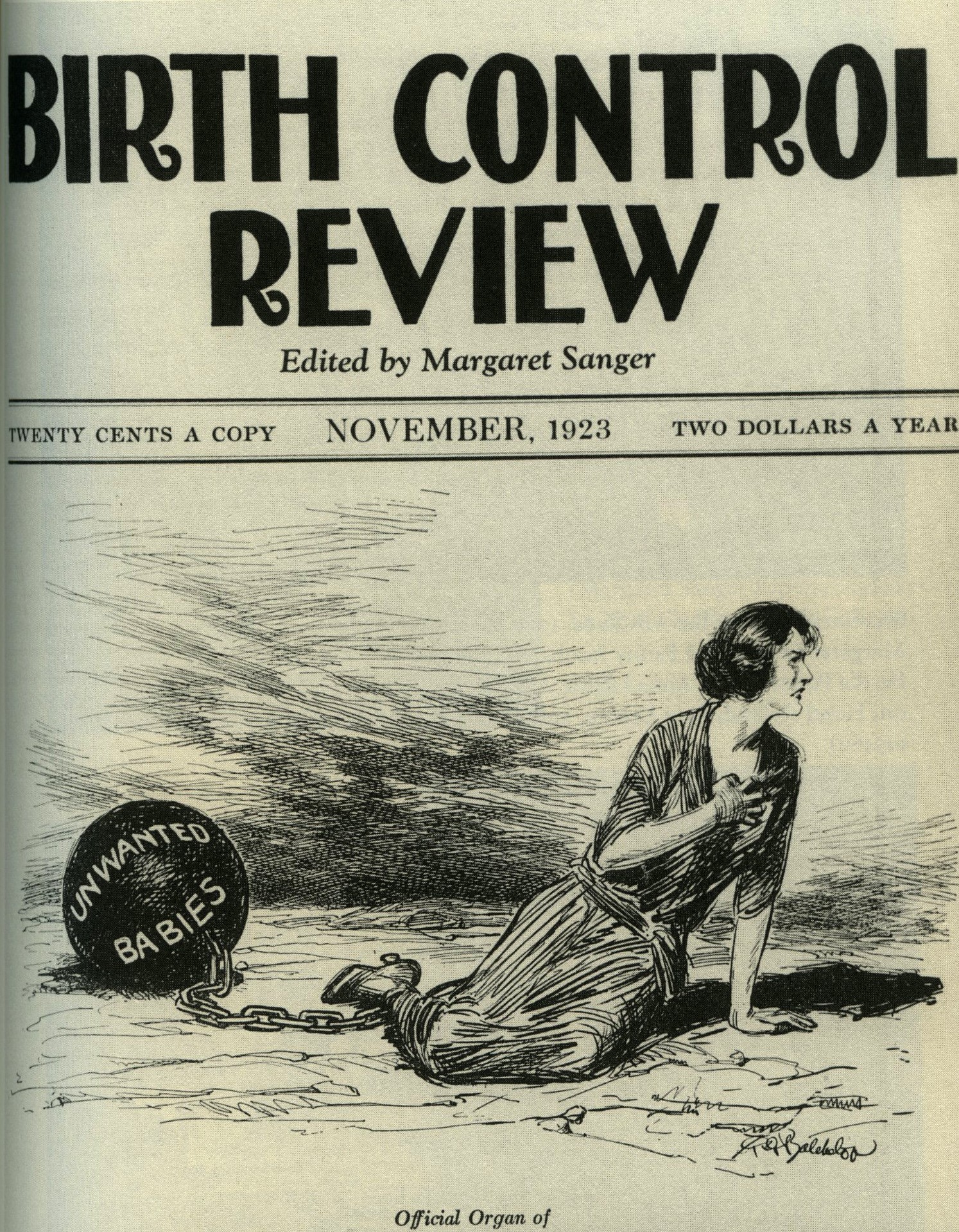
1923, The selected papers of Margaret Sanger.
"Under the heading 'Difficulties Encountered' in the annual report of the New York Society for Suppression of Vice...are case studies of lewd or lascivious materials encountered by the society.... In the same section of the annual report, The Society describes the matierals they considered to be obscene:
'Each one of these ounce packages had concealed a small red book, containing an advertisement of the pills. ... They were sent out broadcast over the country to tempt young girls and women from paths of virtue, and as a menace to motherhood.'" ~ June Titus, n.d., Center for Women's History
Margaret Sanger is the most well known birth control advocate in history and most notoriously founded Planned Parenthood; "...her activism directly targeted the Comstock Laws, which made it illegal to disseminate birth control information." (Mike Saelee, n.d.). Sanger challenged these laws to bring contraceptive access and information to women, and coined the term birth control, landing her with nine indictments under Comstock laws. She was arrested numerous times for distributing information through mail and opening the first birth control clinic. She dreamt of "...a pill that could provide women with cheap, safe, effective and female-controlled contraception. Her search ended in 1951 when she met Gregory Pincus...Their collaboration would lead to the FDA approval of Enovid, the first oral contraceptive, in 1960." (The Pill, 2003)
"Because I believe that deep down in woman's nature lies slumbering the spirit of revolt. Because I believe that woman is enslaved by the world-machine, by sex conventions, by motherhood... by middle-class morality, by customs, laws, and superstitions. Because I believe that women's freedom depends upon awakening that spirit of revolt within her against these things that enslave her."
~ Margaret Sanger, 1914, The Woman Rebel.
First Steps to Privacy
Four years after the invention of Enovid came the first undoing of the Comstock Act, the 1965 Supreme Court case Griswold v. Connecticut. The case challenged a Connecticut law that "makes it a crime for any person to use any drug or article to prevent conception." (Court Brief, 1965). The decision of this case ruled that "...the Connecticut ban on contraceptives was unconstitutional. Justice William O. Douglas... based his opinion on the right to privacy, which he said was implied in other constitutional guarantees." (Andi Reardon, 1989). The defendant of this case, an executive for Planned Parenthood, and a Yale professor were jailed after they "...put Connecticut's ban on birth control to the test," (Connecticut Women's Hall of Fame, n.d.). The violated Connecticut state law had been challenged multiple times in court, but it, along with other state laws, were finally overturned by the Supreme Court in this case that established marital privacy. However, this precedence of constitutional privacy was selective to married couples and women were left without personal privacy and autonomy.
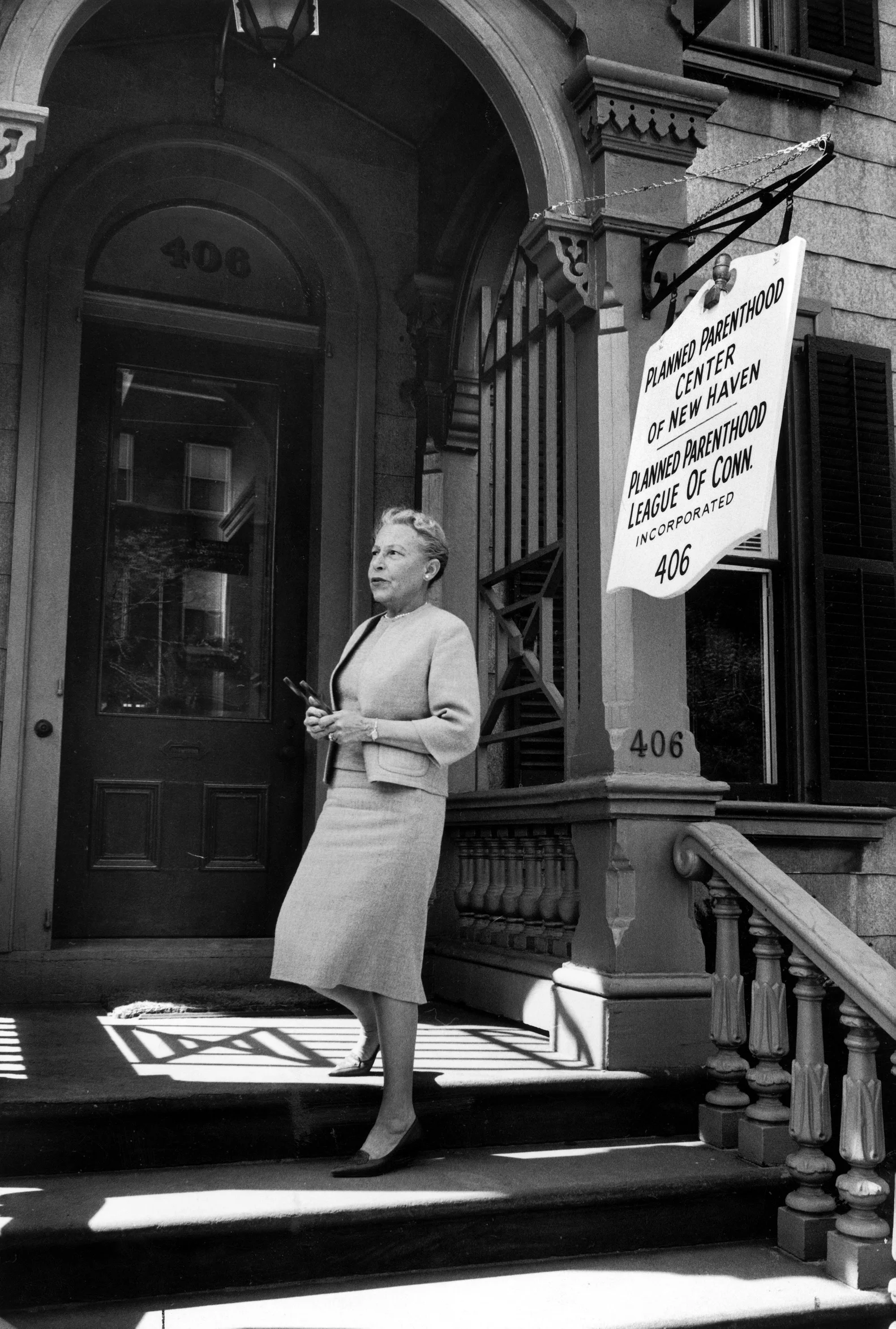
Estelle Griswold in front of her birth control clinic. Lee Lockwood, 1963.
