
Thesis
In the 1930s, when racial scientific beliefs shaped medical practices and ethical guidelines were largely absent, the Tuskegee Syphilis Study exploited Black men for syphilis research, violating their basic rights. The study demonstrates the dangerous effects of scientific racism in the justification of unethicality in research, highlighting the fundamental responsibility of researchers to ensure the wellbeing and rights of all patients, regardless of race. The study brought awareness and change through ethical reforms to the nation, but improvements are still necessary in the medical community, especially regarding racism.
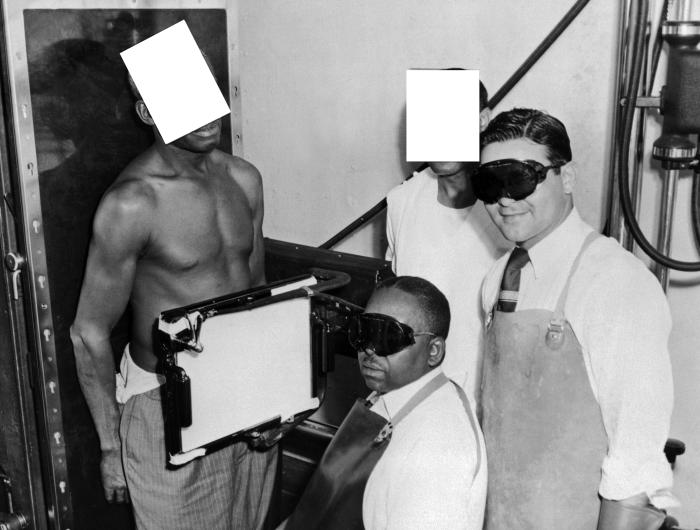
"CDC/ Betty Hooper, OCD; Inf. Office. This historic photograph, created sometime around 1932, shows participants in the Tuskegee Syphilis Study. In this particular view, an African-American man was being x-rayed, while in the standing position. 1932. Details,"
"...the behavior of the PHS officers was no more than representative of the sentiments and prejudices of the times. But not to remember is to forget, and to forget is a disservice to those who suffered the indignities...[In] calling upon us to honor [Parran], one of the participants, we should also mention the context in which the meritorious service was earned"
- Silver G.