SHORT-TERM IMPACT
After the War
“In 1942, there were about 50,000 Navajo tribe members. As of 1945, about 540 Navajos served as Marines. From 375 to 420 of those trained as code talkers; the rest served in other capacities.”
(“Navajo Code Talkers," April 16, 2020)
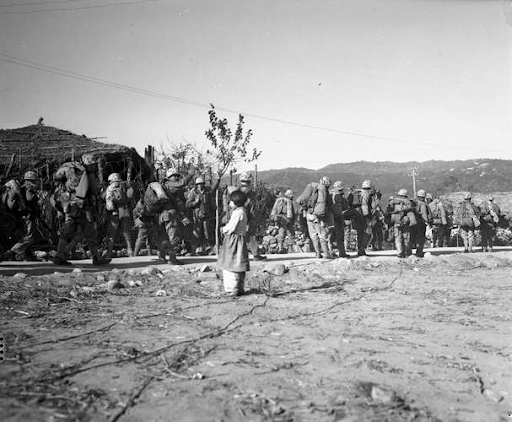
Thanks to their skill, speed and commitment to their
country, the Navajo Code Talkers’ communication
through radio helped win WWII. Because of the Navajo Code’s complexity, the Japanese never cracked it, giving America a huge strategic advantage over Japan. When the war was over, the Code Talkers continued to serve in the Army and Marines. They were ordered not to tell anyone about their battle experiences, because the Navajo Code Talkers remained a top secret operation.
(Korean War, Battle of Chosin Reservoir, Encyclopedia Britannica, 2016)
"Also, as if the Marine Corps was not enough, he enlisted to be in the United States Army, serving[d] in the Korean War; survived that awful battle at Chosin.”
(Peter MacDonald, November 27, 2017)
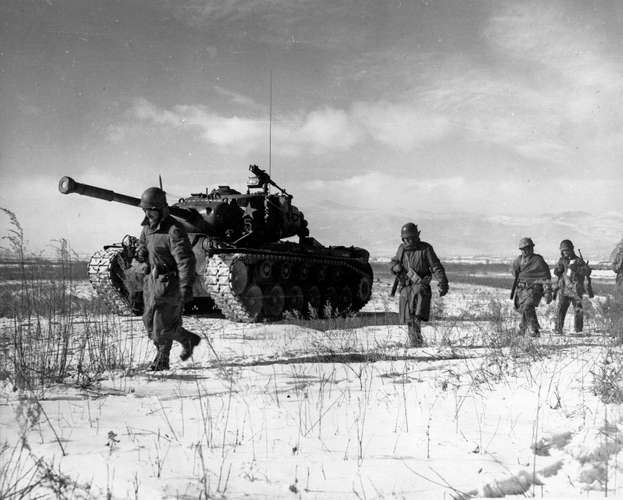
The Navajo Code Talkers continued to serve in the Korean War, surviving some incredibly bloody battles, such as the Battle of Chosin. The Navajo Code Talkers also served at the beginning of the Vietnam War, however the program was discontinued before the war ended.
(Korean War, Battle of Chosin Reservoir, Encyclopedia Britannica, 2016)
Despite many years of service, and many lives saved, the Navajo Code Talkers did not receive any recognition for their valiant efforts until 1982, when the Navajo Code was declassified. Nevertheless, their fellow Marines respected them for their bravery and service to their country.