Fight for Language Rights -Ka Hakakā no nā Pono ʻŌlelo
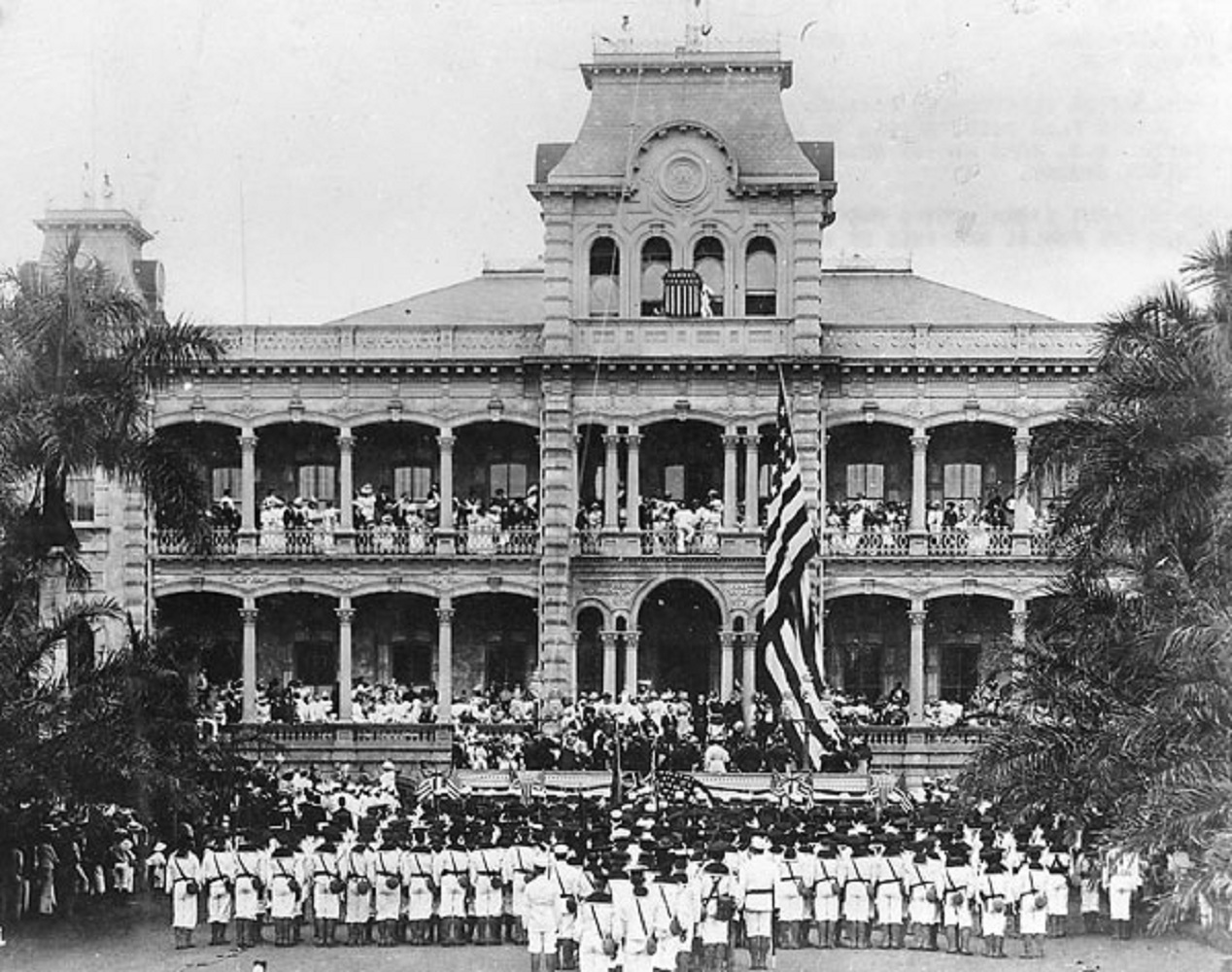
(Raising the American Flag, retrieved from nea.org.)
After the overthrow of Queen Liliʻuokalani, English replaced Hawaiian in schools, leading to a sharp decline in fluency.
However, the Hawaiian Renaissance of the 1960s and 1970s, inspired by the civil rights movement and Indigenous activism, sparked efforts to revive ʻŌlelo Hawaiʻi.
“Due to the heavy influence from missionaries and other foreigners, the culture, the language, and many other native practices were discouraged. This caused a near extinction of the Hawaiian language, which began in 1896 after the overthrow of the throne. The Hawaiian language was banned from being taught in schools and was also discouraged from being spoken at home.55”
By Emma Kauana Osorio / Winter 2021
"There are so many kūpuna who have talked to me, tears in their eyes, who told me they were punished for speaking Hawaiian."
By No'eau Woo-O'Brien / Dec 7, 2019
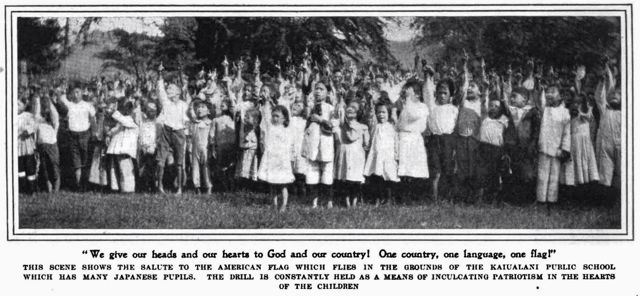
(Americanizing Hawaiian Education, retrieved from nea.org).
The ban on teaching Hawaiian in public schools lasted until 1987, but Native Hawaiians continued to preserve the language at home.
Today, revitalization efforts persist through Hawaiian language immersion schools, university programs, and a growing movement to reclaim Hawaiian identity in everyday life.
“Consenting for our nation to be subsumed within America is like agreeing that we…be buried alive”.
By Native Hawaiian resistance leader James Keauiluna Kaulia / 1897