The Tacoma Narrows Bridge collapse left everyone speechless. It was designed to withstand winds up to 120 miles per hour (mph), but it fell in 40 mph winds (Chronicling America). Engineers were puzzled.
The Collapse of Galloping Gertie:
A Revolutionary Turning Point in Suspension Bridge Design
Effects
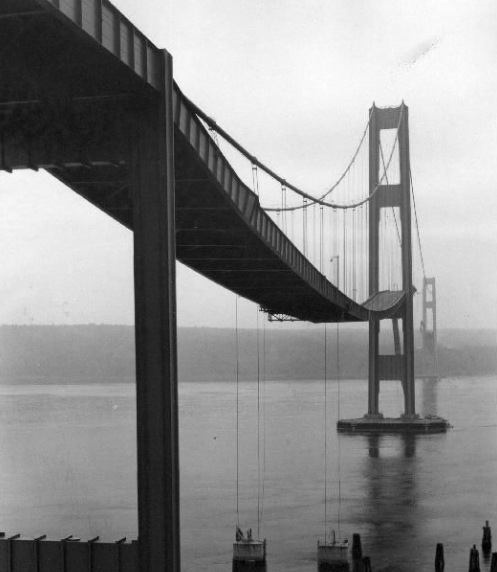
"Collapse of the Tacoma Narrows Bridge", Caltech Image Collections
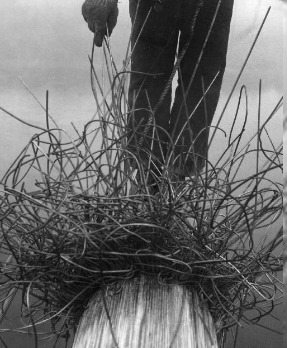
Destruction of cables, Caltech Image Collections
When the bridge collapsed, the public was devastated. The Peninsula had lost an important economic connection to Tacoma. They believed that money-lenders should have given more money to the construction of the bridge (Chronicling America). The Tacoma population was annoyed. This caused people to root for a new bridge even more.
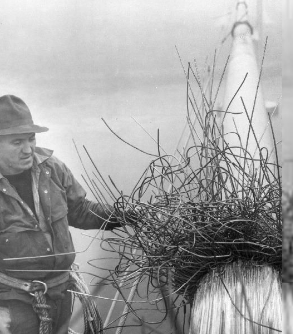
Government official inspecting cable, Caltech Image Collections
While the construction crews dismantled the bridge, engineers drastically changed the way suspension bridges were designed. The collapse exposed the limits of the Deflection Theory. Today, bridges are designed with aerodynamic stability analysis in mind, along with the Deflection Theory (Hobbs 83). This was a defining moment in the design of bridges, the safety of the people, and equations engineers used.
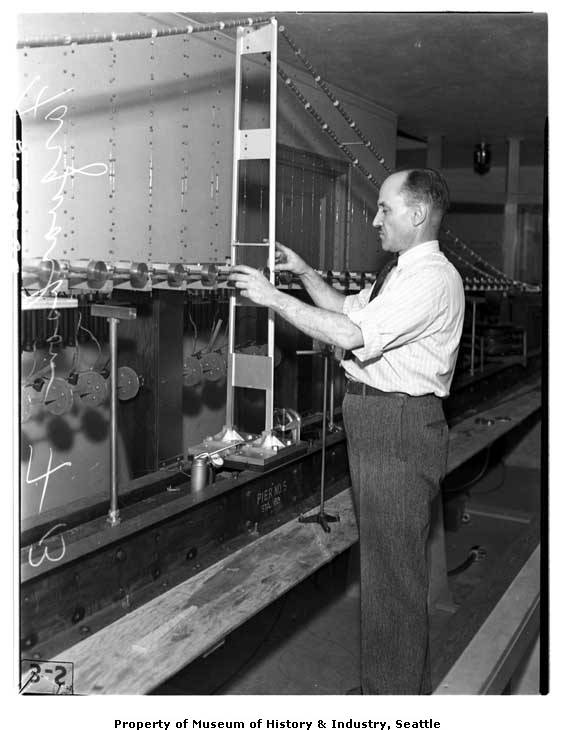
"Engineer with model of Tacoma Narrows Bridge", September 1940
"Regrettable as the Tacoma Narrows Bridge failure and other recent experiences are, they have given us invaluable information and have brought us closer to the safe and economical design of suspension bridges against wind action."
~ Othmar Ammann, Tacoma Narrows Bridge engineer