The Early Years of The Enigma Machine
The German Military's Interest in the Enigma
With World War II on the horizon, the German army was preparing a war force that would be vastly superior to the one used during World War I and an improved communication with the development of the radio. The main problem with radio communication was that it was impossible to tell whether the enemy was intercepting the transmissions. To combat this, the German army had to look for a device that would have an almost unbreakable code. The Germans turned to the electromechanical Enigma machine.
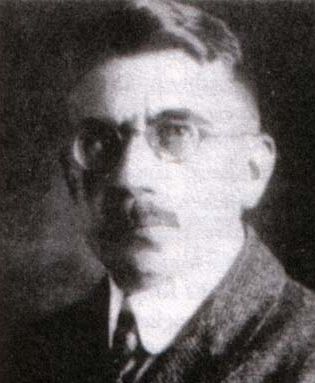
Arthur Scherbius, the original inventor of the Enigma Machine
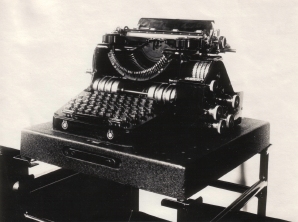
Arthur Scherbius's 1926 model of the Enigma
The Invention of the Enigma Machine
The Enigma machine was invented in 1918 in Germany, by Arthur Scherbius. He patented the design of the Enigma, a cypher machine with rotating wired wheels. He continued to work on the design of the Enigma until 1923, when he started selling it under the name “Enigma” in his company named Scherbius & Ritter. It was used by a few businesses such as banks, but in the end, the Enigma did not gain the interest of many until 1926. In 1926, the German Navy bought some of his Enigmas and altered it to send coded messages to communicate. In 1929, shortly after the Enigma was starting to gain interest from the German military, Arthur Scherbius died in a car crash. Now the German military had full control of further development of the Enigma into a machine that would translate messages into a coded language and another Enigma would be able to translate back into normal script.