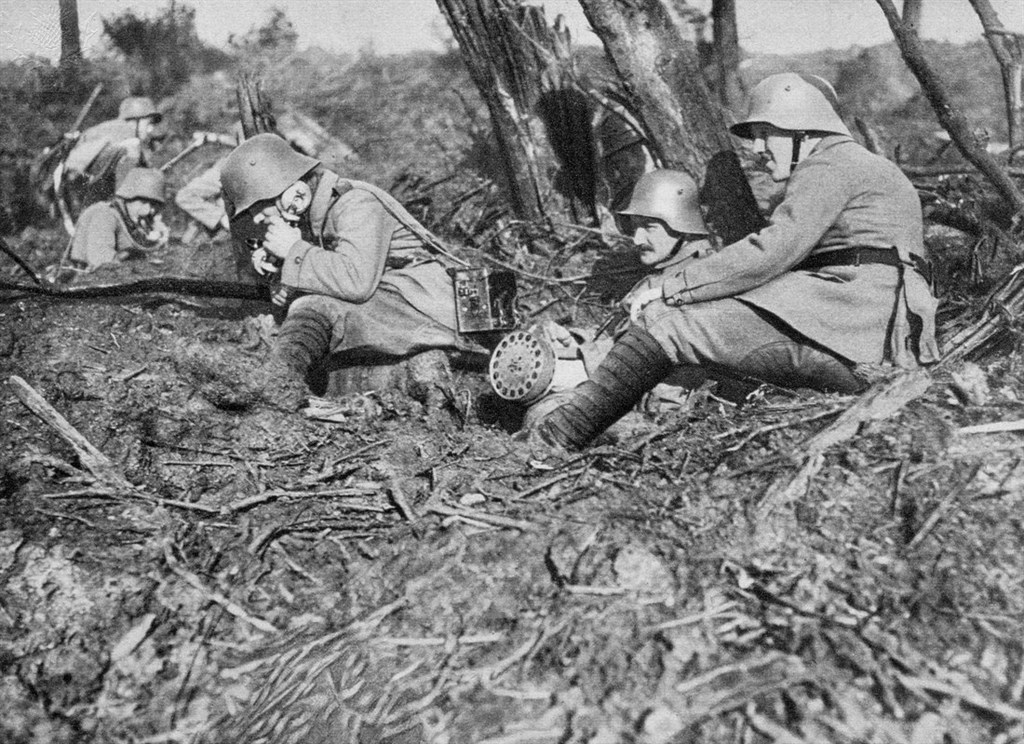
German soldiers phoning during the Battle of the Somme, France, Britannica ImageQuest
Animal messengers- The US army had Two Detachments of "pigeoneres" in the First World War. The soldiers would write a note and attached it to the leg. The army's used the pigeon with great success using them for artillery orders and troop movements with a 95% success rate of them reaching their master. Dogs were also used for their speed and their noses to find wounded men. The worlds army’s used animals because they could be lest costly and more fool proof compared to a telephone or Telegraph line that could be cut. (USMC museum)
The Telegraph- it was invented in 1836 and used Morse code. It was used to convey messages on both sides to convey orders and troop movements to leaders and C.O’s
Signal flags- Flags were mostly used on sea to communicate between ships and land, as well as signaling refueling within a fleet but not giving an exact position. It as also an international signal in more then 5 major languages. (USMC museum)
Portable radio- it was very important because a soldier could communicate from anywhere in the battleground. This led to the wireless cellphone more then half a century later and was a major advantage in tech for the military who possessed it.
“The communication trench was just wide enough to accommodate a man with a full-pack, and about seven feet deep, so that one's vision was limited to a patch of darkening sky and the shoulders of the man in front. Its floor was covered with a foot of tensely glutinous mud. We drove slowly through the morass, wrenching out each foot before putting it down again. (Communication trenches spatricus ed.com)
German soldiers phoning during the Battle of the Somme, France, Britannica ImageQuest
Home
Quotes and letters
Research