Reception
Public reaction to Unsafe at Any Speed launched the topic of vehicle safety into the national conversation, framing the General Motors Corporation as a public villain marketing Corvairs that had a known tendency to oversteer and cause crashes.
"To many Americans, Nader, at 35, has become something of a
folk hero, a symbol of
constructive protest against the
status quo. When this peaceful revolutionary does battle against modern bureaucracies, he uses only the weapons available to any citizen: the law and
public opinion." (Toughest Customer,
Time)
"It is
not believed by even the most optimistic that
safer automobiles will
'stop accidents'...Our goals must be to
reduce the number of accidents by all available means, including
proper design of the vehicle as well as better
driver training and
better roads. In addition, it must be recognized that accidents will occur, and therefore
adequate crash protection must be provided for the occupants of the car."
-William I. Stieglitz in a letter to the editor of the New York Times, 1965
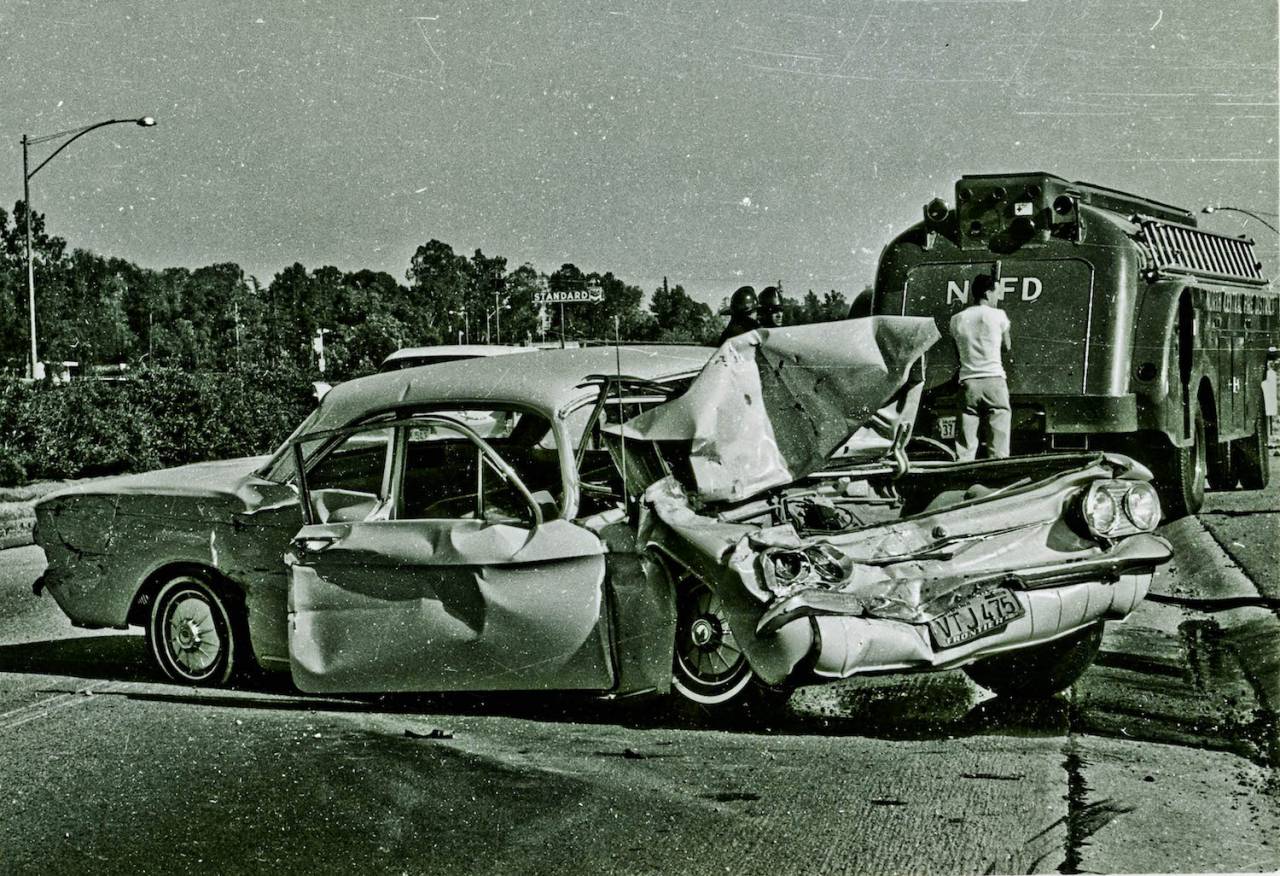
Ralph Nader's favorite car. On U.S.Highway 99 in Fresno, California.
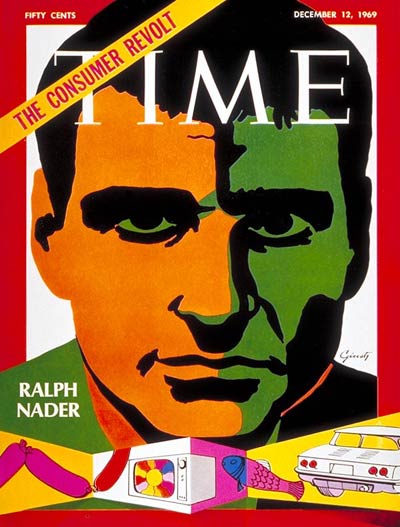
Ralph Nader, Time
The public still had mixed reviews:
"One can only conclude after reading [an auto-safety publication of the New York Times] that
automakers are to
blame for
all accidents on the highways.
Nothing, of course, could be more ridiculous. Alcohol...is responsible for
50 percent of all accidents. Auto manufacturers
know how to build safer cars, and a start is now under way,
instigated largely by public officials." - a member of the public, Stanley Judkins, in a letter to the editor of the New York Times, 1966
Ford CEO Henry Ford on Ralph Nader and other motor vehicle safety activists: “I think that, if these
critics who don't really know anything about safety of an automobile,
will get out of our way, we can go
ahead with our job-and we have a job to do. We have to make our cars safer.
We think they are safe today, but we have to make them safer still.”
After the widespread outcry following the publication of Unsafe at Any Speed, automobile manufacturers, including General Motors and Ford Motors, began to push back against motor vehicles safety reforms, calling them a "harrassment" to the industry.
"Henry Ford Sees Economic Hazard in Curb on Autos," New York Times
Auto manufacturers were intent on securing their bottom line and viewed Nader's rise as a threat to their industry's reputation and, therefore, their own profit.