In 1972 a major earthquake hit Managua, devastating much of the city. Other countries sent relief donations, yet most of these funds were embezzled by Somoza's retinue. This signaled a rapid decline in Somoza's public opinion alongside a growing support for the FSLN, giving them the opportunity to gradually exert more influence in Nicaragua and put more pressure on Somoza's regime.
Rise of the Sandinistas
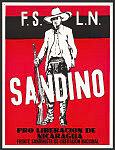
FSLN Promotional Poster
Library of Congress
The assassination of opposition newspaperist Pedro Joaquín Chamorro in January of 1978 served as the catalyst for the Sandinistas to start a civil war against Somoza Additionally, U.S. president Jimmy Carter had decided that Somoza's abuses warranted a waning of U.S. aid to Nicaragua and the National Guard, and in January of 1979, he eventually withdrew all military assistance and urged other countries to do the same.
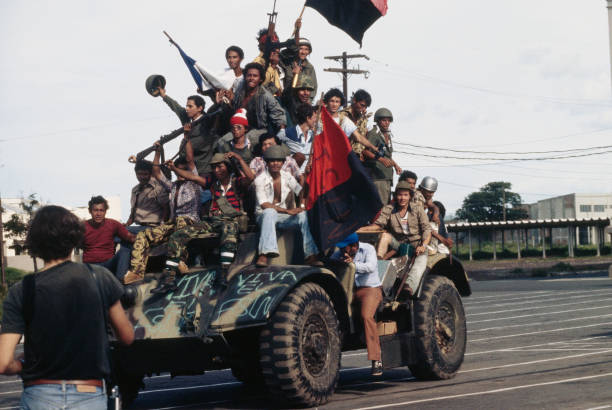
Sandinistas Parade after Victory
Bettmann Archive
In July of 1979, the Somoza government finally collapsed from the lack of U.S. support and the resistance of the FSLN. Somoza fled the country and went into exile in Paraguay, allowing the FSLN to establish its own government. This government immediately enacted land reforms and expanded education, showing promise for improvements in Nicaragua, but these hopes were crushed when they began to violently suppress all dissidents and Somoza sympathizers.