The Imapct
The Hawaiians started importing other ethnicities from Japan, Korea, the Philippines, and other countries. The positive was that the Hawaiians got cheap labor but the negative was that the laborers weren't getting treated well. “In 1870, 40 Japanese contract workers returned to their homeland due to harsh conditions. The remaining workers from Japan ended up taking the lead in organizing labor, fighting to improve work conditions and wages” (“Sugar Cane Production”). “Hawaii’s Reciprocity Treaty with the United States, signed on Jan. 30, 1875, allowed Hawaiian sugar and other products to be sold in the United States without a tariff” (“Sugar Cane Production”). After this, different ethnicities came to Hawai’i to work because the Hawaiians thought that if they kept importing the Chinese there would be too large of a Chinese population in Hawai’i. “The treaty boosted Hawaii's sugar industry, increasing the number of sugar plantations from 20 to 63 between 1875 and 1880. This increase in production led to another influx of immigrants from around the world” (“Sugar Cane Production”). We can see now that Hawai’i has become a diverse population from the Chinese, Japanese, Korean, Filipino, and other countries coming to Hawai’i. There were also a lot of strikes that happened after these people came. For example, “As Japanese sugar workers became more established in the plantation system, however, they responded to management abuse by taking concerted action, and organized major strikes in 1900, 1906, and 1909, as well as many smaller actions” (Plantation Society).
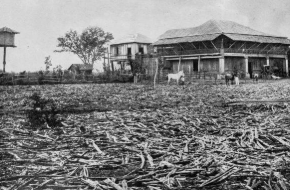
Getty Images
The Chinese coming to Hawai’i changed history because this was the start of Hawai’i importing laborers to work for them. This has caused the population of Hawai’i to change greatly and created the diverse population it has today. The reaction to Hawaiians not wanting to work on the sugarcane plantation led to the Master and Servant Act being passed and has affected the amount of Asians that are in Hawai’i to this day.