A Unfinished Revolution, Reaction, and Reform: Brown v. Board and the Ongoing Battle for Equality
“In the field of public education, the doctrine of ‘separate but equal’ has no place.
Separate educational facilities are inherently unequal.”
– Chief Justice Earl Warren, writing for the unanimous Court in Brown v. Board of Education, 347 U.S. 483, 495 (1954).
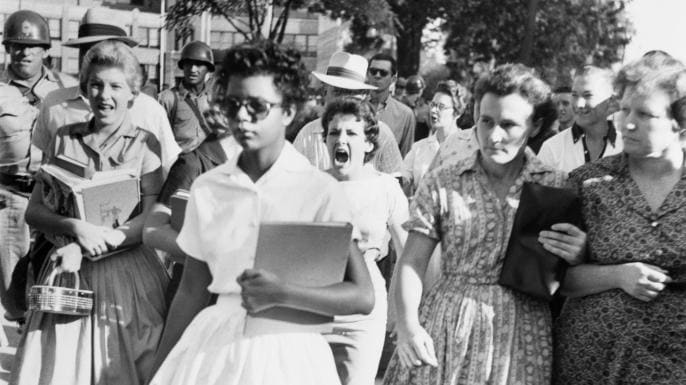
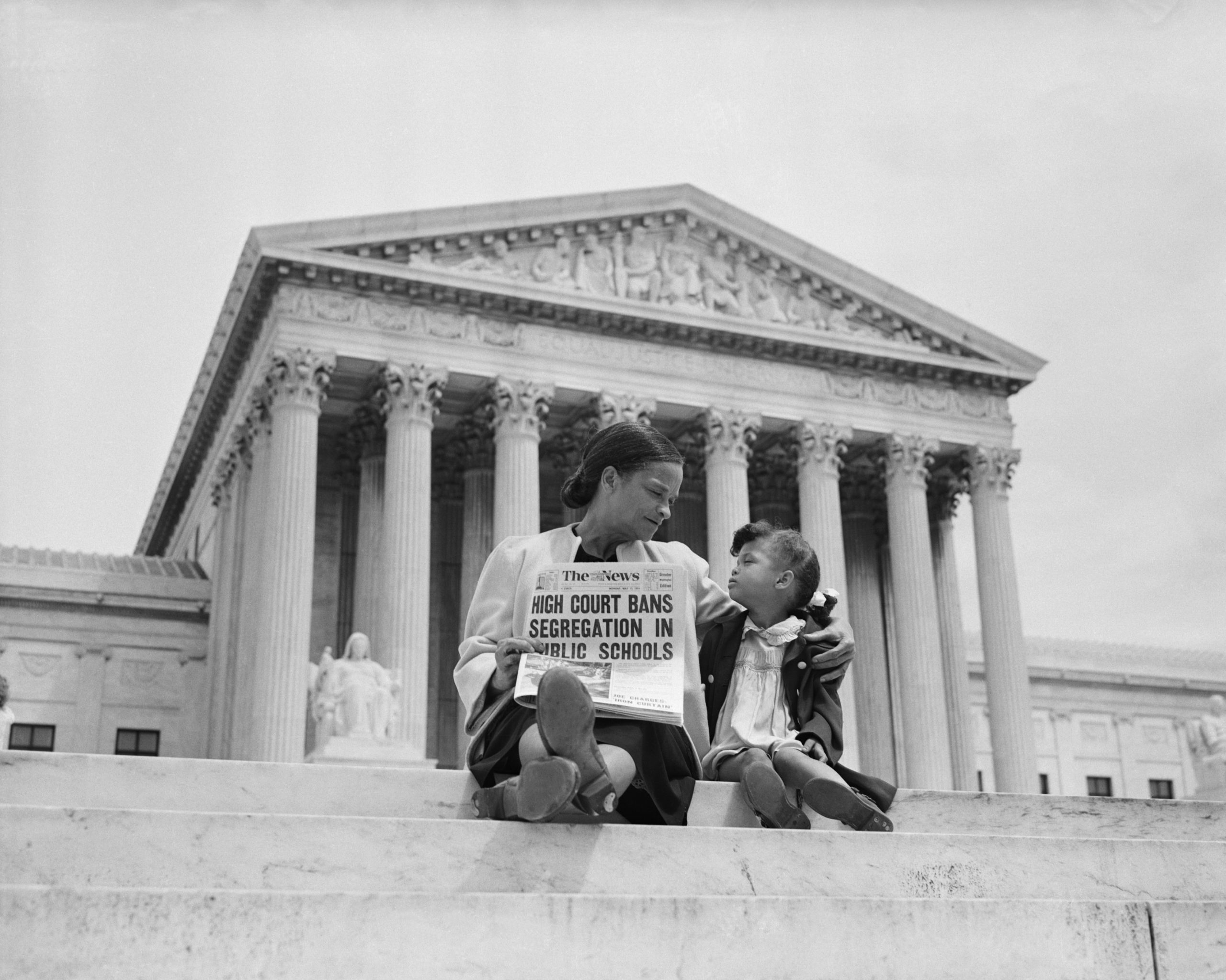
A white mob screaming at Black students (Little Rock, 1957). Mrs. Nettie Hunt sitting in front of the The Supreme Court building (1954).
Thesis:
The Brown decision, argued by Thurgood Marshall, revolutionized the U.S. by overturning over 50 years of legalized segregation in American schools. The decision divided the nation, bolstering the Civil Rights movement while sparking a reaction of Massive Resistance in the South. Although the decision was ordered by the Supreme Court, enforcing the ruling proved to be challenging and required reform.
Ruoyan Kang
Senior Individual Website
Website Word Count: 1188
Length of Multimedia: 2:24
Process Paper Word Count: 429