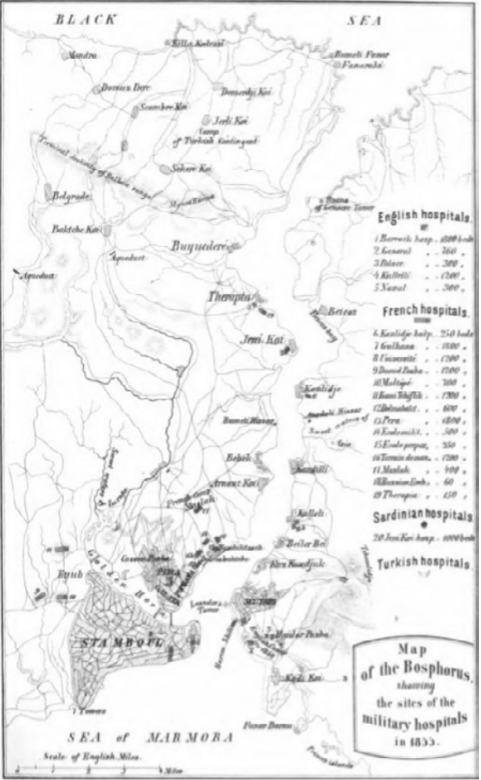
Map of the Military Hospitals for England, France, the Ottoman Empire, and Sardinia-Piedmont. Courtesy of Ugurgul Tunc, Lessons from the Crimean war: How hospitals were transformed by Florence Nightingale and others, 2019.
Map of the Military Hospitals for England, France, the Ottoman Empire, and Sardinia-Piedmont. Courtesy of Ugurgul Tunc, Lessons from the Crimean war: How hospitals were transformed by Florence Nightingale and others, 2019.
After studying at the Kaiserswerth Institution for Deaconesses in Germany, Florence Nightingale volunteered for the Crimean War in October 1954 and, on November 4th, 1954, arrived with 38 other nurses in a British base hospital named Selimiye Barracks Hospital in Scutari, which is now present-day Istanbul. Nightingale was sent to the hospital to try to improve the unsanitary conditions of the facilities and, overall, give aid to the wounded and sick soldiers fighting against the Russians. Despite the 5000 injured at peak moments, Nightingale and her other nurses managed and improved conditions in the facility.
"Florence had always been a person who made an impression. Her voice, manner, and conversation were striking, and though far from beautiful, she remained in people’s memories. She had charisma, and now everyone noticed."
-Anderson, Florence Nightingale: The Biostatistician, 2011.
"Late at night, when the other nurses had gone to bed and the night duty orderlies were usually asleep, Florence walked the four miles of wards with a small lamp in her hand, stopping to talk here and there to suffering soldiers. What began as an exploratory tour of inspection became a routine and then a ritual. Her nightly rounds captured the public’s imagination, and Longfellow immortalized her as the “lady with a lamp”."
-Anderson, Florence Nightingale: The Biostatistician, 2011.
Due to Nightingale’s work among the hospitals and barracks, she gained a lot of popularity and became known as the “Lady with the Lamp”.
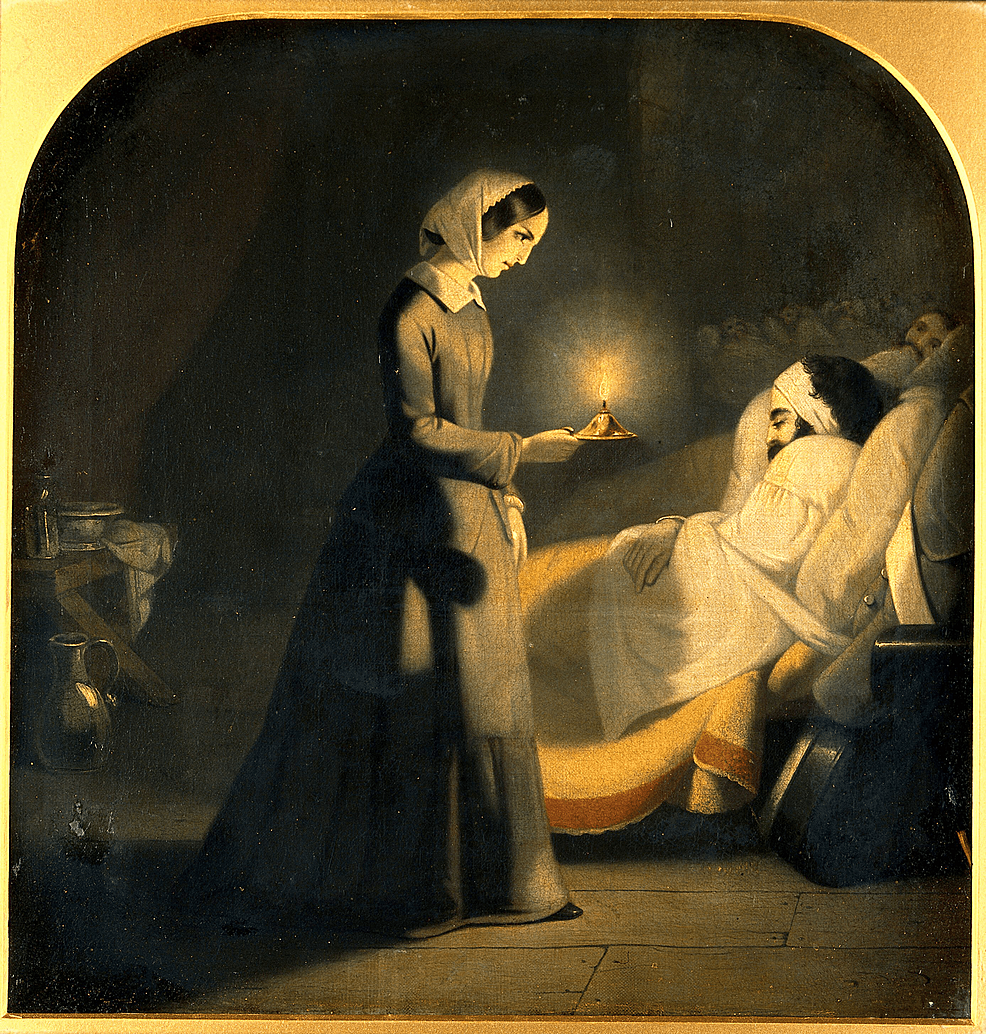
Portrait of Florence Nightingale doing nightly checks on wounded soldiers. Courtesy of Turkowski, Yana and Victor Turkowski, Florence Nightingale (1820-1910): The Founder of Modern Nursing, 2024.
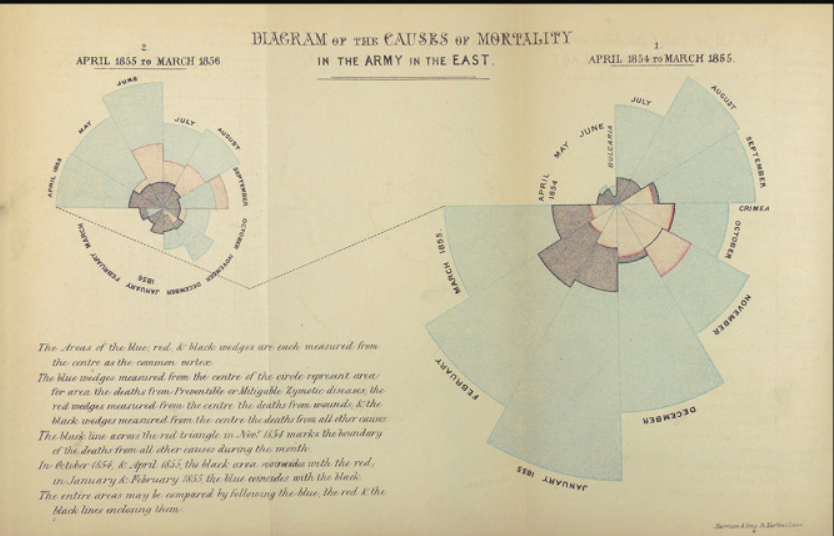
Fig 1, Florence Nightingale's polar chart of mortality rates during the Crimean War. Courtesy of McEnroe, Natasha, Celebrating Florence Nightingale's bicentenary, 2020.
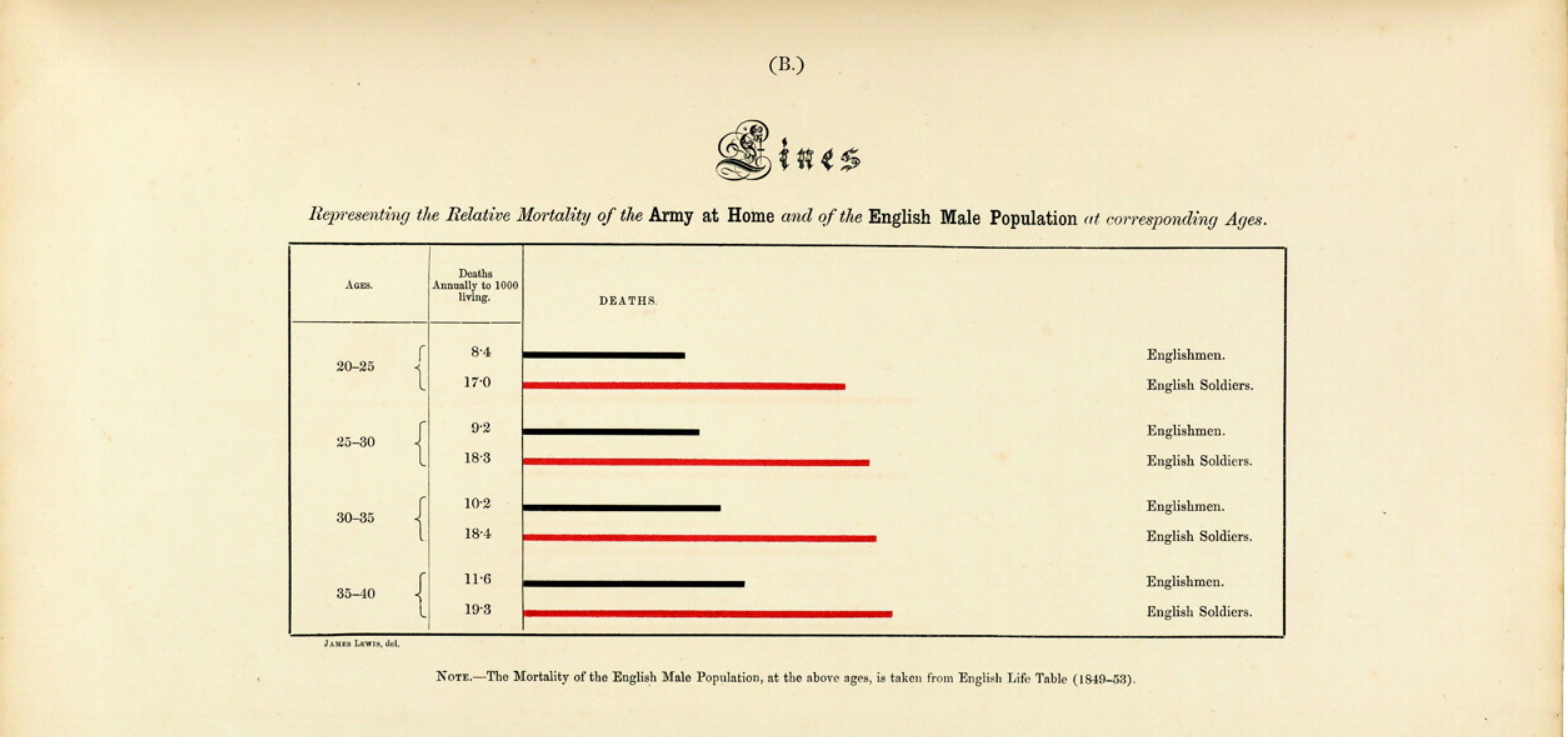
Fig 2, Florence Nightingale's "Lines" diagram for mortality rates during the Crimean War. Courtesy Anderson, Rebecca, Florence Nightingale: The Biostatistician, 2011.
During the war, to better analyze and visualize the difference in mortality rates, Florence Nightingale created the polar chart (Fig 1) and the “Lines” diagram (Fig 2). After the war, when the Royal Commission asked Nightingale for her experiences, she sent her diagrams to show how she and her nurses further improved conditions for military health care during the war. Nightingale also started to create many notes and publications to advocate for healthcare facilities and military healthcare, eventually getting the attention of Queen Victoria.
"Nightingale’s mortality data also dramatized the impact of improved sanitary conditions. In March 1855, her sanitary reforms began lowering hospital mortality, and by the end of the war, with the aid of the Sanitary Commission’s improvements, the annualized mortality rate had dropped to 13 per 1,000."
-Anderson, Florence Nightingale: The Biostatistician, 2011.
"She was further endorsed by Queen Victoria, ultimately strengthening her position with the military hierarchy and giving her more freedom to confront much needed health reform. Nightingale's work cannot be underestimated."
-Gilbert, Heather, Florence Nightingale's Environmental Theory and its influence on contemporary infection control, 2020.