BY ANY MEANS NECESSARY:
THE BLACK PANTHER PARTY'S IMPACT ON THE CIVIL RIGHTS MOVEMENT
BY ANY MEANS NECESSARY:
THE BLACK PANTHER PARTY'S IMPACT ON THE CIVIL RIGHTS MOVEMENT
FOUNDING
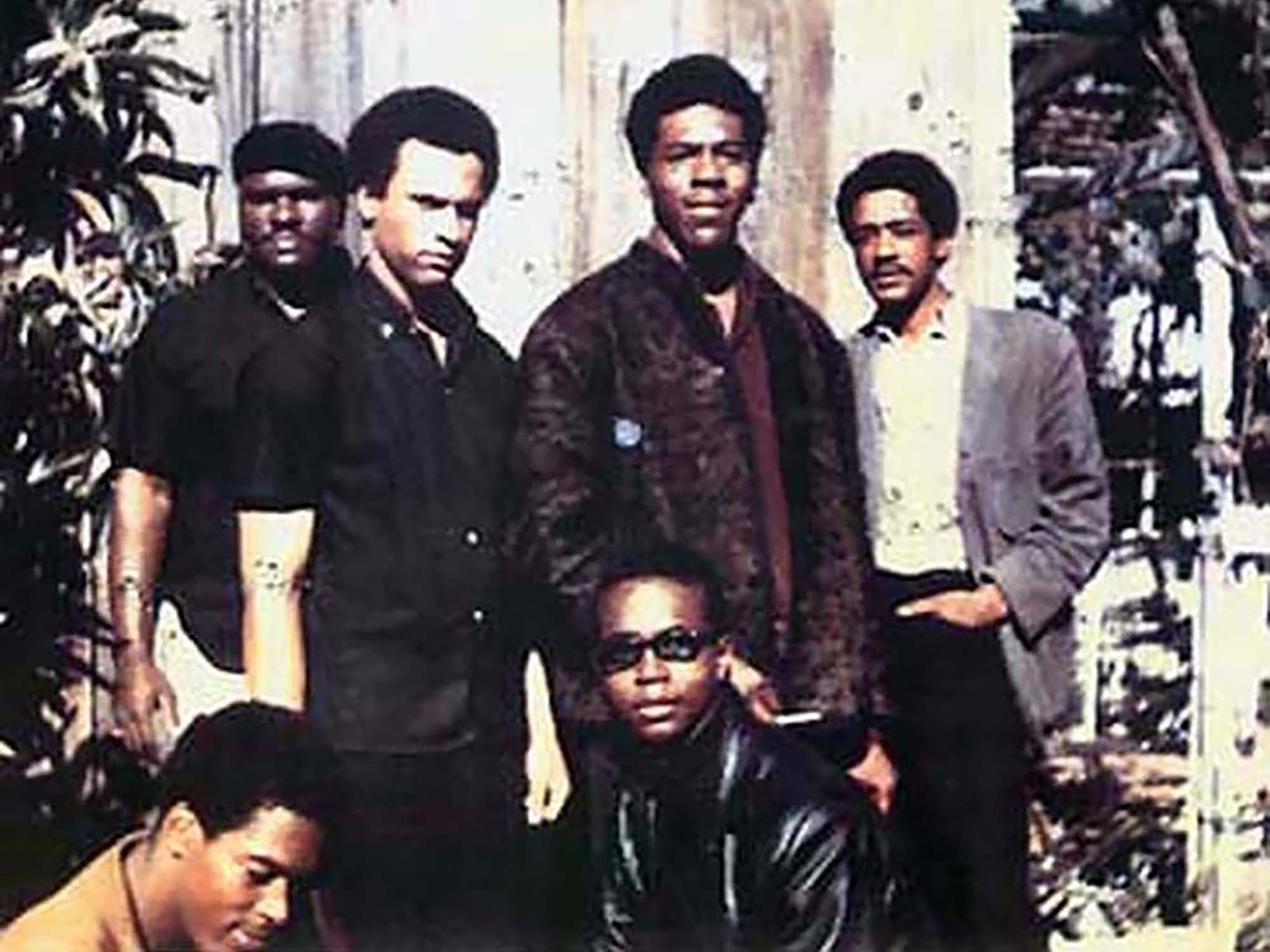
"Original six members of the Black Panther Party (November, 1966) Top left to right: Elbert "Big Man" Howard; Huey P. Newton (Defense Minister), Sherman Forte, Bobby Seale (Chairman). Bottom: Reggie Forte and Little Bobby Hutton (Treasurer)."
[Source: California African American Museum]
Founders Bobby Seale and Huey P. Newton, who were political activists from Oakland, California, used “public indignation” as an opportunity to gain popularity for the party and bring attention to their cause, believing in using violence only as a means of self-defense when confronted by police, but also saw guerrilla warfare as a potential strategy for social change.
“The first point was we wanted power to determine our own destiny in our own black community. And what we had done is, we wanted to write a program that was straightforward to the people. We didn't want to give a long dissertation.”
-Bobby Seale: Cofounder and Chairman of the Black Panther Party
They were inspired by Malcolm X and Martin Luther King Jr., developing an intellectual orientation that viewed the black community as a colony exploited by white businessmen, the government, and the police.
“If they had not murdered Malcolm X, there probably never would have been a Black Panther Party.”
-Bobby Seale: Cofounder and Chairman of the Black Panther Party
"Interview with Bobby Seale, conducted for “Eyes on the Prize II.” describes the founding of the Black Panther Party with Huey P. Newton in Oakland California."[Source: Washington University in St. Louis, 1990]
The Black Panther Party's dissatisfaction with capitalism was another key aspect of their platform, as they saw it perpetuating struggle and violence towards marginalized groups, believing that socialism and self-determination as favorable paths for social change.
“We Want An End to the Robbery By the Capitalists of Our Black Community.”
-The Ten-Point Program, 1966.