Mexican American Repatriation in the Great Depression: Courtesy of American History TV C-SPAN, 2024
The Beets of Betrayal: Mexican Repatriation and Exploitation of Betabeleros in the 1930s
Deportation
The Great Depression drove the Mexican "repatriation," a euphemism for deportation.
"When the Great Depression hit Michigan in 1929, the sugar industry almost collapsed. The Lansing Factory closed."
Ryan A. Huey, 2018
Before this collapse, migrants were brought up to work for the sugar beet season and then they went back (Haack, 2023). However, “In the 1930s, these migrant workers began to stay year-round in Michigan due to the Great Depression. Wages declined, and workers often did not have enough money to return south at the end of the season,” (Haack, 2023).
Americans tolerated them because they were a short-term tool to be used and then discarded, but when the economic instability of the Depression forced them to stay in Michigan, people turned on the Mexicans. Nativism became more powerful in the catastrophic economic climate.
"On the calender of President Hoover's law enforcement commission, these violations of the national immigration laws are said to be rated second only to the prohibition matter. In many vital points most patriotic Americans will say that ridding the country of smuggled aliens who have never been inspected for mental or physical diseases is of infinitely more importance than ridding the country of contraband liquor. A bottle of whiskey may damage one generation; a diseased or criminal alien who has gained entry in defiance of the law may damage several generations yet to come...since the quota laws [Johnson-Reed Act] were passed, Mexicans have been flocking into the United States to get the jobs hitherto taken by Europeans...they utterly disregard the American officers along the Rio Grande and steal into the country by hundreds of thousands."
Remsen Crawford, 1929
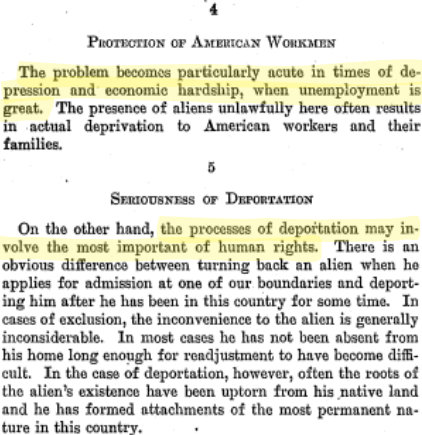
People thought that jobs in America should be for American citizens and that by removing the Mexicans, they would be creating jobs (Balderrama and Rodríguez, 2006). Along with worries about job growth, welfare also stirred up hatred against Mexicans during the Great Depression.
"In diverse places like Idaho and Montana, Nebraska and Iowa, and Minnesota and Michigan, the rate for working sugar beets fell from twenty-eight dollars to ten dollars an acre. At that wage, the dirty, backbreaking work did not provide a workman’s family with a decent livelihood."
Balderama and Rodríguez, 2006
Attempting to preserve jobs for citizens, the federal government banned foreigners from civil work or working for the federal government (Balderama and Rodríguez, 2006). Many Mexicans had to take welfare to survive.
“In an ironic twist of bureaucratic inaneness, in order to receive federal relief assistance American citizens had to agree to accept employment on federally funded work projects. At the same time, the federal government decreed that welfare allotments should be increased by 30 percent for those ‘for whom no Civil Work projects are available…or who, because of nationality, cannot take part on Civil Works projects.’ As a result, in some cases, the allotments received by aliens were larger than those of citizens forced to work for their welfare check. The inequity of the situation riled up many aid recipients, taxpayers, and lawmakers. It helped to fan the flames of the anti-alien feelings sweeping the country. Thus, Mexicans found themselves victims of a situation not of their own making."
Balderama and Rodríguez, 2006
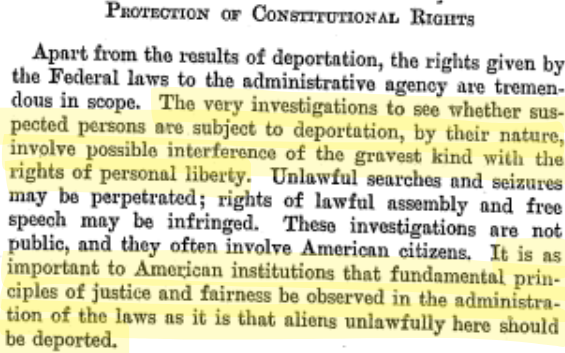
America, mostly on unregulated and coercive levels, deported more than a million people of Mexican descent back to Mexico. An estimated 60% of those deportees were American citizens (Balderama and Rodríguez, 2006). Yet, these people ought to have been protected by the Constitution of the United States.
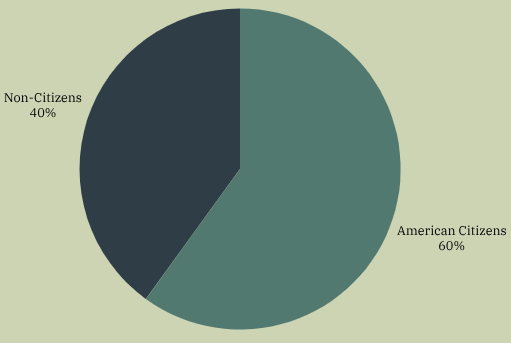
The deportation of American citizens is unconstitutional, specifically violating the 14th Amendment. Deporting citizens unjustly deprives them of their rights and discriminates on the basis of ethnicity, violating equal protection.
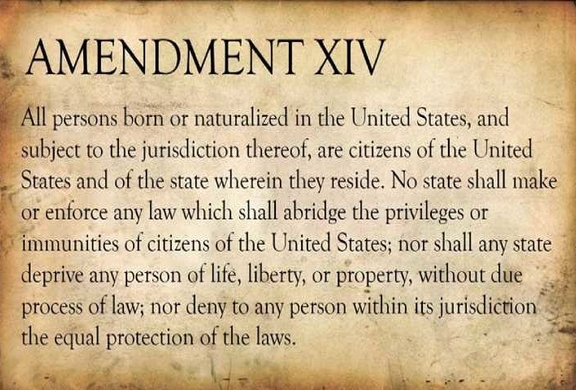
Understanding the Constitution: The Fourteenth Amendment: Part 1: Courtesy of Independence Institute, 2021
"Decade of Betrayal": How the U.S. Expelled Over a Half Million U.S. Citizens to Mexico in 1930s: Courtesy of Democracy Now, 2017
“Commendation is due Governor Brucker and all others who have had a part in making plans whereby 5,000 Mexicans may be returned from Michigan to their native lands with the effect of reducing the welfare burden in communities of this state and at the same time improving the lot of the Mexican themselves who undoubtedly will be happier at home than where they are at present."
Lansing State Journal, 1932
A significant number of these deportees came from the Michigan sugar beet fields. In 1933, the federal government, in cooperation with the state government, repatriated about 3,500 Mexicans (although the number was likely higher) from the Michigan beet fields (Lansing State Journal, 1935).
Wastefully, jobs were not created by deporting these laborers, yet it was done anyway because it was easier for the government to find a scapegoat than it was for them to deal with the economic disaster on their hands.
"...even in the middle of the Depression in 1935, most white workers refused to work in the beet fields for the $1.40 a day that farmers typically paid migrant workers."
Ryan A. Huey, 2018
This proves that the migratory labor framework set up in the years preceding the Great Depression was never built to give rights to laborers or to place responsibility on the government and companies benefitting from their labor. It was built to exploit them, to ship them in and then ship them out again seemingly without repercussions, yet the economic impacts of the deportations harmed more than the migrants.
"Analyzing 893 cities using full count decennial Census data in the period 1930-40, we find that repatriation of Mexicans was associated with small decreases in native employment and increases in native unemployment."
Lee et al., 2017
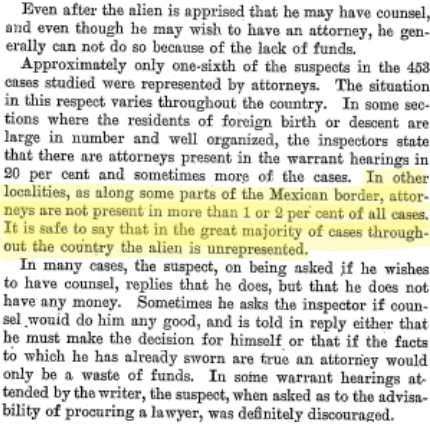
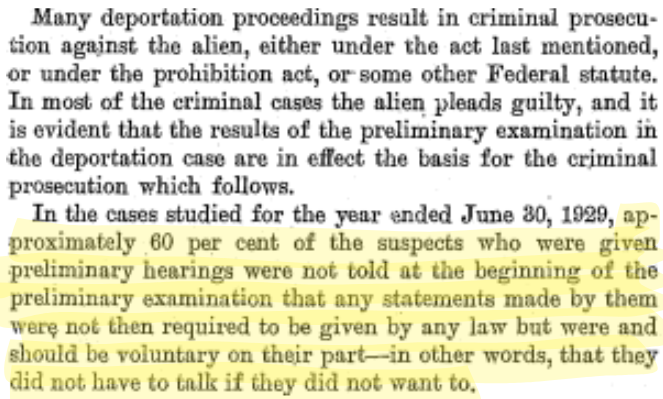
(Report on the Enforcement of the Deportation Laws of the United States, 1933)
Different perspectives on the government's right to deport illegal aliens, treatment of aliens before proved illegal, and just deportation of illegal immigrants without violating their rights.