Legacy
The Champaran Satyagraha inspired future movements in India and the United States.
Impact in India
The Champaran Satyagraha was Gandhi’s first civil disobedience movement in India. Its success established his credibility as a leader for several future satyagrahas.
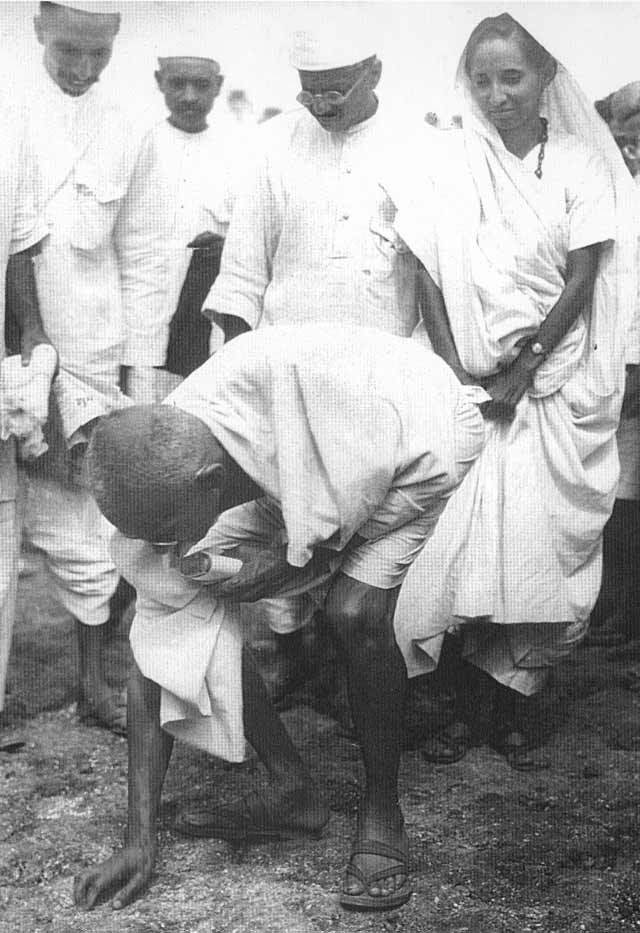
(Watkins, Mahatma Gandhi Picking up Salt during the Salt March)
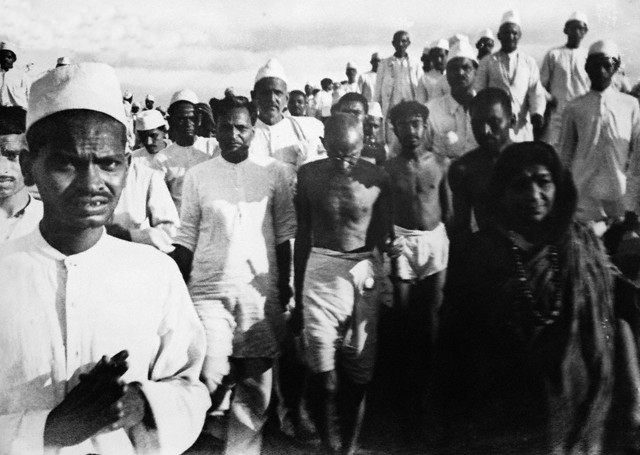
(Watkins, Mahatma Gandhi Leading the Salt March)
Gandhi’s Subsequent Major Satyagrahas in India:
- 1919: Rowlatt Satyagraha
- Nationwide satyagraha opposing the Rowlatt Act, which permitted detention without trial and curtailed civil liberties (Wolpert)
- Nationwide satyagraha opposing the Rowlatt Act, which permitted detention without trial and curtailed civil liberties (Wolpert)
- 1930: Salt March
- Satyagraha against the British-imposed salt tax with millions of followers, a revolution in political change for Indians ("Salt March")
- Satyagraha against the British-imposed salt tax with millions of followers, a revolution in political change for Indians ("Salt March")
- 1942: Quit India Movement
- Revolutionary call for British withdrawal from India during WWII, met with widespread repression and arrests, resulting in Indian independence (Wolpert)
“ But let there be not a semblance of breach of peace even after all of us have been arrested. We have resolved to utilize all our resources in the pursuit of an exclusively nonviolent struggle…Wherever possible, civil disobedience of salt should be started…A Satyagrahi, whether free or incarcerated, is ever victorious. He is vanquished only, when he forsakes truth and nonviolence” -Mahatma Gandhi ("Dandi March")
“ Ours is not a drive for power, but purely a nonviolent fight for India's independence…I have traveled all over India as perhaps nobody in the present age has. The voiceless millions of the land saw in me their friend and representative” -Mahatma Gandhi ("Quit India Speech")
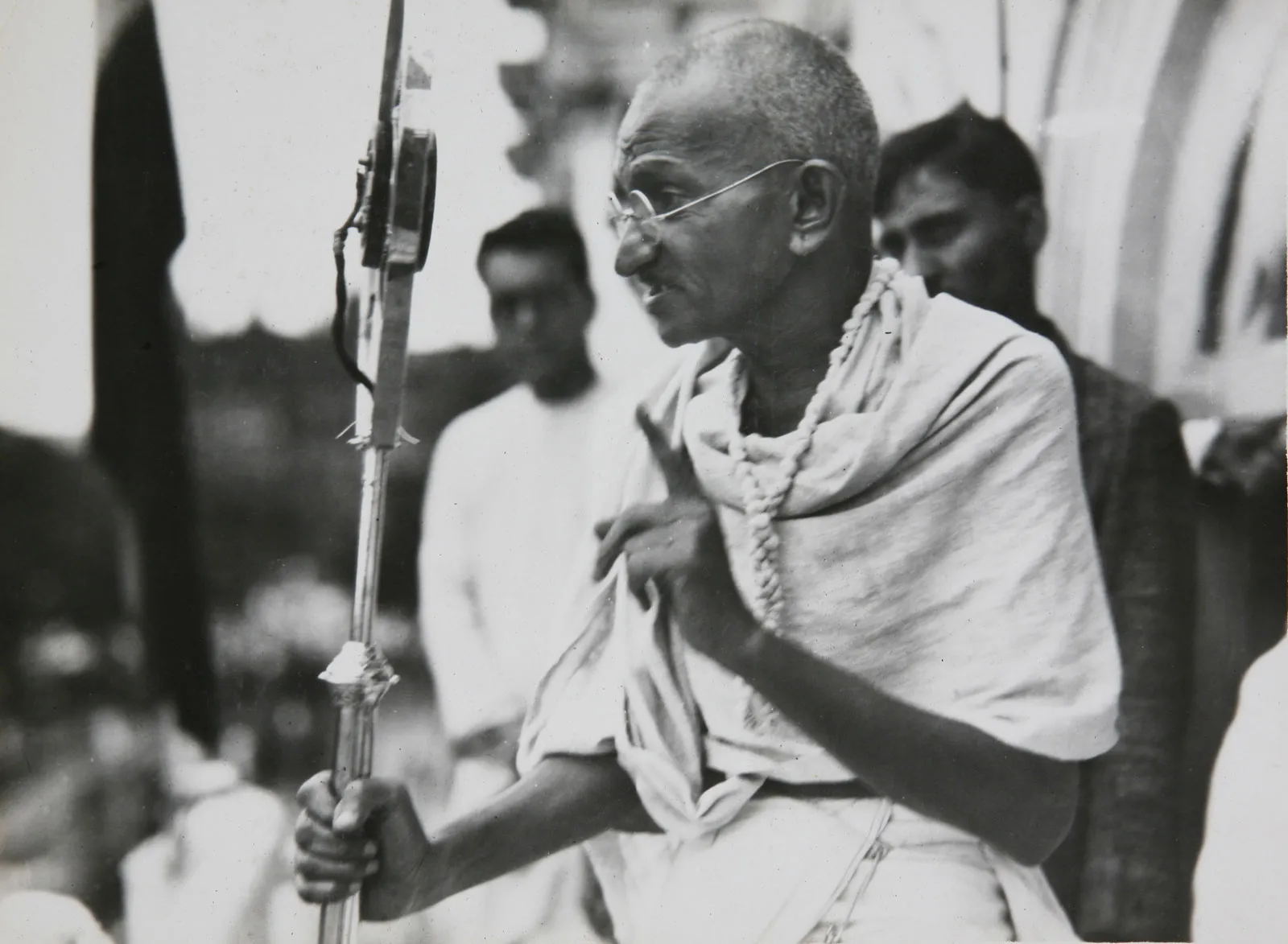
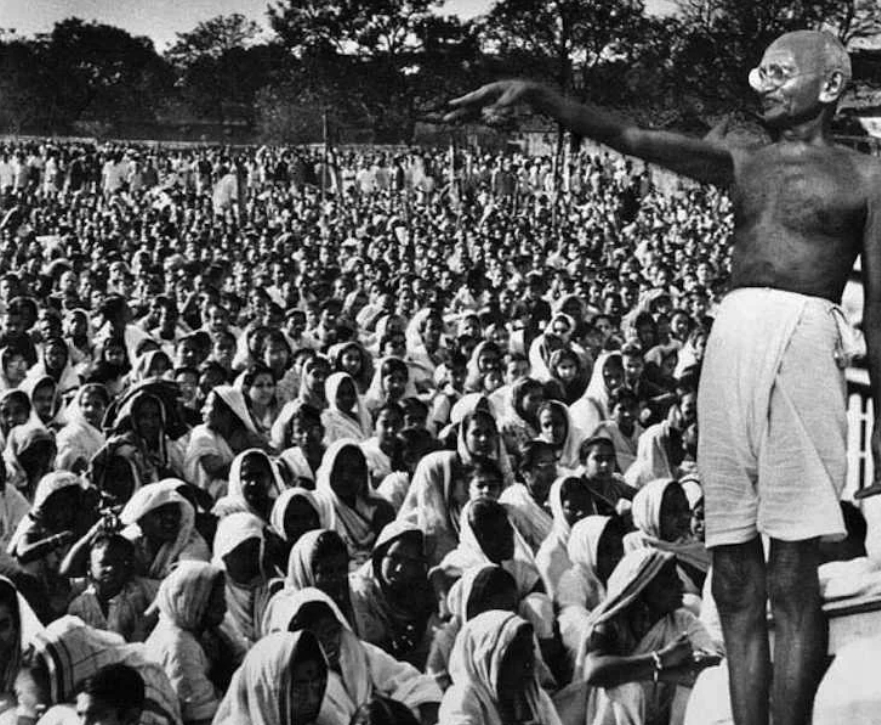
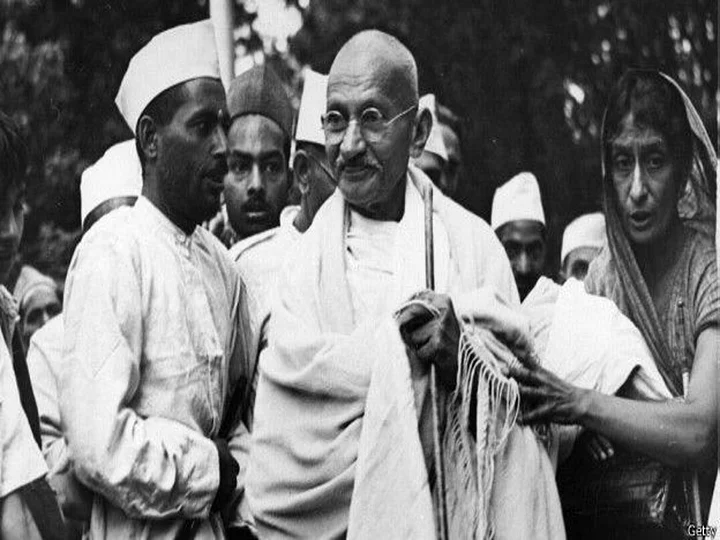
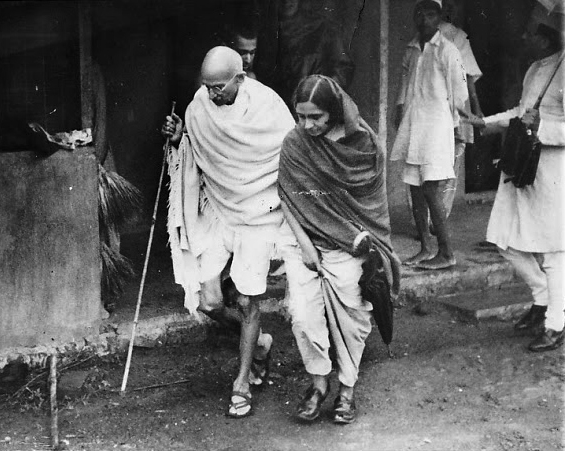
1st Image: (Kulik, Mahatma Gandhi)
2nd Image: ("Mahatma Gandhi: 'It is to Join a Struggle for Such Democracy that I Invite you Today', 'Quit India' - 1942")
3rd Image: (Singh, Mahatma Gandhi during the Quit India Movement)
4th Image: ("Mahatma Gandhi with a Bamboo Staff Strolling through the Village with Assistance by a Woman Congress Worker - 1942")
Impact in the USA
Martin Luther King Jr., a leading figure in the United States Civil Rights Movement, drew inspiration from Gandhi’s satyagraha approach. After traveling to India in 1959 to study Gandhi, King strengthened his belief in nonviolent resistance. ("Martin Luther King Jr.'s use of nonviolence inspired by Gandhi").
"I left India more convinced than ever before…non-violent resistance is the most potent weapon available to oppressed people in their struggle for freedom" - Martin Luther King Jr. ("My Trip to the Land of Gandhi")
Like Gandhi, he used civil disobedience by organizing and participating in sit-ins, boycotts and marches combating racial segregation and discrimination ("Martin Luther King Jr.'s use of nonviolence inspired by Gandhi").
"While the Montgomery boycott was going on, India’s Gandhi was the guiding light of our technique of non-violent social change" - Martin Luther King Jr. ("My Trip to the Land of Gandhi")
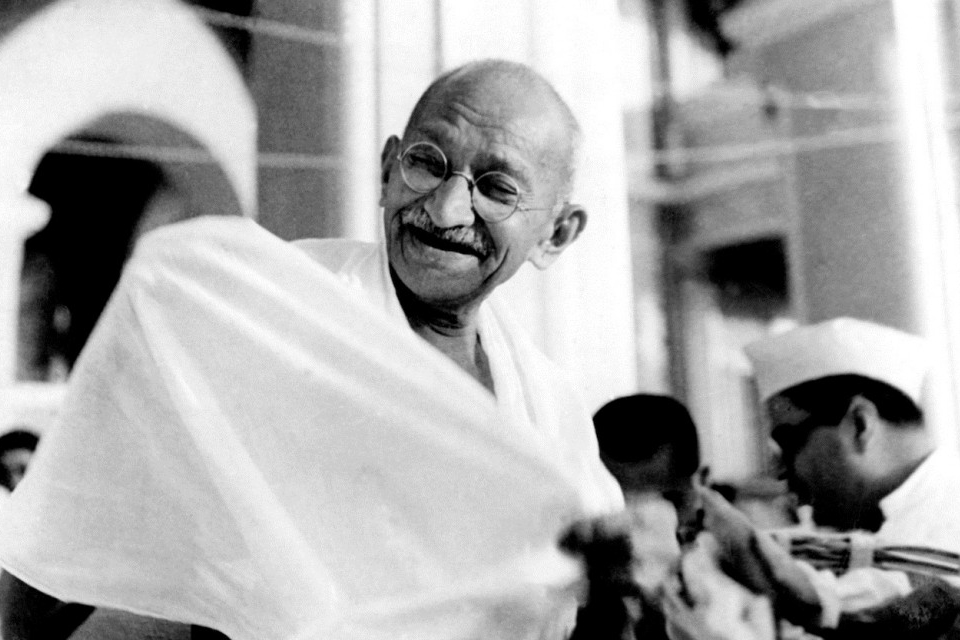
(Treadell, Photograph of Mahatma Gandhi Smiling)
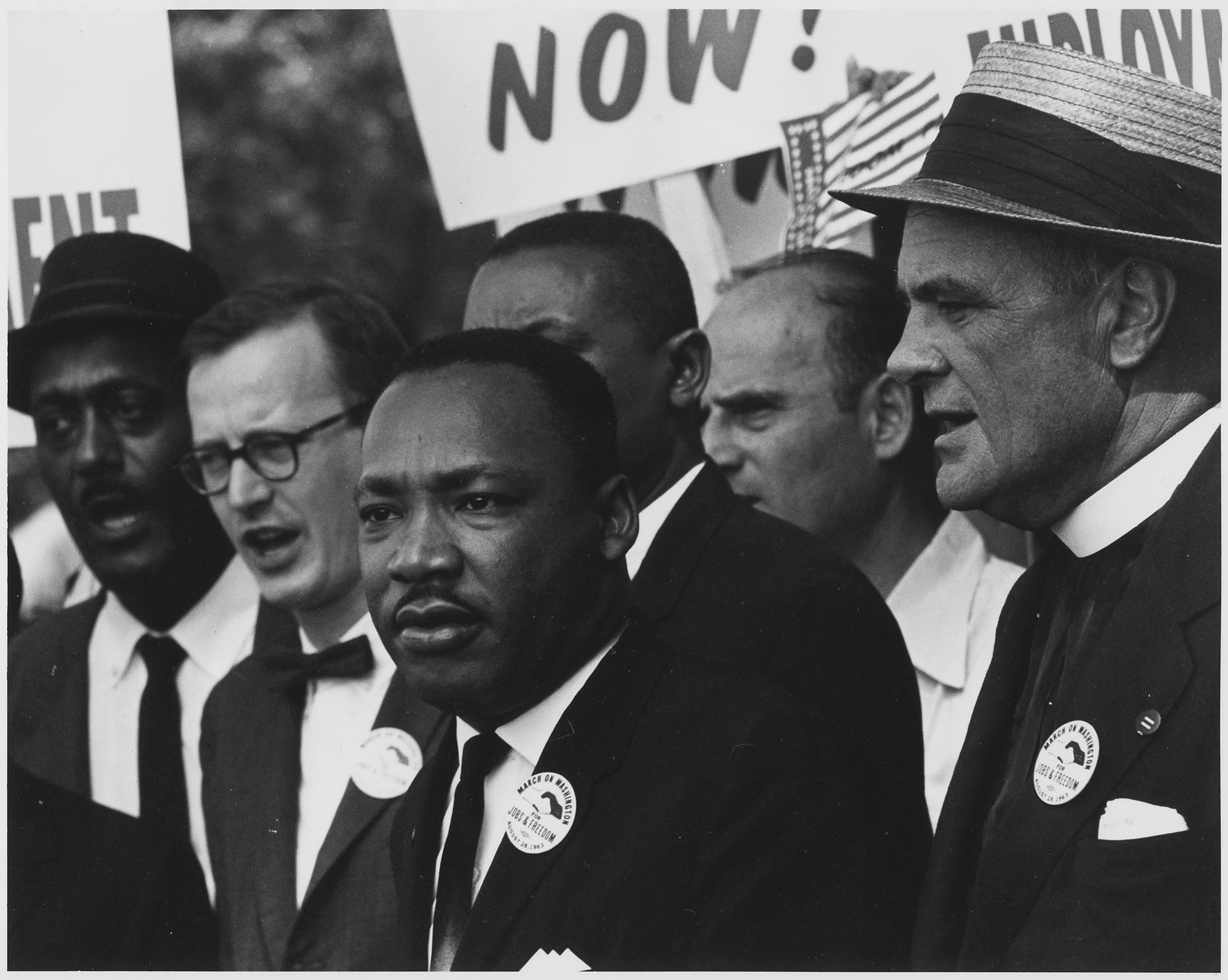
Dr. Martin Luther King Jr. and Other Civil Rights Leaders at the March on Washington, 1963 (Scherman)
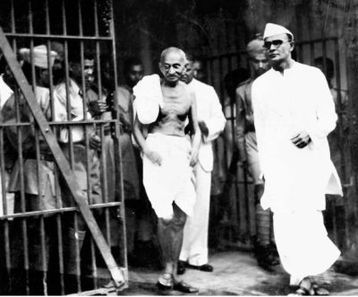
("Mahatma Gandhi was charged with sedition 95 years ago: All about the sedition law")
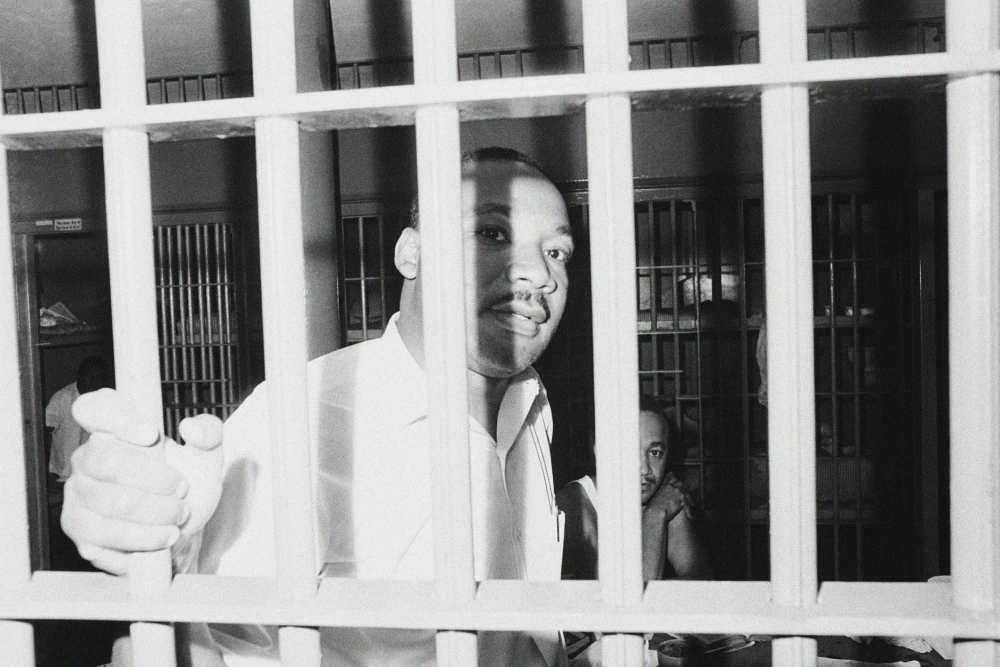
(Love, Martin Luther King Jr. in His Cell at the St. John's County Jail in St. Augustine, Fla., 1962 )