Traditional China
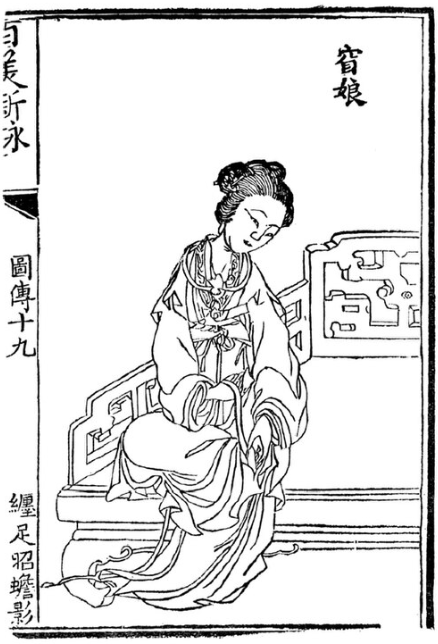
Context : Foot-binding was inspired by a 10th century elite dancer named Yao Niang, who danced on bound feet. Other court ladies took on the tradition and it spread quickly. Many women were forced to bind their feet in order to keep them at home and make their walks look delicate. It was a symbol of their oppression.
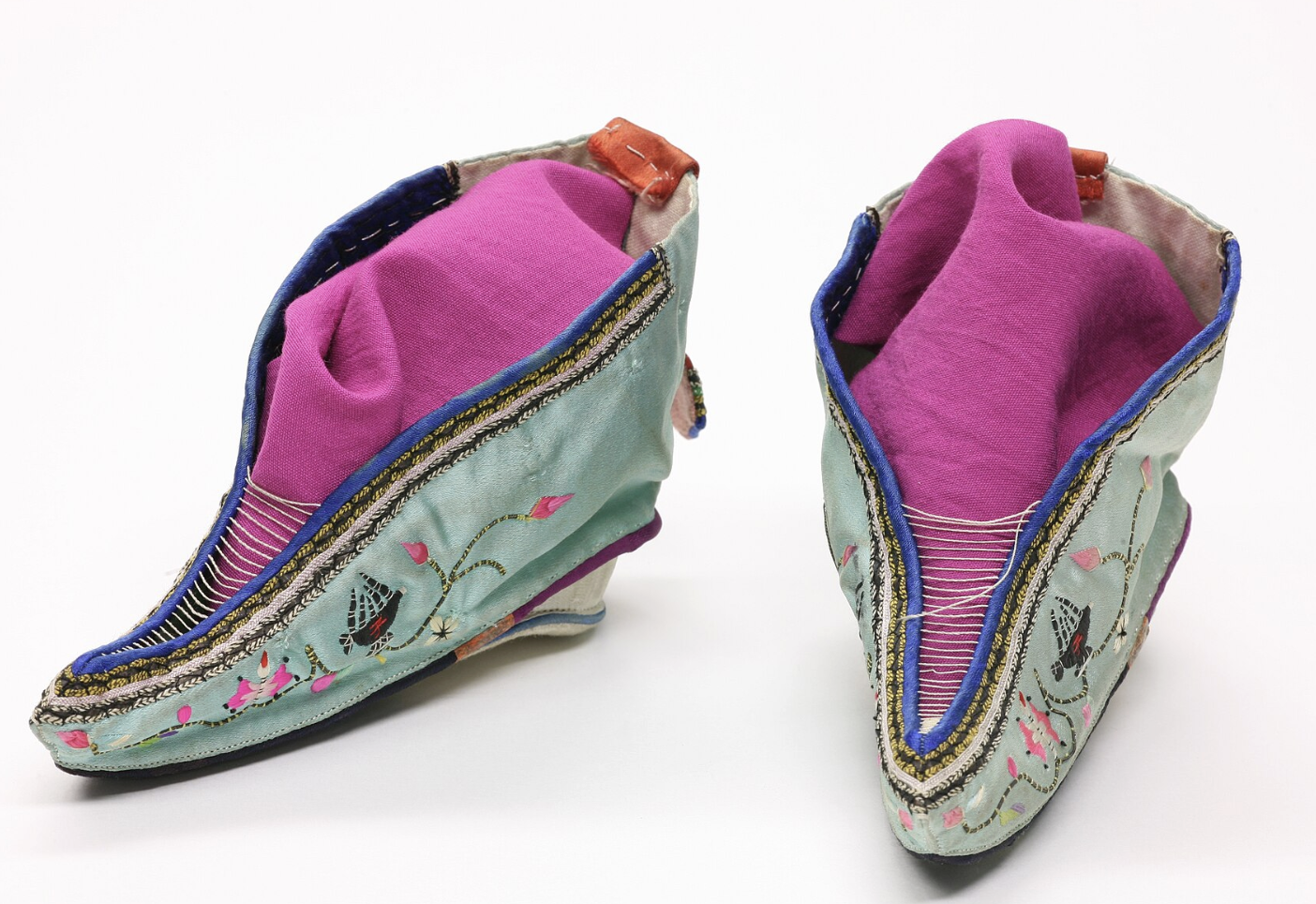
Creator unknown, 1911, The Children's Musuem of Indianapolis
True meaning
"The custom marked a high status because it meant the girl would never have to work. The delicate, but practically useless little feet were also considered a feature of great beauty. The practice gradually spread beyond the elite."
John Dudgeon, The Small Feet of Chinese Women, 1869
"It symbolized a girl’s willingness to obey, just as it limited the mobility and power of females, kept women subordinate to men, and increased the differences between the sexes."
Brittanica editors, "Taiping Rebellion", 2013
Physical
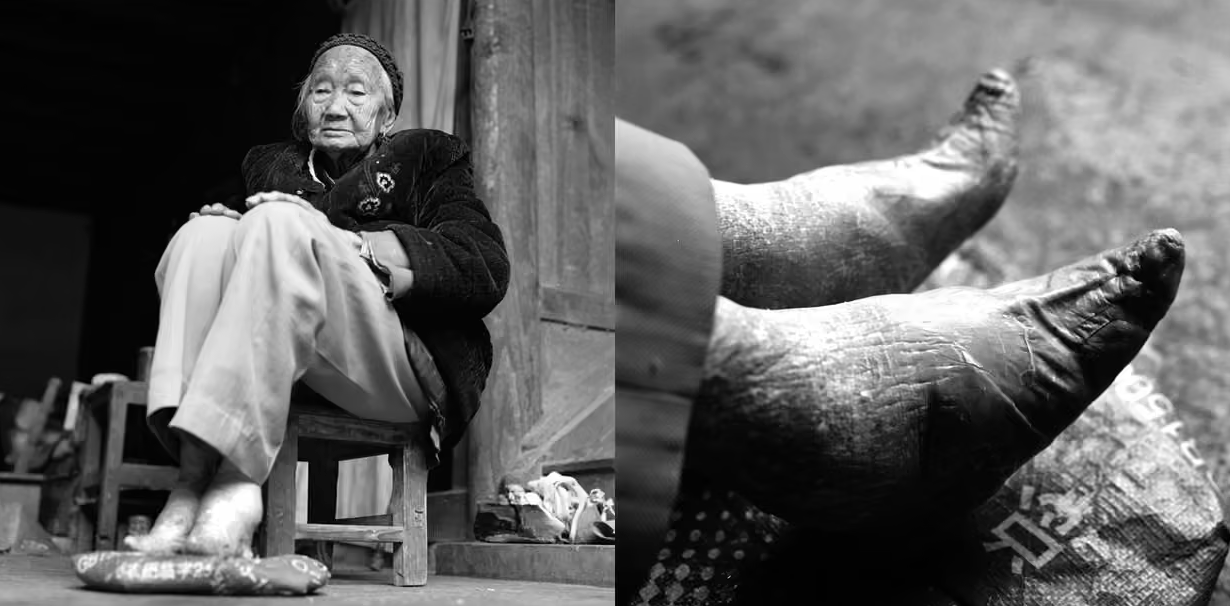
"I was seven years old...mother bound my feet tightly...it would eventually break the bones"
Interview of Luochuan, Shaanxi, October 19, 2008. In Bound Feet, Young Hands, by Lauren Bosson and Hill Gates, Stanford University Press, 2017