Women in Military

Gender Reforms Within the
​​​​​​​Taiping Rebellion

Women in Military

The Taiping army recruited women for their strength and abilities, and many women joined as a way to fight for their rights. Female soldiers were treated as equals to men, making their participation a revolutionary rejection of traditional Chinese gender roles.

Traditional China

Before the Taiping Rebellion, it was uncommon for women to serve in the military. Those who did were not treated as equals and were not respected enough.


"In traditional China, both military affairs and heavy labour were considered men's work. The Taiping women's quarters proved that women could fullfil military duties."
Yuh-Chen, The Position of Women in Taip'ing Tien-kuo, 1971 ​​​​​​​

"In ancient China, few women had their names recorded in history books for heroic deeds."
Sun Jiahui, Qin Liangyu: Ancient China's Unstoppable Female General, 2024
Heavenly Kingdom reforms

The Taiping Rebellion allowed women to fight in the military because they wanted to promote gender equality, but also because they realized they could use the help.


“Officials were recruited...open to women as well. It was a sign of the regime’s support for gender equality."
Zhang Ke, Taiping Rebellion, Academy of Chinese Studies

"Women were allowed to enlist in the Taiping Army. These female soldiers were the equal of their male counterparts."
Zhang Ke, Taiping Rebellion, Academy of Chinese Studies

"His mother is a general of the women's Fourth Rear Army. His wife holds a position in the office of the court."
Jonathan D. Spence, God's Chinese Son: The Taiping Heaveny Kingdom of Hong Xuiqan, W.W Norton & Company, 1996


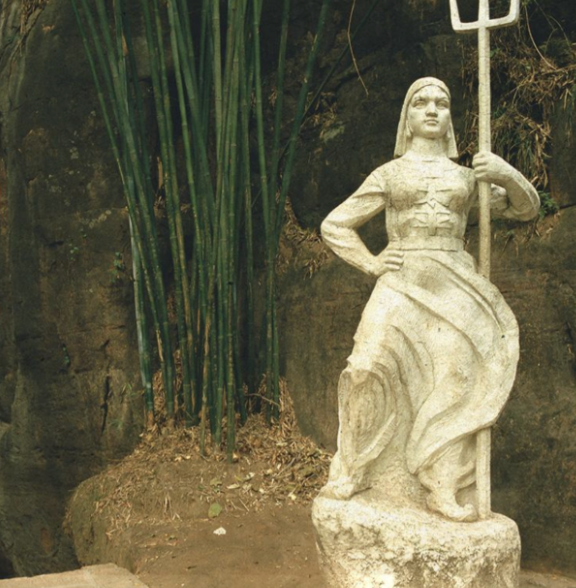
Artist unknown, created during Taiping Rebellion (1850-1864), sculpture of Taiping female warrior, Academy of Chinese Studies


"Very many of the women accompany their husbands upon military expeditions, inspired with enthusiasm to share the dangers and severe hardships of the battle-field."
Augustus Lindley, Ti-Ping Tien-Kwoh: The History of the Ti-Ping Revolution, Including a Narrative of the Author's Personal Adventures, 1866

"Hsiao San-niang was known as the ‘woman commander’. She was a great general on horseback, and could shoot an arrow with either hand…she led several hundred women soldiers."
Yuh-Chen, The Position of Women in Taip'ing Tien-kuo, 1971 ​​​​​​​

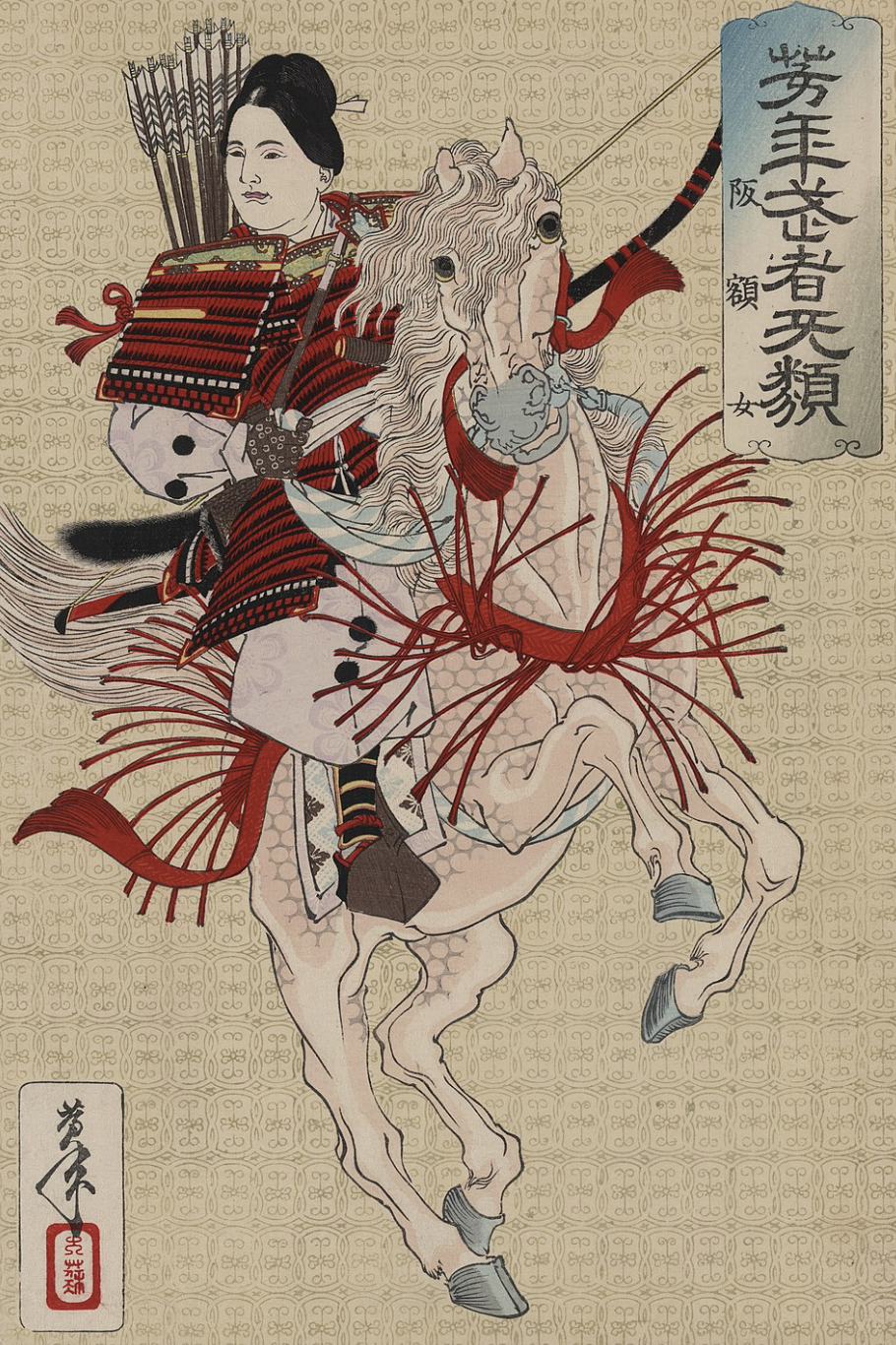
Hangakujo, the female warrior samurai.

Yoshitoshi, 1885, woodcut print, exhibited at the Library of Congress