Rebellion Overview

Gender Reforms Within the
​​​​​​​Taiping Rebellion

Rebellion Overview

The Taiping Rebellion was a revolution that attempted to replace the Qing rule with a new order, provoking intense reactions from both the Qing dynasty and strict Confucian followers.

Beginning/before the rebellion

1814 - Hong Xuiqan is born in Hua County, Guangdong


1837 - Hong "Had a series of visions and believed himself to be the son of God, the younger brother of Jesus Christ, sent to reform China."
Brittanica editors, "Taiping Rebellion", 2013

​​​​​​​

1845-1847 - "Hong’s writings Instructions on the Original Way to Save the WorldInstructions on the Original Way to Awake the World and Instructions on the Original Way to Make the World Realise were used as the doctrine of the Society."                                                                  Zhang Ke, "Taiping Rebellion", Academy of Chinese Studies, last updated 2025​​​​​​​

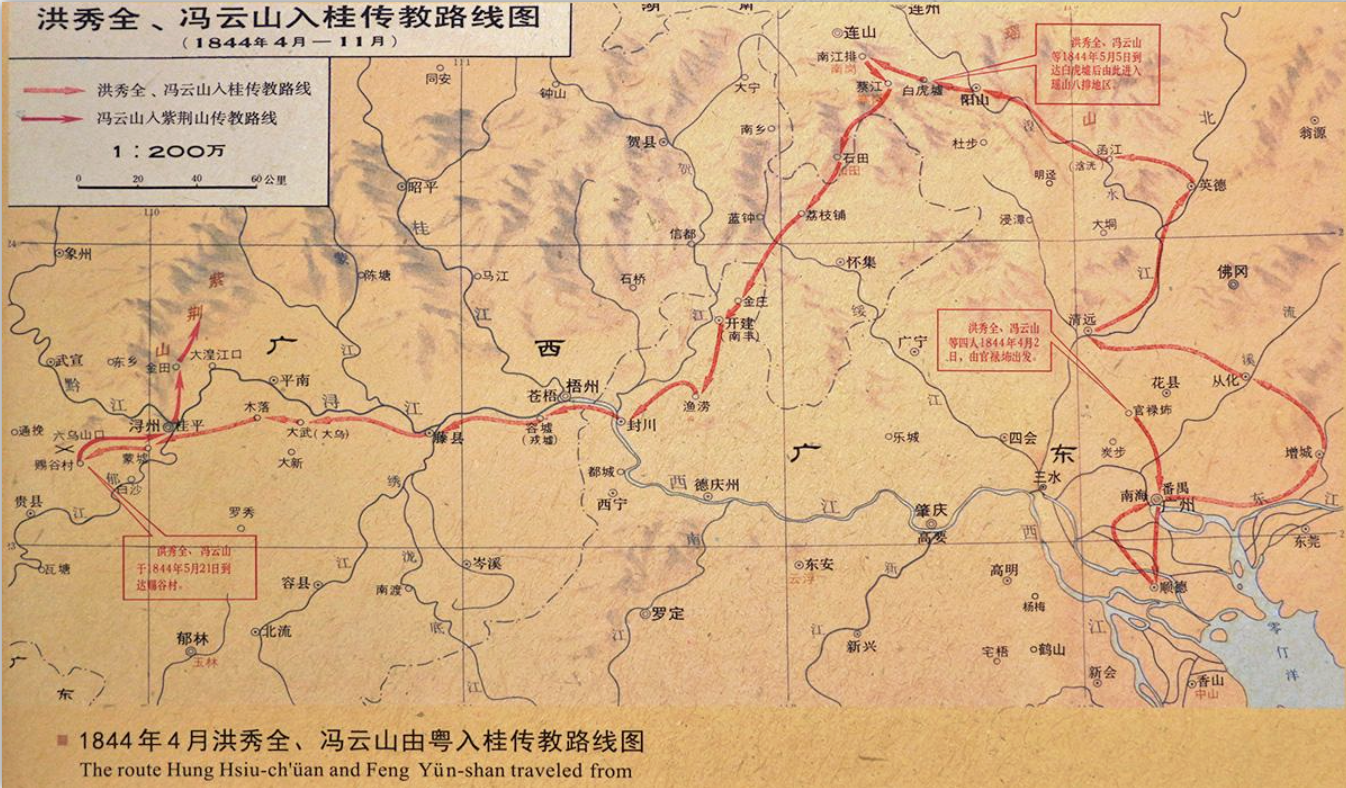
1847 - Hong and his friend Feng Yunshan travelled to Guangxi to spread                   their ideas and wrote the principles of the kingdom.

"Their credo—to share common property—attracted many famine-stricken peasants, workers, and miners, as did their propoganda against the foreign Manchu rulers."                                                                                    Brittanica editors, "Taiping Rebellion", 2013

"The God worshipping society spread the concepts such as equality and salvation, which attracted many lower-class people."                                      Zhang Ke, "Taiping Rebellion", Academy of Chinese Studies, last updated 2025

"The Book of Heavenly Commandments...there were 10 major precepts that believers must obey and the religious rites they must perform."                      Zhang Ke, "Taiping Rebellion", Academy of Chinese Studies, last updated 2025
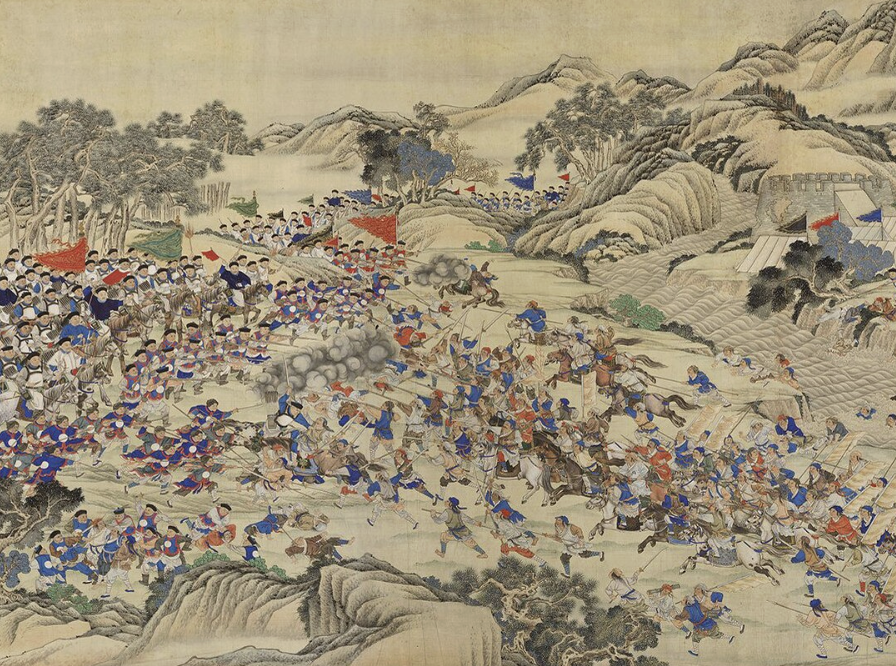

Wu Youru,  A Scene of the Taiping Rebellion at Nanjing, 1886


Height of the rebellion

1855 - They continued taking parts of China, but there was internal struggle. "Yang Xuiqing, claimed that God wanted Hong dead. The plot was thwarted, Yang was beheaded and his family members slaughtered."                         Amanda Onion and Matt Mullen, "Taiping Rebellion: Causes, Definitions, and Death Toll", History.com, 2018

​​​​​​​

1857 - 1858 - "The Xiang Army (Qing army) waged a fierce battle both on land and at river against the Taiping army Jiujiang." The Taiping army lost.         Zhang Ke, "Taiping Rebellion", Academy of Chinese Studies, last updated 2025                              


1860 - "An attempt by the Taipings to regain their strenght by taking Shanghai was stopped by the Western-trained 'Ever Victorious Army' commanded by...Fredrick Townsend Ward."                                                                     Amanda Onion and Matt Mullen, "Taiping Rebellion: Causes, Definitions, and Death Toll", History.com, 2018


1862 - After attacking many Taiping-occupied cities, the Western Army and Qing army, led by Zeng Guofan, surrounded Nianjing
​​​​​​​


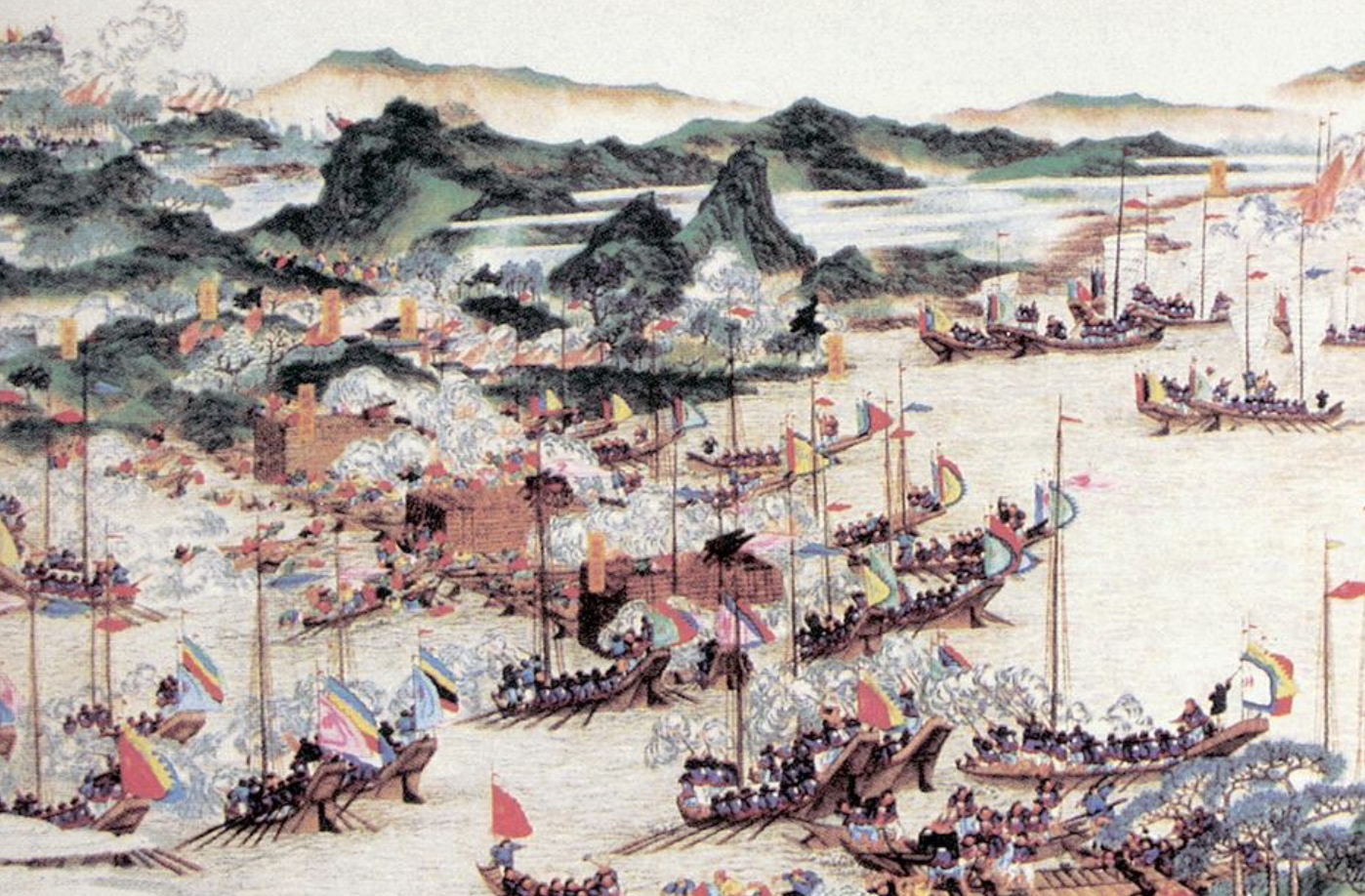
Wu Youru, A Battle Scene in Tianjia Town Final Battle 1869
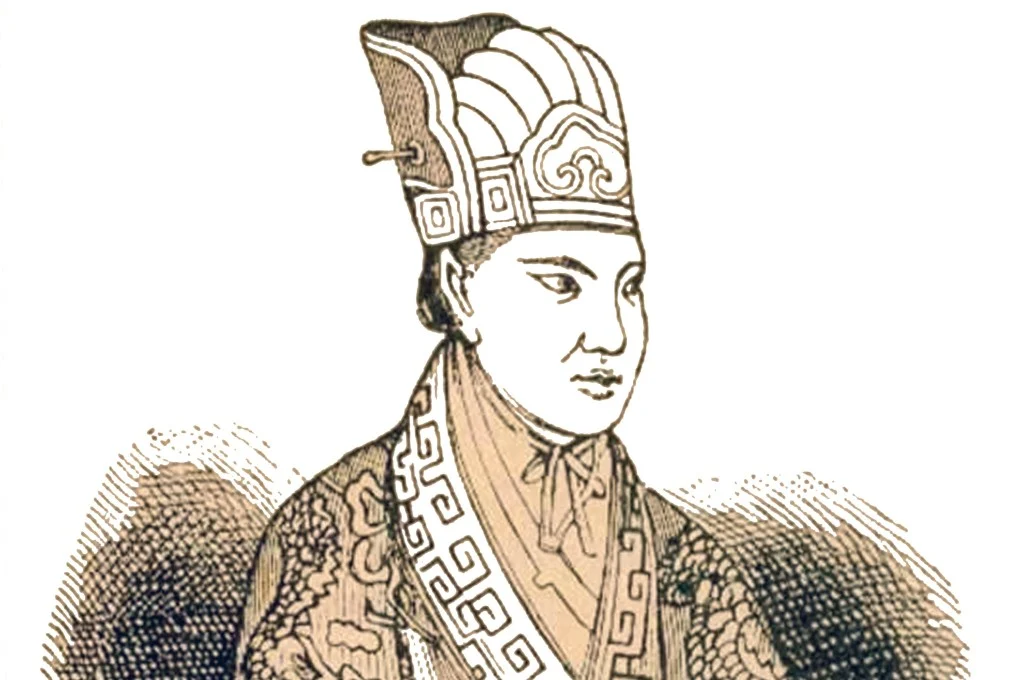

Alleged Illustration of Hong Xuiqan, taken from Chinese woodblock prints, published in European book, Ford & West Lith, 1853


Artist unknown, Map of the Route Hong and Feng Took to Quangxi, 1844, from Academy of Chinese Studies


Beginning flame of the rebellion

1851  -  "They proclaimed the establishment of the Taiping Heavenly Kingdom...under the rule of Hong, the Heavenly King. They began to call themselves the Taiping Army, the army of great peace."​​​​​​​
Zhang Ke, "Taiping Rebellion", Academy of Chinese Studies, last updated 2025


1852 - "Taiping ranks swelled, and they increased from a ragged band of several thousand to more than one million totally disciplined and fanatically zealous soldiers."​​​​​​​                                                                                                  Brittanica editors, "Taiping Rebellion", 2013


1853 - They captured the eastern city of Nanjing, renamed the city Tianjing (Heavenly Capital)​​​​​​​


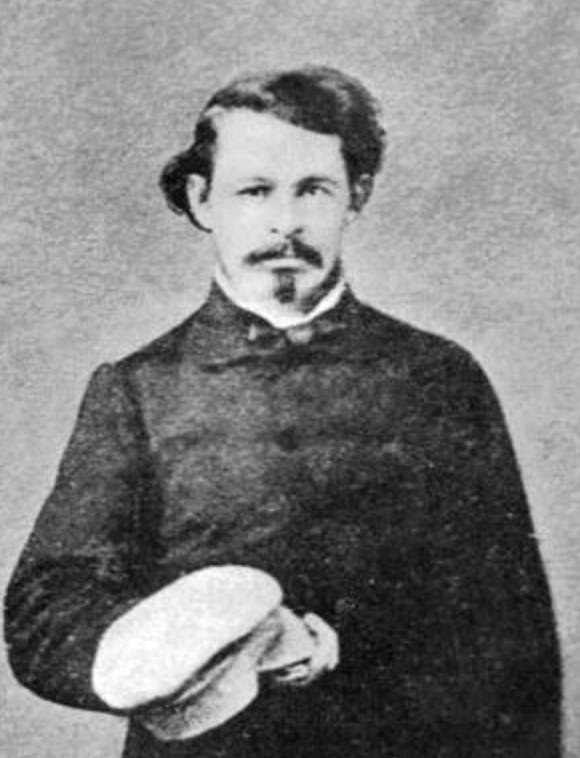
Image of Fredrick Townsend Ward, Commander of the "Ever Victorious Army", 1861, author unknown


End of the rebellion

June 1864 - Hong supposedly died of illness, but it may have been suicide


July 1864 - "The Xiang Army managed to breach the walls...the Heavenly Kingdom of Great Peace came to an end."                                                       Zhang Ke, "Taiping Rebellion", Academy of Chinese Studies, last updated 2025

"After making their way into Tianjing, the Xiang Army ravaged the city by plundering, burning, and slaughtering, subjecting the people to unspeakable horrors."                                                                                                           Zhang Ke, "Taiping Rebellion", Academy of Chinese Studies, last updated 2025

"With the loss of our heroic King, the morale and might of our army fell at once, totally crumbling."                                                                                    Warrior Chen Yuncheng, a lianhuanhua, 1970, in Zhang Ke, "Taiping Rebellion", Academy of Chinese Studies, last updated 2025