Impact
The Kindertransport
| Scale of the Kindertransport |
While the Kindertransport is most recognized for the 10,000 children that were taken to Britain, it is also a vague term that refers to any smaller child rescue efforts. After the British Kindertransport, other Kindertransports brought children to European nations such as the Netherlands and Sweden.
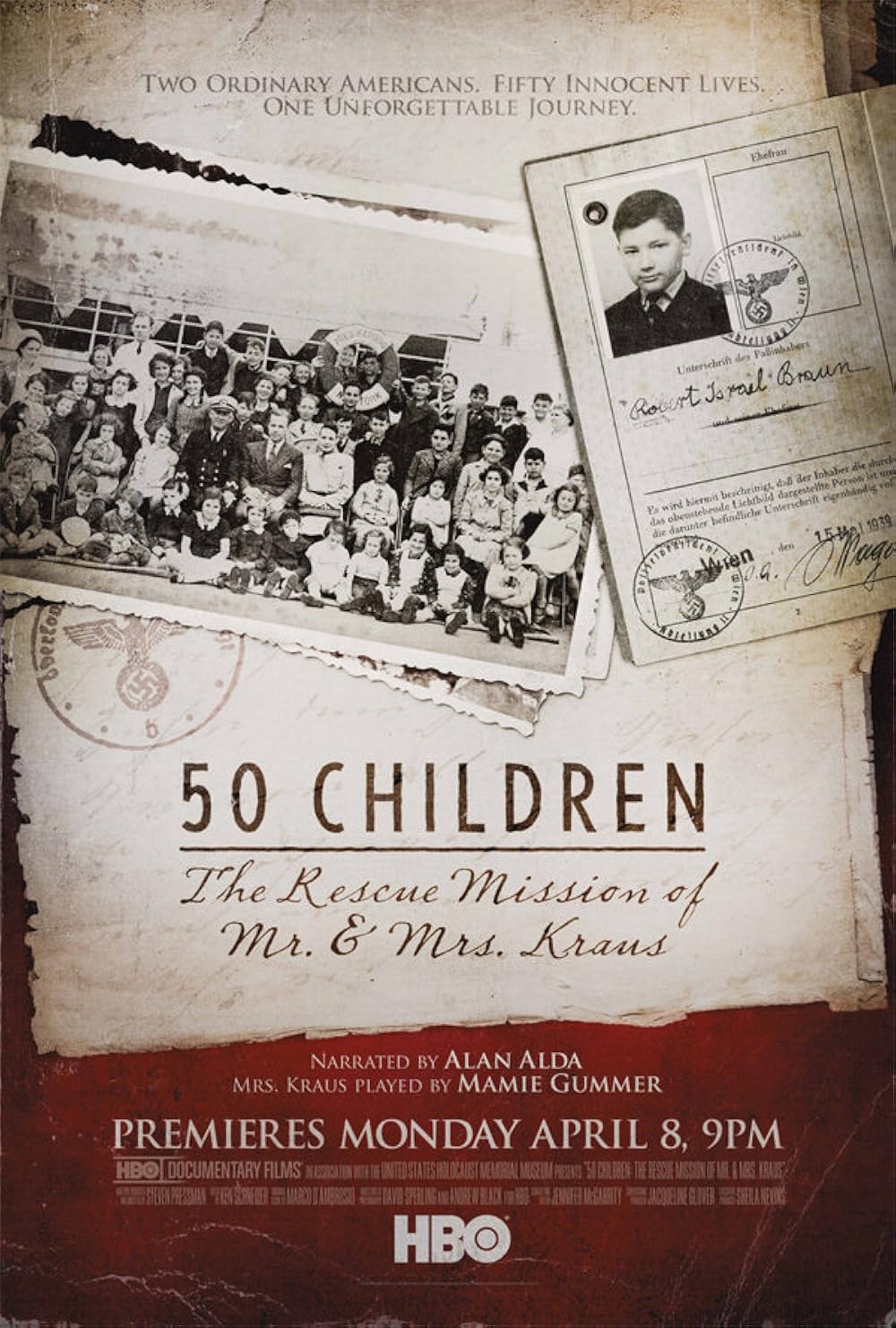
[50 Children, 2013, IMDb.]
In 50 Children: The Rescue Mission of Mr. & Mrs. Kraus, Gilbert and Eleanor Kraus embarked on their own Kindertransport mission in Philadelphia. The couple rescued fifty Jewish children from Vienna, Austria in 1939.
The film shows how the British Kindertransport inspired similar rescue efforts in other countries.
| Long-term Impact |
The Kindertransport often comes up in conversations and debates surrounding immigration and rescue. In 2016, many people spoke up about the British government denying entry to 3,000 refugee children displaced because of the conflict in Syria. Among them were past Kindertransport children, like Ben Ables.
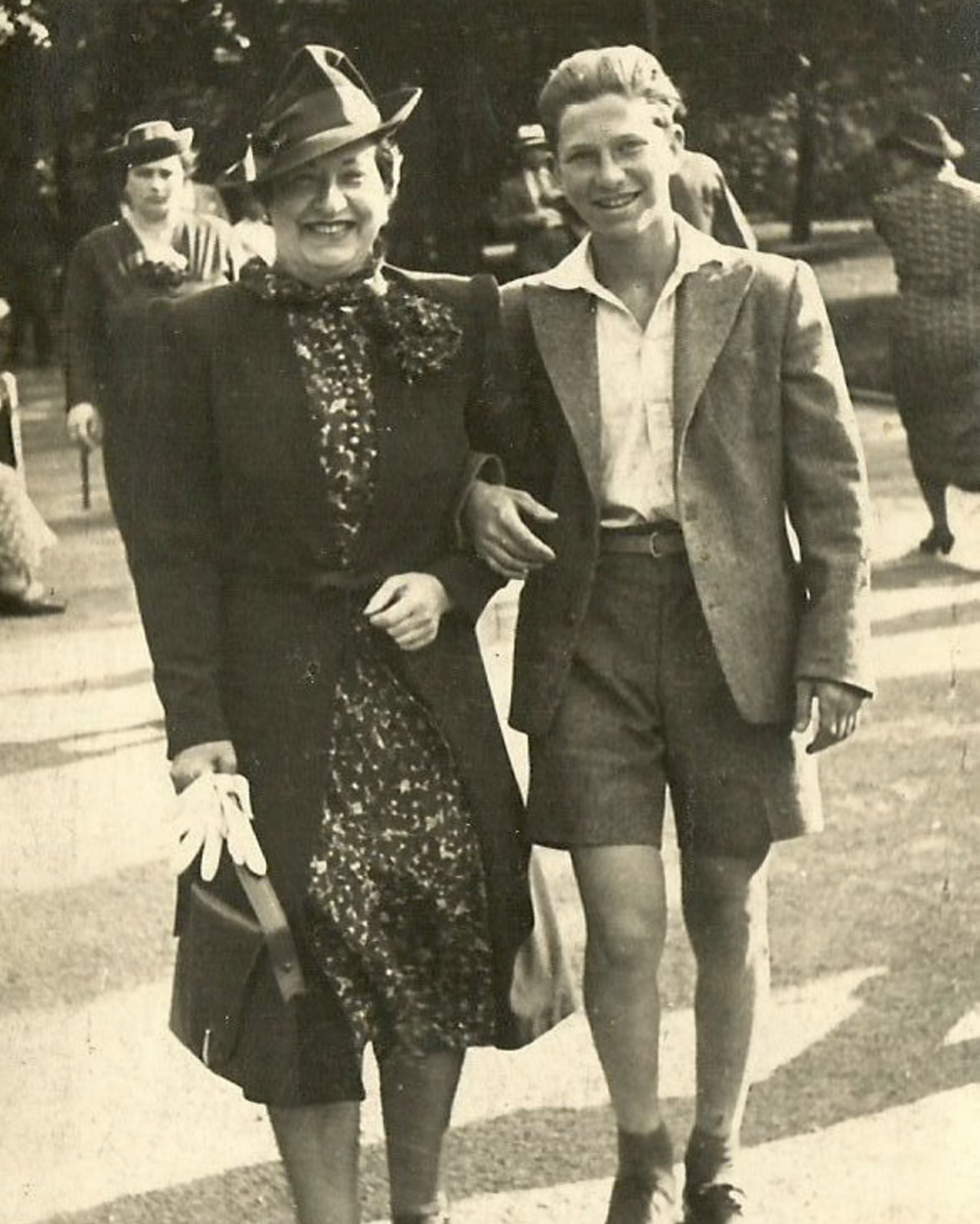
[Ben Abeles with his mother before leaving for England, 1939, The Guardian.]
"If these children were allowed to come here they could contribute so much."
"Three thousand children is a small number if we consider that 10,000 Kindertransport children came [to the UK].
"...we wouldn’t have been able to contribute so much to this country and the world. Out of those who came here, at least one is a Nobel prize-winner."
Ben Abeles, "'It Was Life and Death for Us and It's the Same Today,': Kindertransport Children Speak," 2016, The Guardian.
"In the spirit of the Kindertransport we want to extend a warm welcome to Syria’s refugees."
Britain resettled one thousand eight hundred and thirty-eight children.
There are certain people who contributed individually to the Kindertransport.
A British man, Nicholas Winton, travelled to Czechoslovakia in 1938 and was shocked by the conditions of which the refugees were living in. He wrote papers regarding the poverty and lack of education refugee children received while raising funds, finding foster homes, and organizing his own Kindertransport trains. He saved 664 children.
[Sir Nicholas Winton meets the children he rescued, 1988, BBC Programme "That's Life."]
| Experiences |
Kindertransport children rarely ever got to see the rest of their family again because they died during the Holocaust. Foster parents were also more drawn to younger children, leaving some of the older ones stuck in the system for longer.
Britain established the Dovercourt camp in 1938 for children who did not immediately have foster homes. This camp focused on the welfare of children by housing them in bunks.
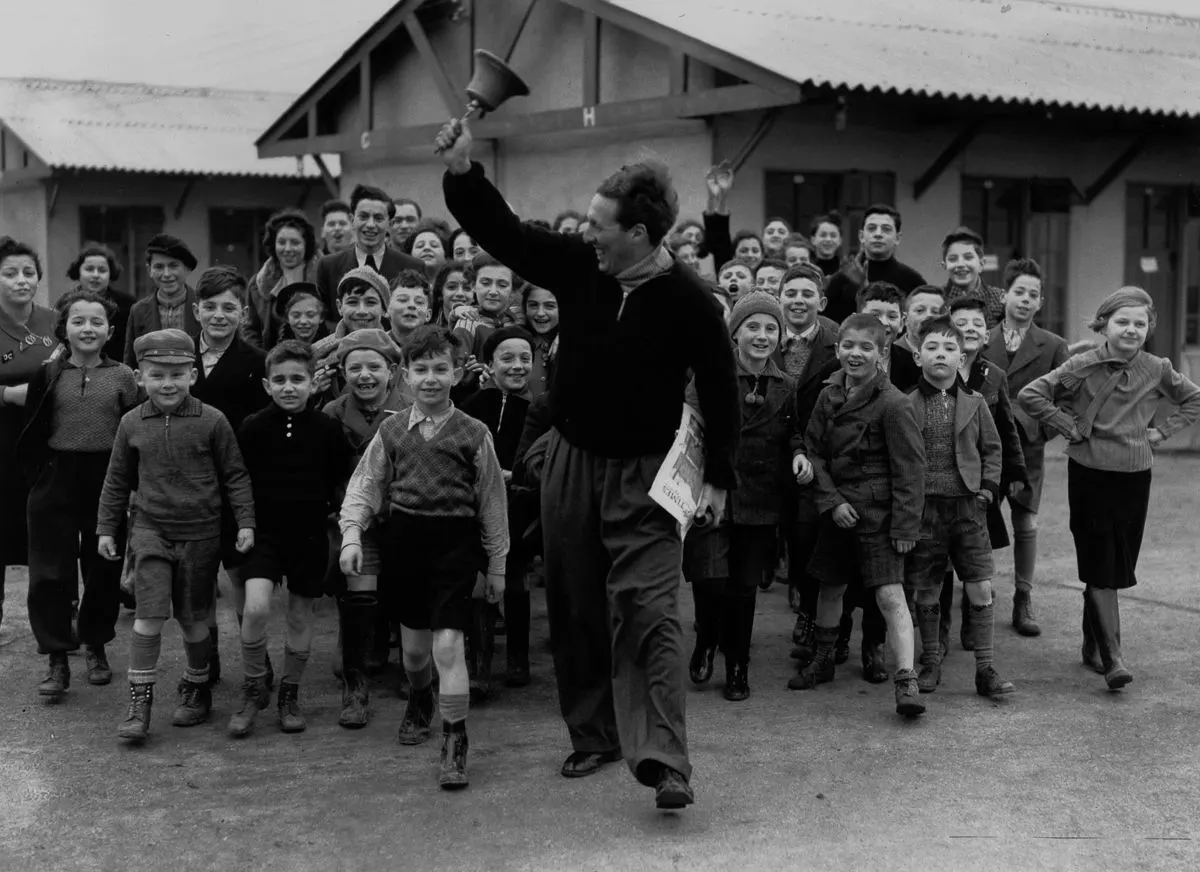
[Reg Speller, Camp leader ringing a dinner bell at the Dovercourt camp, 1939, Rare Historical Photos.]
"The camp leaders are very keen, full of human kindness, vitality and emanating a cheerful atmosphere. Great efforts are made to stress the future hopes of the children and so help them to forget the past. They seem wonderfully happy, considering all they had been through."
Women's Voluntary Service, "Report on a Visit to Dovercourt Refugee Camp", 1939.
Antisemitism was still very prevalent in Britain, so they weren't automatically promised an easy life. Some faced bullying at school and abuse by their foster parents.
"Most Kinder could not speak English when they arrived, and were not acquainted with British customs. Often, they came from different social, political and economic backgrounds to their foster families."
The National Holocaust Centre and Museum, "Kindertransport,"
"...the Kinder were denied ‘the rights of a child’ and instead had adulthood thrust upon them too soon."
Chad McDonald, "'We Became British Aliens': Kindertransport Refugees Narrating the Discovery of Their Parents' Fate," 2018.
After WWll, most Kindertransport children stayed in Britain while others moved to places like the United States or Canada.