Reform
The Kindertransport
Kristallnacht resulted in reform because it led to changes in Britain's immigration policies. Britain at this time had long expressed that they had no interest in aiding Jewish refugees, as said during the Evian Conference. The tragedy of Kristallnacht prompted a change in policy. It was a "turning point in British refugee policy."
Tasha Holtman, "'A Covert from the Tempest:' Responsibility, Love, and Politics in Britain's Kindertransport," 2014.
| Immigration Policies Pre-1938 |
"Until 1938, border control officials determined whether political refugees or those escaping ethnic persecution could enter Britain. Refugees had to meet various criteria or be privately sponsored or self-supporting. Eligibility was not based upon the refugee’s experience of persecution, and the British Government provided no funding for refugees. It was easier to obtain entry to Britain if one was wealthy or had what was deemed a ‘useful’ profession."
London Jewish Cultural Centre, "British Response the Holocaust Explained."
| Immigration Policies Post-1938 |
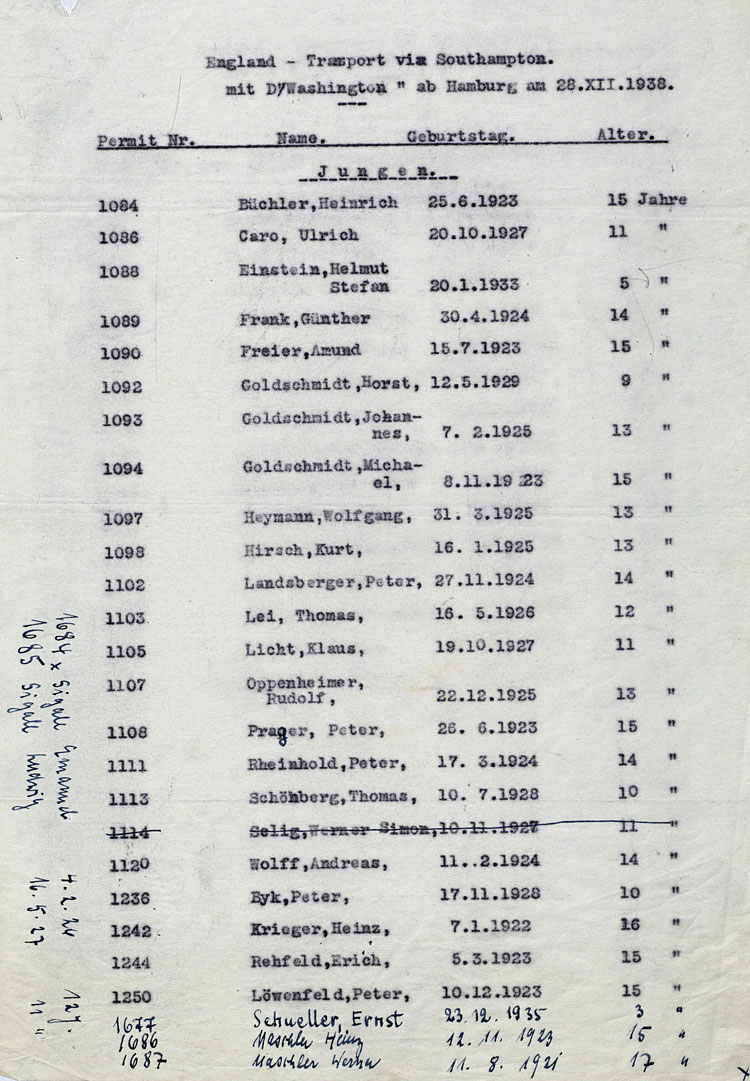
[One of the transports, 1938, The National Archives.]
Children below the age of seventeen were now able to enter Britain (via the Kindertransport) using a two-part identity card rather than a visa, if they could pay a £50 fee. The card was issued to the conductor responsible for bringing in that specific child and was later endorsed by an immigration officer. Most of these children were aided by donations from well-off families, allowing them to come to Britain at no expense.
Through the Kindertransport, Britain saved over 10,000 children within nine months.
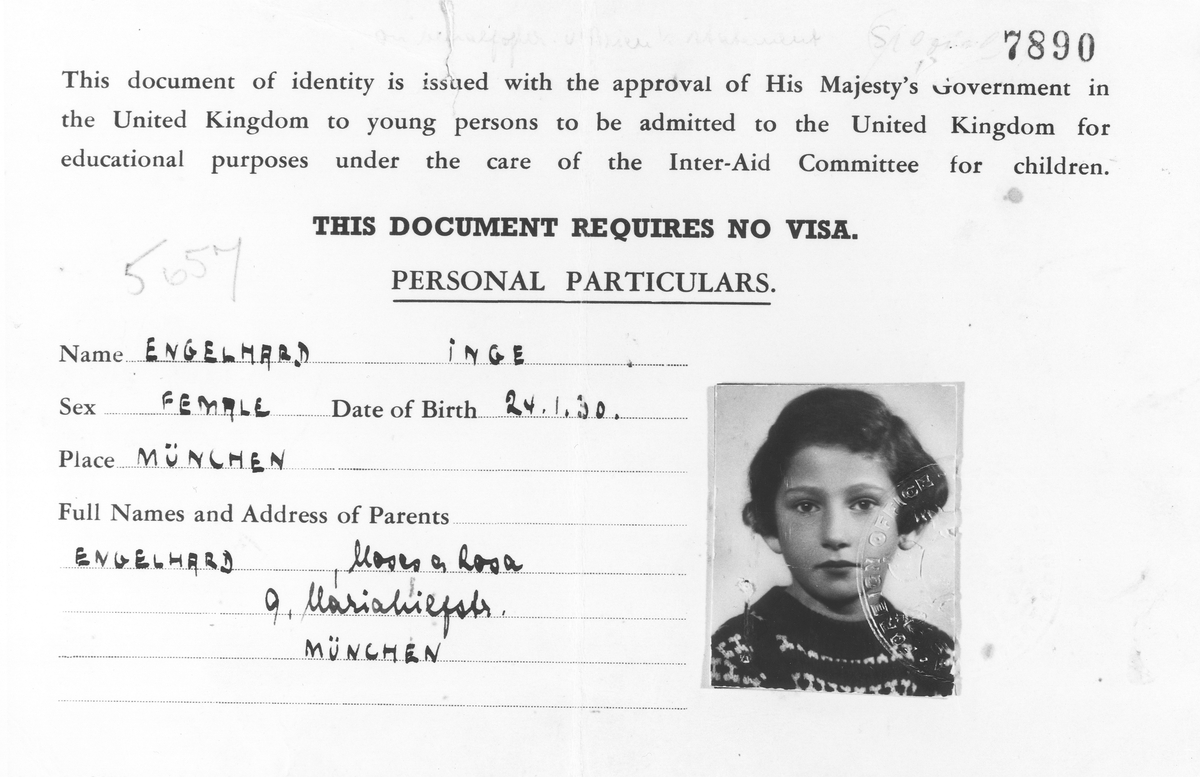
[Kindertransport identity card, 1939, German History in Documents and Images.]
| Other Laws |
Even years after the Kindertransport, Britain still enacted new laws that affected the lives of refugee children. Like the Guardianship Act of 1944, which appointed official legal guardians for refugee children who were under the age of twenty-one.
This law included not just Kindertransport refugees, but also any orphaned child who came to Britain after 1936.
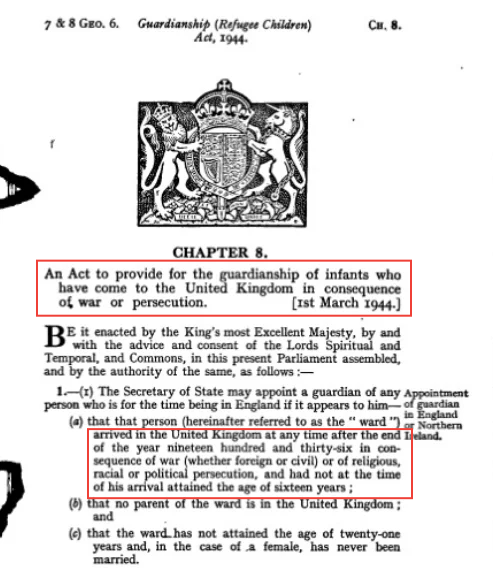
[Guardianship Act for Refuge Children, 1944, Legislation.Gov.UK.]

[Official portrait for Lord Dubs, UK Parliament]
Established in 2016, the Dubs Amendment was named after Alf Dubs, who was a former Kindertransport child.
"[It] was designed to ensure that the Government would continue to allow unaccompanied and separated refugee children in Europe the opportunity to be reunited with family members here in the UK..."
International Rescue Committee, "What is the Dubs Amendment?," 2020.
480 children were brought in as a result, which would not have been possible without the Kindertransport. It shows how the Kindertransport continued to reform policies and make pathways for at-risk children.