Reaction
The Kindertransport
Britain had the strongest reaction to Kristallnacht. As major newspaper paper headlines reported about the events that took place, citizens held protests. Following this persistent pressure, the government launched the Kindertransport.
"After the Kristallnacht pogrom in November 1938, several prominent British Jews arranged a meeting with the British Prime Minister Neville Chamberlain where they asked for permission for a programme allowing the entry of Jewish child refugees from Nazism. The programme would be financed mainly by Jewish community organisations in Britain."
"British Response," The Wiener Holcaust Library.
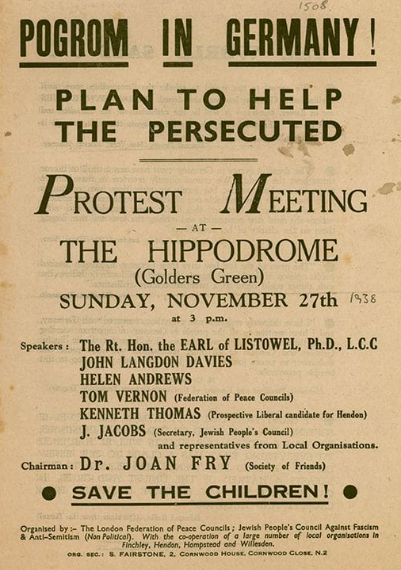
[Pogrom in Germany, 1938, The Wiener Holocaust Library Collections.]
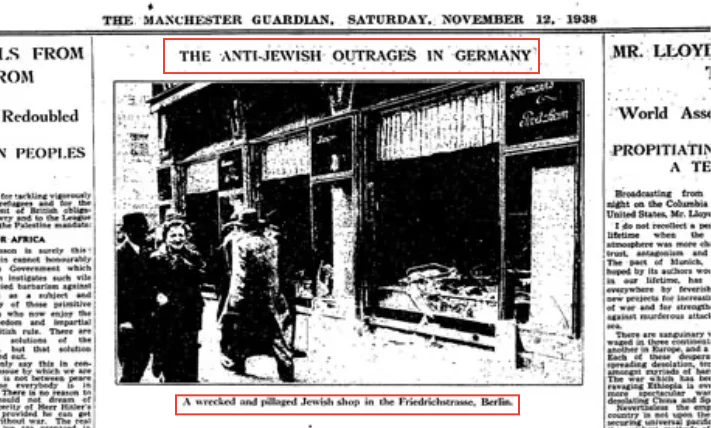
[The Anti-Jewish Outrages in Germany, 1938, The Manchester Guardian]
"The government thus aimed to quell national and international criticism and satisfy Jewish organizations and concerned citizens after Kristallnacht’s horrors."
Tasha Holtman, "A Covert from the Temperst," 2014.
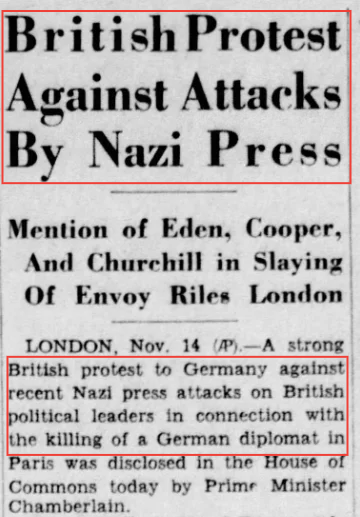
[British Protest Against Attacks By Nazi Press, 1938, History Unfolded]
Many Jewish parents quickly realized their children were no longer safe in Germany and decided to send them to safety through the Kindertransport. The first group of two hundred children arrived in Britain only three weeks after the events of Kristallnacht.
Nazi authorities were glad to be getting rid of these children, so they allowed the Kindertransport to proceed. The only exception were boys older than seventeen, whom they wanted to use for labor.
Although Kristallnacht significantly influenced Britain's decision to accept child refugees, it was not the only factor.
In October of 1938, J.H. Harker, a citizen of Britain, sent a letter to a politician known as Lord Halifax—who later permitted the Kindertransport—disturbed by the rise in antisemitism in Germany, and concerned for the well-being and education of Jewish children living there.
He asked for various items such as visas, clothing, employment, and British families that were willing to adopt.
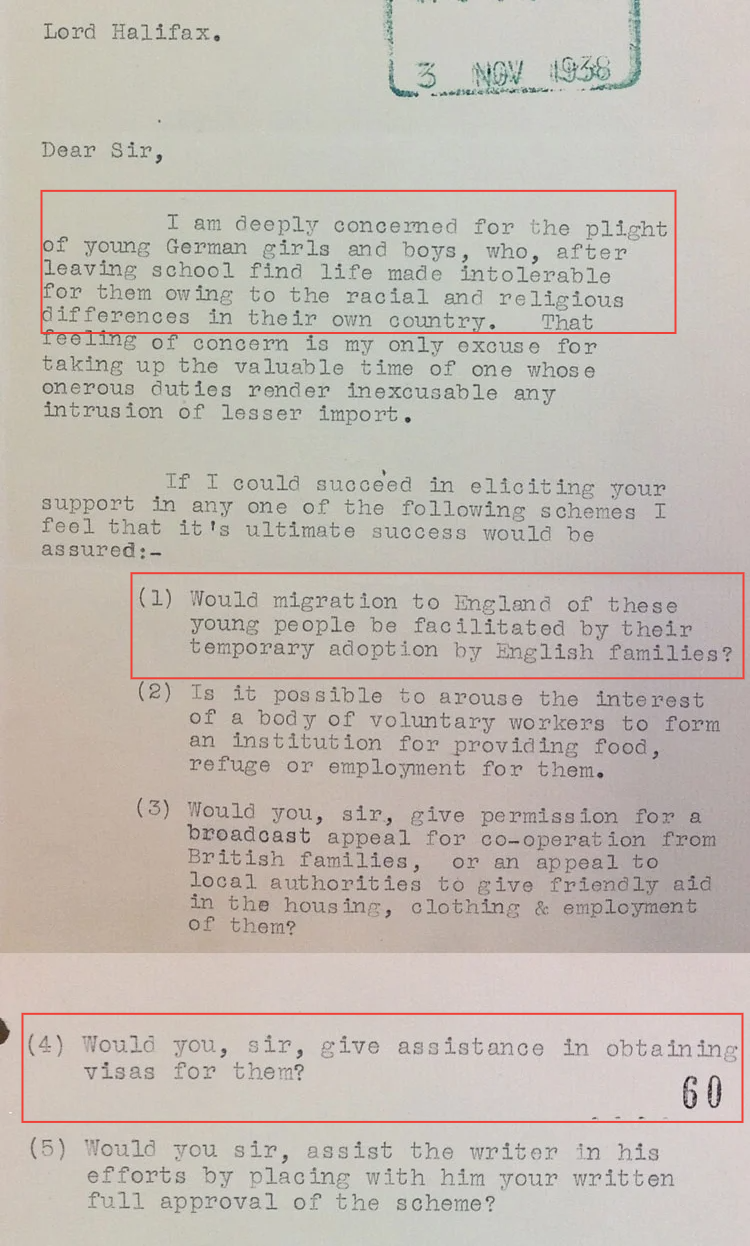
[Letter of Concern, 1938, The National Archives.]
| Other Reactions to Kristallnacht |
Non-Jewish German Citizens
Most citizens were horrified. Fear of the same thing happening to them stopped many from protesting. After Kristallnacht, members of the SS (Nazi guards) would walk the streets disguised as regular citizens to try and overhear anyone making ill comments about the events that took place.
Others were not as sympathetic. In response to the burning of a synagogue, this comment was made:
"That's the right way to do it—it's a pity there aren't any Jews inside."
Wil Mara, "Kristallnacht: Nazi Persecution of the Jews in Europe," 2009.
Other European Nations
Leaders in Italy, Romania, and Hungary approved of Kristallnacht because they held similar beliefs to Hitler.
Citizens in places like France were forced to stay silent out of fear.
"Today, when we protest against the contemptible persecution of defenseless Jews and their wives and children, we are told, ‘Be silent! France is afraid."
"World Responses to Kristallnacht," 2016.