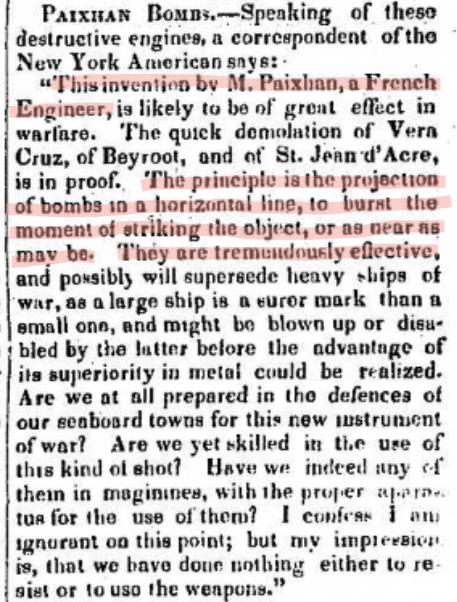
"Paixhan Bombs," The Star and Repblican Banner (Gettysburg, PA), March 30, 1841.


Clary Ray, "United States Steamer Monitor," ca. 1900. U.S. Naval History and Heritage Command.
In the early 1800s, wooden warships had dominated the seas for centuries. However, new developments in cannon technology created a necessity for iron-plated ships.
The Paixhan cannons (1820s) were the first naval cannons that could fire explosive shells, which created massive holes and started fires on wooden ships.
"Paixhan Bombs," The Star and Repblican Banner (Gettysburg, PA), March 30, 1841.

“Paixhan Bombs,” The Star And Republican Banner
(Gettysburg, PA), March 30, 1841.
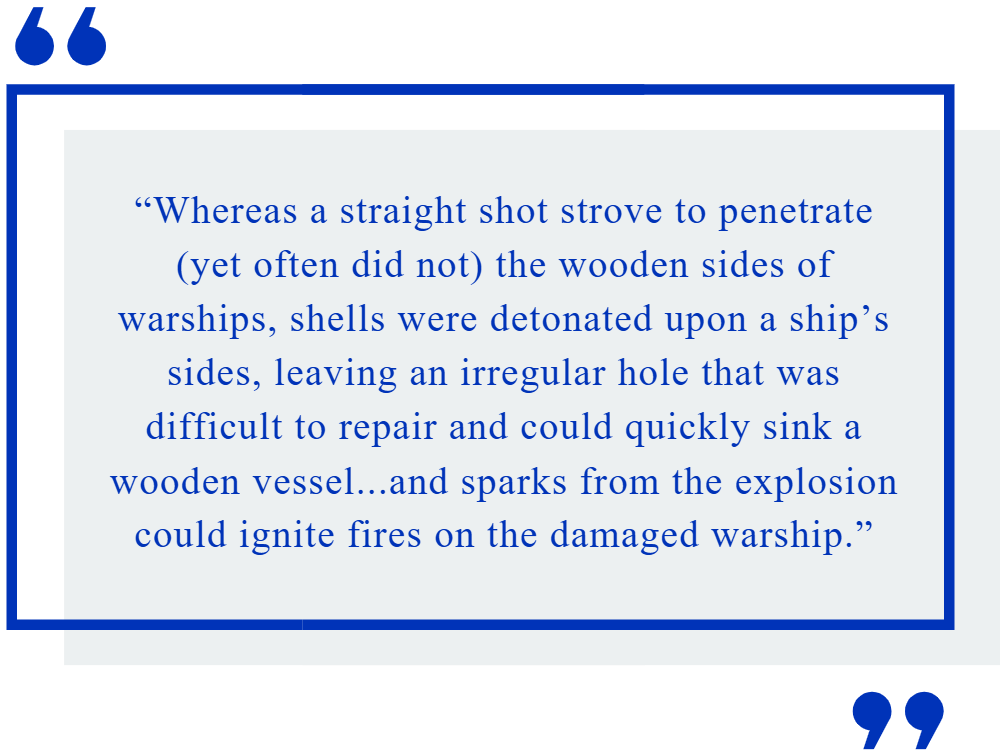
John V. Quarstein, “The Evolution of Naval Ordnance:
1820-1866,” 2022.
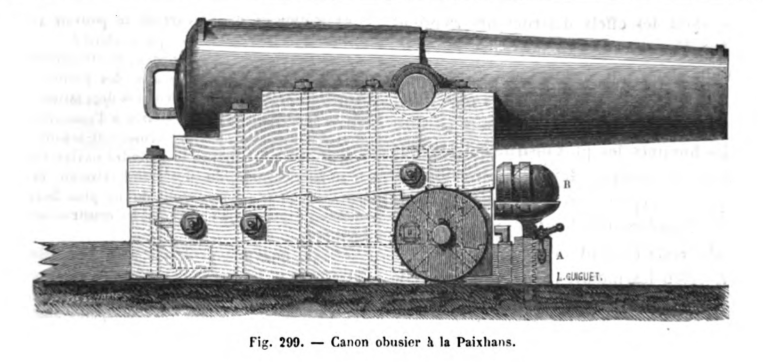
“Canon Obusier à la Paixhans,” 1870, in Merveilles de la Science by Louis Figuier.
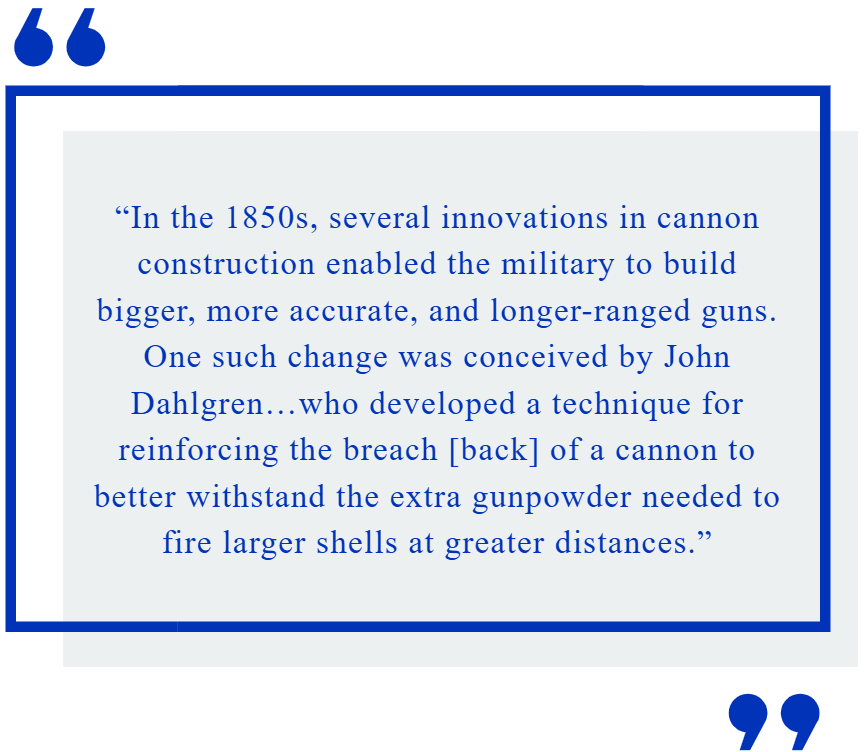
Dahlgren guns (1850s) reinforced the back of cannons for increased accuracy and power.
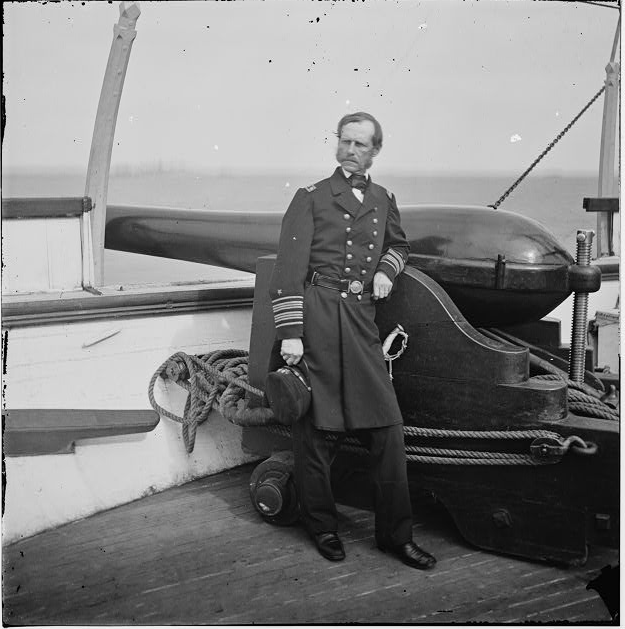
“Charleston Harbor, South Carolina. Rear Adm. John A. Dahlgren Standing by a Dahlgren Gun on Deck of U.S.S. PAWNEE,” June 17, 1865. Library of Congress.
Roger A. Bailey, “Steel & Steam,” n.d.

John V. Quarstein, “The Evolution of Naval Ordnance:
1820-1866,” 2022.
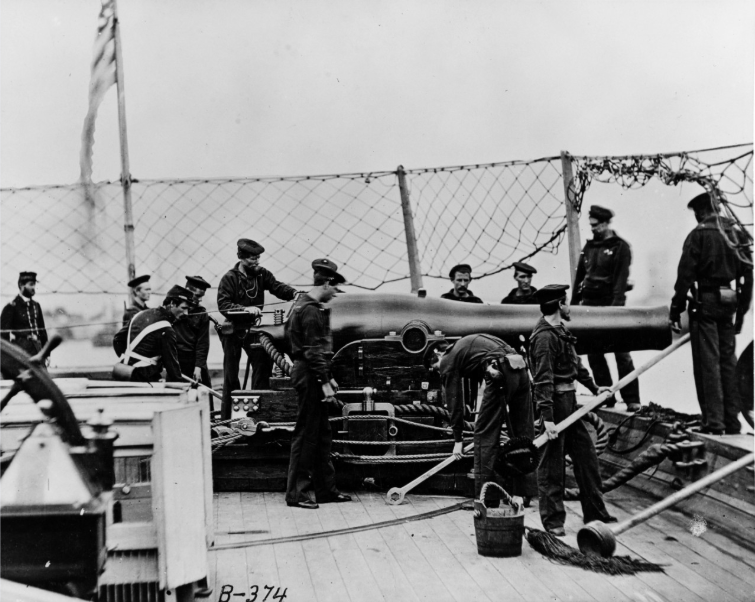
“IX-inch Dahlgren Smooth-bore Gun,” 1864. U.S. Naval History and Heritage Command.
These new cannons could quickly sink wooden ships, propelling people to devise new forms of protection. Some suggested bolting iron plates to the ship's sides to prevent shells from penetrating and exploding.
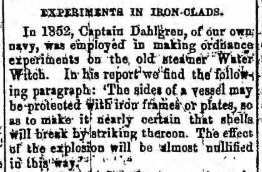
"Who Invented Iron-clad Ships!" The Wooster Republican, July 17, 1862.
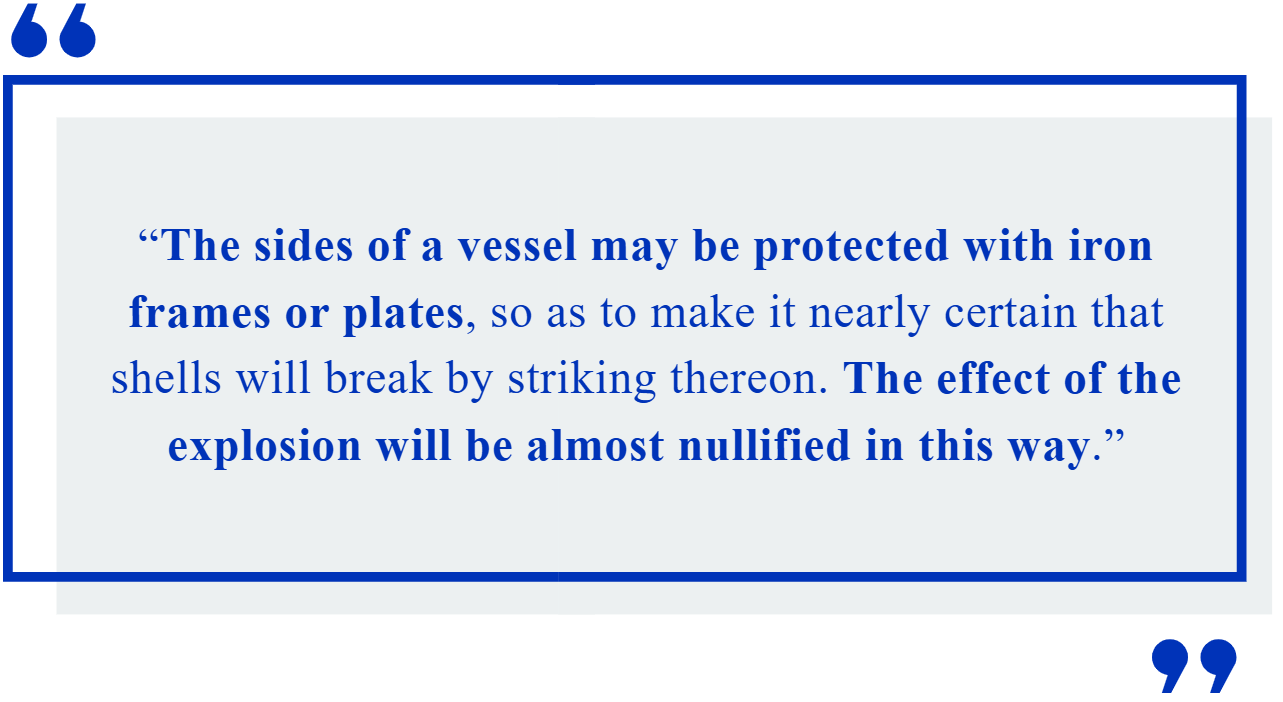
"Who Invented Iron-clad Ships!" The Wooster Republican, July 17, 1862.
In 1855, during the Crimean War, the French built floating ironclad platforms that successfully bombarded a Russian fort at the Battle of Kinburn, receiving heavy fire but sustaining little damage.
"News of the Day," Alexandria Gazette, November 23, 1855.
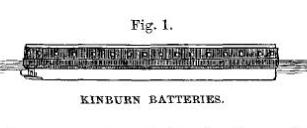
"Kinburn Batteries," 2010, in The British Navy: Its Strength, Resources, and Administration by Thomas Brassey.
In 1859, France launched the world’s first ironclad ship — the Gloire, which had iron plates bolted to a wooden hull.
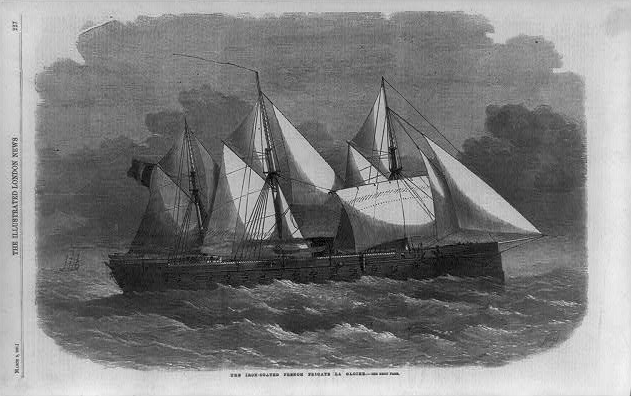
“The Iron-coated French Frigate La Gloire,” 1861. Library of Congress.
Bruce Taylor, “A Global Phenomenon,” June 2020.
England launched a similar ship, HMS Warrior, in 1860.
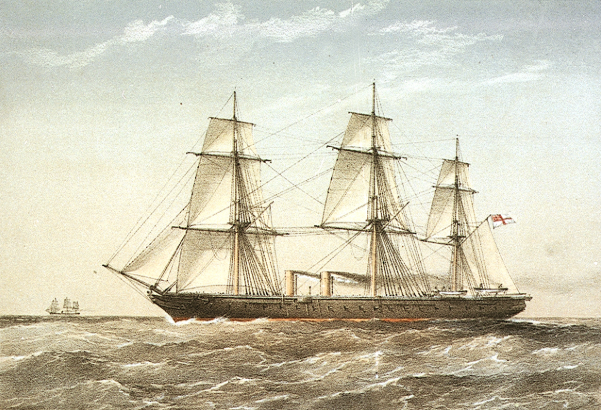
“H.M.S. Warrior,” June 1, 1872. Royal Museums Greenwich Collections.
Yet some were still skeptical of ironclads’ power.
"...there is a strong party in England…who stoutly maintain that iron-clad vessels are and must be failures…It is asserted that an unplated vessel can carry an armament which will penetrate the heaviest armor…at 600 yards it is said that six 100-pounder [cannons] would make a wreck of La Gloire or the Warrior, while a timber ship would still hold together, and from her greater facility of movement be more difficult to hit."
"Iron-Plated War-Vessels," New York Daily Tribune, August 15, 1861.