
Taking Responsibility in Healthcare
"The relationship of the African American community with the medical and public health communities did not begin or end with the syphilis study. There has been hundreds of years of mistreatment of African Americans within the health care system"
Dr. Vanessa Northington Gamble
The Tuskegee Syphilis left a long-lasting mark on the history of medical research and racism. President Bill Clinton’s formal apology to the Black American community in 1997 was a critical step toward acknowledgement and change, announcing that the government was providing a $200,000 grant to help establish a center for research and healthcare bioethics at Tuskegee University as a memorial for the study’s participants.
“User Clip: Bill Clinton apologizes for Tuskegee experiment.” C-SPAN, 16 March 1997,
"To the survivors, to the wives and family members, the children and the grandchildren, I say what you know: No power on Earth can give you back the lives lost, the pain suffered, the years of internal torment and anguish. What was done cannot be undone. But we can end the silence. We can stop turning our heads away. We can look at you in the eye and finally say on behalf of the American people, what the United States government did was shameful, and I am sorry. "
- President Bill Clinton
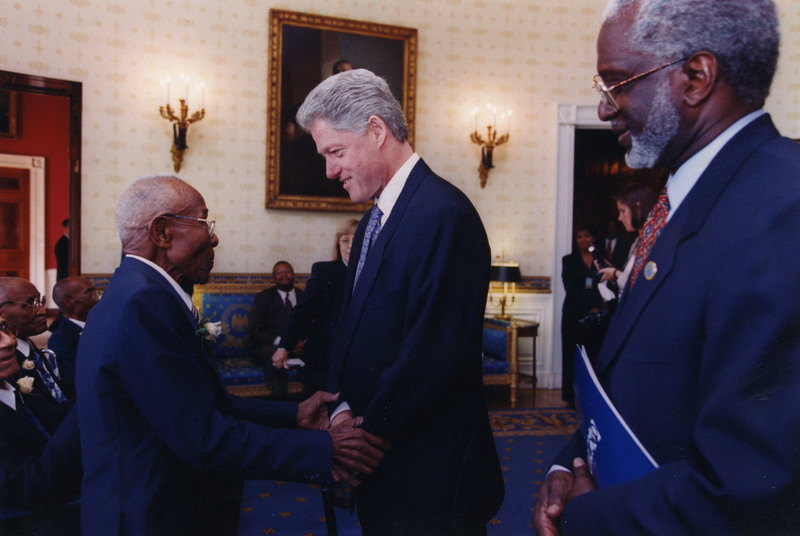
Farmer, Sharon, and White House Photograph Office. "Tuskegee Syphilis Study Apology Ceremony." 16 May 1997. Tuskegee Syphilis Study Apology Ceremony, William J. Clinton Presidential Library,
Shaw, Herman. "Apology to Survivors of the Tuskegee Syphilis Experiment." 16 May
1997. Youtube, www.youtube.com/watch?v=F8Kr-0ZE1XY. Speech.
While Clinton’s apology acknowledged the injustice of the study, the consequences still continue to affect healthcare today. Many African Americans have grown to distrust the healthcare system, fueled by ongoing structural and scientific racism in healthcare.
"Still, 25 years later, many medical studies have little African American participation and African American organ donors are few. This impedes efforts to conduct promising research and to provide the best health care to all our people, including African Americans. So today, I'm directing the Secretary of Health and Human Services, Donna Shalala, to issue a report in 180 days about how we can best involve communities, especially minority communities, in research and health care. You must -- every American group must be involved in medical research in ways that are positive. We have put the curse behind us; now we must bring the benefits to all Americans."
- President Bill Clinton
"I think the trauma has been passed down by family stories and family histories. One of the major historical events that people talk about is the United States Public Health Service syphilis study at Tuskegee. But it's not the only history. And so I think families passed down the stories maybe of the syphilis study, but it might be how their grandmother was treated in the hospital, how their aunt was treated by a physician."
- Dr. Vanessa Northington Gamble
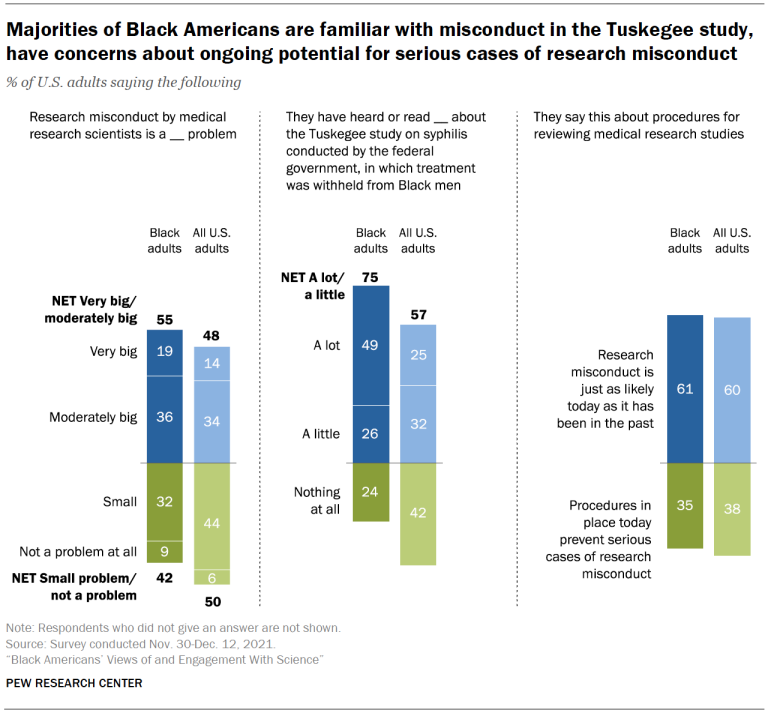
Funk, Cary. “Majorites of Black Americans are familiar with misconduct in the Tuskegee study, have concerns about ongoing potential for serious cases of research misconduct.” Black Americans’ Views of and Engagement With Science, 7 April 2022,
"Still, 55% of Black adults say they’ve had at least one of several negative experiences with health care providers in the past, such as feeling they had to speak up to get the proper care or that the pain they were experiencing was not being taken seriously."
- Cary Funk, Black Americans’ Views of and Engagement With Science
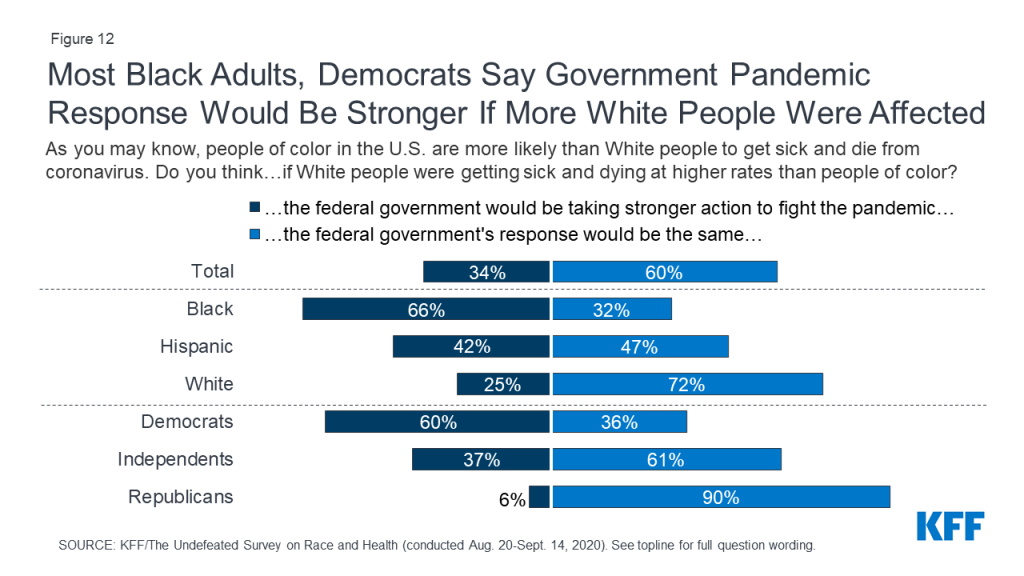
KFF. “Figure 12: Most Black Adults, Democrats Say Government Pandemic Response Would Be Stronger If More White People Were Affected.” KFF/The Undefeated Survey on Race and Health, 13 October 2020,
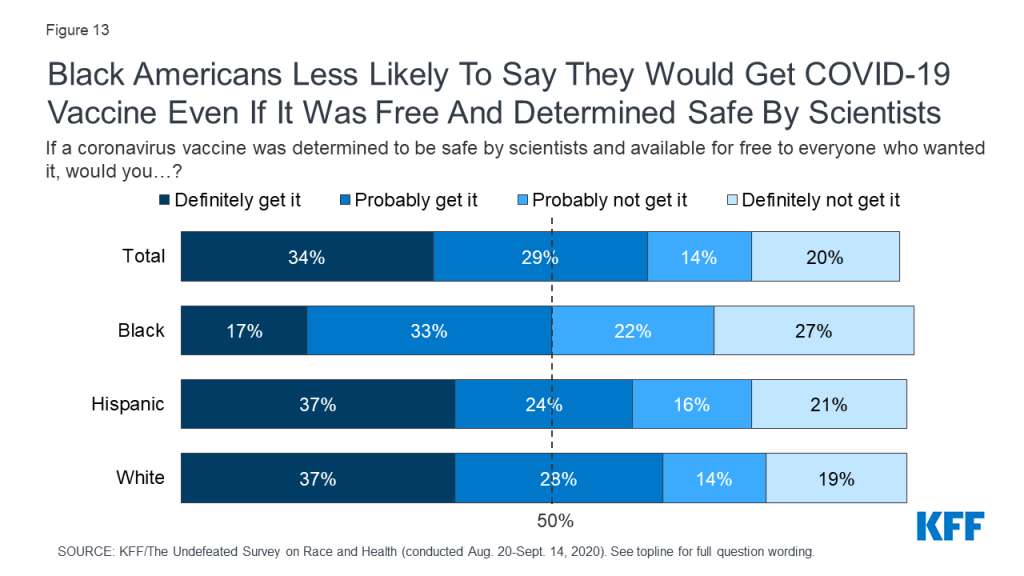
KFF. “Figure 13: Black Americans Less Likely To Say They Would Get COVID-19 Vaccine Even If It Was Free And Determined Safe By Scientists.” KFF/The Undefeated Survey on Race and Health, 13 October 2020,
The persisting racism, such as the myth of Black Americans having higher pain tolerance than White Americans, negatively affects healthcare for Black patients. Patients with darker skin tones often receive lower doses of pain medication, and–due to the theory that Black bodies are different–face neglect in treatment for the kidneys, lungs, pregnancy, and more.
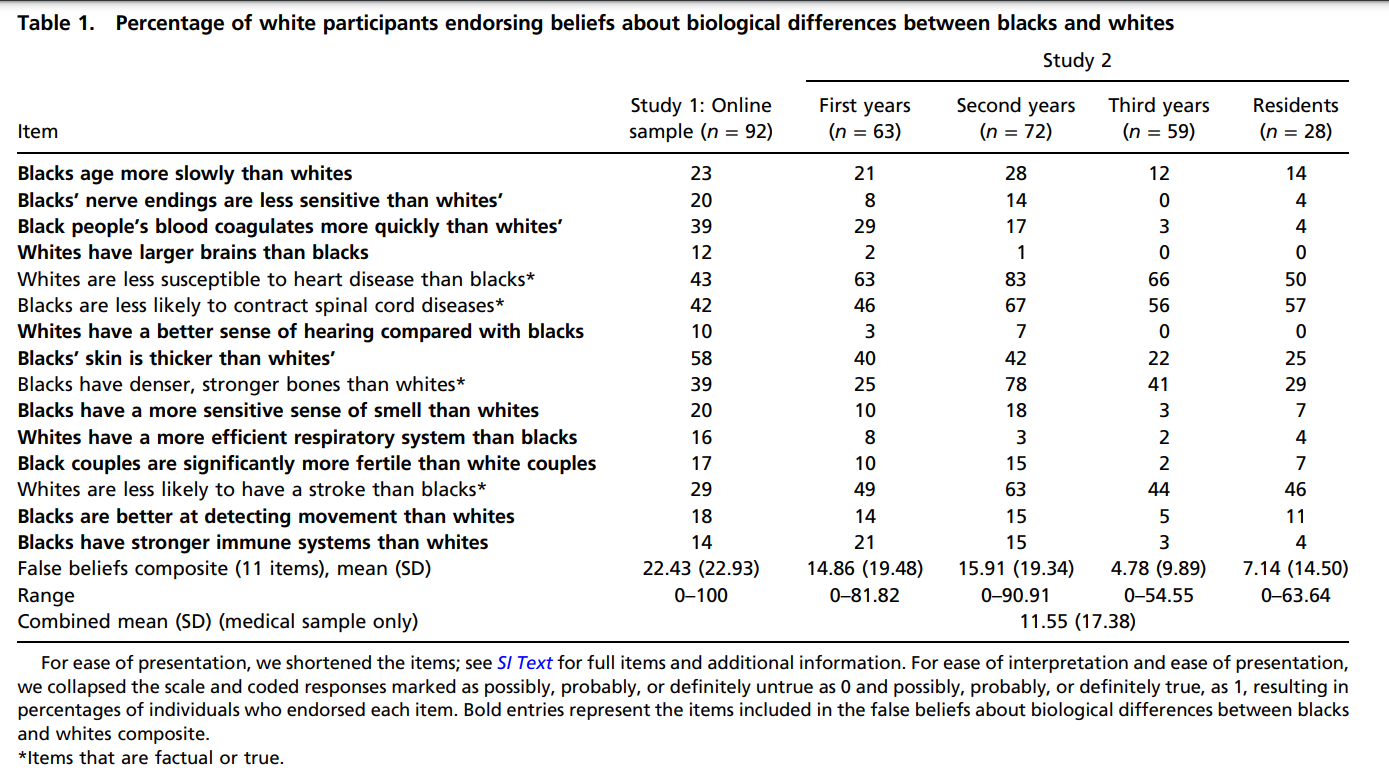
PNAS. "Table 1. Percentage of white participants endorsing beliefs about biological differences between blacks and whites." 1 March 2016. Racial bias in pain assessment and treatment recommendations, and false beliefs about biological differences between blacks and whites
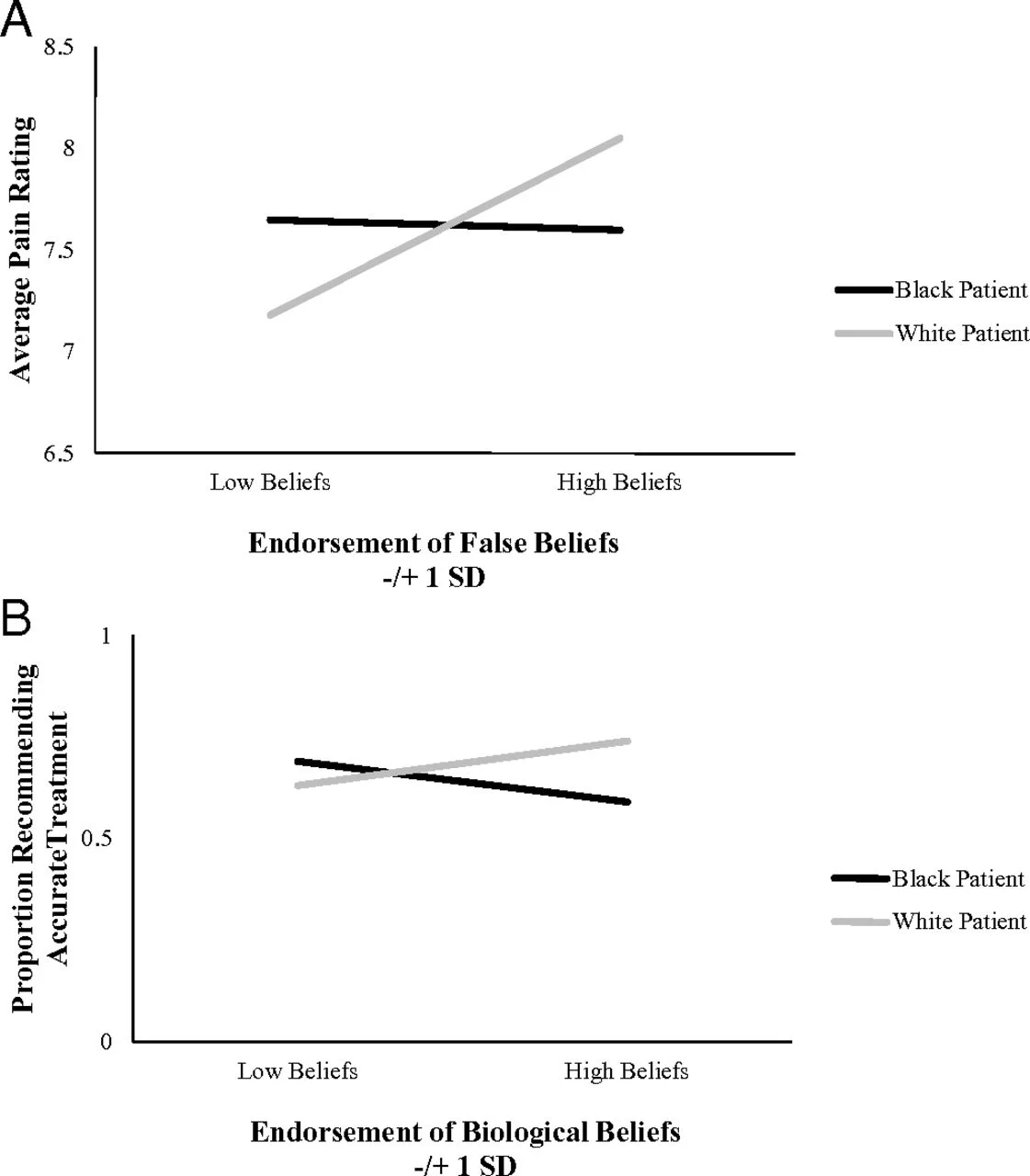
PNAS. “Medical sample estimated mean pain ratings and treatment recommendation accuracy as a function of false belief endorsement (plotted 1 SD below and above the mean). (A) Average pain ratings (pain rating scale: 0 = no pain; 1; 2 = mild pain; 3; 4 = moderate.” Racial bias in pain assessment and treatment recommendations, and false beliefs about biological differences between blacks and whites, 1 March 2016,
While the implementation of ethical guidelines, such as IRB protocols, allows for progress in bridging trust between Black Americans and healthcare once again, persisting structural and scientific racism highlights the need for further improvement. Addressing the issues that still exist in the medical world today is an essential responsibility in protecting patients’ rights and achieving equity to ensure that a study like the Tuskegee Syphilis Study doesn’t happen again.