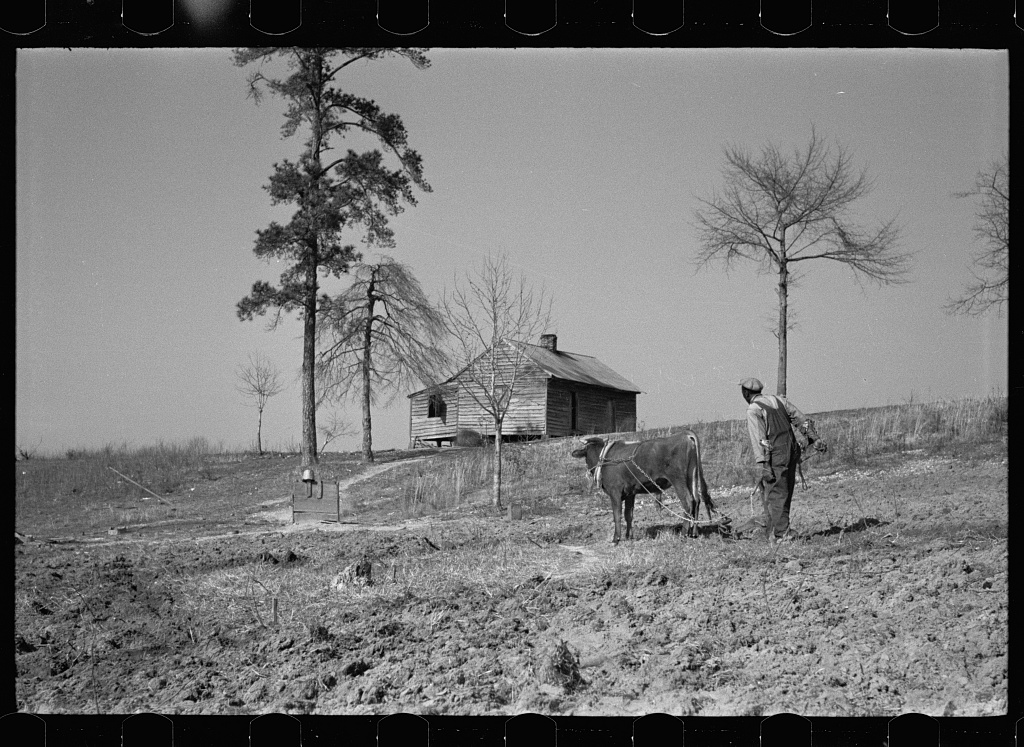
United States. Resettlement Administration., and Arthur Rothstein. "Plowing, Macon County, Alabama. 1937." Plowing, Macon County, Alabama digital file from original neg.,

In 1929, with funding from the Rosenwald Fund, the USPHS (U.S. Public Health Service) initiated a project in six southern counties to explore possibilities for mass treatment for Black Americans with syphilis. Out of the six counties, Macon County, Alabama, had the highest prevalence of syphilis, with a 39.8 percent infection rate among the 3,684 tested.
United States. Resettlement Administration., and Arthur Rothstein. "Plowing, Macon County, Alabama. 1937." Plowing, Macon County, Alabama digital file from original neg.,
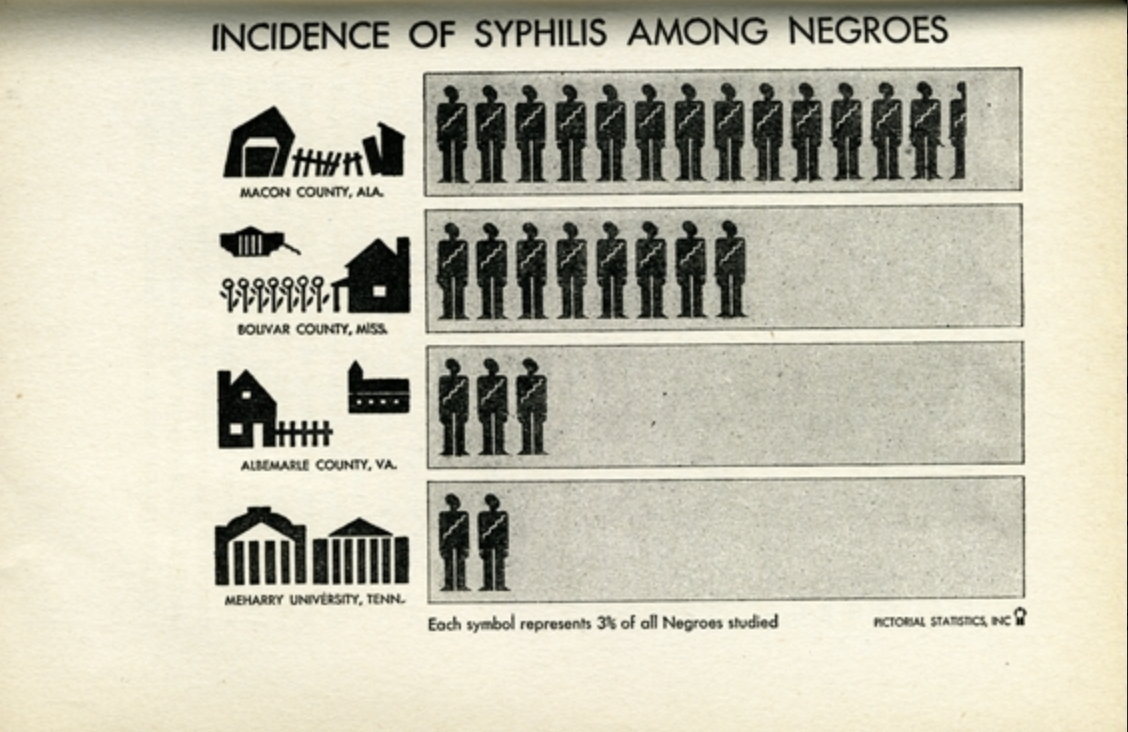
Parran, Thomas. “Incidence of Syphilis Among Negroes” chart. 1936. U.S. Public Health Service Syphilis Study at Tuskegee,
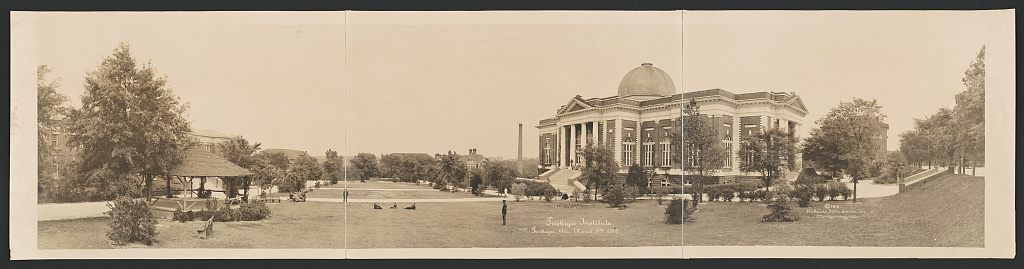
Richards Film Service. "Tuskegee Institute, Tuskegee, Ala., April 5th, 1918." 5 April 1918. Tuskegee Institute, Tuskegee, Ala., April 5th, 1918,
It was concluded that mass treatment could be successfully implemented, but due to the Great Depression, funding dwindled, and the findings were ignored
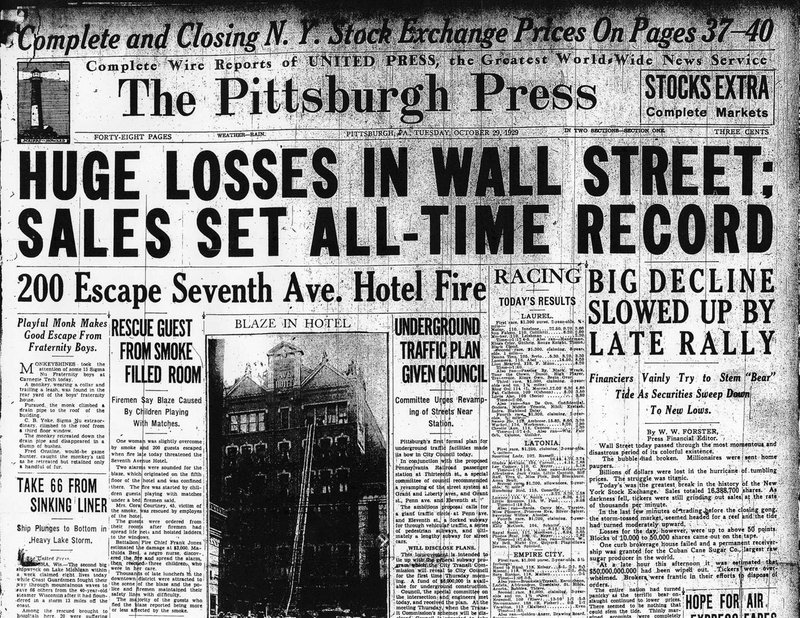
Goldberg, Jake. "The Pittsburgh Press newspaper cover on October 29, 1929, Photo credit from Old Pittsburgh photos and stories "| The Digs. 29 October 1929. The Start of the Great Depression,
It was not until 1932, when Dr. Taliaferro Clark, Chief of USPHS Venereal Disease Division and author of the Rosenwald Study report, proposed the idea of a “study in nature” to observe the consequences of untreated syphilis.
"The results of these studies of case records suggest the desirability of making a further study of the effect of untreated syphilis on the human economy among people now living and engaged in their daily pursuits."
Taliaferro Clark
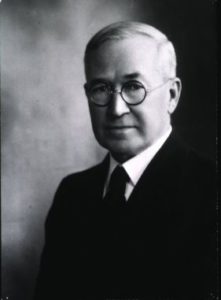
"Portrait of Dr. Taliaferro Clark, 1932. Clark founded the Public Health Service. He disagreed with the extended experiment and quit a year after it started. National Archive. 2017." 20 Photos from the Tuskegee Syphilis Study, National Archives,
"The recent syphilis control demonstration carried out in Macon County, with the financial assistance of the Julius Rosenwald Fund, revealed the presence of an unusually high rate in this county and, what is more remarkable, the fact that 99 per cent of this group was entirely without previous treatment. This combination, together with the expected cooperation of your hospital, offers an unparalleled opportunity for carrying on this piece of scientific research which probably cannot be duplicated anywhere else in the world"
Surgeon General H.S. Cumming
Major textbooks of syphilis emphasized the importance of treating syphilis, but the concerns were dismissed by scientifically racist assumptions. Researchers claimed that Black American men would not be treated or continue to seek treatment either way. It was also argued that the conditions existed naturally, scientists linking the high prevalence of syphilis to the supposed sexually promiscuous nature of blacks.
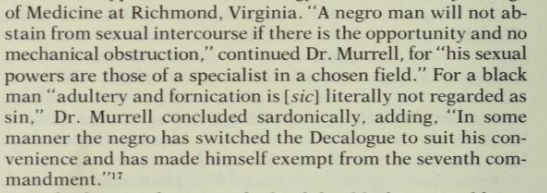
Jones, James Howard. "Bad blood : the Tuskegee syphilis experiment. New York" : Free Press ; London : Collier Macmillan Publishers, 1981,
"This state of affairs is due to the paucity of doctors, rather low intelligence of the Negro population in this section, depressed economic conditions, and the very common promiscuous sex relations of this population group which not only contribute to the spread of syphilis but also contribute to the prevailing indifference with regard to treatment."
Taliaferro Clark
In addition, syphilis was thought to affect blacks cardiovascularly rather than neurologically due to the previously mentioned assumption that blacks had less intelligence, a theory scientists were curious to test.
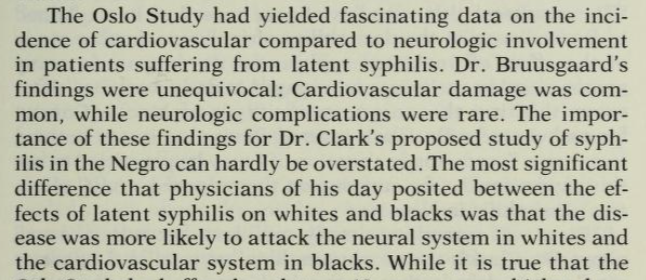
Jones, James Howard. "Bad blood : the Tuskegee syphilis experiment." New York : Free Press ; London : Collier Macmillan Publishers, 1981,