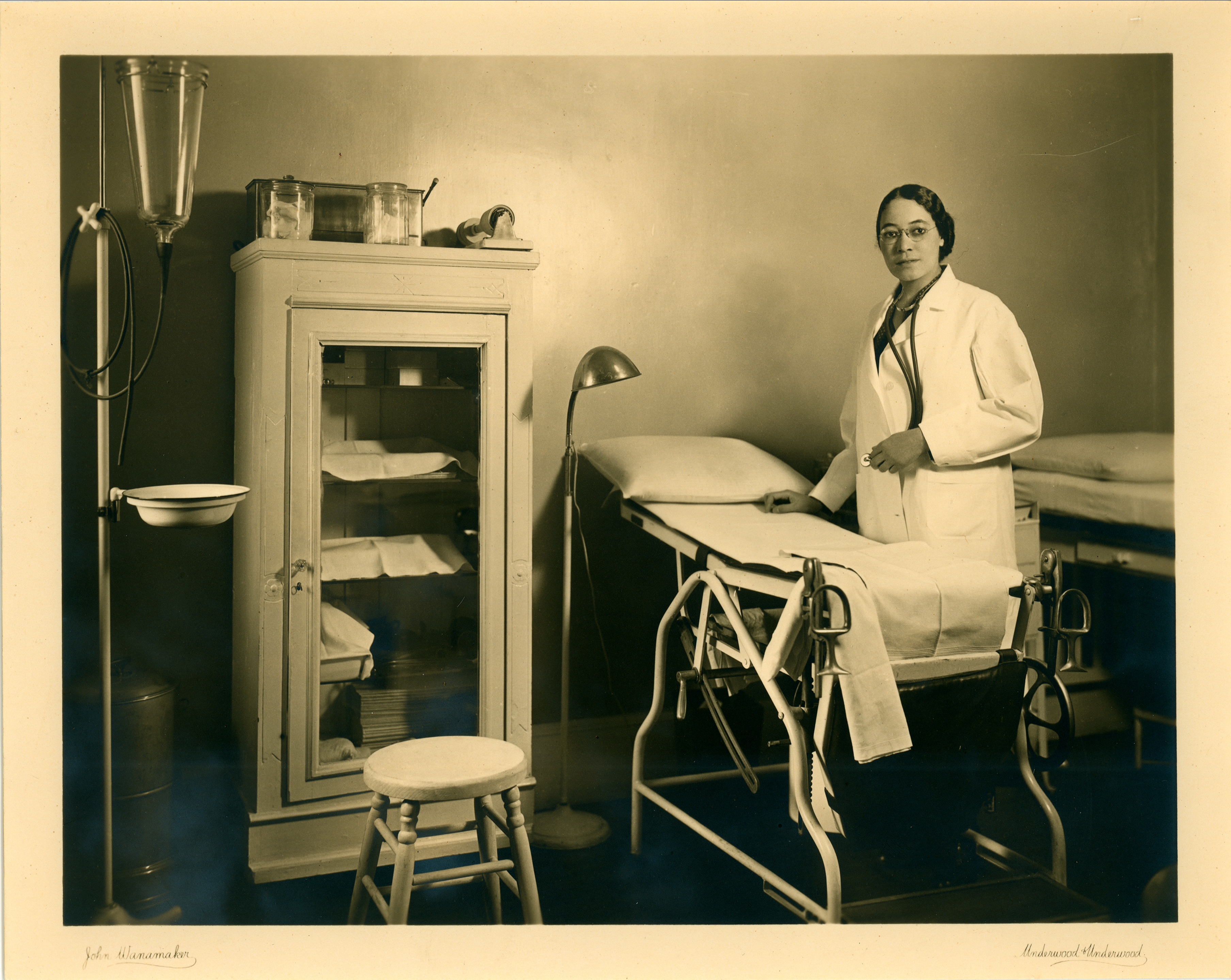
"Underwood & Underwood. Virginia M. Alexander in Exam Room. Circa 1930s,". John Wanamaker Collection, Digital Commonwealth.
Aspiranto:A Revolutionary Healthcare System
In 1931, Virginia Alexander founded Aspiranto Health Home, a revolutionary hospital that bypassed the systemic racism of the 1930s medical establishment to provide comprehensive, socialized care to the Black community.
"Underwood & Underwood. Virginia M. Alexander in Exam Room. Circa 1930s,". John Wanamaker Collection, Digital Commonwealth.
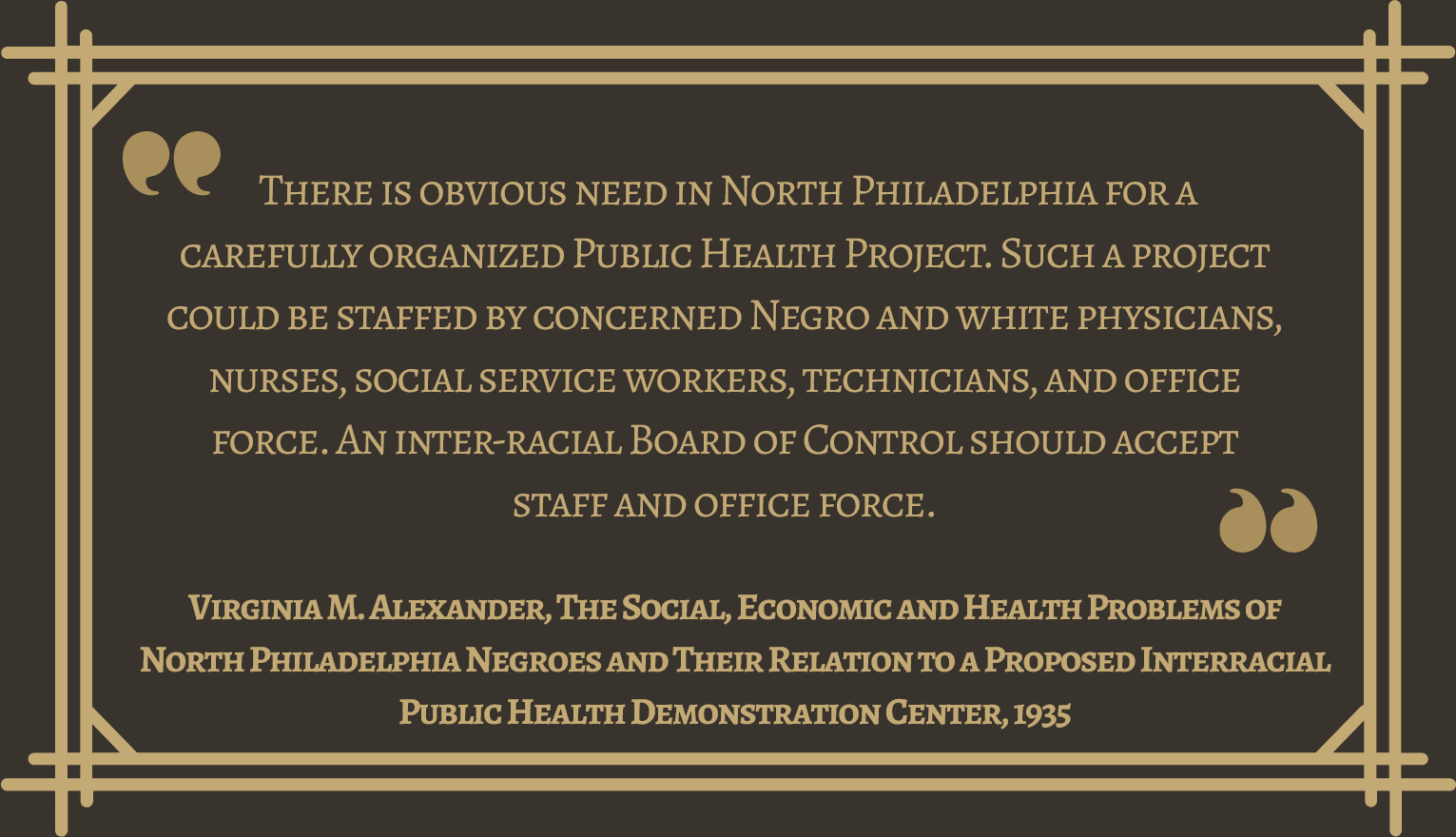
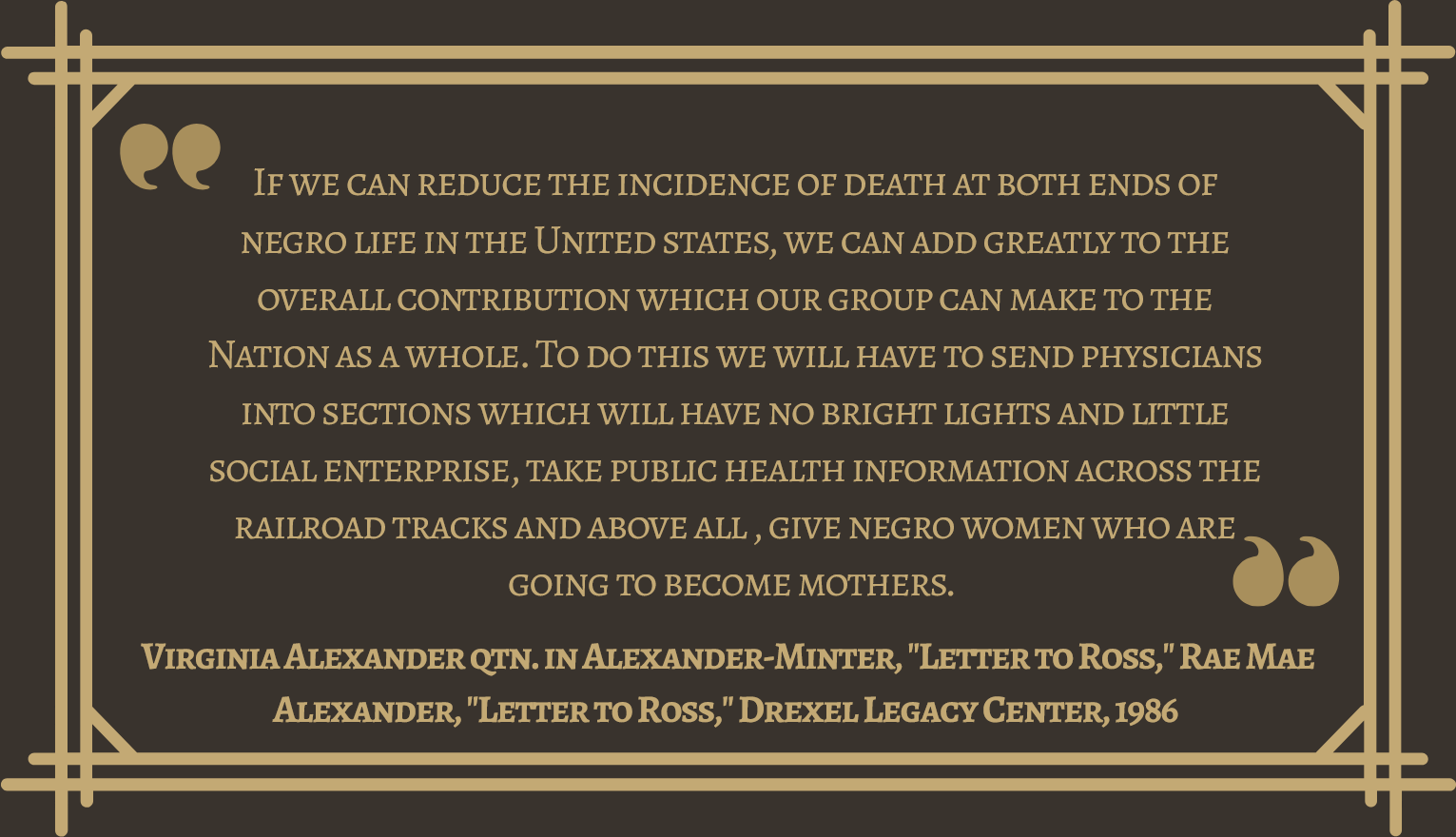
This interracial public health demonstration center in Philadelphia reflected the need for maternal health care and equitable access for those denied services elsewhere.
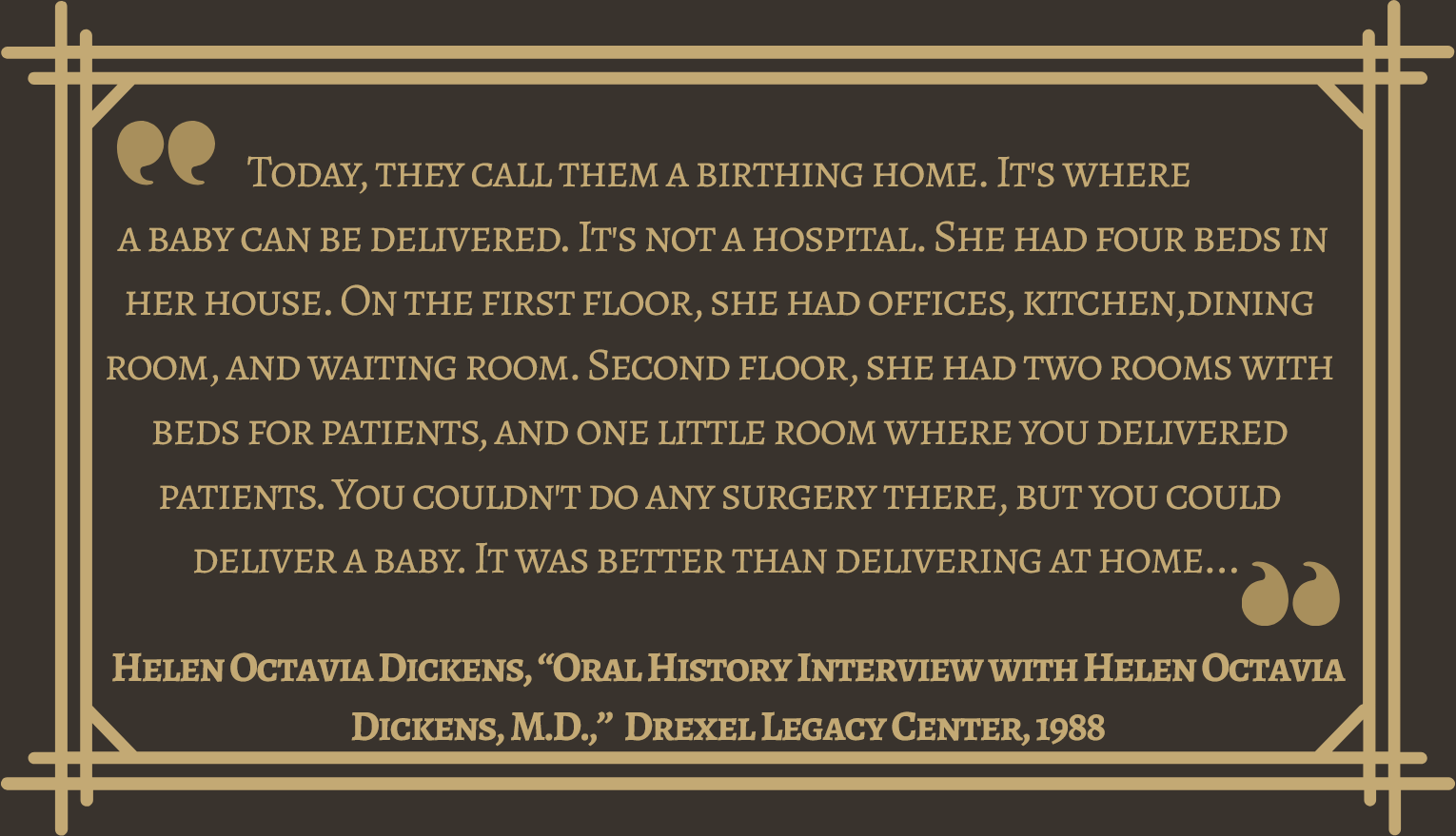
When the health home was established, she officially gained a license.
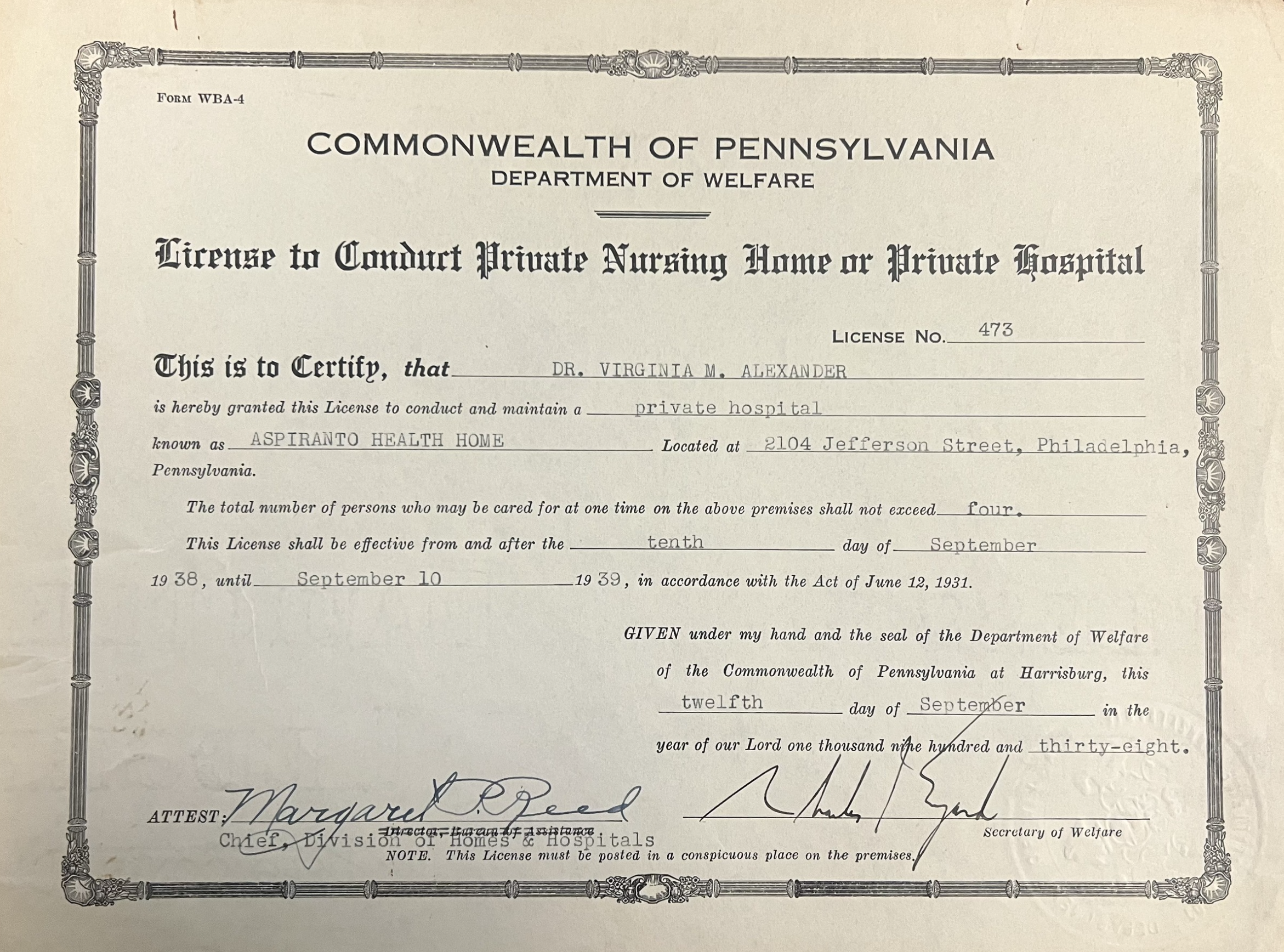
Conduct Private Nursing Home or Private Hospital (License No. 473). September 12, 1938. Virginia Margaret Alexander Papers (UPT 50 A374V), box 2, folder 21. University of Pennsylvania Archives and Records Center, Philadelphia.
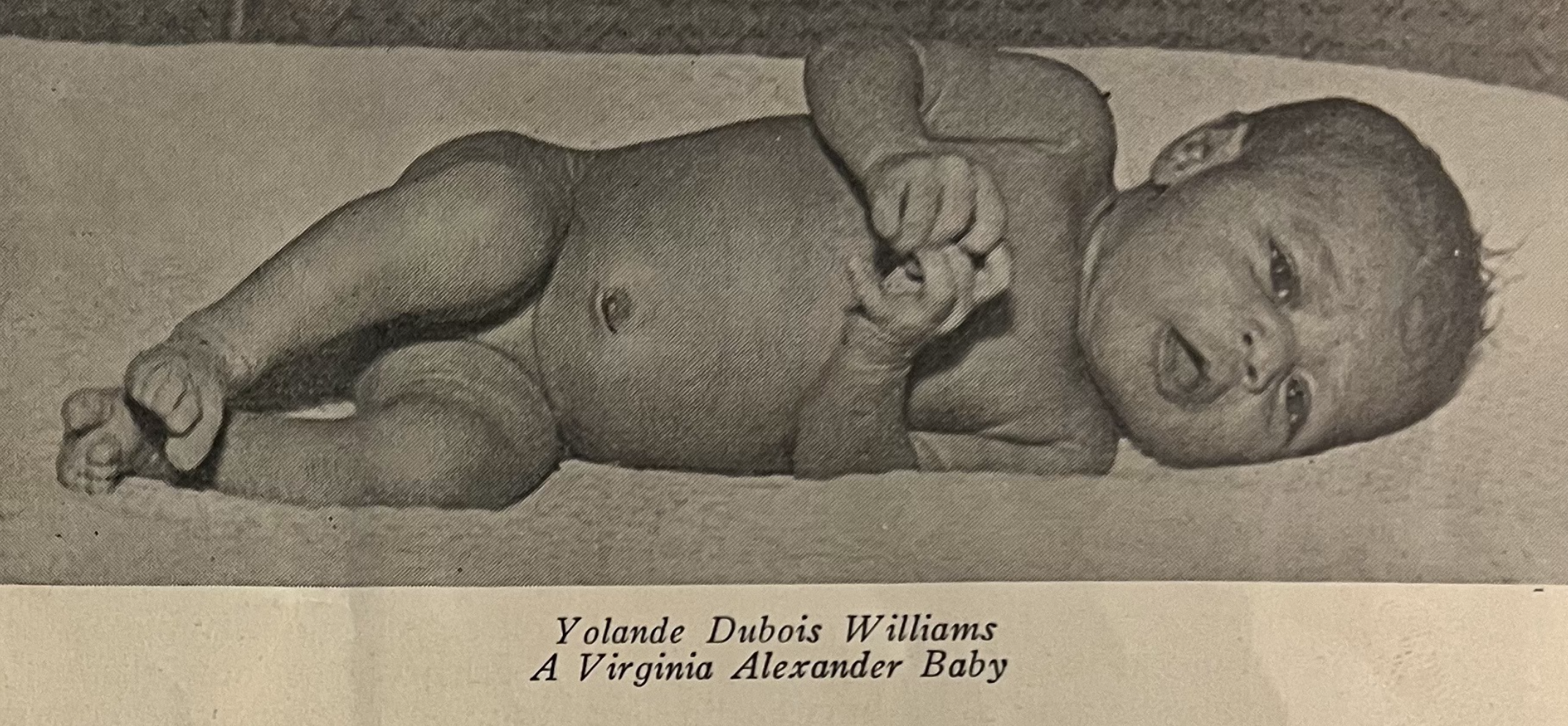
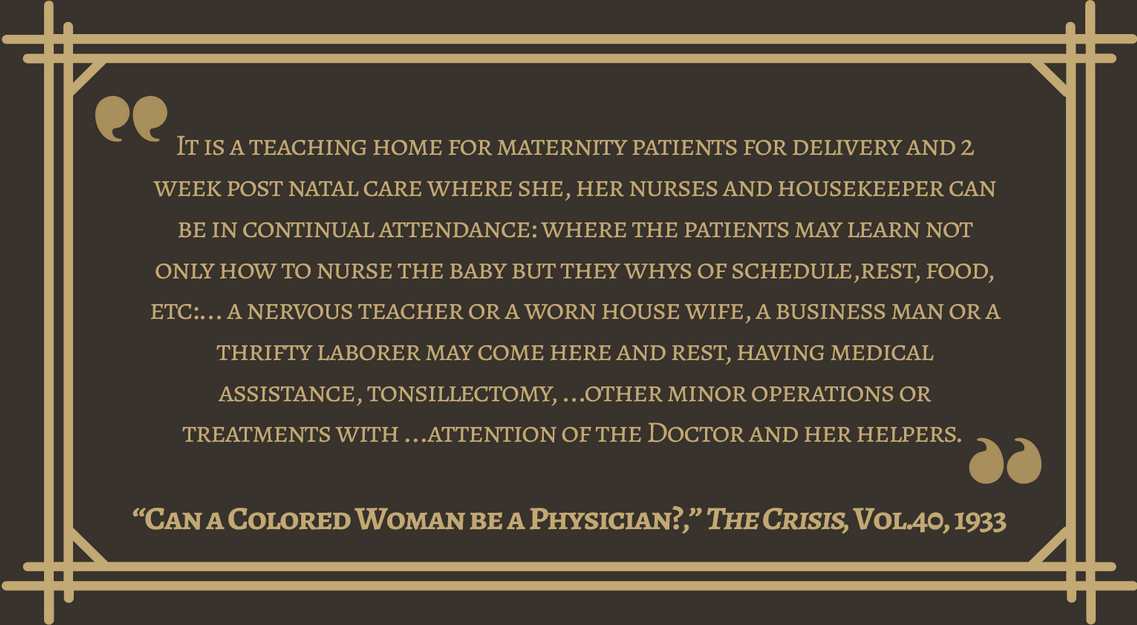
Yolande Dubois Williams. A Virginia Alexander Baby, "Can a Colored Woman be a Physician,". The Crisis (1933). Drexel Legacy Center.
[Granddaughter of W.E.B Dubois, a prolific author with whom Dr.Alexander had an affair.]
By 1933, she had treated over 2000 patients in her office or homes. Her efforts drew female physicians to her practice, and Black hospitals took notice of Aspiranto.
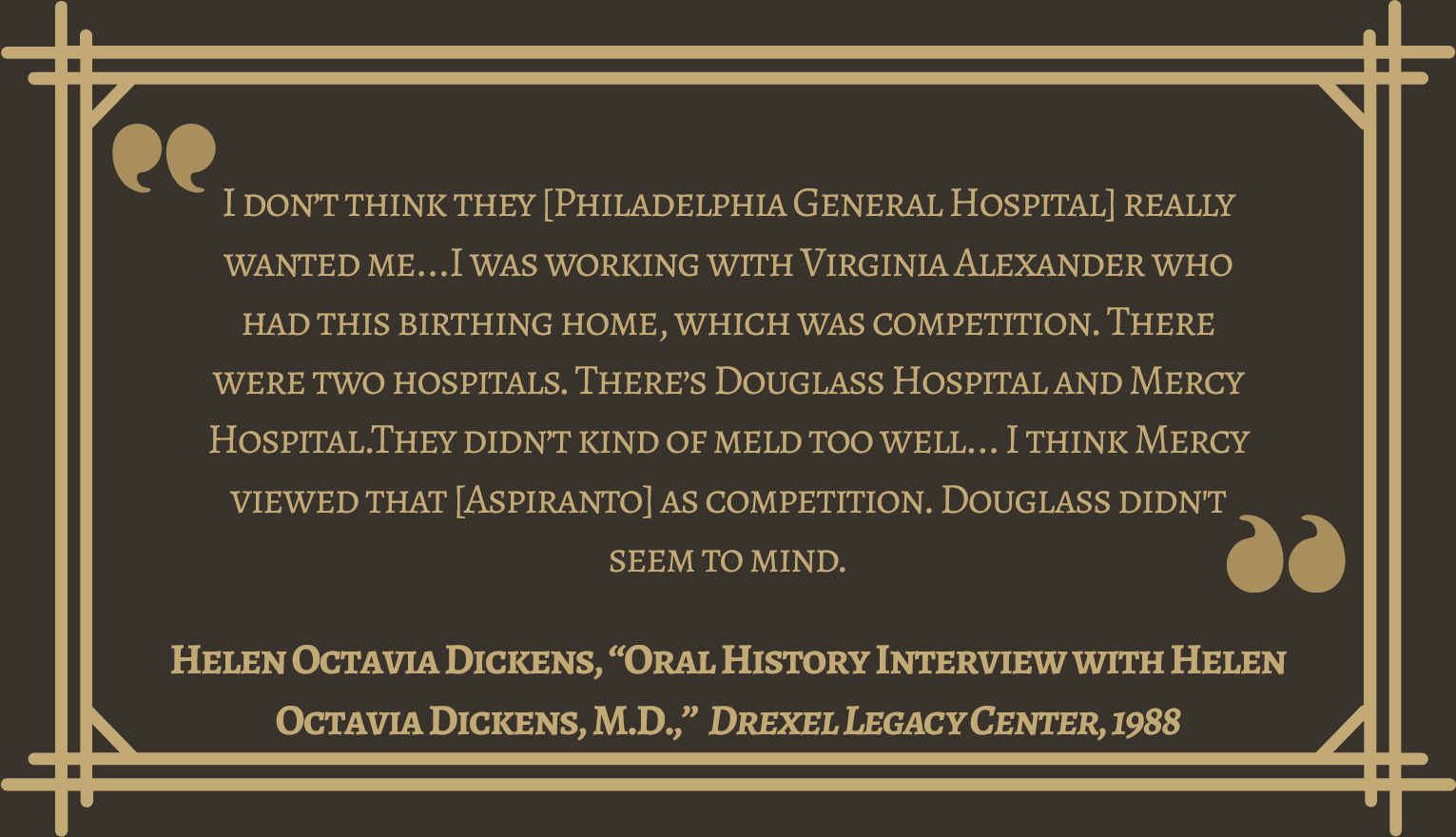
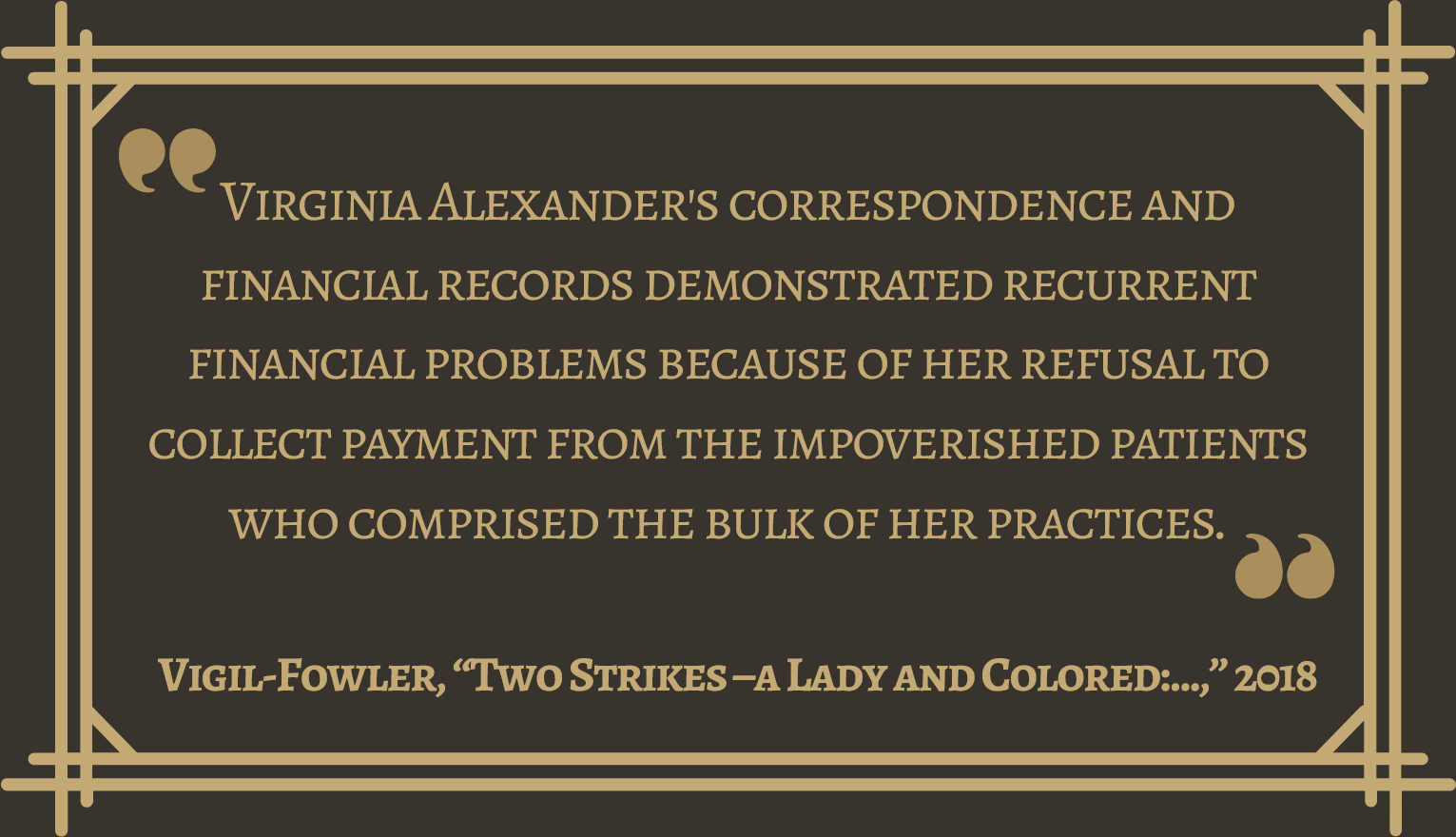
Since Alexander rarely collected fees from patients, her grave financial situation put her health and relationship with her sister at risk.
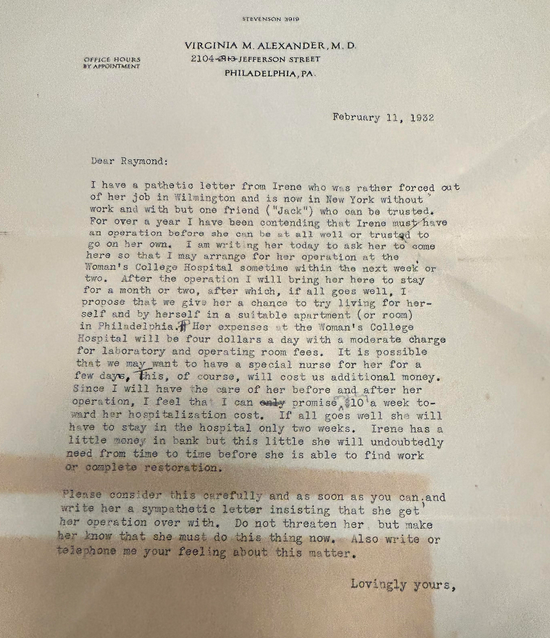
Virginia Alexander. Letter to Raymond Pace Alexander. February 11, 1932, Virginia Margaret Alexander Papers. University of Pennsylvania Archives and Records Center, Philadelphia.
Aspiranto was a revolutionary act that transformed a private home into a beacon of medicine, proving that compassionate care could flourish even in the face of systemic exclusion.
Haley Lau and Tania Wasim
Senior Division
Group Website
Student Composed Words: 1200
Process Paper Words: 450
Media Length: 0:47