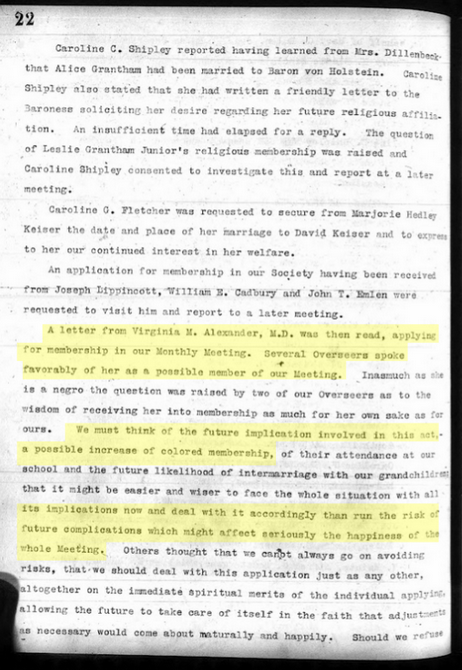
"Overseer Minutes December 17,1930,". U.S., Quaker Meeting Records, 1681-1935. Friends Historical Library. Swarthmore, Pennsylvania.
Reform:
Quakers in Philadelphia
Dr. Alexander, as the first Black member of the Germantown Monthly Meeting, implemented racial reforms within the organization and in Philadelphia.
In 1918, Alexander stumbled upon a Quaker meeting at Penn and felt a spiritual connection.
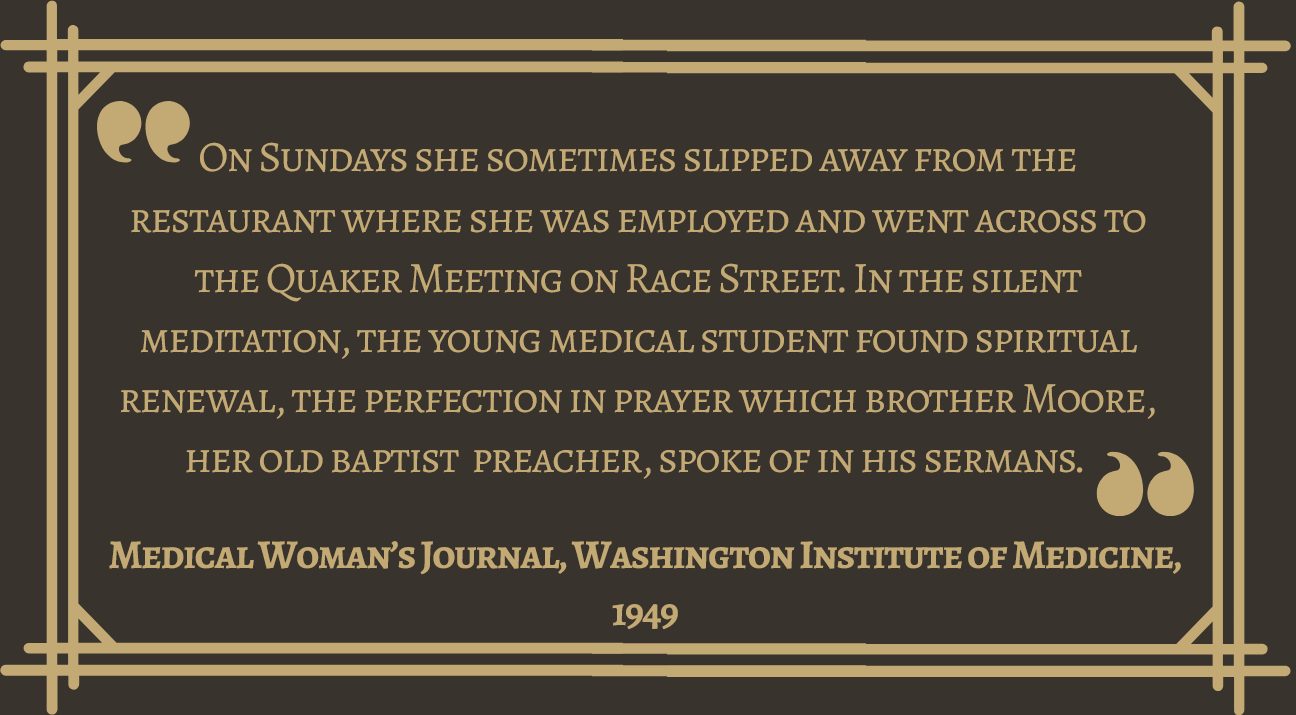
She applied for membership to the Germantown Monthly Meeting, but they were reluctant to accept her due to her race.
"Overseer Minutes December 17,1930,". U.S., Quaker Meeting Records, 1681-1935. Friends Historical Library. Swarthmore, Pennsylvania.
In September 1930, her membership was approved. Her involvement in the group provided a new perspective on dealing with racial issues, prompting more interracial efforts within the group.
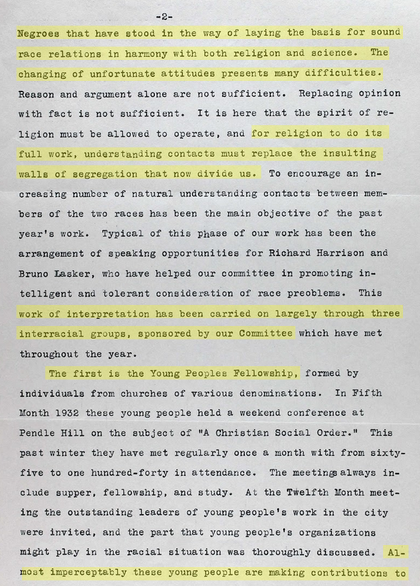
"Overseer Minutes 1932-1933 p2,". U.S., Quaker Meeting Records, 1681-1935. Friends Historical Library. Swarthmore, Pennsylvania.
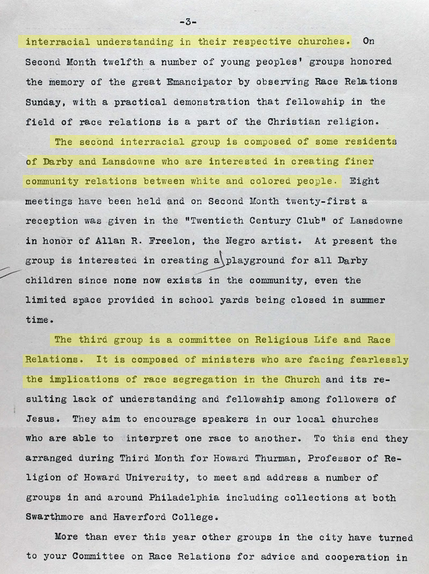
"Overseer Minutes 1932-1933 p.3,". U.S., Quaker Meeting Records, 1681-1935. Friends Historical Library. Swarthmore, Pennsylvania.
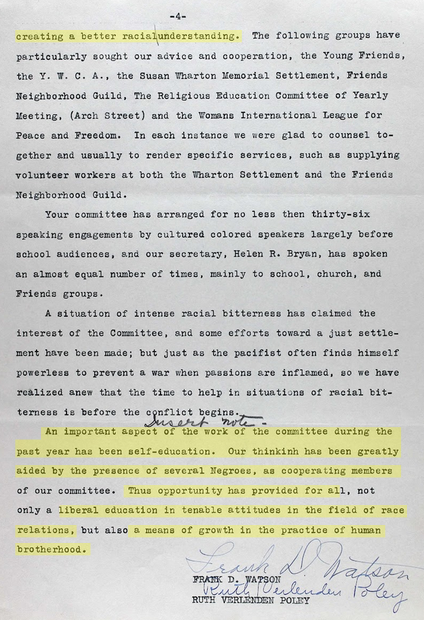
"Overseer Minutes 1932-1933 p.4,". U.S., Quaker Meeting Records, 1681-1935. Friends Historical Library. Swarthmore, Pennsylvania.
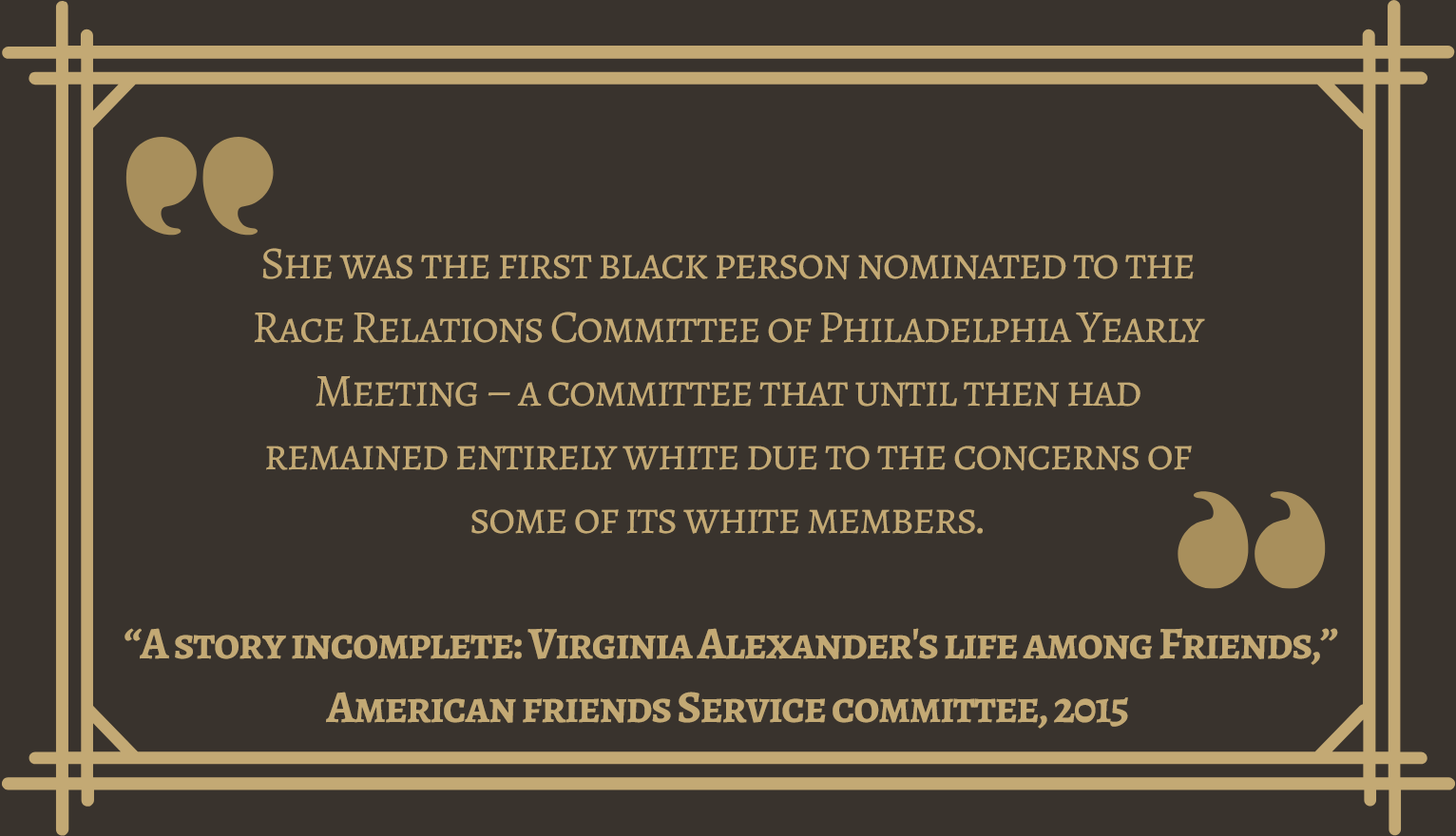
Alexander’s active role in the Race Relations Committee pushed Quakers to fight for racial reforms in the group and medical field.
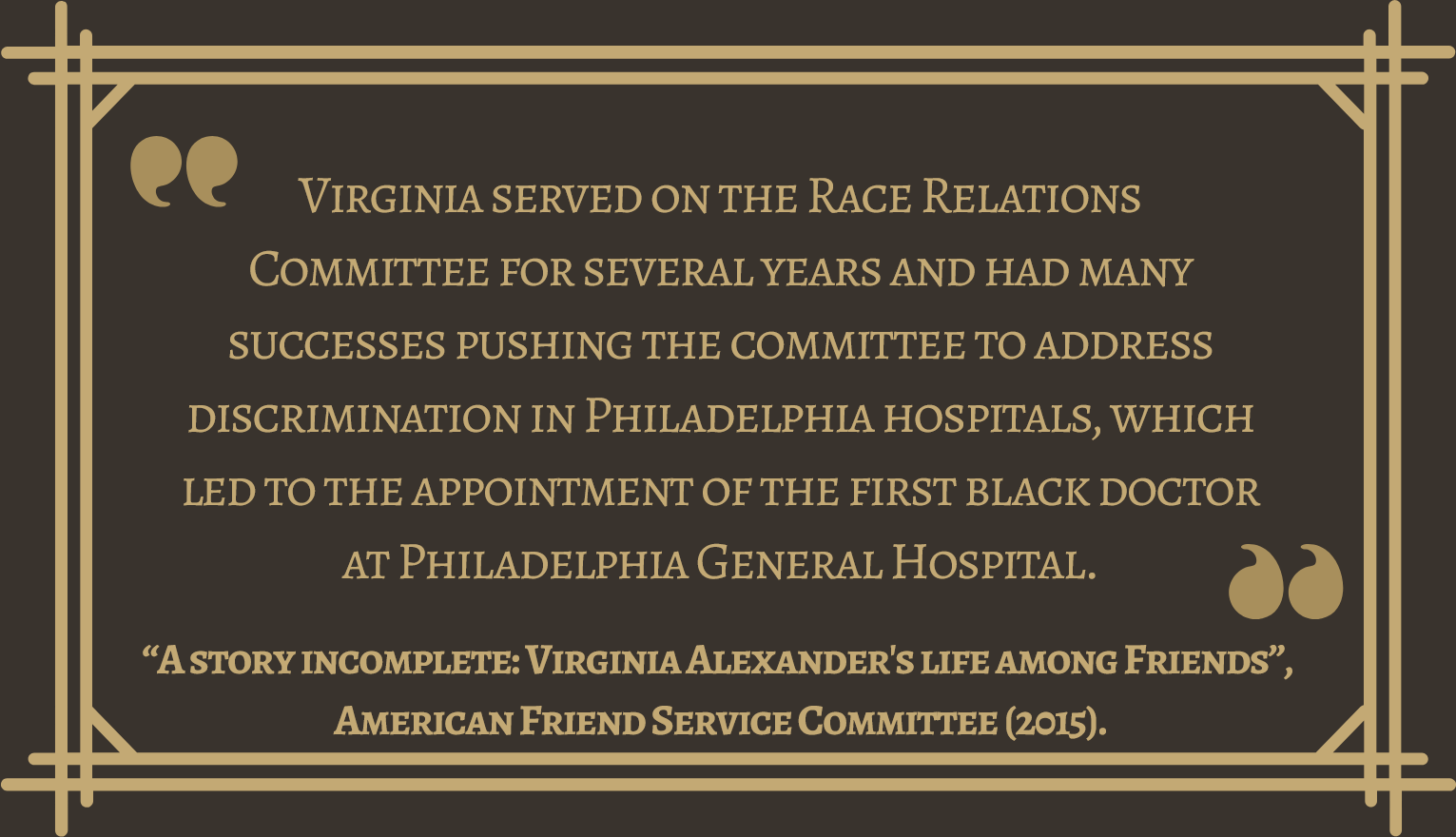
Alexander’s active role in the Race Relations Committee pushed Quakers to fight for racial reforms in the group and medical field.
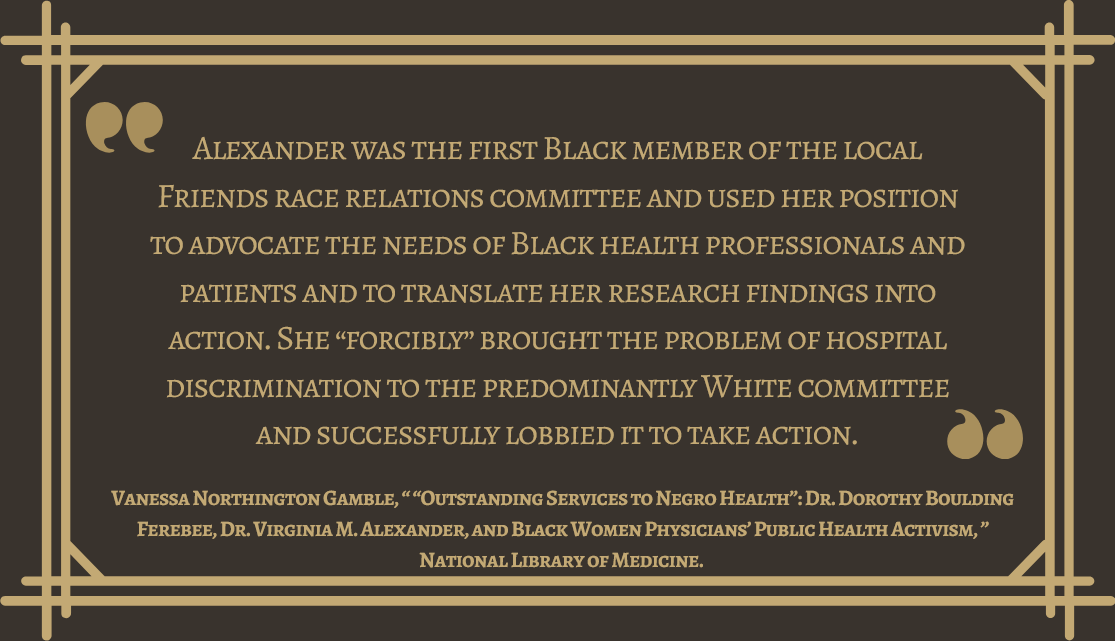
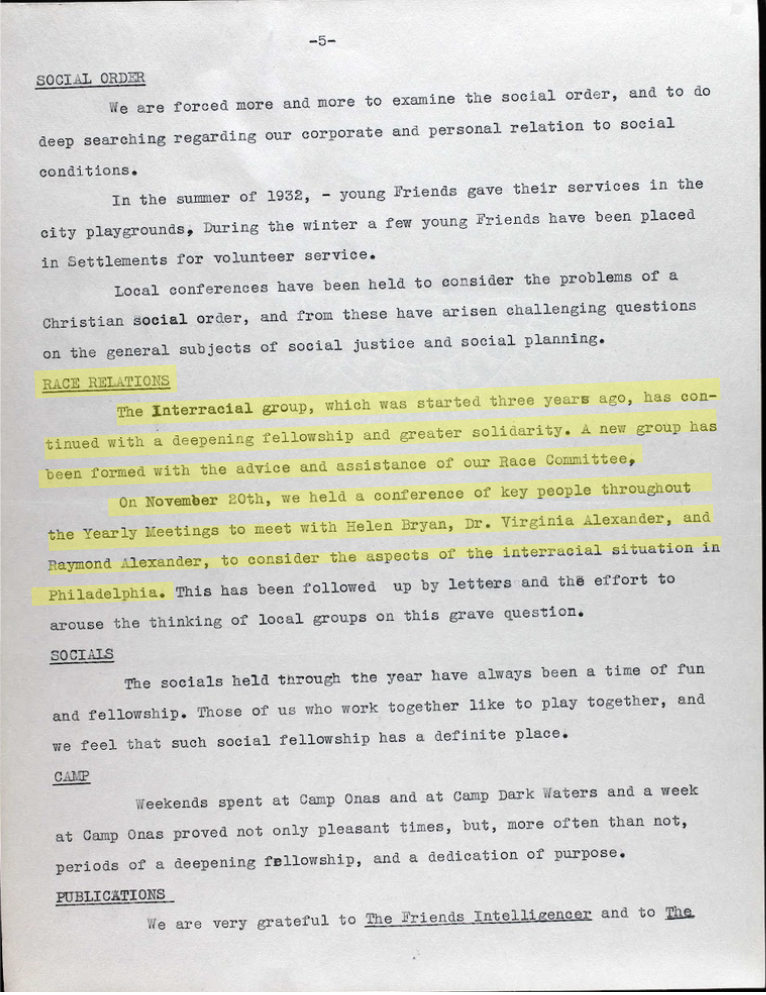
"Overseer Minutes 1932-1933, p.5,". U.S., Quaker Meeting Records, 1681-1935. Friends Historical Library. Swarthmore, Pennsylvania.
Because of her impactful reforms, the Germantown Monthly Meeting funded her research on racial discrimination in healthcare.
Haley Lau and Tania Wasim
Senior Division
Group Website
Student Composed Words: 1200
Process Paper Words: 450
Media Length: 0:47