The CIA, through MoMA sent several art exhibitions to Europe, the most significant being The New American Painting, which was shown in eight countries. It consists of 81 works by 17 artists:
William Baziotes, James Brooks, Sam Francis, Arshile Gorky, Adolph Gottlieb, Philip Guston, Grace Hartigan, Franz Kline, Willem de Kooning, Robert Motherwell, Barnett Newman, Jackson Pollock, Mark Rothko, Theodoros Stamos, Clyfford Still, Bradley Walker Tomlin and Jack Tworkov
Abstract Expressionism:
Cold War Propaganda to Combat Communism
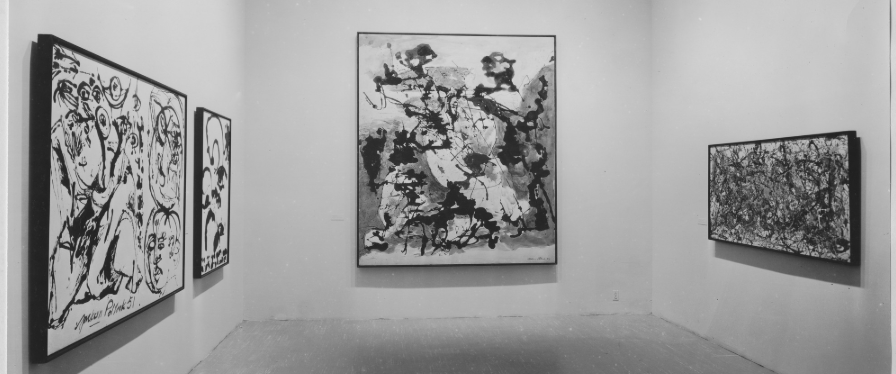
The New American Painting as Shown in Eight European Countries 1958–1959, Jackson Pollock
In Europe
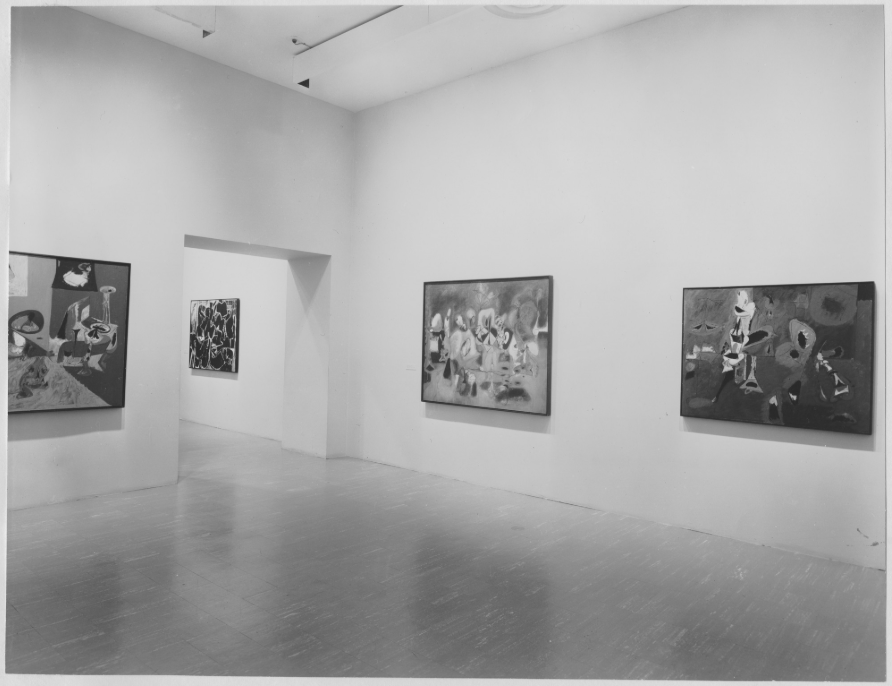
The New American Painting as Shown in Eight European Countries 1958–1959, Arshile Gorky
As The Critics Saw It
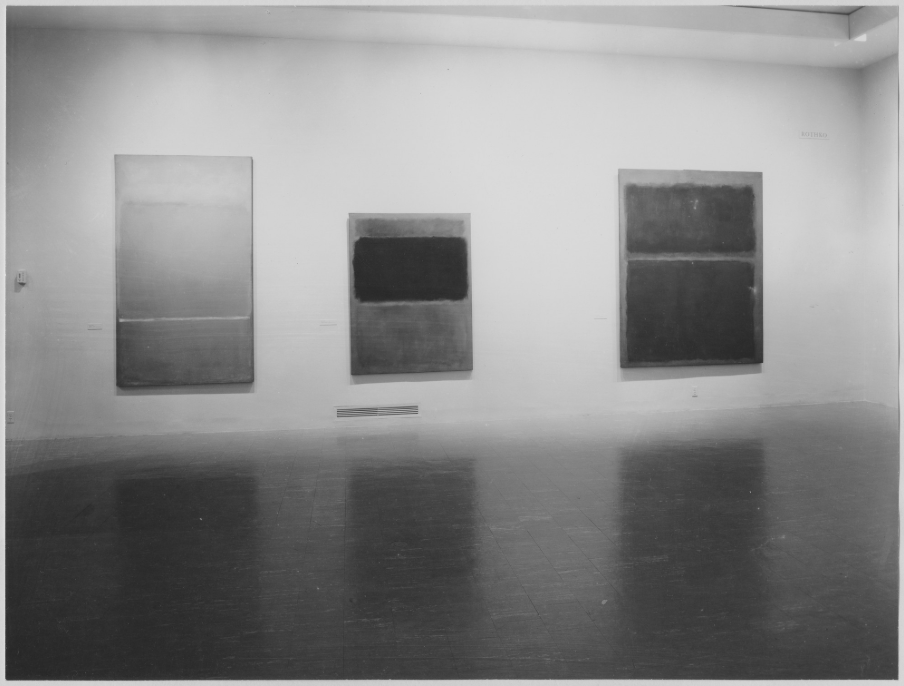
The New American Painting as Shown in Eight European Countries 1958–1959, Mark Rothko
"In view of the large number of great talents, one can speak of an American School; for the first time in the history of art, personalities are emerging that are not influenced by Europe, but, on the contrary, influence Europe, including Paris. For nearly ten years Pollock has exerted his influence on the avant-garde of all countries... The unshakable fortress of the French School is shaken." -Will Grohmann, Der Tagesspiegel, Berlin, September 7, 1958
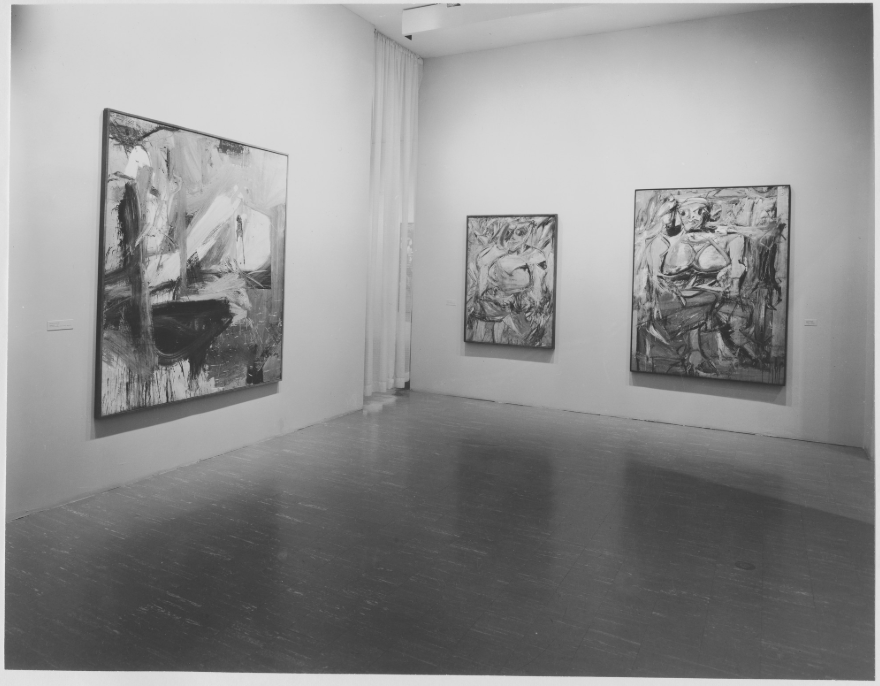
The New American Painting as Shown in Eight European Countries 1958–1959, Willem de Kooning
"This impelling urge toward utter freedom and uninhibited statement frees this style of painting of all symbolic sign language and allows it to reach the most spontaneous manifestation of emotion." -Helmi Gasser, Neue Zürcher Zeitung, Zurich, May 23, 1958
"...the images are so abundant and so permeated by the fantasy and motivations of Americans ideals, that one must admit it has by now the look of independence, decisively recognizable." -Marco Valsecchi, Il Giorno, Milan, June 10, 1958
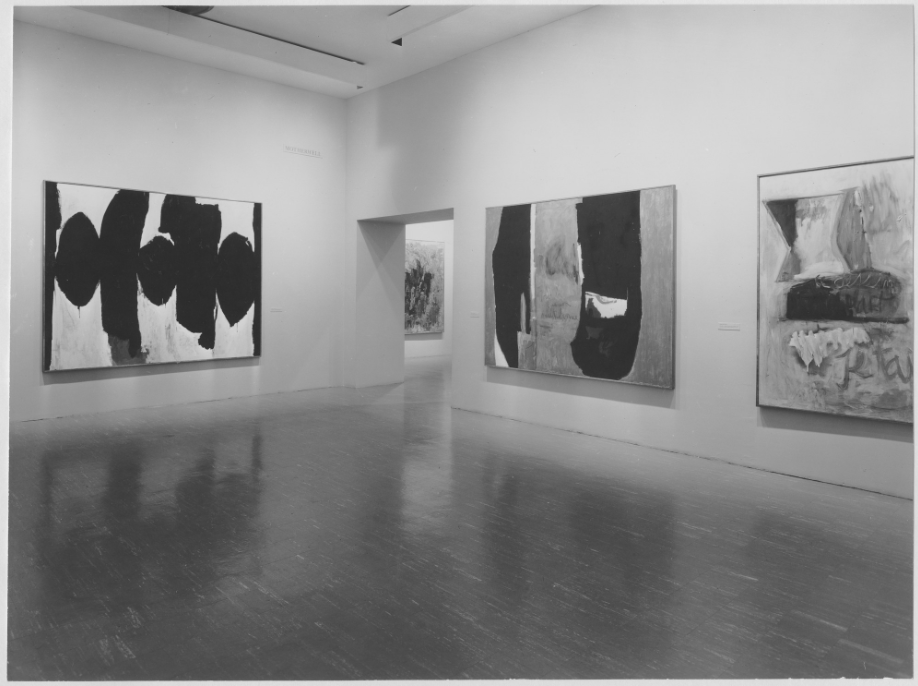
The New American Painting as Shown in Eight European Countries 1958–1959, Robert Motherwell
"All of which emphasizes to an extreme degree the originality of the American scene" -Andre Chastel, Le Monde, Paris, January 17, 1959"
"But here again the quality of adventure, of individual striving, of hammering out modes of expression with a pioneering sense of independence, lends these personal utterances a forceful, easily communicable, vitality." -From Our Art Critic, The Times, London, February 4, 1959
Overall the European reception of this exhibit, and the American exhibits in general, was positive. While there were negative reviews, the majority of European critics expressed how the art demomstrated American creativity and freedom.