As soon as the CIA was founded in 1947, they had plans to use culture and art during the Cold War. In 1954, the International Organization Division of the CIA was created to combat communist fronts. They sent art abroad, symphonies abroad, and published magazines abroad, all things Congress was against doing, so the CIA had to do them covertly.
Abstract Expressionism:
Cold War Propaganda to Combat Communism
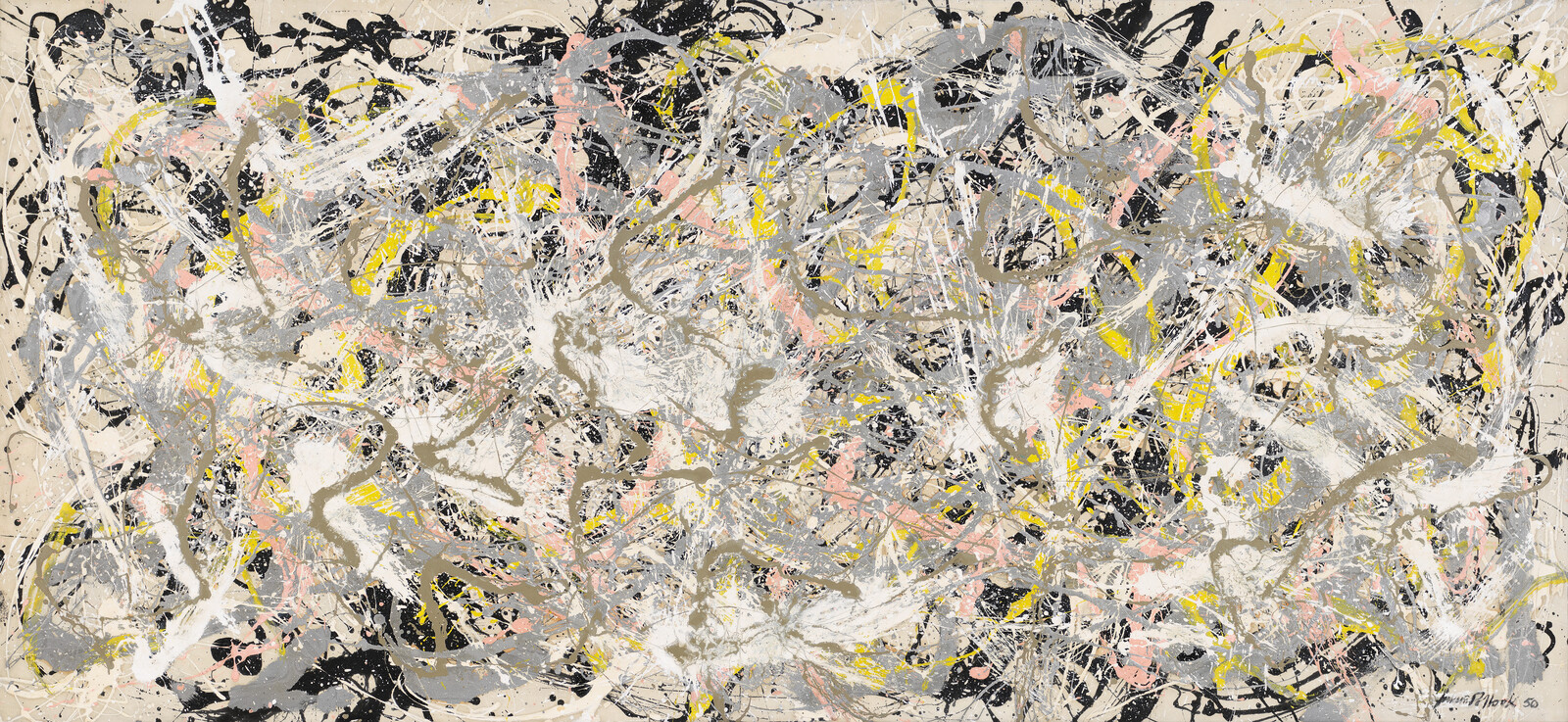
Jackson Pollock, Number 27, 1950
CIA Funding
"We wanted to unite all the people who were writers, who were musicians, who were artists, to demonstrate that the West and the United States was devoted to freedom of expression and to intellectual achievement, without any rigid barriers as to what you must write, and what you must say, and what you must do, and what you must paint, which was what was going on in the Soviet Union. I think it was the most important division that the agency had, and I think that it played an enormous role in the Cold War." -Tom Braden, first chief of the CIA's International Organisations Division
"could only have been done through the organizations or the operations of the CIA at two or three removed, so that there wouldn’t be any question of having to clear Jackson Pollock, for example, or do anything that would involve these people in the organization – they’d just be added at the end of the line... most of them were people who had very little respect for the government in particular and certainly none for the CIA"- Donald Jameson
The Congress for Cultural Freedom (CCF)
Beginning in September 1948, the Soviet Union sponsored a series of "peace" conferences that denounced the Truman administration. The first held in the West took place at New York's Waldorf-Astoria Hotel in March 1949, where 800 writers and artists promoted peace with Stalin and accused the US of war-mongering, promoting harassment from the Americans for Intellectual Freedom. The Office of Policy Coordination(OPC), the CIA's new covert action arm, viewed these events and began planning how to counteract.
After a US-backed counter-conference in Paris in April 1949, American officials concluded that a more effective and credible anti-communist response was needed. After a planning meeting in Frankfurt, the decision was made to host an international conference for anti-Communism in Berlin the next year.
The CIA knew that if the US government openly sponsored the conference, it would lose credibility. The Truman administration officers also did not want to sponsor the former Communists. In late 1949, Michael Josselson proposed covertly funding the congress. CIA members were told to stay away from the congress, as to not cause suspicion or criticism.
The CCF convened in Berlin's Titania Palace on June 26, 1950. It was proof that even though people had differing beliefs, they could be civil and share those beliefs, as they were all against Communism. OPC officers began campaigning to have permanent covert backing for the CCF, which was approved.
Through the CCF, the CIA published political/literary journals, hosted dozens of conferences for the most eminent Western thinkers and helped intellectuals behind the Iron Curtain.
"Now the theme is that the United States and the Western democracies are the war-mongers and Fascists and the Kremlin and its stooges the peace-loving democracies"
-Raymond Murphy, State's Office of European Affairs
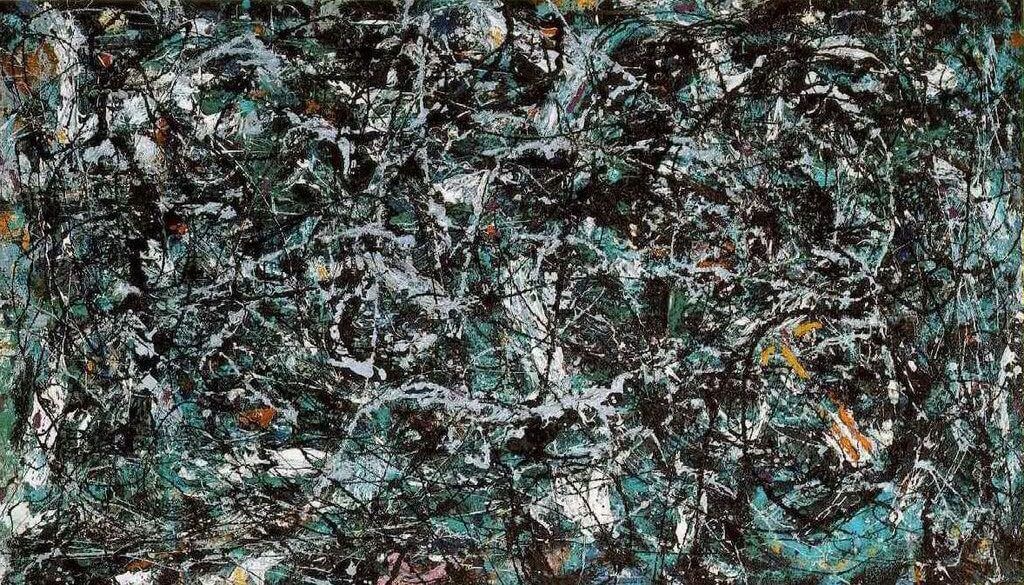
Jackson Pollock, Full Fathom Five, 1947
"Leadership of the Congress sessions spontaneously devolved on two eloquent Europeans with very different views: the Italian socialist Ignazio Silone and the Anglicized Hungarian writer Arthur Koestler... These competing themes lent a certain dramatic tension to the Congress, but their rivalry by itself helped to make the point that debate in the West is truly free, with room for all shades of anti-totalitarian opinion."
-Micheal S. Warner, CIA
Museum of Modern Art (MoMA)
"I assumed Nelson knew pretty much everything about what we were doing"
-Tom Braden, CIA
"In June, 1941, a Central Press wire story claimed MoMA as the 'latest and strangest recruit in Uncle Sam’s defense line-up.'"
-Eva Cockcroft
The CIA worked with millionaires and museums to move art around. They worked especially with Nelson Rockefeller, the president of MoMA. Within MoMA, there were many people who had ties to the CIA.
MoMA served as a key institutional partner in promoting Abstract Expressionism abroad. The museum had a long-standing relationship with national political objectives. MoMA's international program had an innately political purpose: to let Europe know that America was not the cultural backwater the Soviets tried to demonstrate it was. It was created soon after the censorship scandal of "100 American Artists".
MoMA also worked with the CCF, who helped them gain access to prestigious art institutions in Europe.