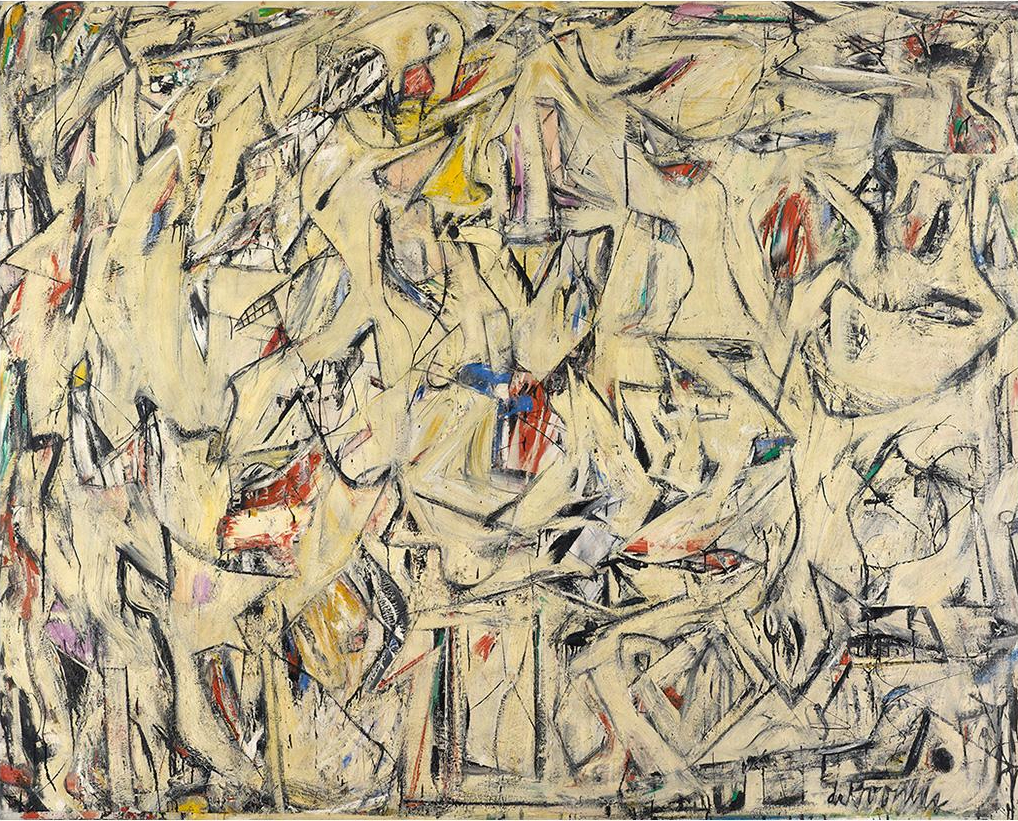
Willem de Kooning, Excavation, 1950
Thesis
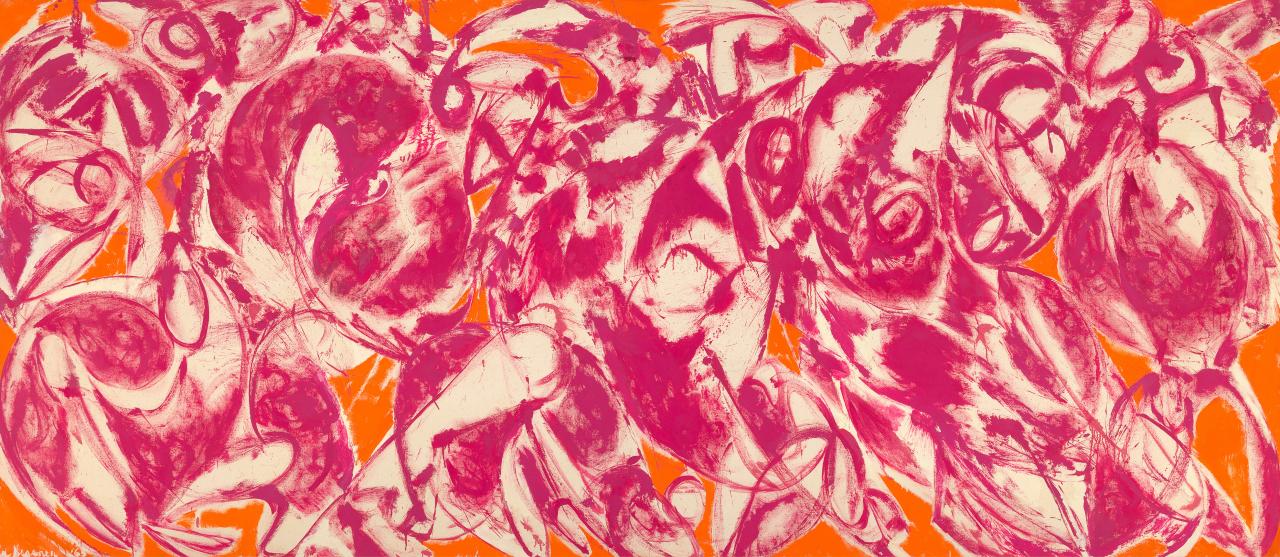
Lee Krasner, Combat, 1965
Willem de Kooning, Excavation, 1950
During the Cold War, as US leaders were publicly rejecting all modern art and as the Soviet Union was expanding its cultural and ideological influence, the CIA reacted by covertly promoting Abstract Expressionism overseas through the Congress for Cultural Freedom and the Museum of Modern Art because the movement’s emphasis on individual artistic freedom directly contrasted the Socialist Realism of the Soviet Union, allowing the United States to present itself as a society built on creative independence rather than state control, reshaping European intellectual opinion and hindering claims that America was a cultural desert.