Abstract Expressionism appeared after the end of WWII in the late 1940s. It was given its name on March 23, 1946 in a New Yorker art review by Robert M. Coates.
Abstract Expressionism:
Cold War Propaganda to Combat Communism
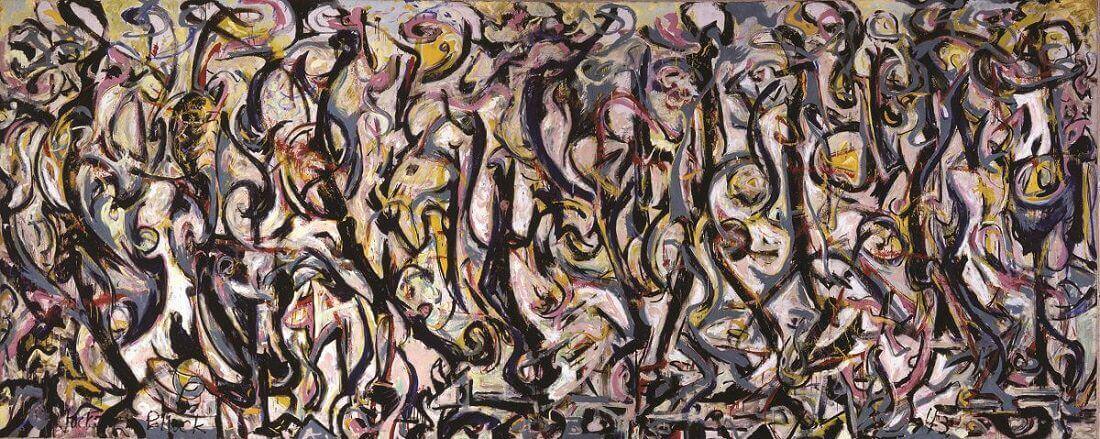
Jackson Pollock, Mural, 1943
The Art
"what some people call the spatter-and-daub school of painting and I, more politely, have christened abstract Expressionism."
-Robert M. Coates
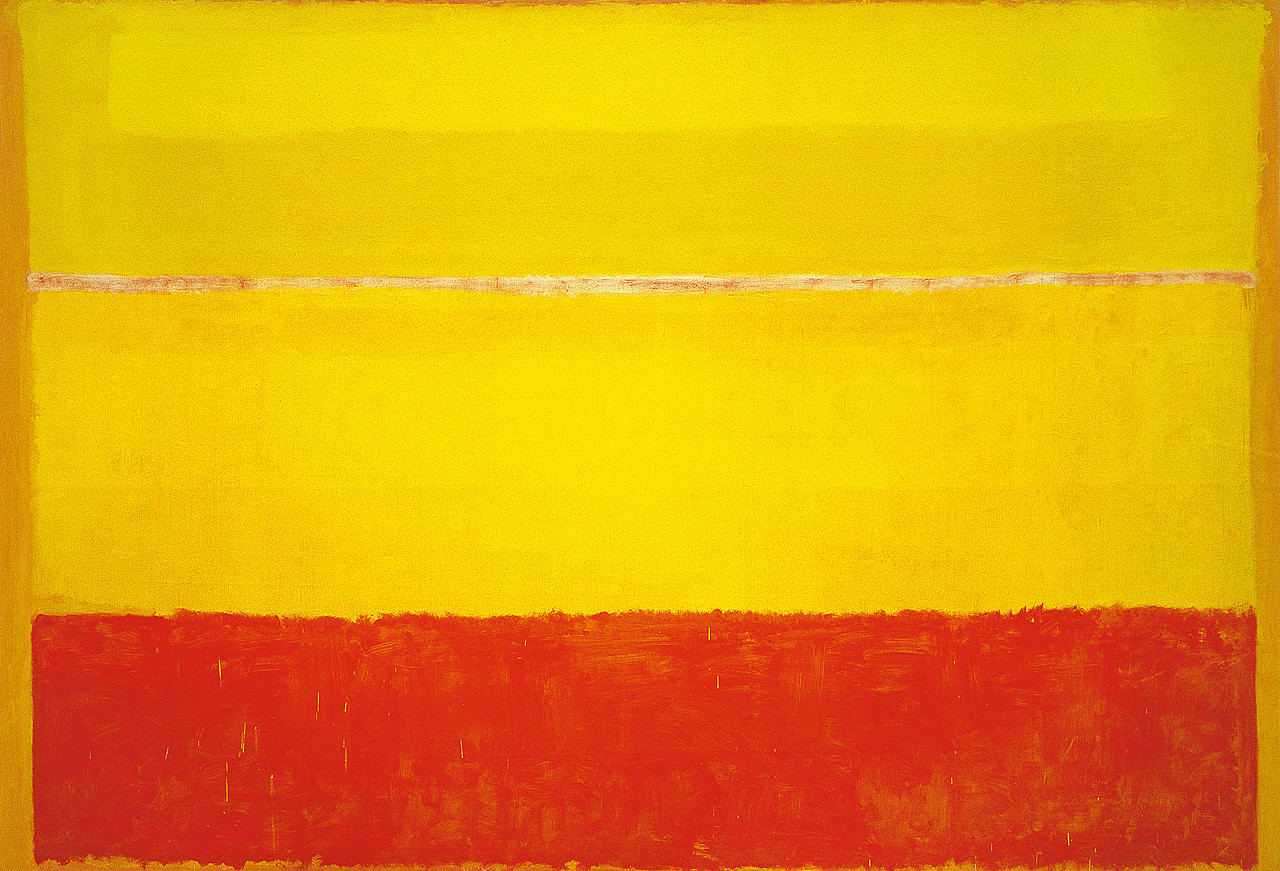
Mark Rothko, Untitled, 1952-53
Abstract Expressionism combined the emotional intensity of German Expressionism with Futurism, the Bauhaus, and Synthetic Cubism. The Red Scare caused heavy artistic censorship in the 1950s. Abstract art was safe from this censorship because it was considered apolitical.
While abstract expressionist paintings vary greatly between artists, they share certain characteristics, including the use of large canvases, and an "all-over" approach.
The Techniques
Action Painting
Action painting puts emphasis more on the process of painting and the physical act of creation than the art itself.
Drip Painting
Drip painting, a type of action painting, made famous by Jackson Pollock, involves pouring, dripping, and flinging paint on a canvas on the floor. The painting to the right is a great example of this.
Color Field
Color field paintings, such as the Rothko above, focus on large, flat areas of solid color to evoke emotion and transcendence, moving away from the gestural abstraction of action painting.
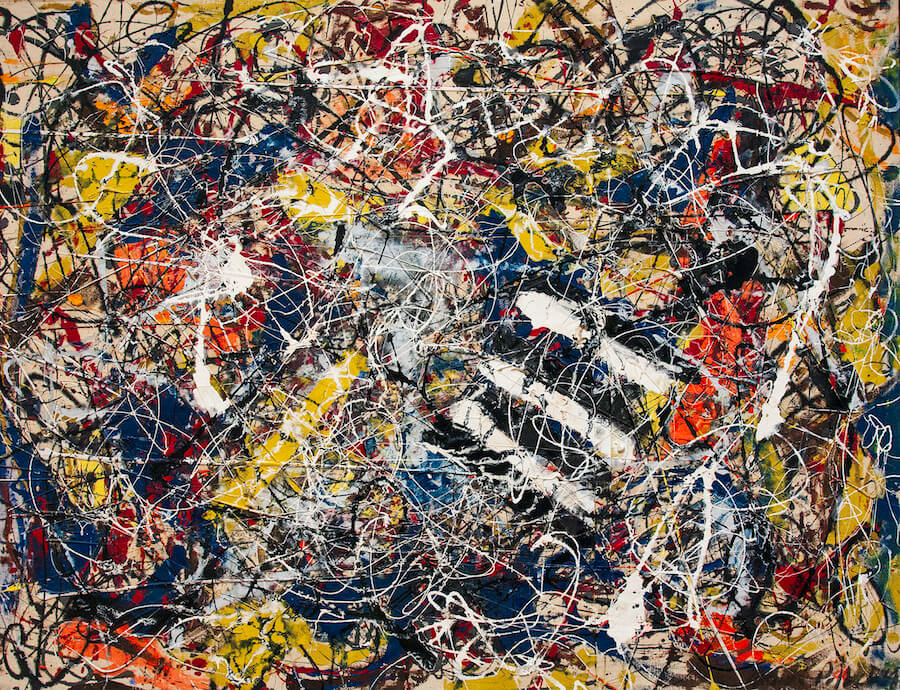
Jackson Pollock, Number 17a, 1948
"Labeled variously as "abstract expressionism," "action painting" and even "abstract impressionism," their works constitute the first manifestation of American art to draw a standing protest at home as well as serious attention from Europe, where, though deplored more often than praised, they have already influenced an important part of the avantgarde."
-Clement Greenberg