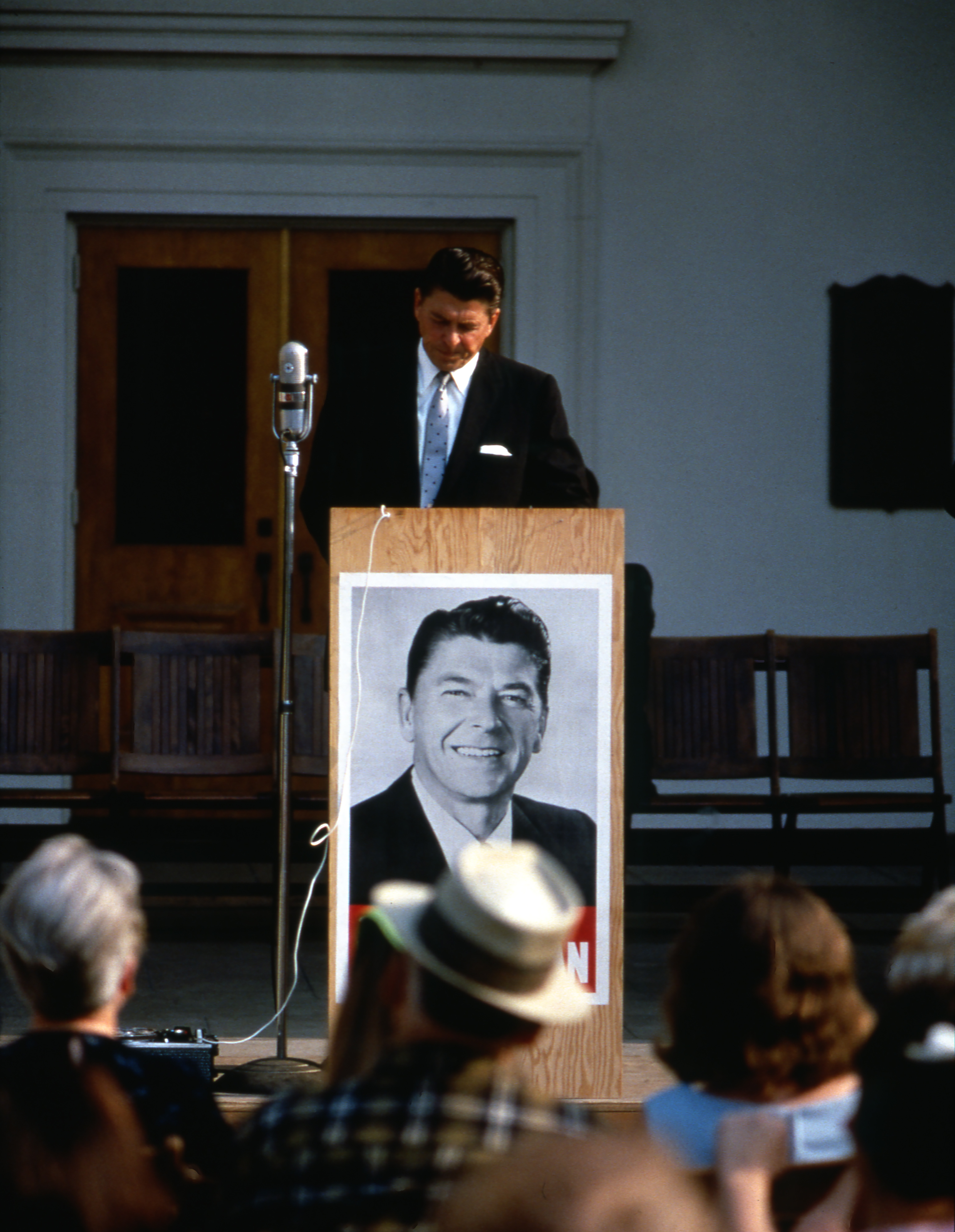
Courtesy of the Reagan Library
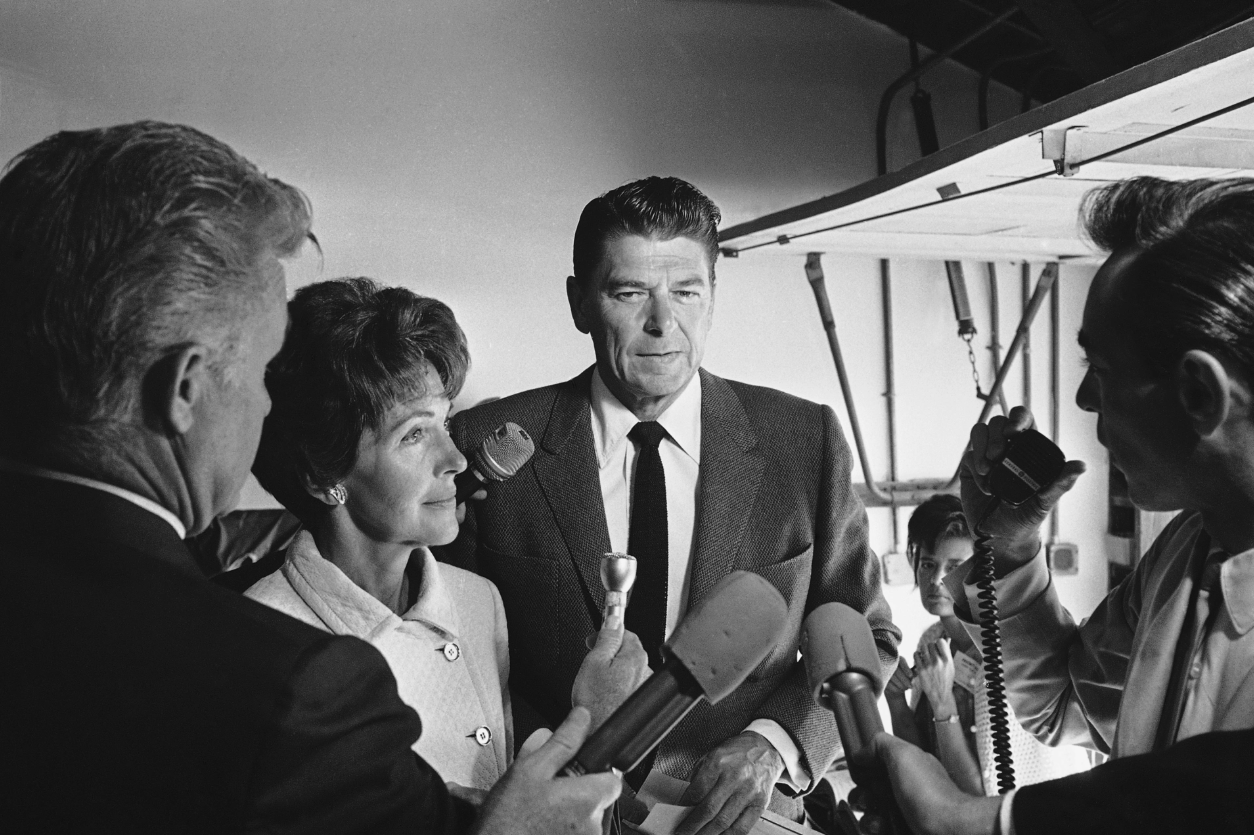
Courtesy of the Associated Press Photo Collection
"When Goldwater lost to Johnson that November, Reagan became the darling of the nation's conservatives, some of whom were soon urging him to challenge Brown for the governorship."
Seth Rosenfield, Investigative Journalist for the SF Chronicle
Reagan, due to his popularity and rhetoric, had won the Republican primary with 64.68% of the vote.
Reagan successfully capitalized on the perception of immorality by reframing student activism as lawless chaos and impure by nature, arguing that universities had lost control. Voters did not look at Reagan to solely react to public concern; they looked at Reagan to restore moral order.
Courtesy of the Reagan Library
"There is a leadership gap, and a morality and decency gap at the University of California at Berkeley, where a small minority of beatniks, radicals and filthy speech advocates have brought such shame to... a great university."
Ronald Reagan, "The Morality Gap at Berkeley"
"The young people were seen standing against the walls, were lying on the floors and steps in a dazed condition with glazed eyes consistent with a condition of being under the influence of narcotics. Sexual misconduct was blatant. The smell of marijuana was prevalent..."
Ronald Reagan, "The Morality Gap at Berkeley"
FBI director J. Edgar Hoover backed Reagan’s plan for an anti-crime academy deliberately at UC Berkeley and announced former CIA Director John McCone would investigate campus unrest if elected.
Hoover had never interfered in an election until he supported Reagan, reinforcing the extent to which calls for reform had now become national political priorities.
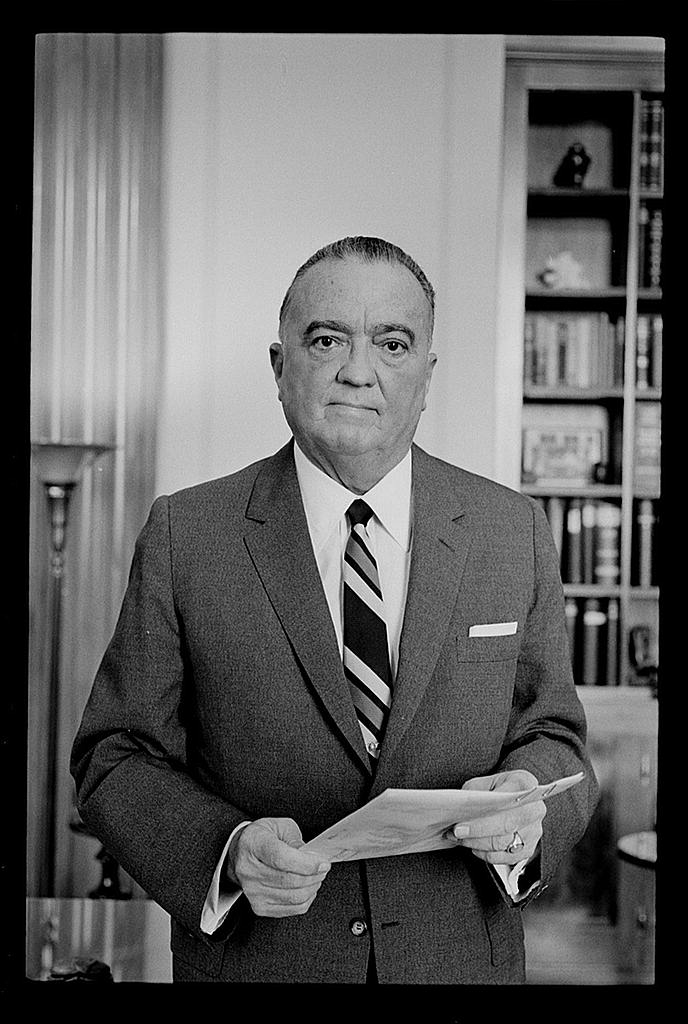
Courtesy of the Library of Congress
"Your many friends in this Bureau join me in the hope that your term in office will meet with every success, and we want you to feel free to let us know whenever we can be of service."
J. Edgar Hoover, Director of the FBI from 1924-1972.
"Brown returned to California from his vacation in Greece during the riots with tough rhetoric upholding the rule of law; however, the more Brown discussed [the] Watts [riots], the more he aligned himself with the rioters, at least in the public’s eye."
Kevin McKenna, History Department, Columbia University
Pat Brown, the incumbent governor of California, was portrayed by Reagan as hesitant towards countercultural unrest, which he effectively juxtaposed with his own commitment to order and reform.
"Will we allow a great university to be brought to its knees by a noisy dissident minority?"
Ronald Reagan, Announcement on Canididacy for California Governor
Reagan had successfully ousted an incumbent governor by swinging the electorate by more than 20 points—a "mini" Reagan Revolution that reshaped California's electoral landscape 14 years before he shaped that of the nation at-large.
The only urban counties with a majority Democratic vote were San Francisco County—the birthplace of the counterculture movement—and Alameda County, the site of UC Berkeley.
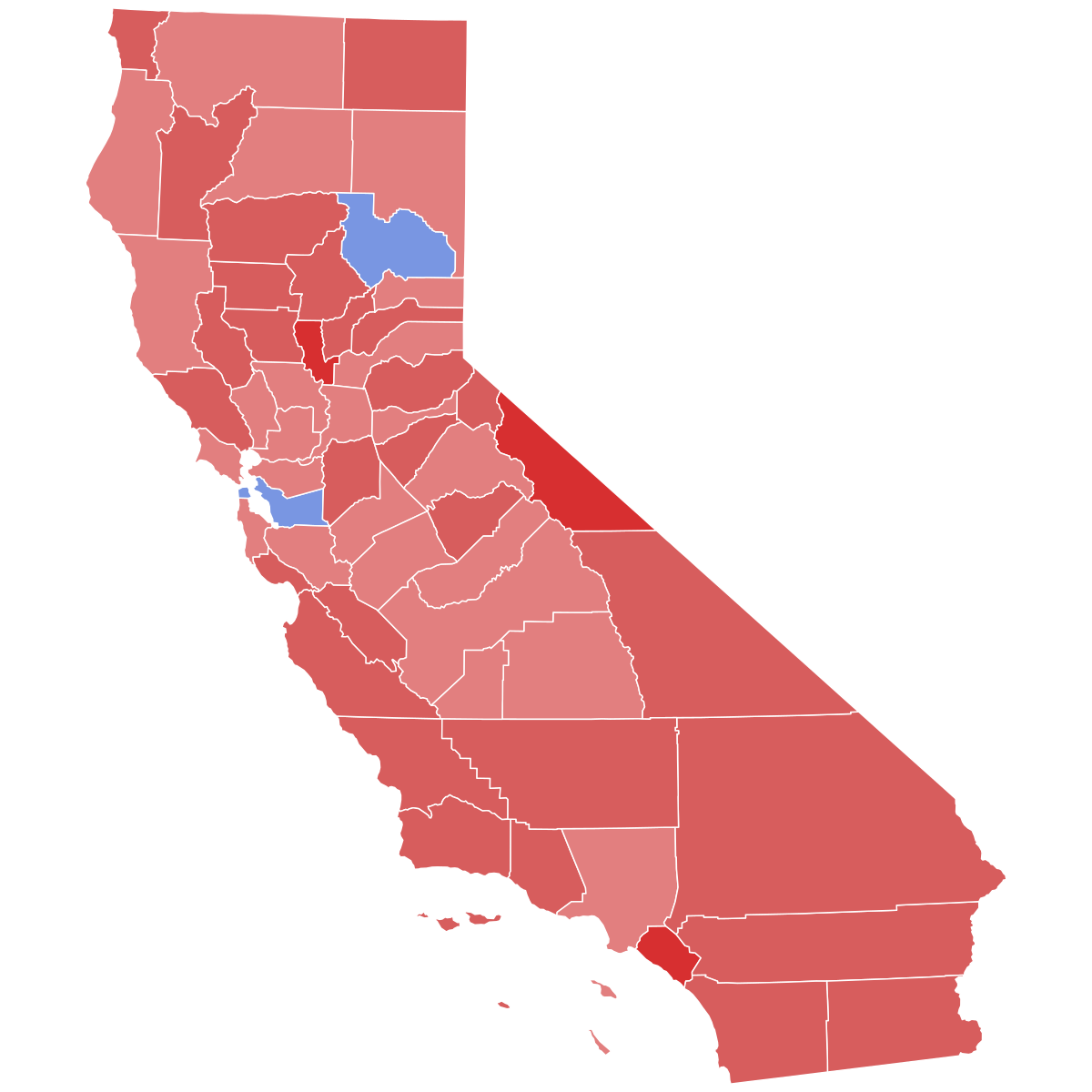
Courtesy of Wikimedia Commons