Organizations like the Vietnam Day Committee (VDC) and the Students for a Democratic Society (SDS) organized demonstrations, teach-ins, and draft card burnings in protest, which were seen as almost subversive.
THE BACKLASH TO BERKELEY
Reagan’s War on Counterculture & the University of California System
VIETNAM WAR PROTESTS INTENSIFY
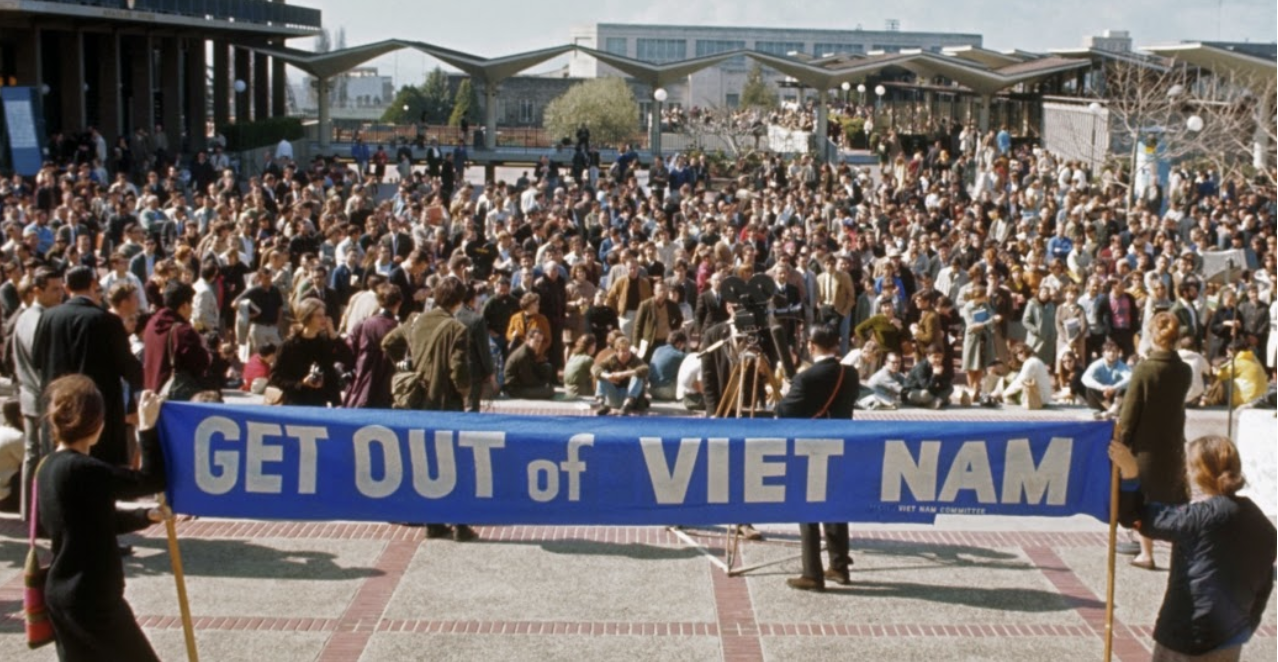
Courtesy of Getty Images
The Vietnam War reshaped the UCs into centers of national protest and became a symbol for the growing counterculture movement in America.
The belief that the spread of communism must be stopped at all costs drove conservatives to continue fighting, whereas anti-war protesters objected morally to the violence in Vietnam, deepening this ideological divide in fueling both revolutionary activism and reactionary response.
"We maintain that our country's cry of 'preserve freedom in the world' is a hypocritical mask."
Student Non-Violent Coordinating Committee; Position Paper: On Vietnam, 1965
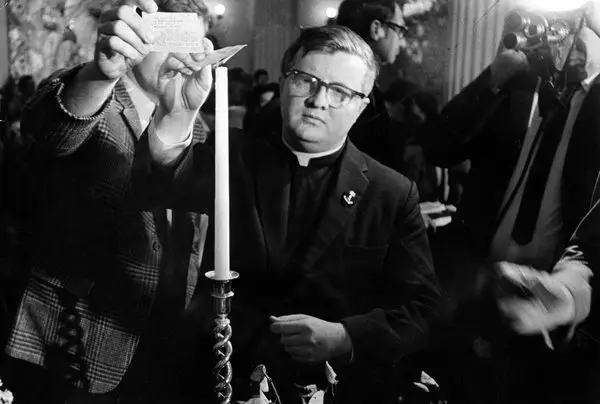
Courtesy of the New York Times
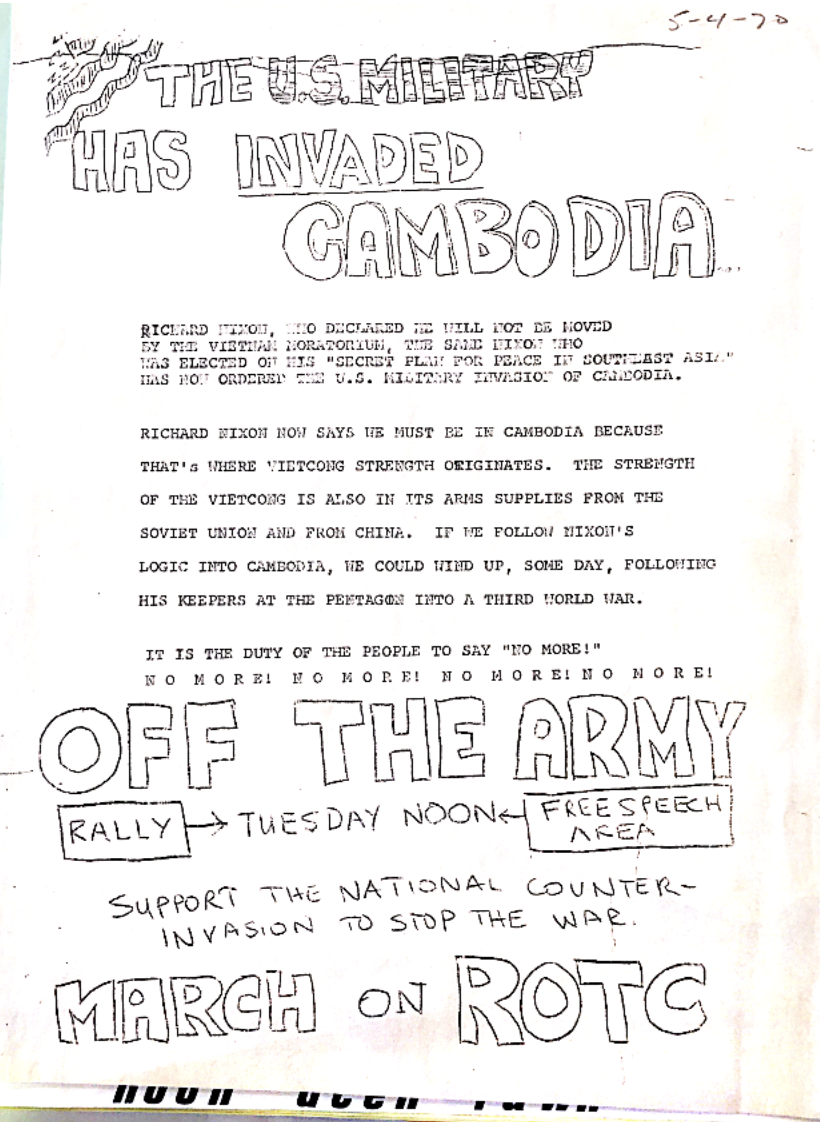
"The U.S. Military Has Invaded Cambodia"
Courtesy of the UCSB Library
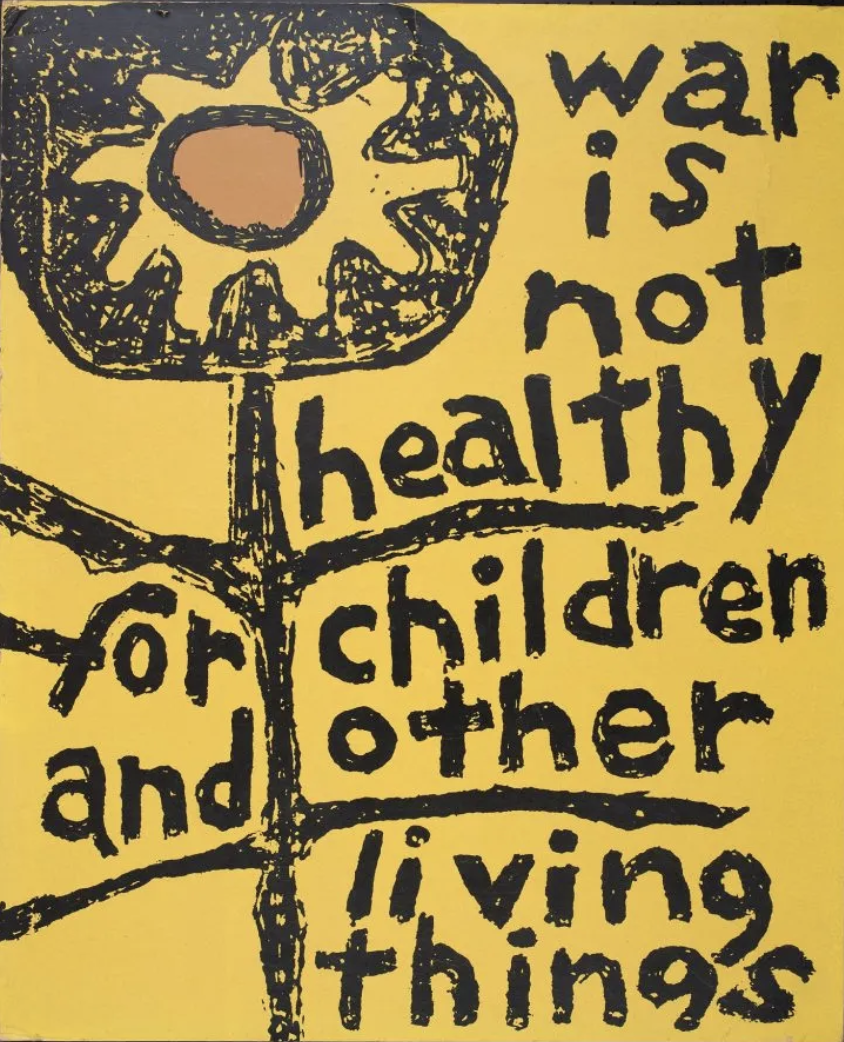
"Primer" Lorraine Schneider
Courtesy of Medium
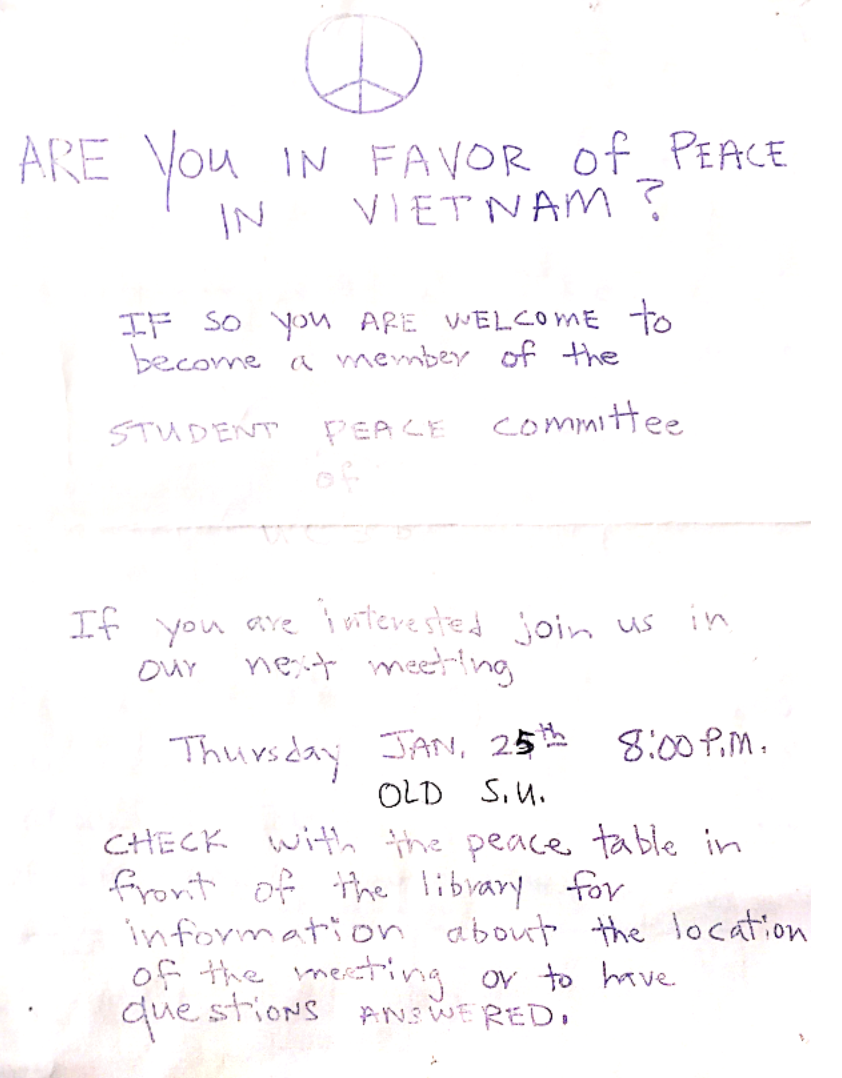
"Are You In Favor of Peace in Vietnam"
Courtesy of the UCSB Library
The Backlash
"YAF’s campus campaigns were designed to undermine the message of the New Left and appropriate sentiments that opposed anti-war and anti-radical viewpoints."
Sandra Scanlon, "The Pro-War Movement"
Students apart of YAF built on Goldwater’s campaign to develop a pro-war movement on campuses, "to undermine the message of the New Left". YAF members often were seen wearing a blue pin, symbolizing resistance in reaction to what they viewed as radical.
"The Blue Button…symbolizes a resistance to the violent tactics of such left-leaning organizations at the Students for a Democratic Society…"
UC Riverside California Aggie, 1969
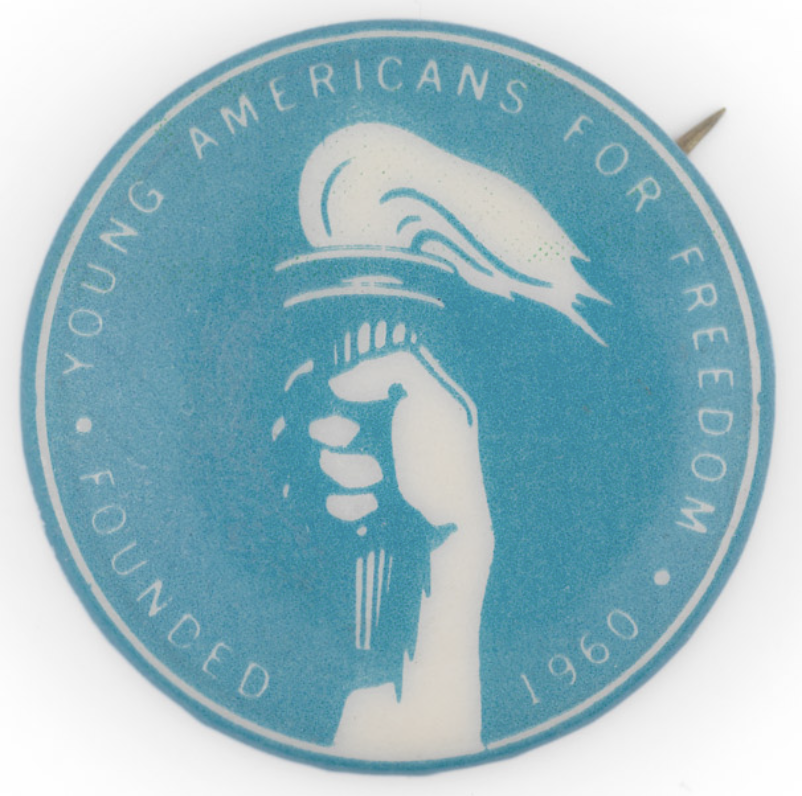
Courtesy of Steven H. Jaffe; Museum of the History of New York
"…several university officials…had been secretly feeding the FBI internal university information that, they believed, showed Kerr not only had tolerated campus dissent but might be subversive himself."
Seth Rosenfield, Investigative Journalist for the SF Chronicle
Reagan met with state assemblyman Don Mulford, and the vice chancellor was found providing personal files on students to the FBI, illustrating how institutional power moved to reform minority dissent, which Reagan successfully achieved as governor.
"I very much appreciate the help of yourself and your associates in providing the true facts on this matter."
Ronald Reagan letter to Don Mulford, 1966
1965-66: Reagan's Race for Governor
←1967-70: Reagan v.s the UC System
→