Point, Click, Shoot: Lewis Hine’s Photographs Create a Turning Point for Child Labor
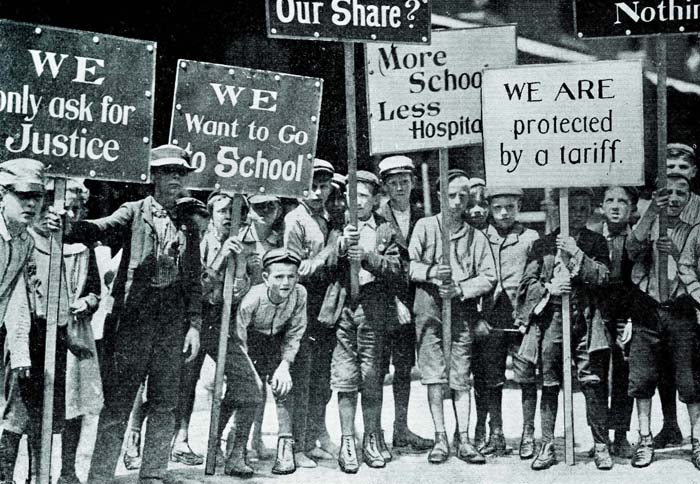
"Children participate in Philadelphia's 1903 textile strike." (Peoples World, N.d.)
Impact
In the short term, Lewis Hine’s photographs had a profound impact on the national conversation around child labor, which forced policymakers to confront the issue and take decisive action.
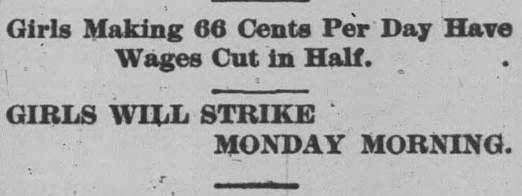
"Girls making 66 cents per day have wages cut in half, GIRLS WILL STRIKE MONDAY MORNING." (The Wheeling Majority, May 1910)
Child Labor Acts
The Keating-Owen Child Labor Act of 1916 established crucial regulations, such as minimum working ages and restrictions on child employment in specific industries. Subsequent laws, such as the Fair Labor Standards Act of 1938, strengthened protections for young workers by establishing national standards for child labor and minimum wage requirements. These laws put protections in place for children in the workforce and paid a living wage to adults in the workplace so they wouldn’t need to send their kids to work.
Education
Today, child labor laws, in combination with compulsory school attendance laws and revelations from child psychologists, have created a new view of childhood as a separate station in life, one that's focused on play and learning for optimal growth and development in children.
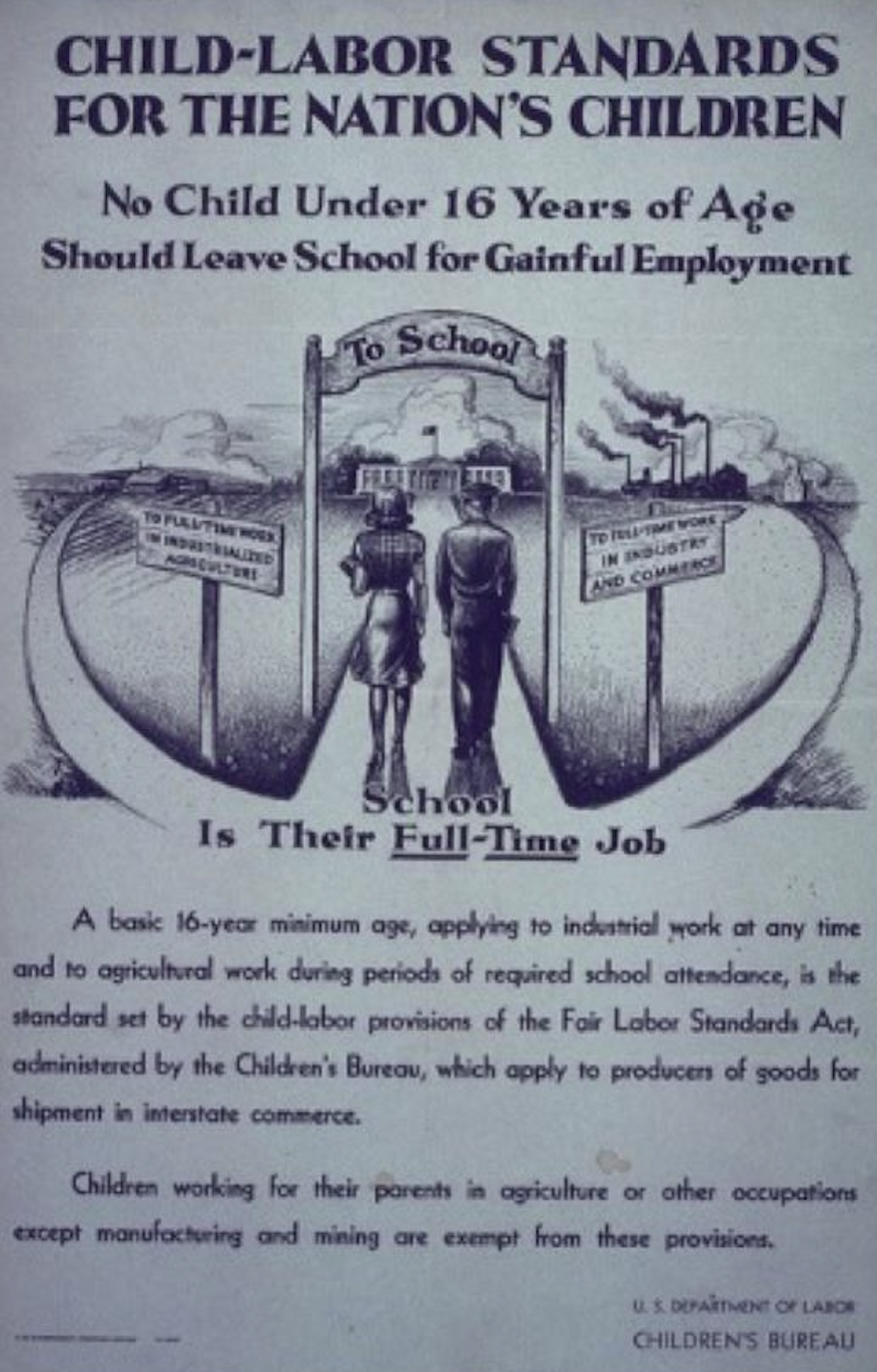
"A child labor standards poster from the 1940s encouraging schooling and reinforcing the rules of the Fair Labor Standards Act." (National Archives, 1940)
"New Child Labor Law Sends Many Youths Back to School." (The Scranton Republic, January 1910)
Perspectives
Legacy