"Something has to be done about the elimination of child labor and long hours and starvation wages."
~President Franklin D. Roosevelt (U.S. Department of Labor, 1936)
Point, Click, Shoot: Lewis Hine’s Photographs Create a Turning Point for Child Labor
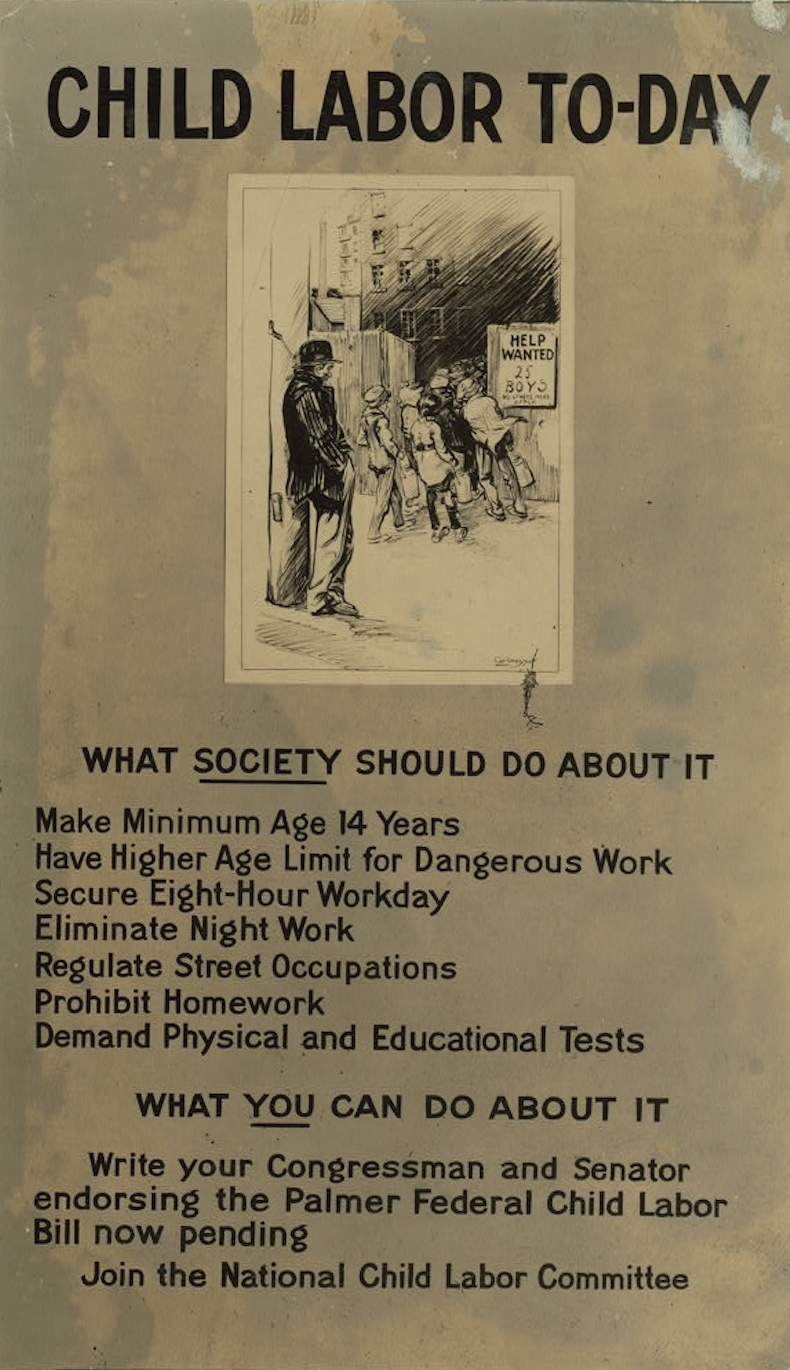
"Exhibit Panel." (Hine, Library of Congress, 1913)
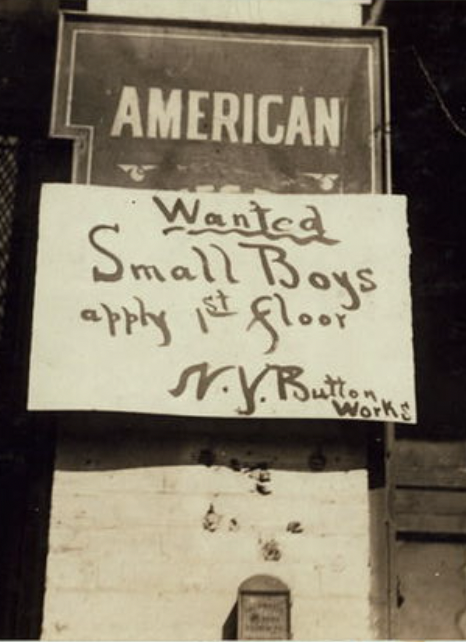
"Advertisement requesting 'small boys' to work in a button factory." (Library of Congress National Child Labor Committee Collection, 1916)
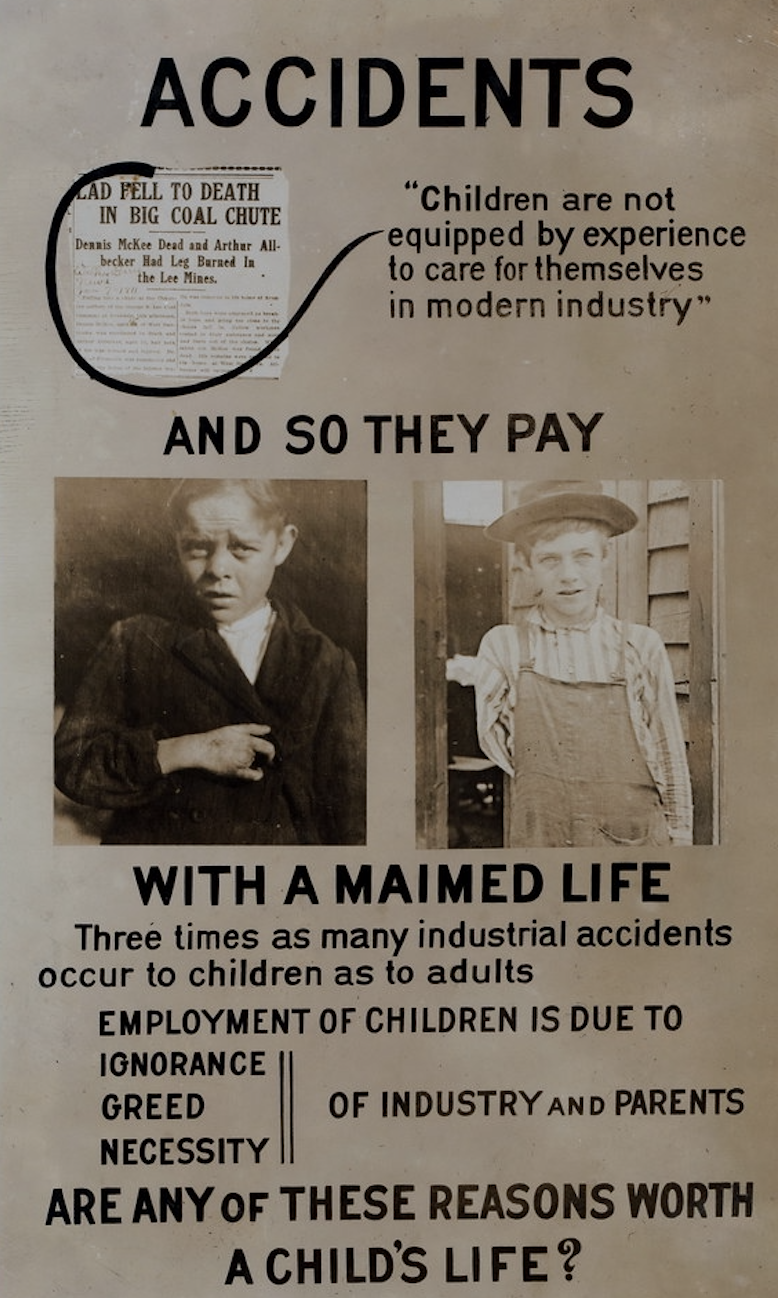
"Anti-Child Labor." (Fine Art America, C. 1913)
Perspectives
Hine’s photographs removed the shades from factory windows that hid the horrors of child labor from the American public. His evocative images of children in the workplace humanized the atrocities that happened. Seeing is believing and Hine’s photographs struck a chord with the American public that evoked sympathy, outrage, and an outcry of support for reform, which compelled them to demand action from lawmakers to pass child labor laws.
~Dr. Joshua Freeman, CUNY Professor of Labor Studies (Personal Interview, April 10, 2024)
"Something has to be done about the elimination of child labor and long hours and starvation wages."
~President Franklin D. Roosevelt (U.S. Department of Labor, 1936)
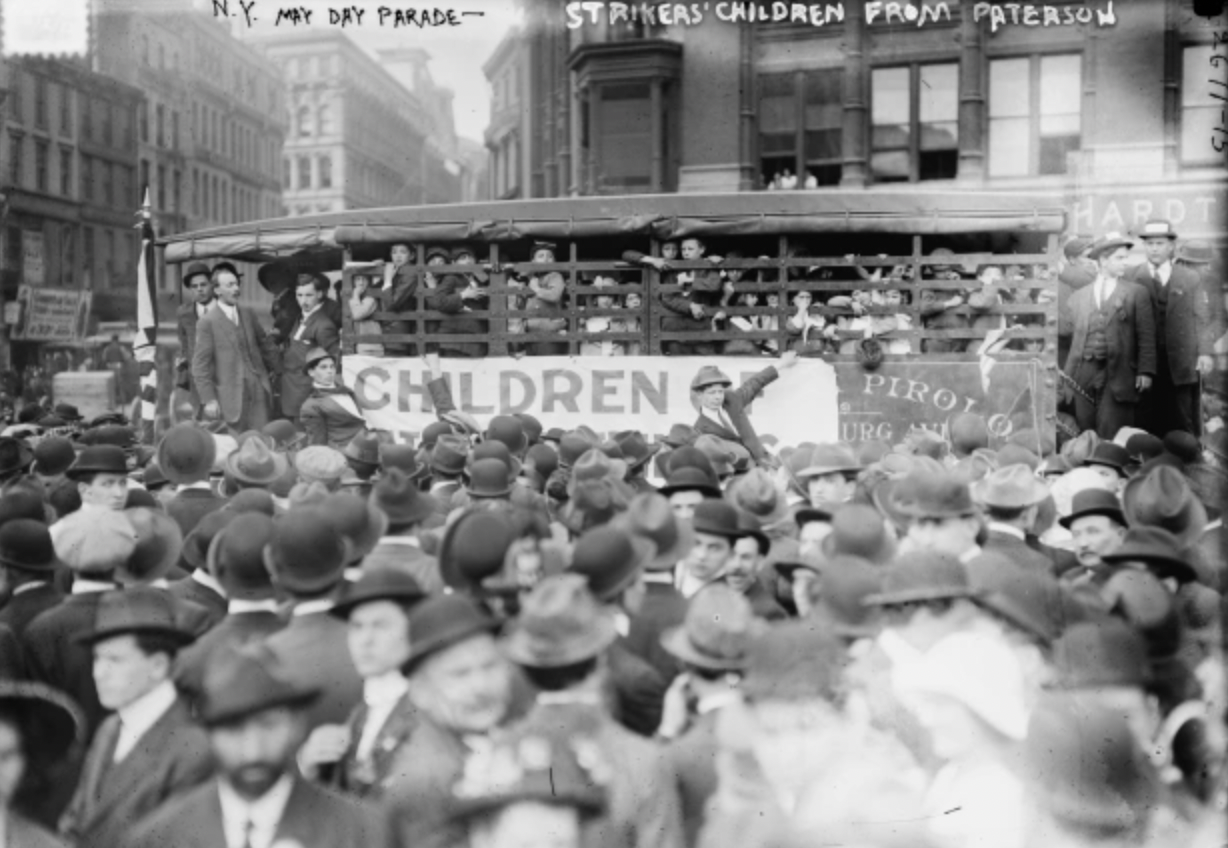
"Children of the strikers of the Paterson Silk Strike arriving in Union Square, New York City." (History of Knowledge, 1913)
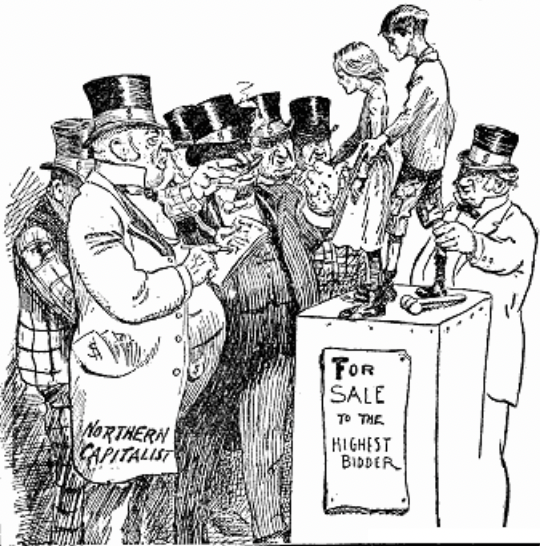
"Northern Capital and Southern Child Labor."(University of Arizona, 1902)
“The world has given up on stealing men from the African coast, only to kidnap children from Italy."
~The New York Times (1873)
“There is work that profits children, and there is work that brings profit only to employers. The object of employing children is not to train them, but to get high profits from their work.”
~Lewis Hine (National Archives, 1908)
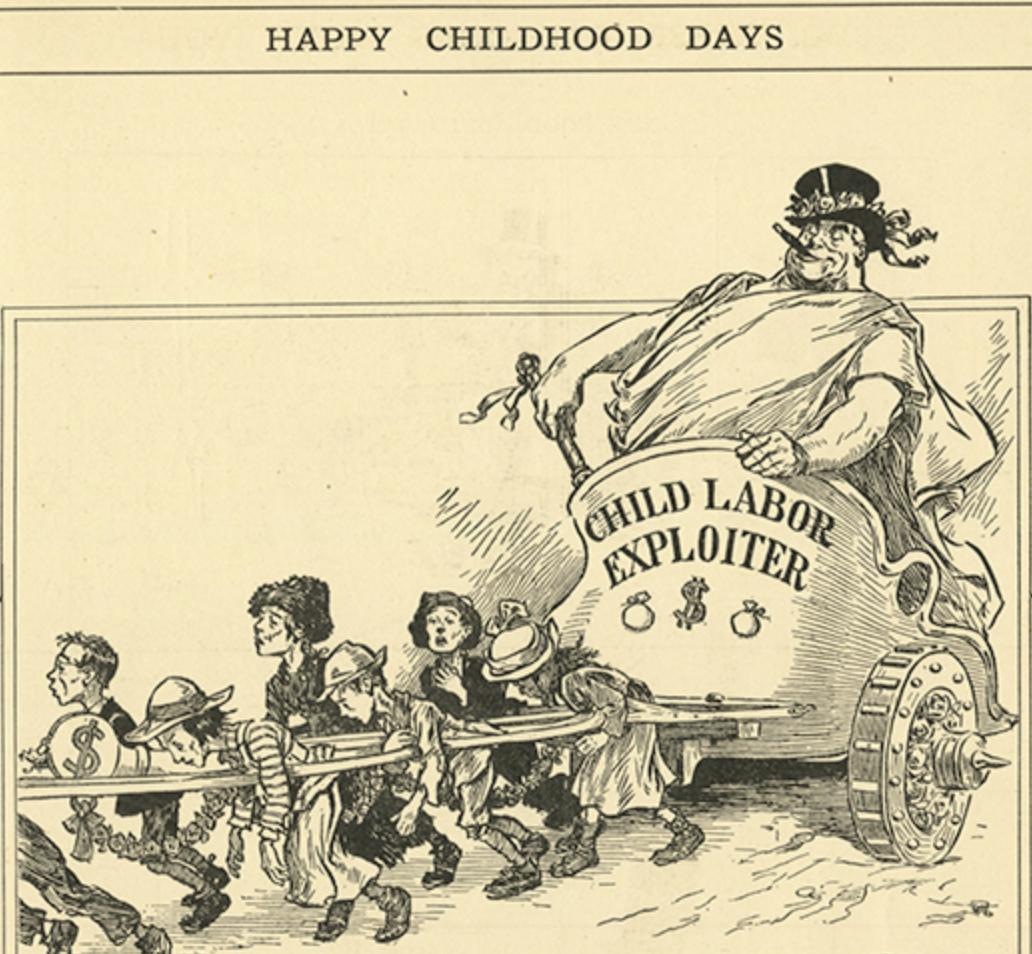
"Cartoons about the perils of child labor." (Richards, Frederick Thompson, and Thomas May, VCU Libraries, April 1913)
They Will Say
Of my city the worse that men will ever say is this:
You took little children away from the sun and the dew,
And the glimmers that played in the grass under the great sky,
And the reckless rain; you put them between walls
To work, broken and smothered, for bread and wages,
To eat dust in their throats and die empty-hearted
For a little handful of pay on a few Saturday nights.
~Carl Sandburg, 1916 ("Carl Sandburg Poetry Collection," National Park Service)
Children's Perspectives
"I wish you could do something to help us girls...We have been working in a sewing factory,... and up to a few months ago, we were getting our minimum pay of $11 a week... Today the 200 of us girls have been cut down to $4 and $5 and $6 a week."
~A letter written to President Roosevelt by a young girl (U.S. Department of Labor, 1936)
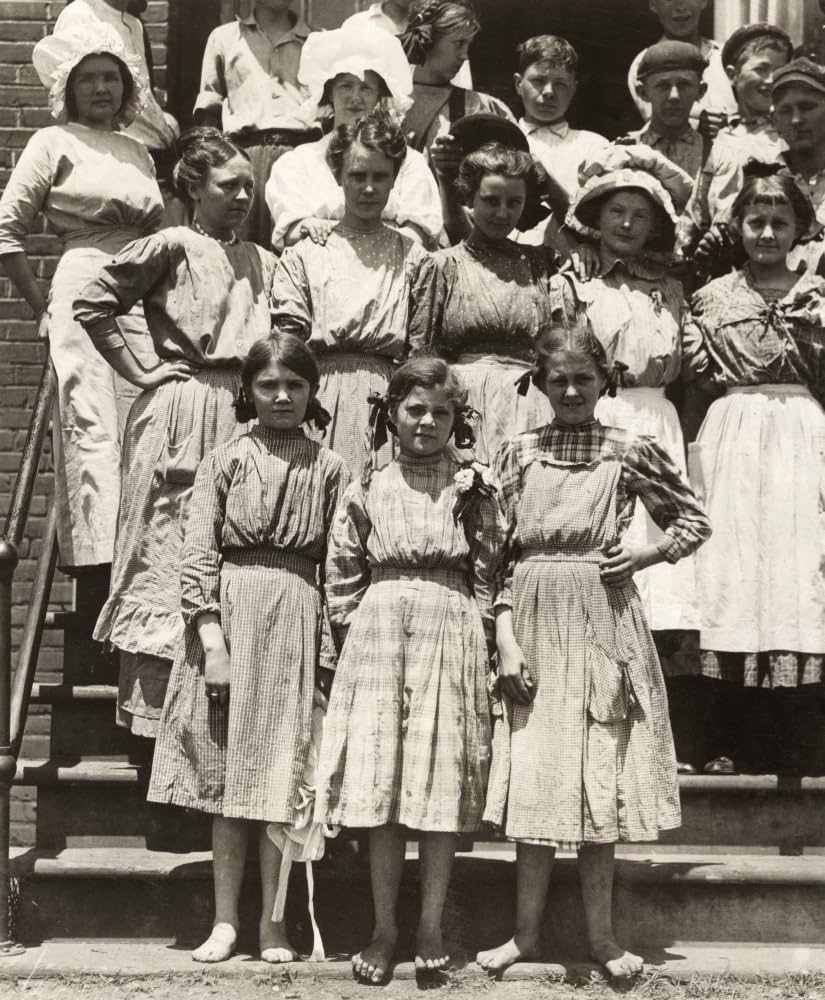
"Group of girls and women working in Aragon Mill." (Hine, Library of Congress, May 1912)
"I works from sun-up to sun-down, and picks thirty-five pounds a day."
~ Seven-year-old Ruby (Hine, Survey, 1914)
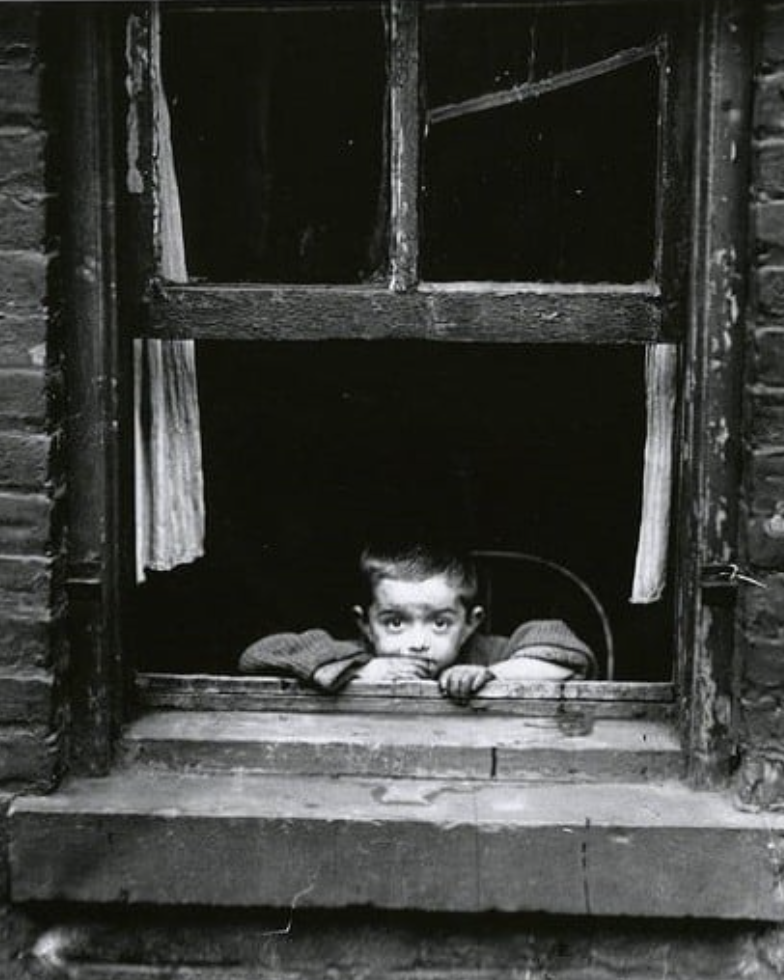
"Tenement child, New York" (Hine, New York Public Library Digital Collections, 1902)
"We'd ruther go to school."
~Seven-year-old Rudy and her Siblings (Hine, Survey, 1914)
Industrialist Perspectives
Yet, Hine and the NCLC faced significant obstacles and resistance in their crusade against child labor. Employers and industrialists sought to suppress his work, viewing it as threatening their profits and the status quo.
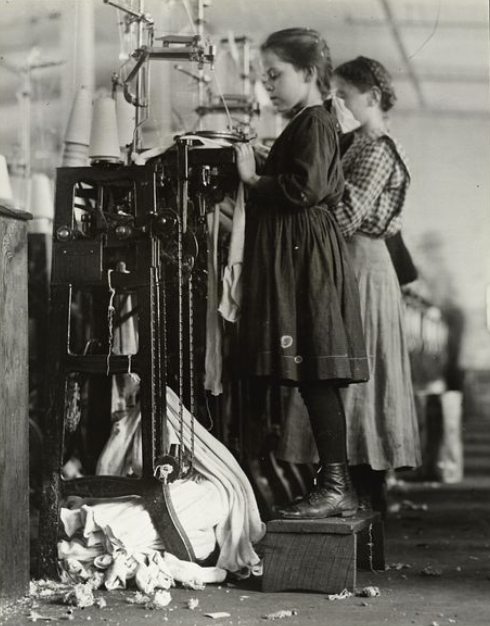
"This little girl is so small she has to stand on a box." (Hine, New York Public Library Digital Collections, December 1910)
"Factory work was not for able-bodied men, but rather better done by little girls from six to twelve years old. Industrialists viewed progress as having machines so simple to operate that a child could do it.”
~Niles Register Magazine, N.d.(Monthly Labor Review)
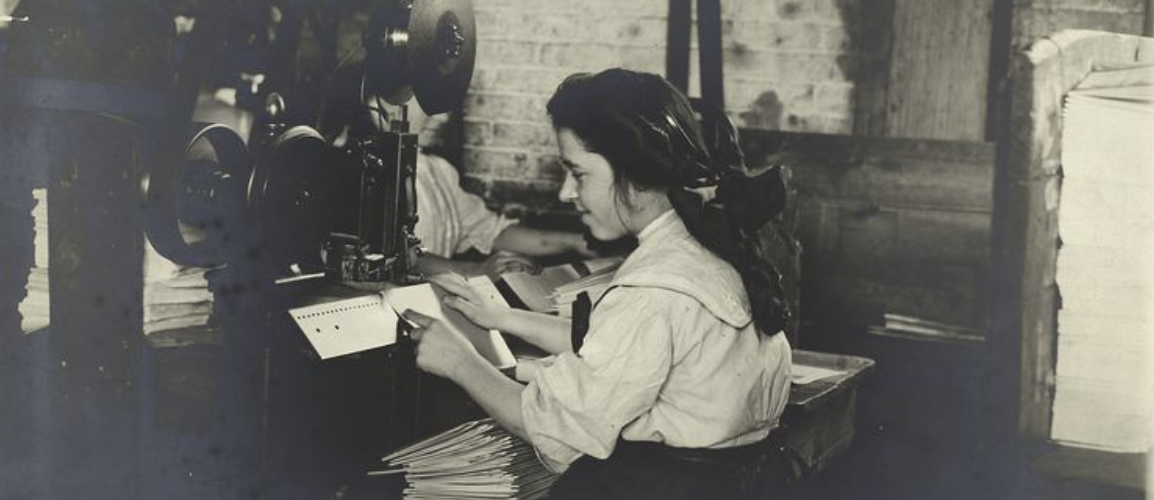
"Wire Stitching." (Hine, New York Public Library Digital Collections, 1921)
"I desire to enter a protest against the passing of the Keating-Owen Act because I think it will be an injury instead of a benefit to the people in the southern states who will be affected by it. The cotton mills of the South will be able to overcome the effect it may have on them, but the real sufferers will be the people who depend upon the cotton mills and other industries for a livelihood."
~Marshall Dilling (National Archives, March 20, 1916)
“It is hoped that those citizens having a knowledge of families, having children destitute of employment, will do an act of public benefit by directing them to the institution [cotton mill].”
~1902 Advertisement, Baltimore Federal Gazette (Monthly Labor Review)
“Children have always worked.”
~Walter Trattner (Monthly Labor Review)
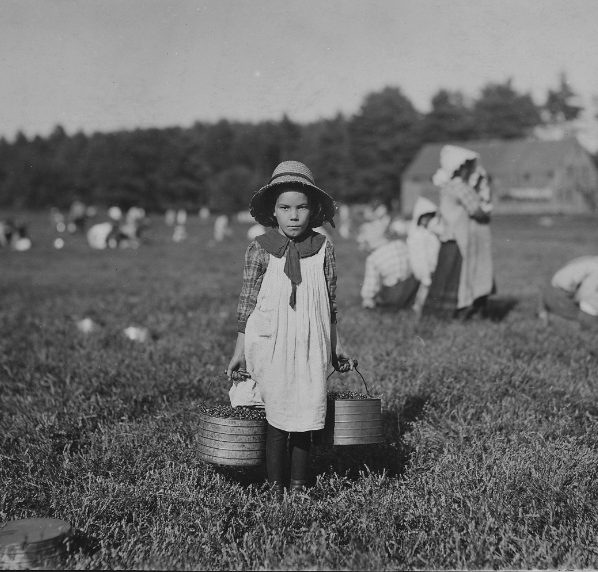
"Merilda Carrying Cranberries."(Hine, Library of Congress, September 1911)
Parents' Perspectives
Many poor parents expressed opposition to labor reform as they needed their children’s salaries for support, while better-off parents supported reform.
"The bag and not the school term is made to fit the child. The family income depends not upon the efficiency of the adult but upon the number of children."
~EDWARD T. DEVINE ("Children or Cotton," 1914)
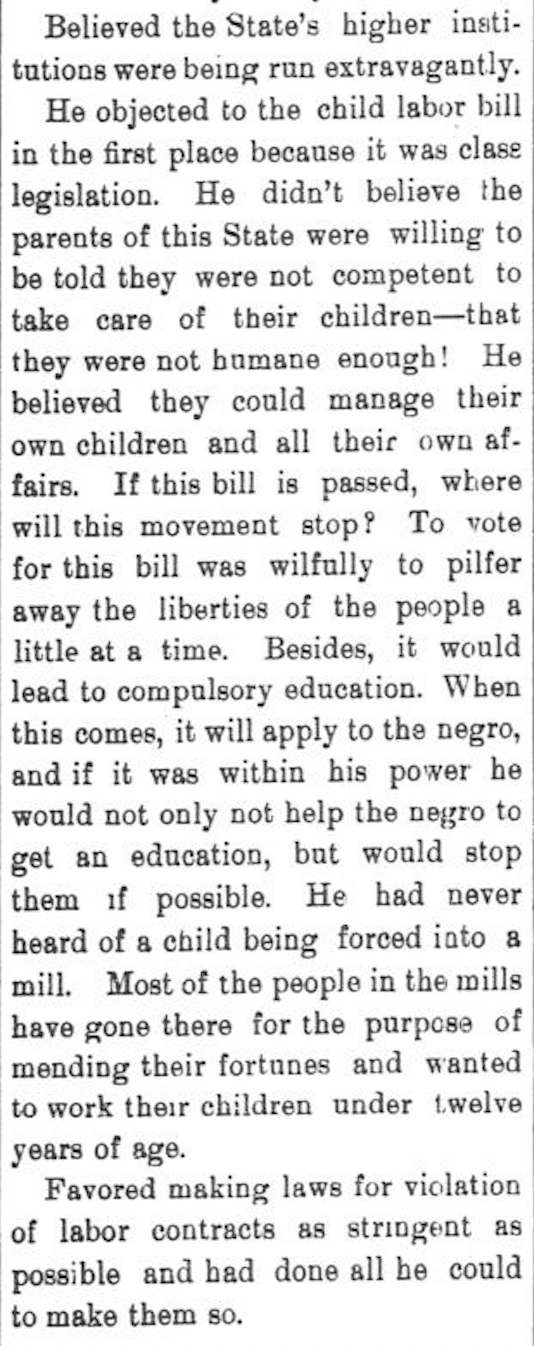
"Child Labor in Factories." (The Watchman and Southron, May 1902)
"The children brought home $2.30 each week; their father only made $2.72 in the same time. The children’s effort almost doubled the family income, which reached $240 for the year.”
~Unnamed Family ("Children or Cotton," 1914)
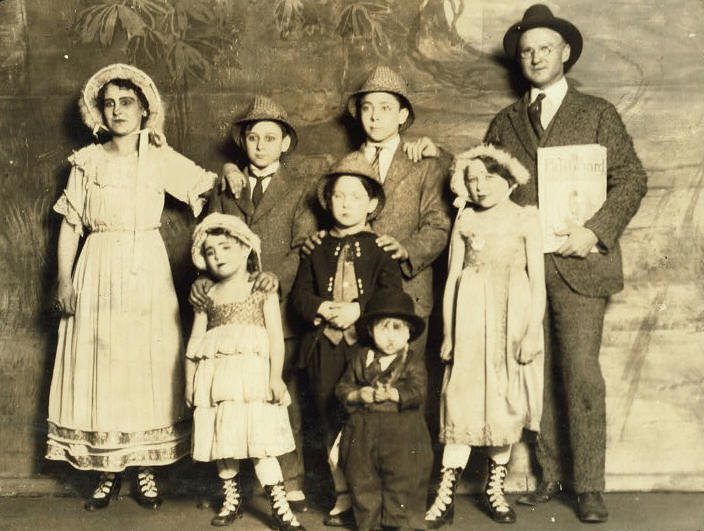
"Capps family, Grand Rapids, Michigan." (Mornings on Maple Street, November 1917)
"I went to work when I was a kid, but you bet my children don't do that way - they get some schoolin' first!"
~A grocer in Evansville Indiana, 1909 ("Child Labor in Indiana.")
“We work for our children, plan for them, spend money on them, buy life insurance for their protection, and some of us even save money for them.”
~A well-to-do Father, 1904 (Monthly Labor Review)