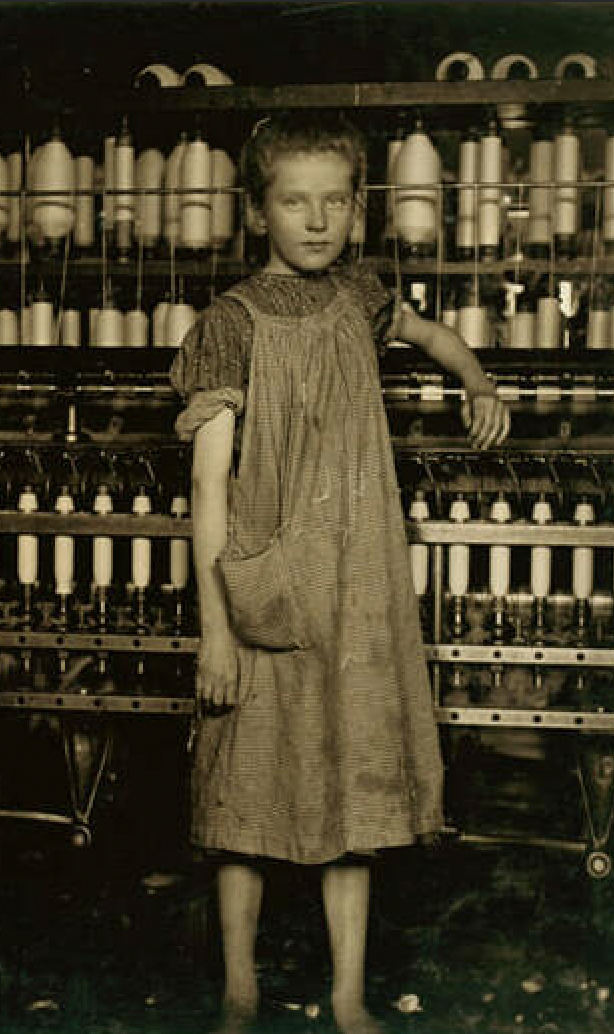
"An anaemic little spinner." (Hine, New York Public Library, August 1910)
Point, Click, Shoot: Lewis Hine’s Photographs Create a Turning Point for Child Labor
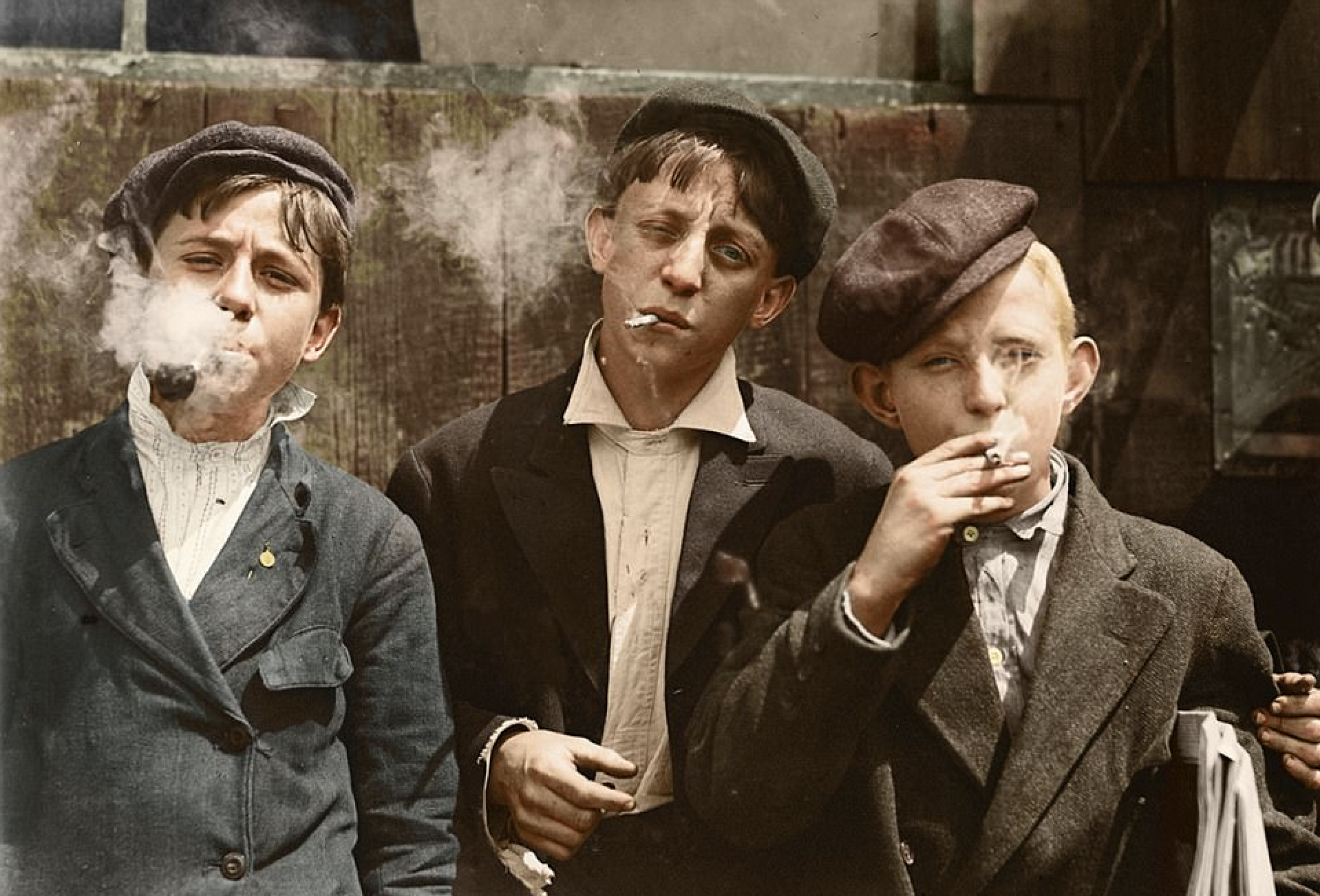
"Newsboys Smoking." (Hine, Fine Art America, 1910)
Main Event
Hine and the NCLC embarked on a series of photography projects aimed at investigating and exposing the true extent of child labor in the United States. Hine, who cleverly disguised himself as a factory inspector or salesman, easily gained access to workplaces. There he discreetly captured powerful photographs of children working in coal mines, glass factories, textile mills, canneries, farm fields, and also in the service industries, where they worked as newsboys, messengers, shoe shiners, and peddlers.
"An anaemic little spinner." (Hine, New York Public Library, August 1910)
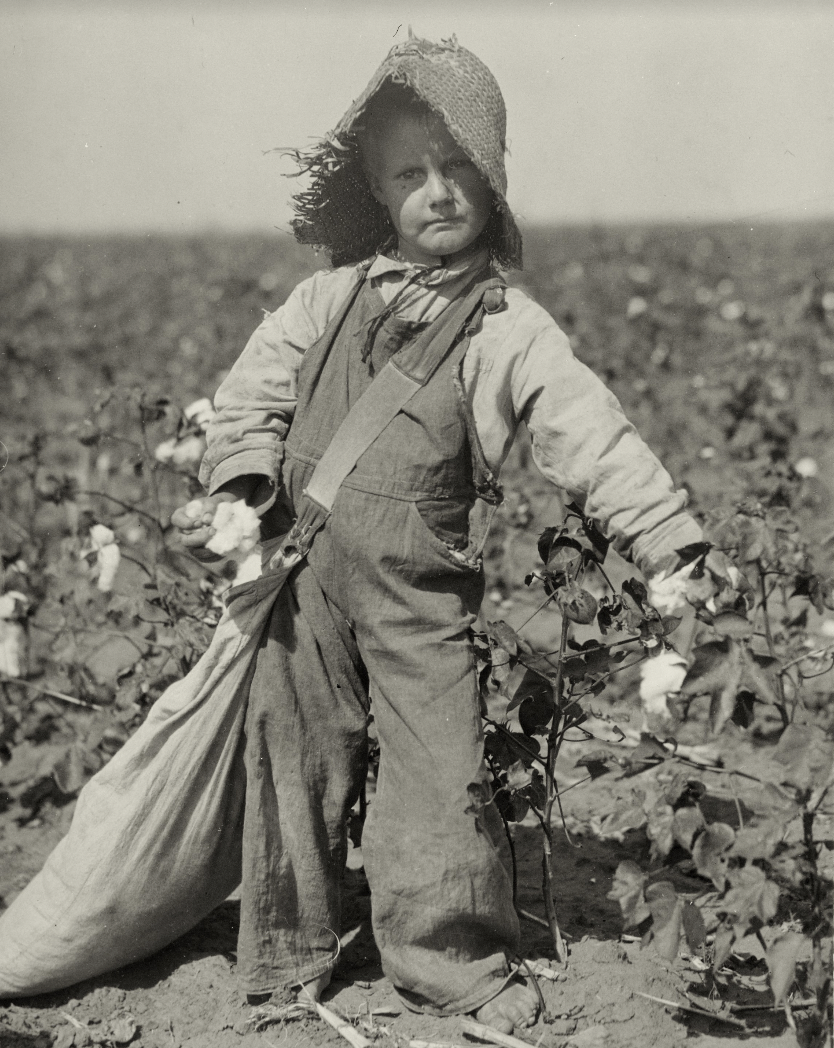
"Mart Payne, 5 years old, picks from 10 to 20 pounds a day." (Hine, Library of Congress, October 1916)
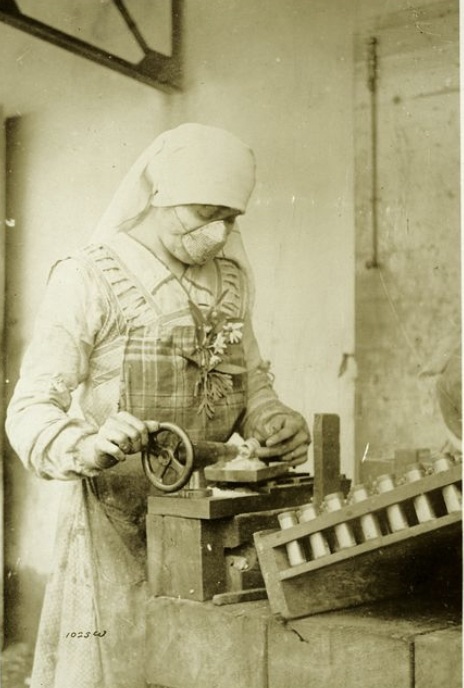
"Lethal weapons" (Hine, New York Public Library Digital Collections, 1907)
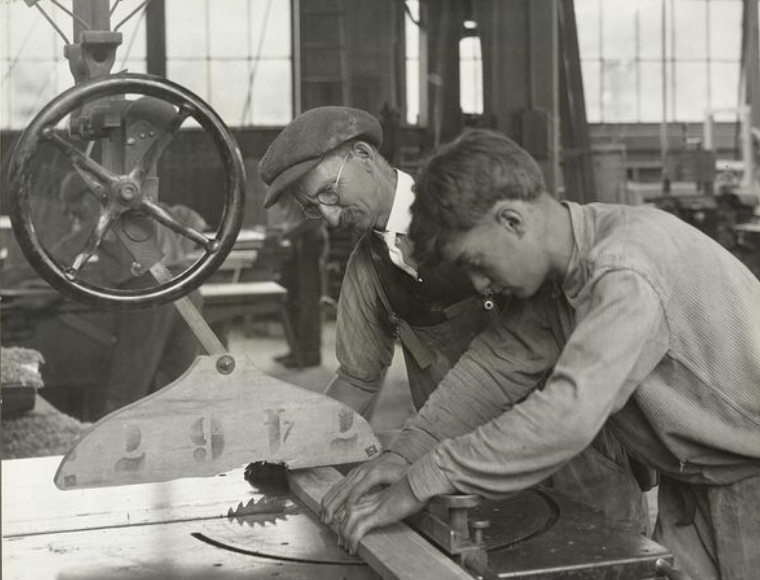
"An apprentice working at a properly safeguarded 'buzz saw.'" (Hine, New York Public Library Digital Collections, 1915)
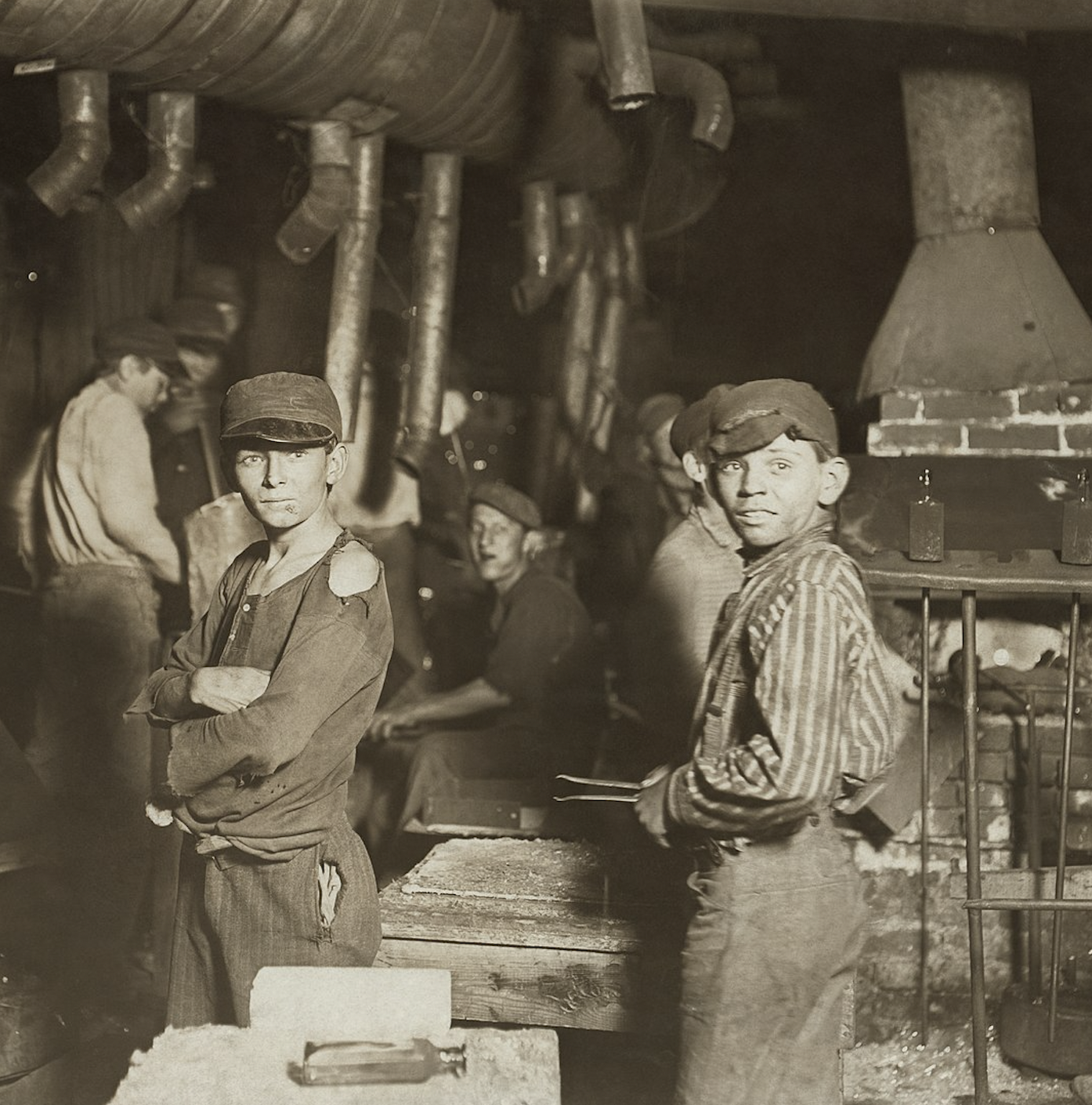
"Boys working in a glass factory in Indiana." (Hine, Library of Congress, 1908)
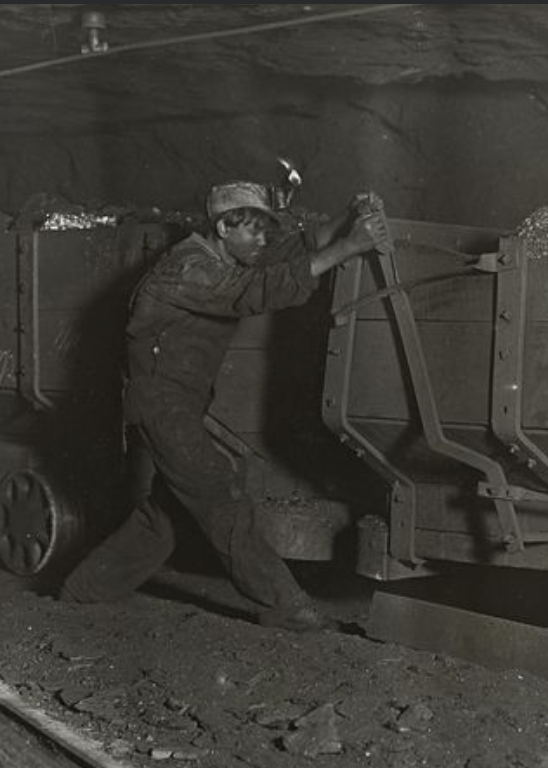
"Boy braking on motor train in coal mine." (Hine, New York Public Library Digital Collections, September 1908)
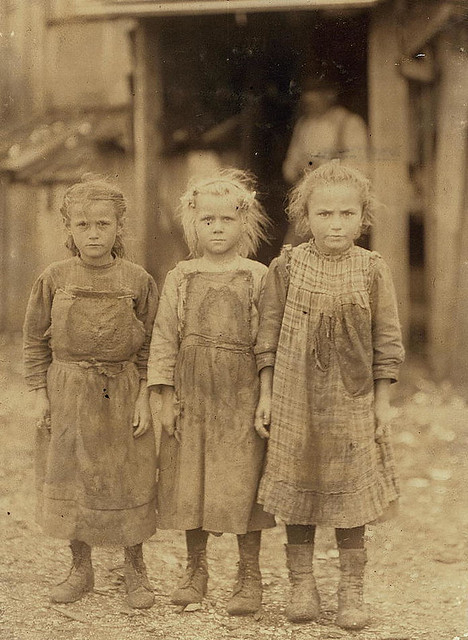
"Josie, 6, Bertha, 6, and Sophie, 10, all shucked corn regularly at Maggioni Canning Co. at Port Royal." (Hine, Mirror News, 1911)
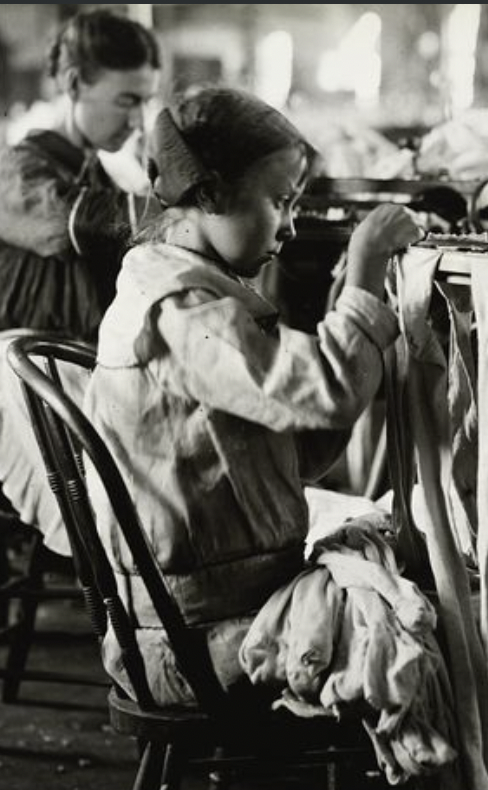
"Nannie, a ... 'looper' in a hosiery mill." (Hine, New York Public Library Digital Collections, November 1914)
Working Conditions
Throughout Hine’s photographic journey, he focused his lens on the dirty, dangerous working environments and daily tasks at which children toiled in their jobs, revealing the hardships they faced and the gaping disparity between expectations and compensation.
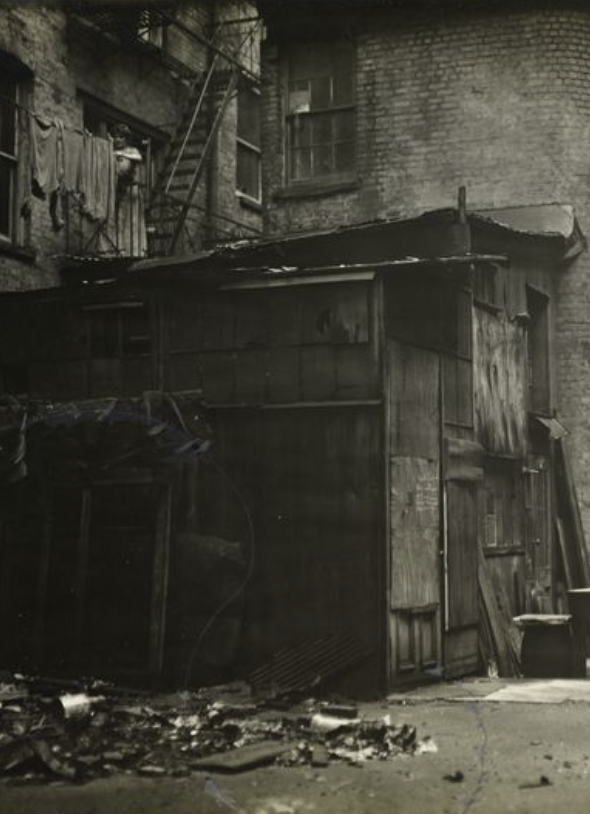
"Rear view [of remodeled tenement]." (Hine, The New York Public Library Digital Collection, 1907).
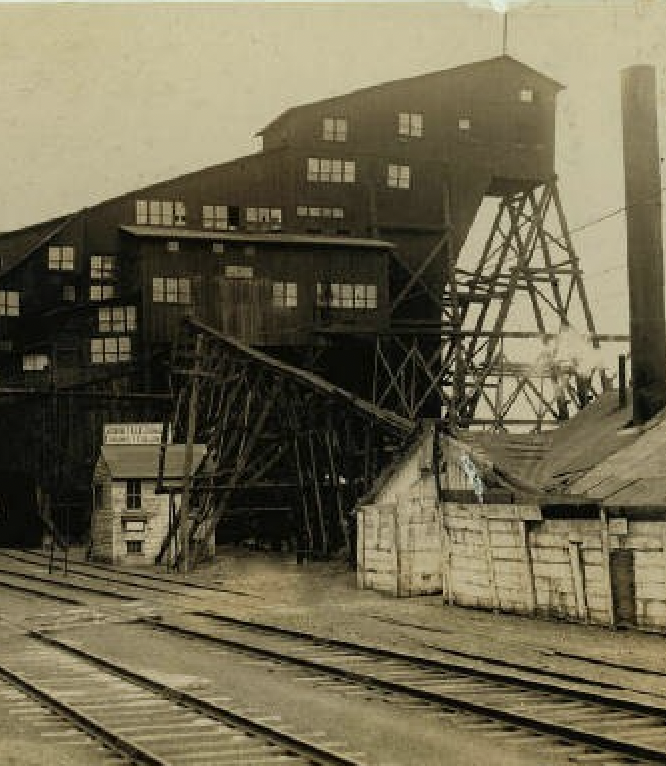
"Breaker of the Chauncy (Pa.) Colliery." (Hine, Mornings on Maple Street, 7 January 1911).
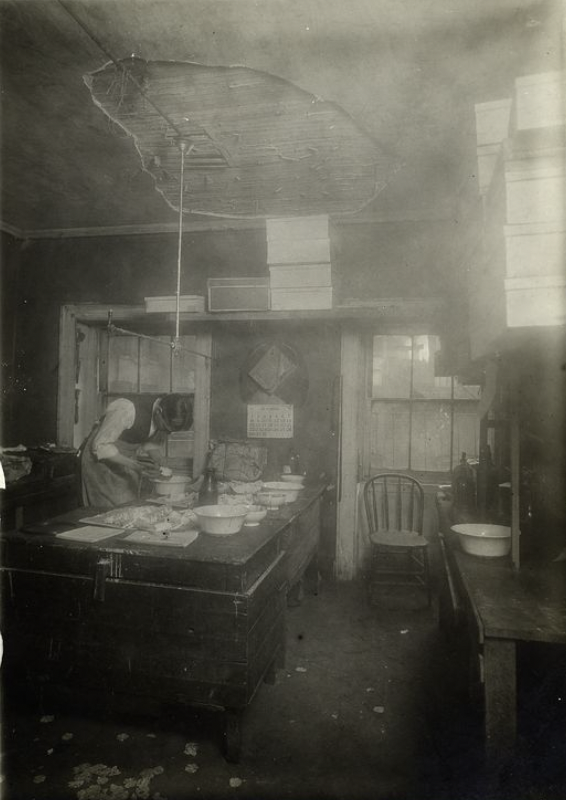
"Coloring Petals [male workers]" (Hine, The New York Public Library Digital Collection, 1908).
Rather than play or attend school, children as young as three and four years old toiled in jobs unsuitable even for adults. Many worked grueling 12-18 hour days, five-six days per week, and were paid wages as low as $0.50 per day. The long hours and conditions they endured took a toll on their bodies. Some suffered broken limbs in machinery accidents or due to lack of training. Textile factory managers sealed windows to retain moisture and heat, which caused the workers intense discomfort. Sanitation was non-existent, and children often worked eighteen consecutive hours without a meal or break.
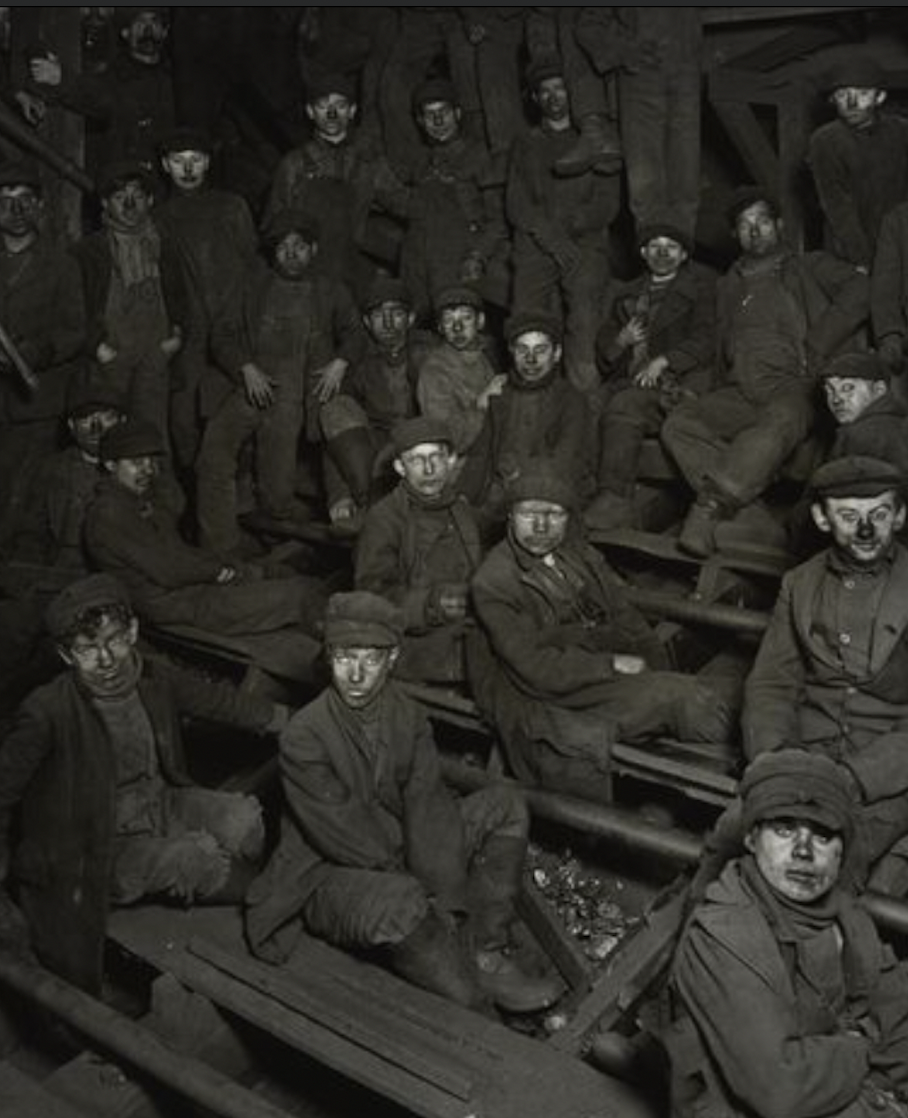
"Noon hour in the coal breaker." (Hine, New York Public Library Digital Collections, January 1911)
"All pale, nervous, slow in their movements, quiet at their games, they present an outward appearance of misery, of suffering, of dejection [gloom] that contrasts with the rosy color, the plumpness, the petulance [childish temper] and all the signs of glowing health that one notices in children of the same."
~Philadelphia Doctor Louis-René Villermé (Library of Congress, 1908)
“While I was there, two breaker boys fell...into the coal chute, where they were smothered to death."
~Lewis Hine (“The High Cost of Child Labor," 1914)
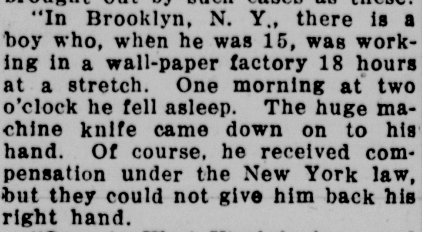
(New Brunswick Daily Times, February 7, 1916)
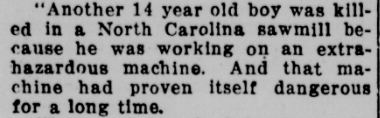
(New Brunswick Daily Times, February 7, 1916)
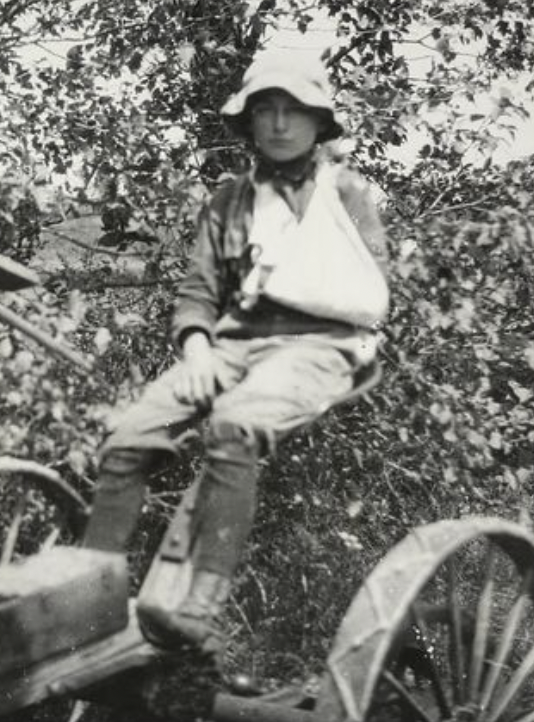
"A twelve-year-old farmer seriously injured while at work." (Hine, New York Public Library Digital Collections, August 1915)
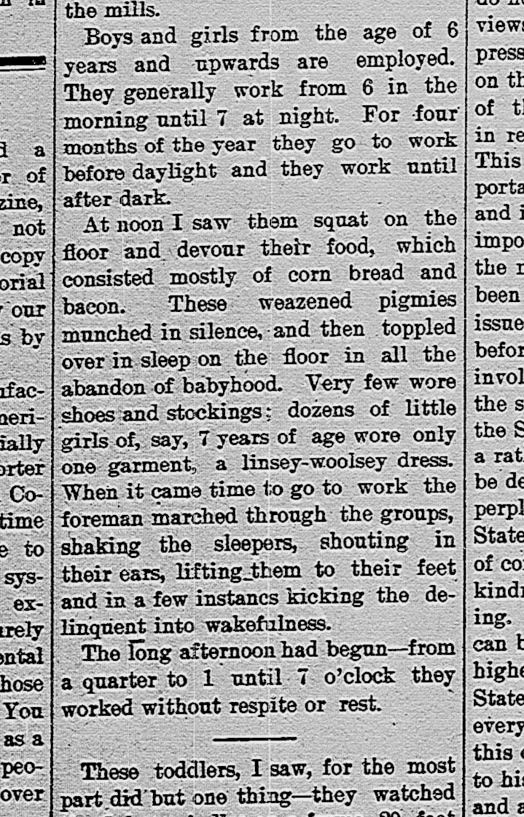
"Child Labor in Factories." (The Watchman and Southron, May 21, 1902)
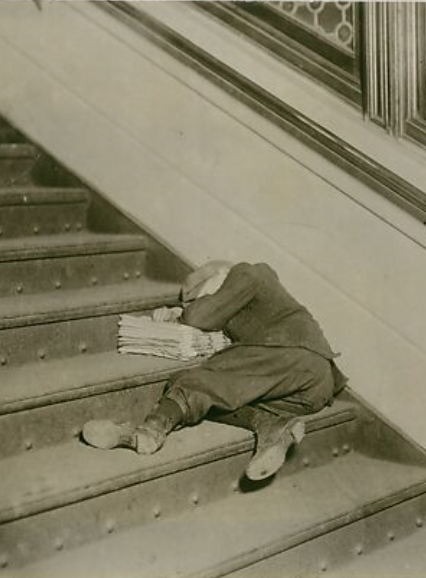
"Newsboy asleep on stairs with papers." (Hine, The Metropolitan Museum, February 1912).
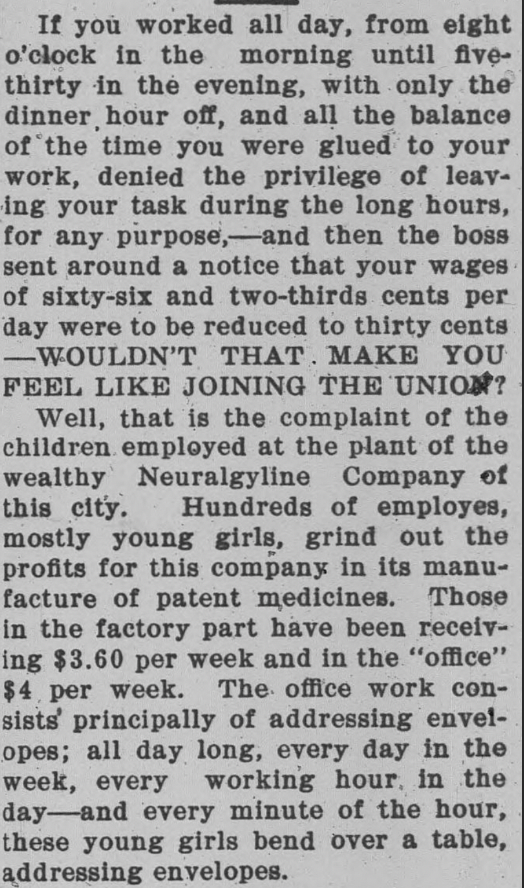
"Girls making 66 cents per day have wages cut in half, GIRLS WILL STRIKE MONDAY MORNING." (The Wheeling Majority, May 12, 1910)
Factory owners forced the children to sleep together in cramped shacks where disease easily spread. Access to running water to clean off factory grime was a rarely encountered luxury. Hine’s photographs aptly captured these and other abhorrent conditions associated with child labor and were used by the NCLC in various publications and at exhibitions to frame their message about the need for government action. This created a turning point in public and political awareness about the issue, and increased advocacy for new laws to protect children.
"Children at Work." (NBC New Learn, May 20, 2020)
Mill-Doors
You never come back.
I say good-bye when I see you going in the doors,
The hopeless open doors that call and wait
And take you then for – how many cents a day?
How many cents for the sleepy eyes and fingers?
I say good-bye because I know they tap your wrists,
In the dark, in the silence, day by day
And all the blood of you drop by drop,
And you are old before you are young.
You never come back.
~Carl Sandburg, 1912 ("Carl Sandburg Poetry Collection," National Park Service)