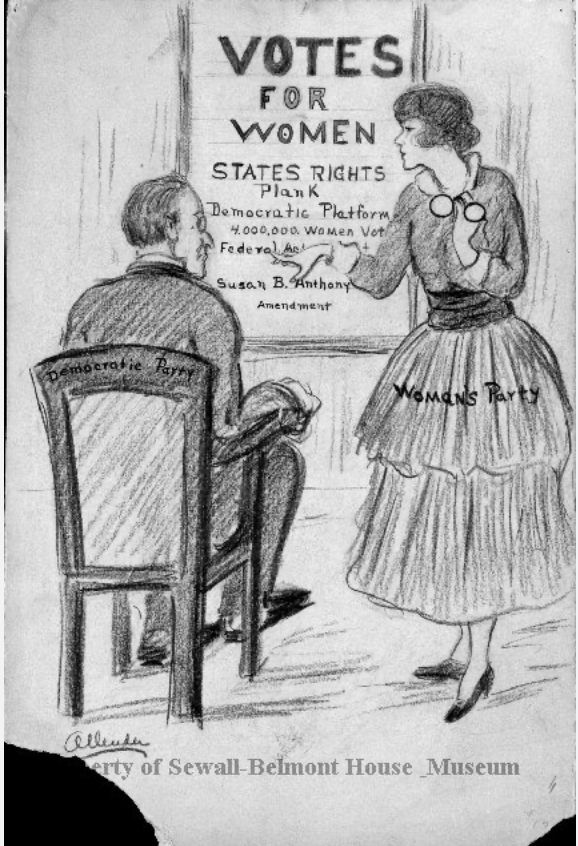
Women’s suffrage political cartoon highlighting debates over voting rights in the United States.
Origin & Context
Women’s suffrage political cartoon highlighting debates over voting rights in the United States.
The Seneca Falls Convention was held because women faced many social and legal inequalities in early-nineteenth-century America. Women were mostly kept out of politics since it was seen as a man’s responsibility, while women were expected to stay at home. Historian Anne Boylan explains that laws and cultural beliefs made women’s political involvement socially unacceptable. In 1841, Mrs. A. J. Graves even argued that women who joined reform movements were ignoring their natural and religious duties, illustrating how most people viewed women’s roles. Although women had participated in boycotts, petitions, and protests since the 1760s, their efforts were often ignored or considered “moral influence” rather than real political action. Laws also limited women’s independence because many organizations required male approval, which pushed women to fight for change more formally
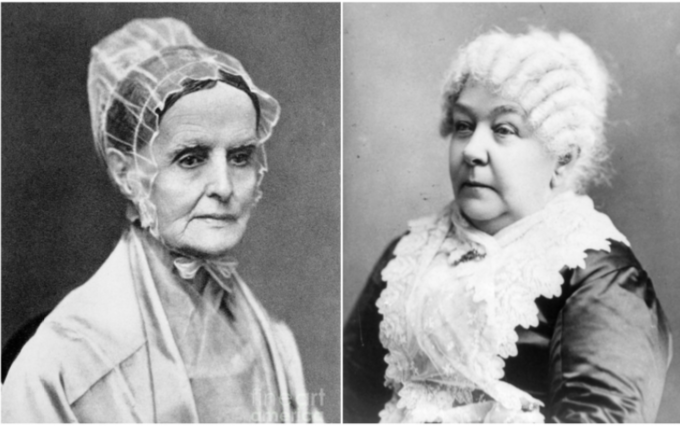
Elizabeth Cady Stanton and Lucretia Mott
Reform movements, such as abolitionism, helped women learn to organize, petition, and speak publicly. A major turning point was in 1840, when Elizabeth Cady Stanton and Lucretia Mott were excluded from the World Anti-Slavery Convention in London. This inspired them to plan a women’s rights convention. Quaker beliefs in equality and early women’s organizations also provided women with opportunities to participate in public life. Legal changes in the 1830s and 1840s, such as the Married Women’s Property Acts, and political support from groups such as the Liberty Party, provided greater momentum to women’s rights and directly led to the Seneca Falls Convention in 1848.