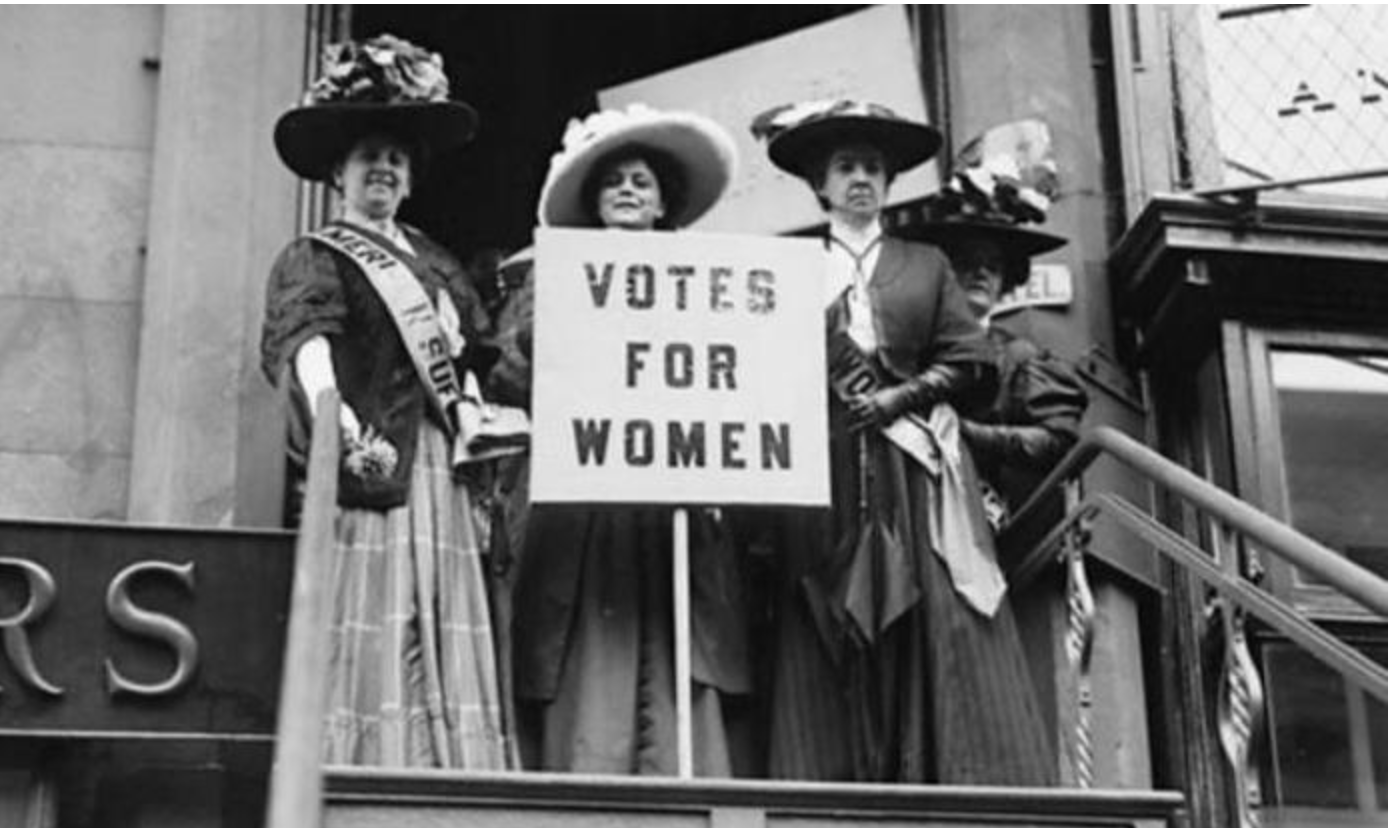
Suffragists advocating for women’s voting rights during the early 1900s
The Lasting Impact
The Seneca Falls Convention was a significant event that inspired continued activism and helped grow the women’s rights movement in the United States.
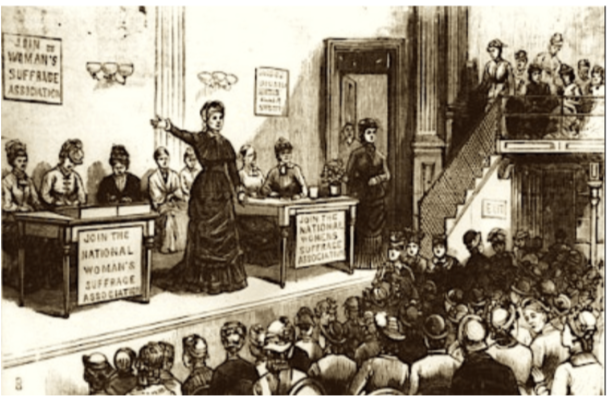
The last day of the convetion
Suffragists advocating for women’s voting rights during the early 1900s
Protests that helped secure women’s right to vote
The Seneca Falls Convention had a lasting impact on the fight for women’s voting rights, laying the groundwork for the 19th Amendment in 1920. Only two attendees were alive to see its ratification, highlighting the decades-long struggle it sparked. Winning the vote required hundreds of campaigns to convince state lawmakers, statewide votes by men, and efforts to amend state constitutions. Western states were early leaders, granting women full voting rights in Wyoming (1869), followed by Utah, Colorado, and Idaho. In 1915, Carrie Chapman Catt introduced the “Winning Plan,” combining state-level lobbying with a federal amendment. The passage of the 19th Amendment, 72 years after Seneca Falls, shows how the convention’s suffrage resolution shaped the national women’s rights movement.
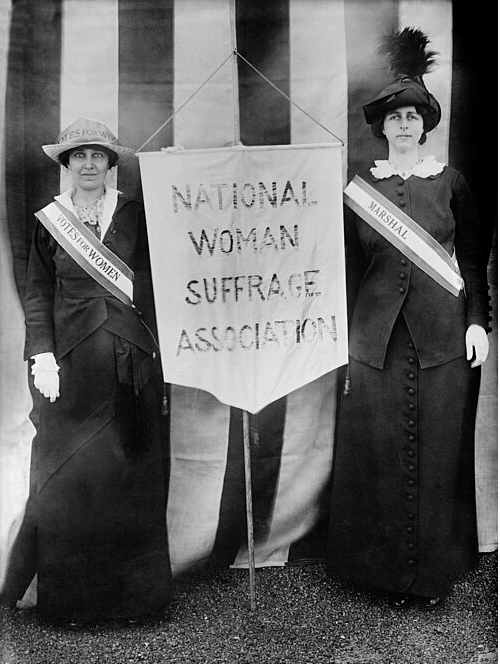
National Woman Suffrage Association
Seneca Falls inspired activism beyond the convention itself, motivating events such as the Rochester Women’s Rights Convention in 1848 and the first National Women’s Rights Convention in Worcester, Massachusetts, in 1850, which established a model for nationwide advocacy. In 1869, Elizabeth Cady Stanton and Susan B. Anthony co-founded the National Woman Suffrage Association (NWSA), shifting leadership from local conventions to national organizations. The NWSA worked to secure a constitutional amendment for women’s right to vote and pushed for changes to property and divorce laws. In 1890, it merged with the American Woman Suffrage Association to form the National American Woman Suffrage Association (NAWSA), showing Seneca Falls’ lasting organizational impact. Beyond suffrage, the convention inspired later reforms, including the Equal Pay Act (1963), the founding of NOW (1966), the Violence Against Women Act (1994), the Women’s Liberation Movement, and the UN’s 1975 International Women’s Year. Seneca Falls served as the starting point for a long-term movement for gender equality.