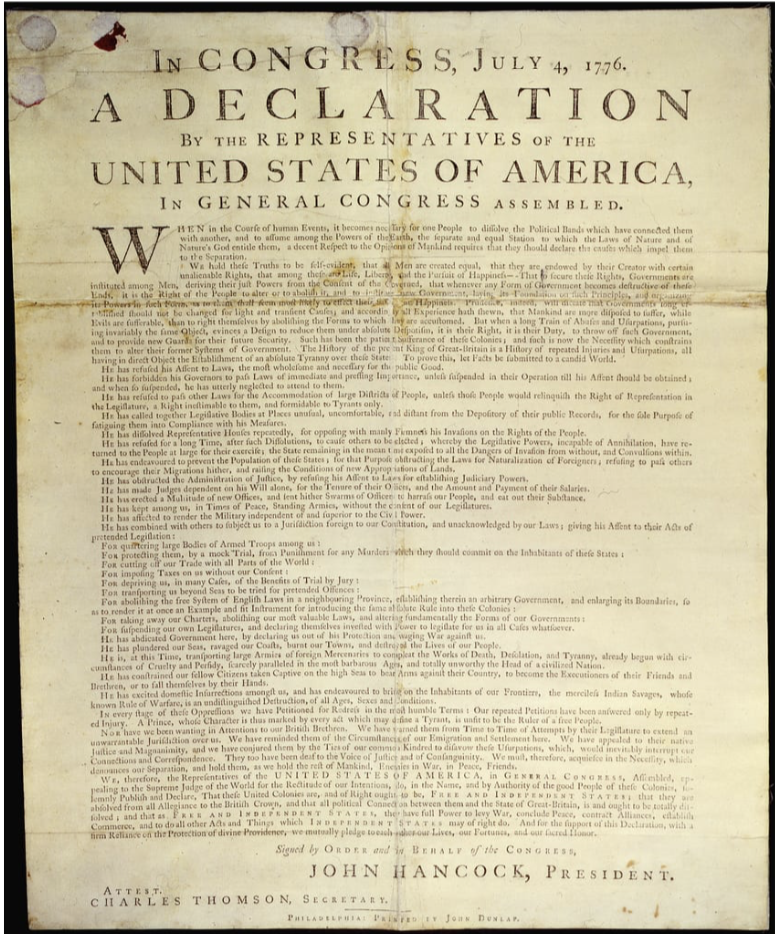
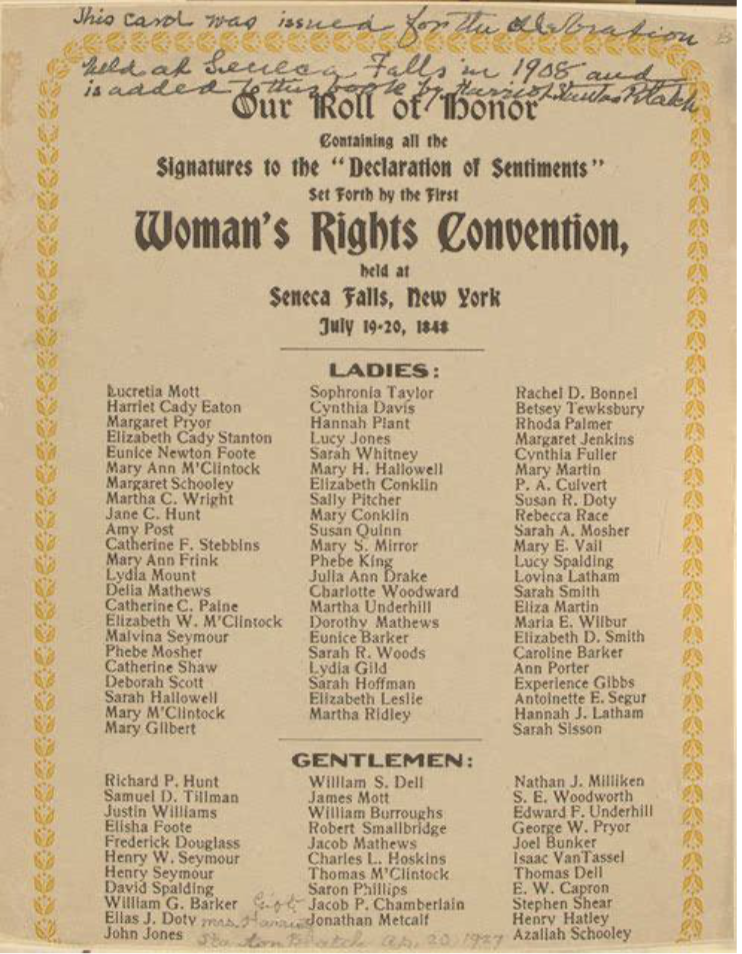
At the Seneca Falls Convention, reformers used the Declaration of Sentiments to clearly outline women’s grievances and demands for equality. Written primarily by Elizabeth Cady Stanton, the document closely followed the structure and language of the Declaration of Independence, famously declaring that “all men and women are created equal.” Using this well-known American document gave legitimacy to women’s claims and connected their cause to the nation’s founding ideals. The declaration listed specific injustices women faced, including denial of property rights, limited access to education, exclusion from professions, and lack of political representation. One of the most debated sections was the ninth resolution, which called for women’s suffrage and ultimately passed, emphasizing the importance of voting rights. The declaration also supported broader reforms, such as improving women's education. All resolutions were debated, and 100 attendees signed the document, showing organized agreement and collective commitment to women’s rights.