Public Perception

While anesthesia is widely accepted today, the public's initial reaction to Ether Day was skeptical, as they believed pain wasn't something that could be eliminated. This led to delays in acceptance of it as a pain management system.

β€œThe abolishment of pain in surgery is a chimera. It is absurd to go on seeking it...knife and pain are two words in surgery that must forever be associated in the consciousness of the patient.”

-Alfred Velpeau (French Surgeon)

"Pain is curative –  the actions of life are maintained by it – were it not for the stimulation induced by pain, surgical operations would more frequently be followed by dissolution."

-John Pollard Harrison (American Physician)
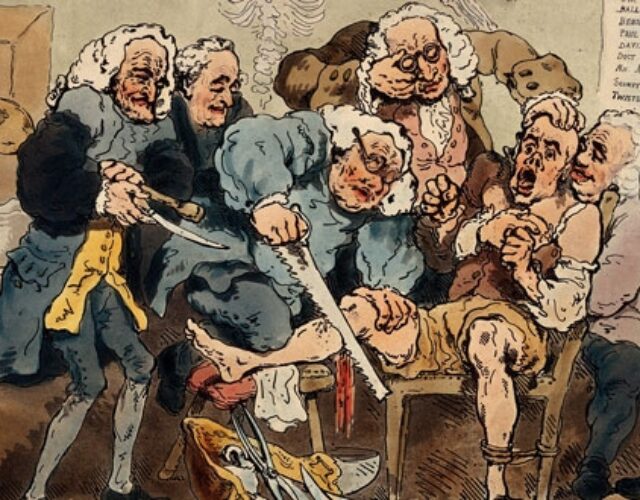
Five surgeons participate in the amputation without anesthetic of a man’s leg while another oversees them. Amputation, Thomas Rowlandson, 1793. [Wellcome Collection]

Additionally, concerns about early anesthetics like ether and chloroform's safety were present. For example, ether was unpleasant and flammable, and chloroform dosage was difficult to control, leading to deaths. As a result, the public was hesitant to undergo anesthesia.

"Inhaling ether vapor in doses adequate to induce insensibility is highly dangerous. It tends to poison blood, impair muscle contraction, adversely affect the nervous system, and put wounds in an unfavourable state for recovery."

-John Porter (United States Army Surgeon)

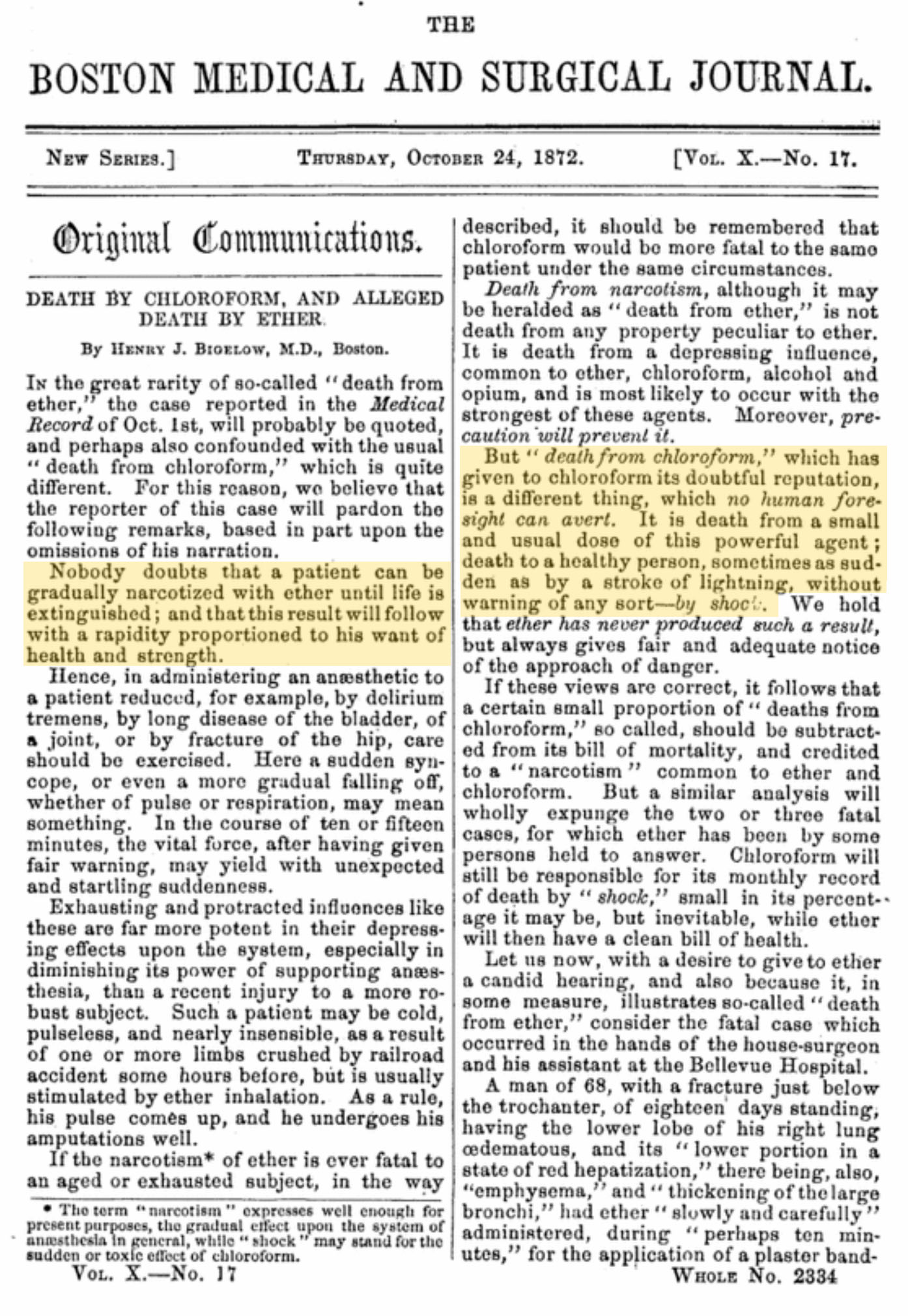
The Boston Medical and Surgical Journal volume 10, number 17, published on October 24th, 1872, on early ether and chloroform deaths. [Henry Bigelow, courtesy of The New England Journal of Medicine]

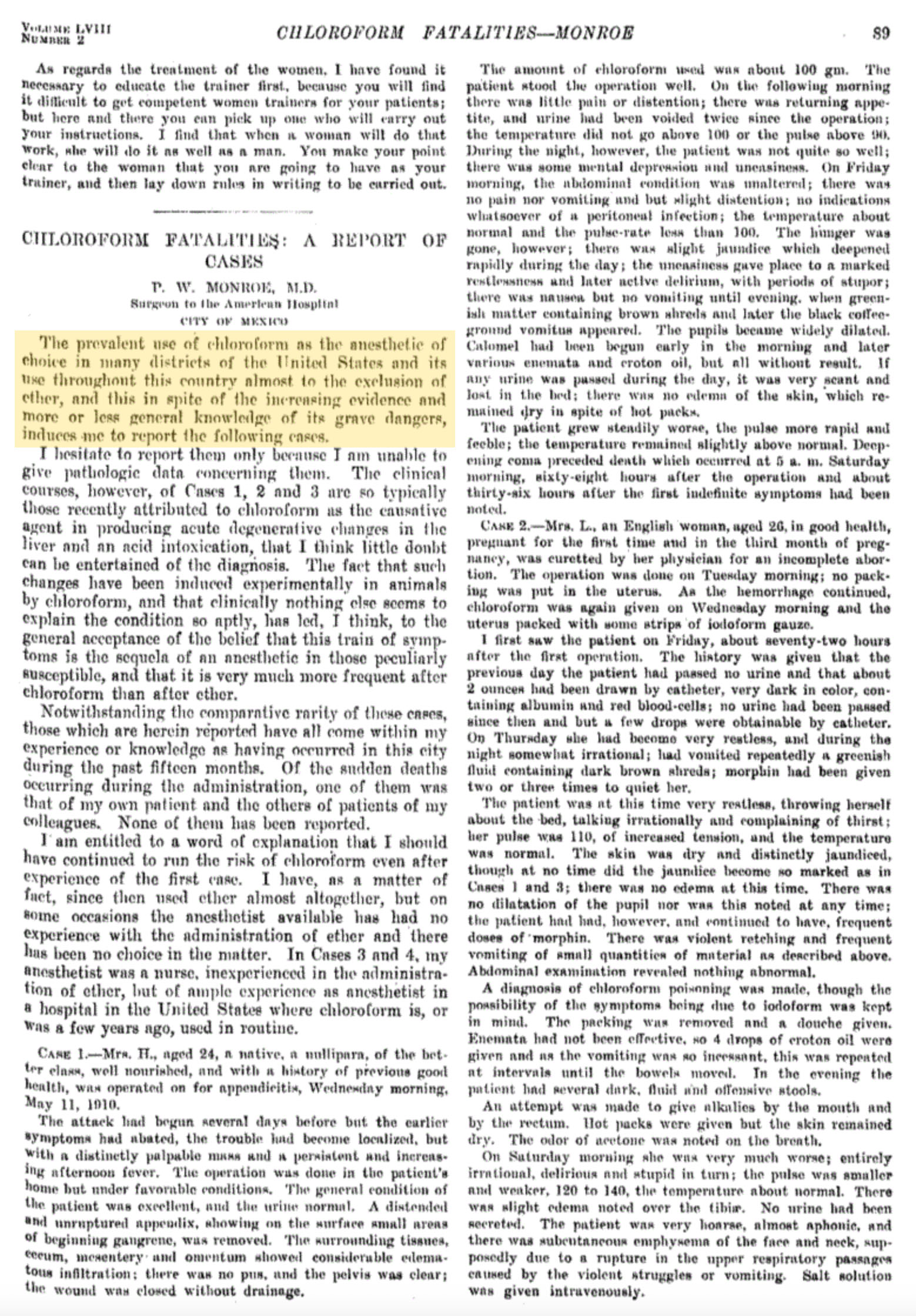
The Journal of the American Medical Association (JAMA) volume 58, number 2: Chloroform Fatalities article published in 1912. [P.W. Monroe, courtesy of JAMA Network] 

In addition to concerns about the procedure, there were also concerns about patients’ rights. For example, female patients felt uncomfortable being unconscious with male surgeons. Additionally, some religions stated that pain was a part of life, and discouraged dulling it. Finally, lack of patient feedback had the potential to increase surgical errors.

" Biblical passages stating that women would bear children in pain were used to discourage them from seeking analgesia during labor. β€‹β€‹β€‹β€‹β€‹β€‹β€‹"

-ScienceDirect

"Previously, patients had been their own advocates during surgery, confirming the surgical site and even assisting surgeons in debridement. If patients were made nonverbal, there was new concern that surgical errors would increase. β€‹β€‹β€‹β€‹β€‹β€‹β€‹"

-ScienceDirect

Despite these concerns, many people were also excited about this discovery and were willing to go under the knife. However, while many risks have been eliminated, there are still concerns about the safety of anesthesia today.

Interview with Dr. Terry Huang, Clinical Director, Department of Anesthesiology, CHI Health Creighton UMC, Assistant Professor, Creighton University School of Medicine, courtesy of Amelia Cheng, Zoom interview

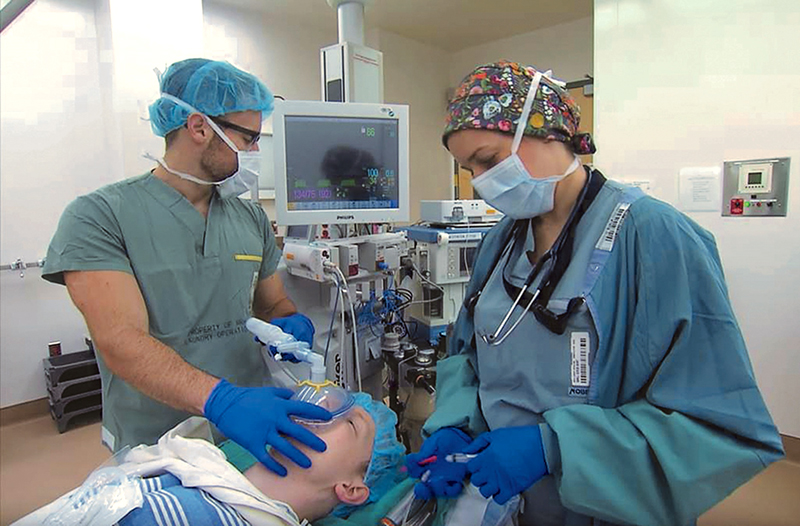
Many risks have been eliminated through anesthetic safety practices. [University of Manitoba]