The Ether Dome

The Ether Dome experiment in Boston's Massachusetts General Hospital was the birth of modern anesthesia. Following a failed anesthesia demonstration in 1844 using nitrous oxide by dentist Horace Wells, his research partner William T.G. Morton began researching whether larger doses of ether could work as an anesthetic. Subsequently, Morton convinced surgeons Henry Bigelow and John Warren to use ether as a test in an upcoming operation.

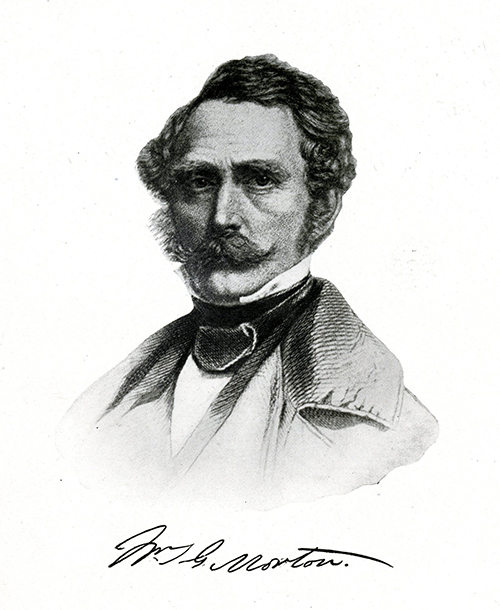
William T.G. Morton [The University of Alabama at Birmingham]

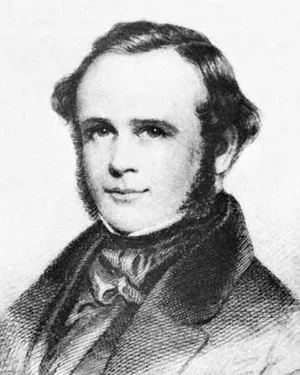
Horace Wells [Britannica]

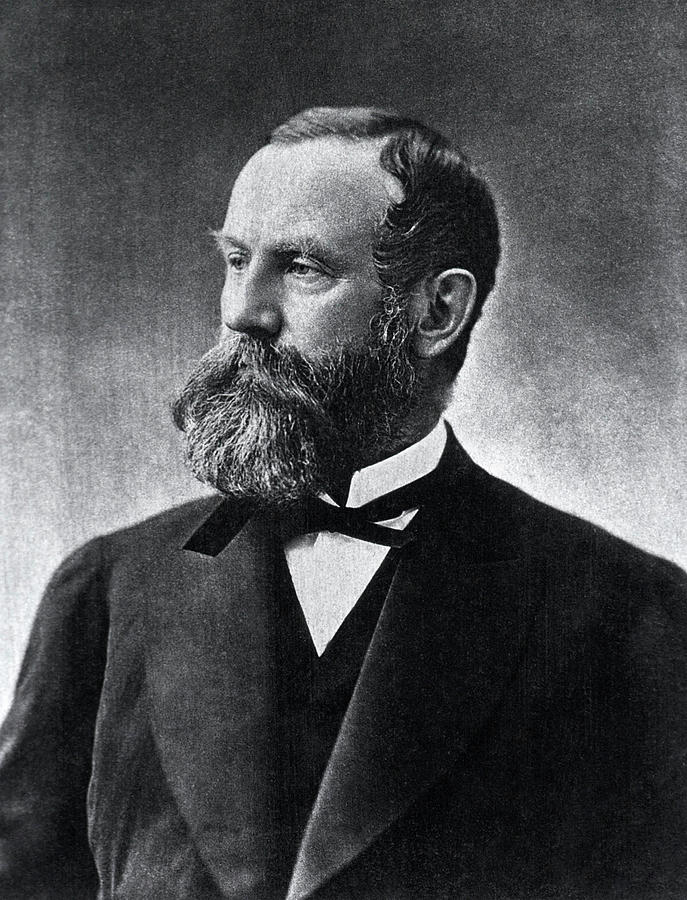
Henry Bigelow [ National Library Of Medicine / Science Photo Library]

A silent reenactment of Ether Day. [courtesy of Massachusetts General Hospital]​​​​​​​

During this experiment, patient Edward Gilbert Abbott underwent removal of a neck tumor and reported only a “scratching sensation,” proving the ether worked.

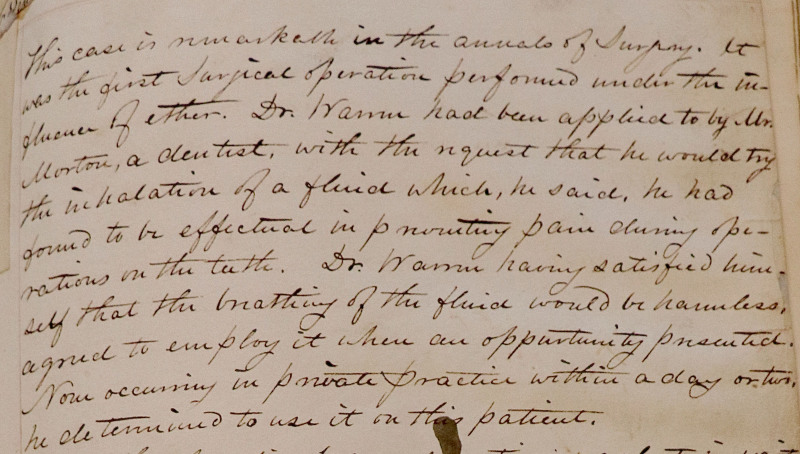
Doctor Warren's medical notes: This case is remarkable in the annals of surgery. It was the first surgical operation performed under the influence of ether.....​​​​​​​ [John Warren, courtesy of National Library of Medicine]

“I have experienced no pain, but only a sensation like that of scraping the part with a blunt instrument.”

-Edward Gilbert Abbott 
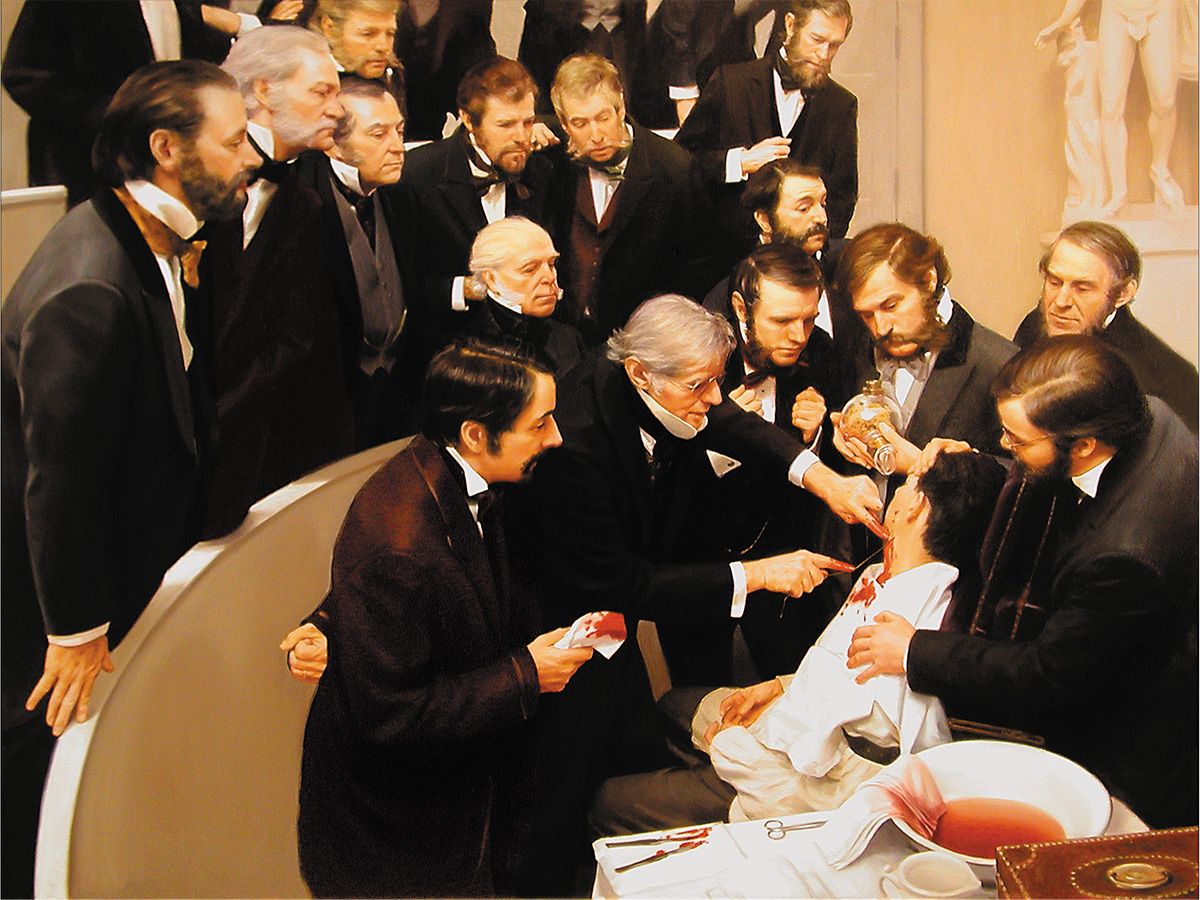
Dr. John Collins Warren performs the first surgery without pain as William Morton administers ether. [Russell Museum].

"Thus was this 16th day of October 1846, made ever memorable and glorious, as long as man shall suffer pain.​​​​​​​"

- William T.G. Morton 

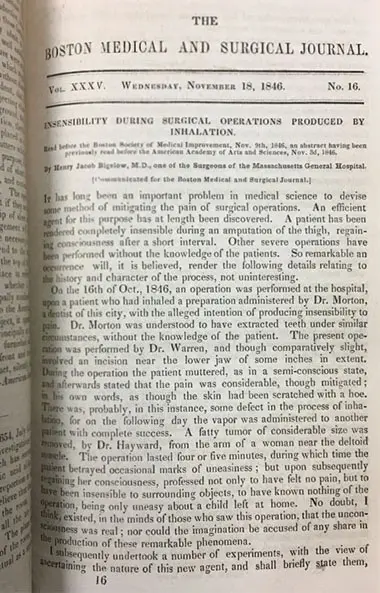
Immediately, Bigelow published his article, “Insensibility During Surgical Operations Produced by Inhalation” about the demonstration. News of it spread quickly across Europe and America.

Henry Jacob Bigelow’s article, “Insensibility During Surgical Operations Produced by Inhalation,” in The Boston Medical and Surgical Journal, Nov. 18, 1846 (Clendening History of Medicine Library)

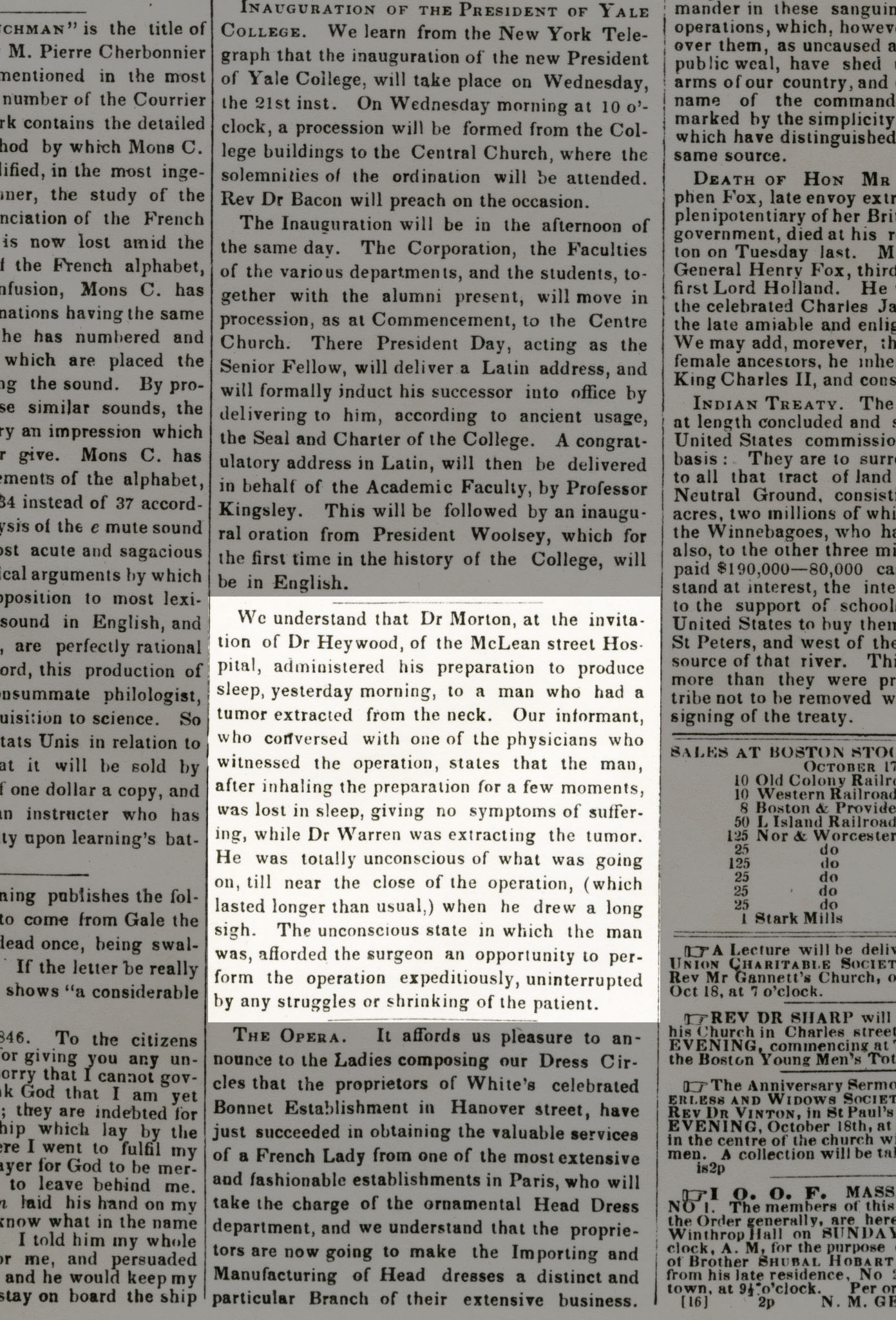
First announcement of the surgical operation using ether anesthesia at Massachusetts General Hospital. [Boston Transcript Journal, courtesy of Harvard Countway Library]

This discovery revolutionized the medical world and led to rapid reforms. Surgeons no longer needed to operate quickly and were able to perform more daring internal procedures. Anesthetic pain management opened a whole new world of possibilities.