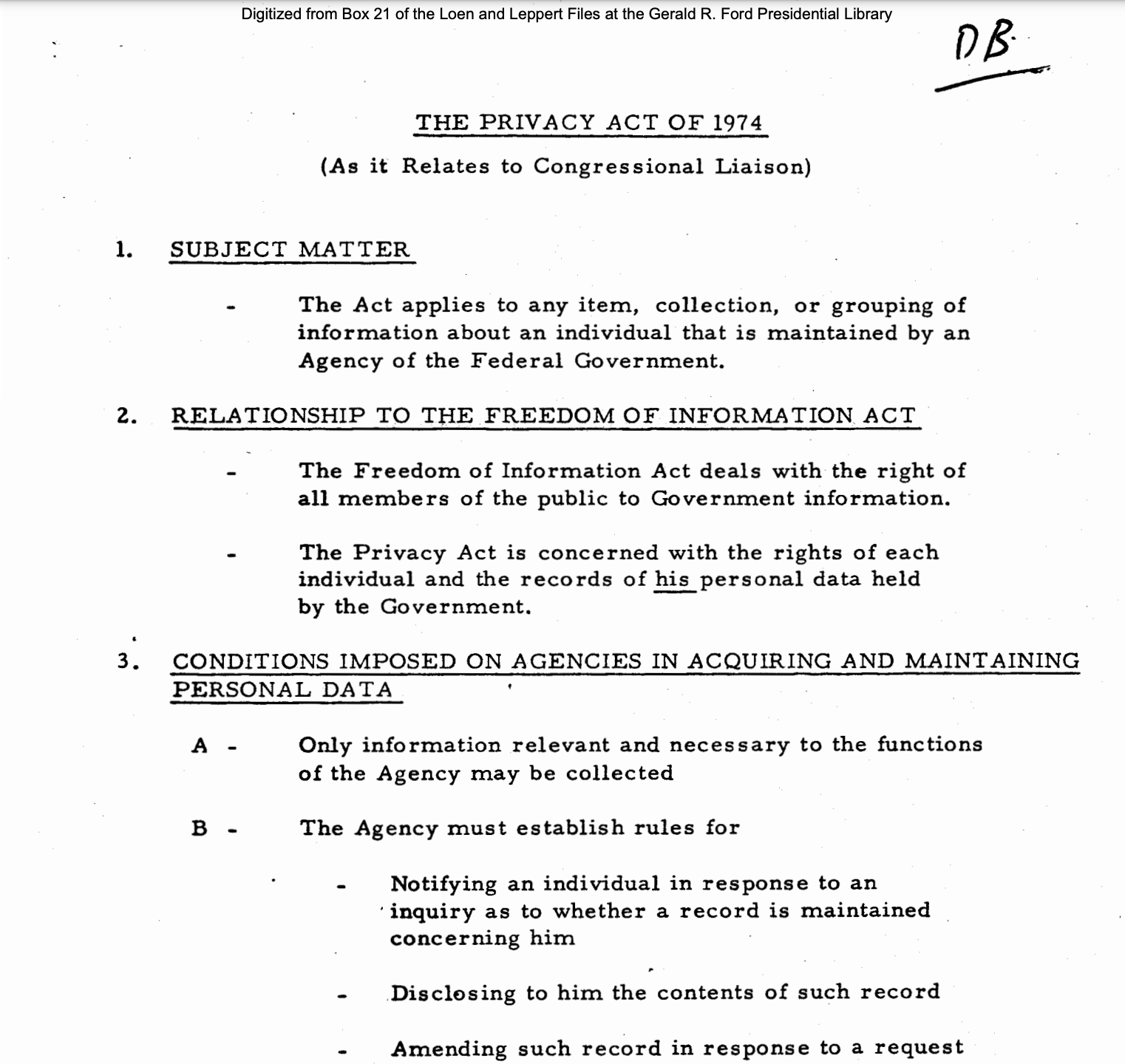
First page of the Privacy Act, 1974, Ford Library Museum
In 1974, the Privacy Act was enacted by Gerald Ford, and its purpose was to give citizens the right to request and access their personal information, know why their information is being collected, and the government the responsibility to correct misinformation about the individuals.
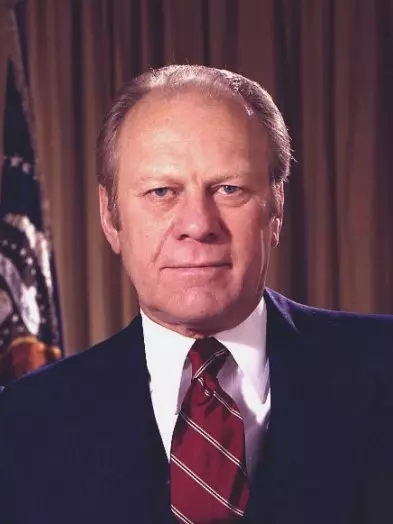
A picture of President Ford, 1972, National Football Foundation
This was to increase government transparency and improve security. The government keeps hundreds of databases on people. The Privacy Act allows people to not only access government data about themselves, but also correct any incorrect information that was stored. However, there are many exemptions where a corporation does not require consent to release information. These exemptions were put into place to make the ruling fair for everyone. One of the exemptions is if an agency worker needs the information for their tasks.
First page of the Privacy Act, 1974, Ford Library Museum
If a citizen is not given access to their information and none of the exemptions are being exercised, then the offender could pay up to $5,000 and be charged with a misdemeanor. American citizens have a right to keep their personal information safe, and agencies have many responsibilities to go along with it. However, not everyone has the same view on the Privacy Act.
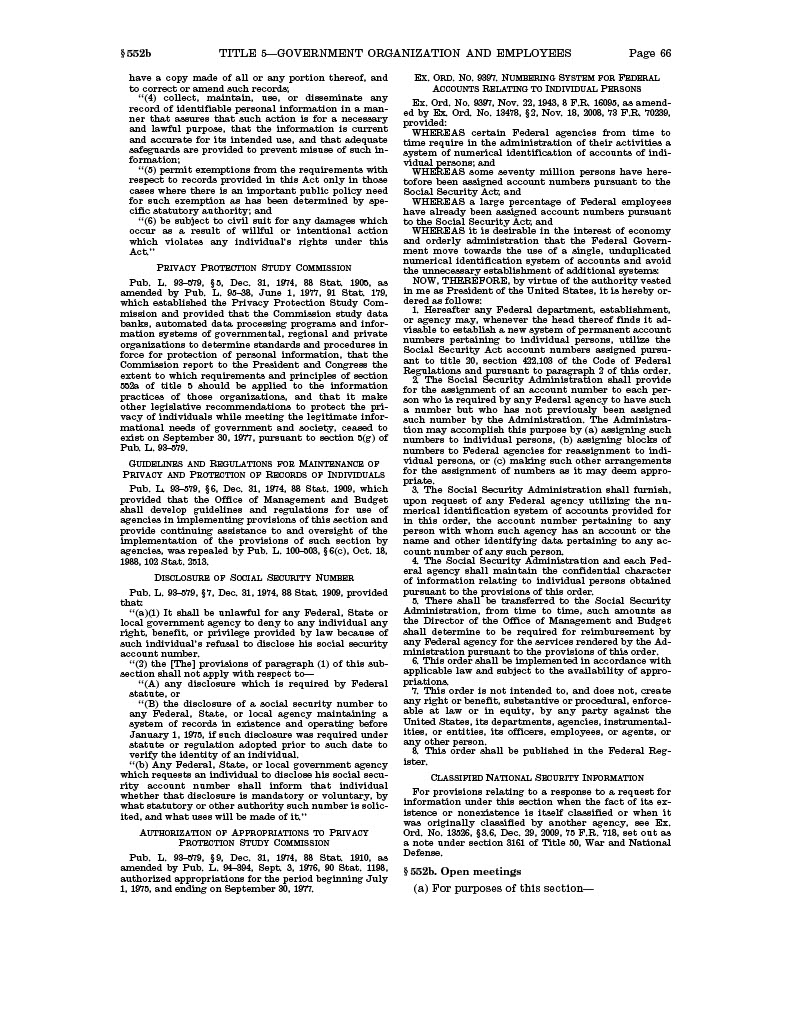
A page of the Privacy Act, 1974, Office of Privacy and Civil Liberties
“Each agency that maintains a system of records shall . . . upon request by any individual to gain access to his record or to any information pertaining to him which is contained in the system, permit him and upon his request, a person of his own choosing to accompany him, to review the record and have a copy made of all or any portion thereof in a form comprehensible to him, except that the agency may require the individual to furnish a written statement authorizing discussion of that individual’s record in the accompanying person’s presence.”
- The Privacy Act of 1974