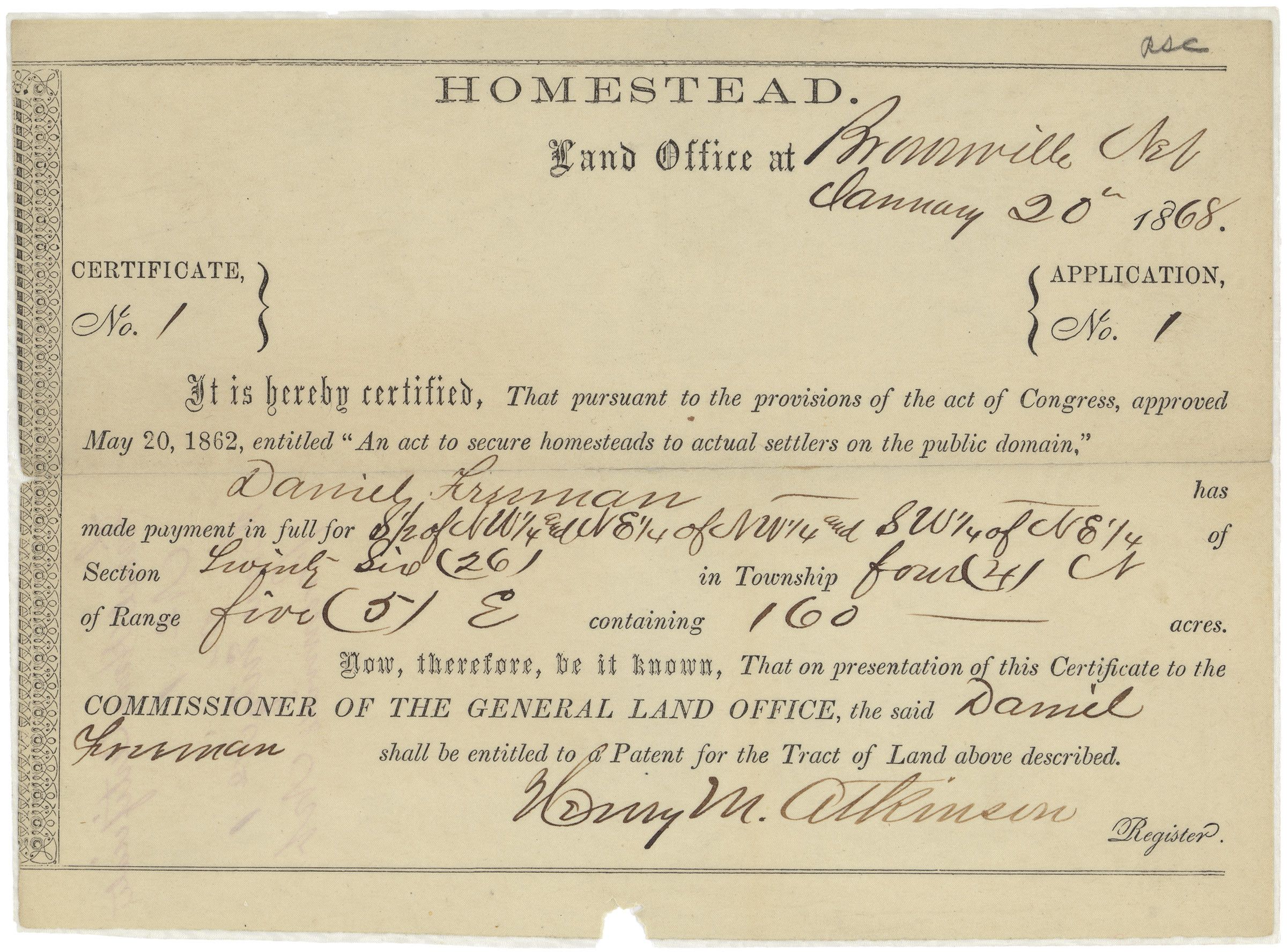
"Daniel Freeman was the first American to file a homestead claim for land under the Homestead Act of 1862. Freeman initiated his claim on January 1, 1863 and received this ownership certificate January 20, 1868." (National Archives)
Family Farms
1977 Crop Failure (Des Moines Register Photo Archive)
American agricultural tradition is grounded in the democratic principle of private land ownership. In 1784, Thomas Jefferson, who viewed the family farm as the great equalizer of opportunity, initiated low-cost land distribution ordinances to encourage their establishment. Later, the Homestead Act of 1862 accelerated this trend by promising 160 acres of free land to anyone willing to cultivate crops, build a home, and improve the land over five years.
"Daniel Freeman was the first American to file a homestead claim for land under the Homestead Act of 1862. Freeman initiated his claim on January 1, 1863 and received this ownership certificate January 20, 1868." (National Archives)
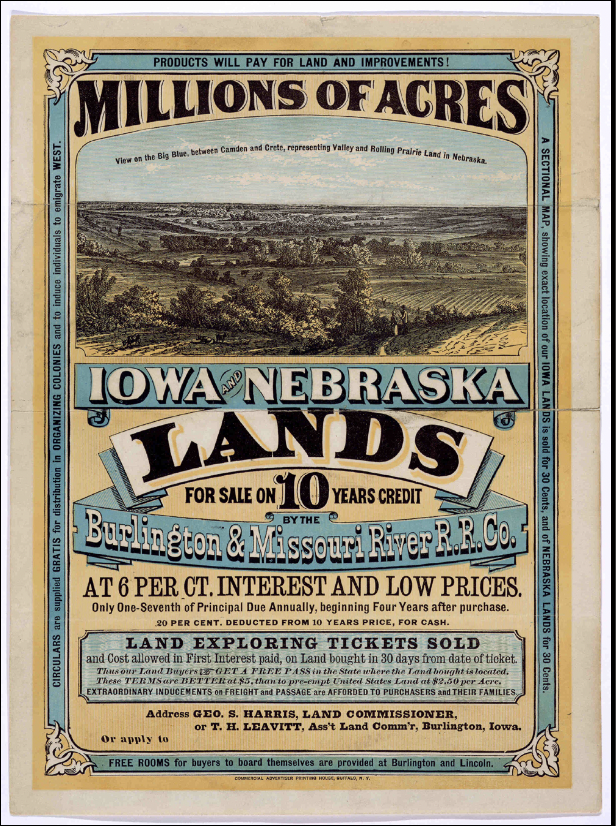
"Millions of Acres" (Burlington & Missouri River Railroad Co., Library of Congress, 1872)
"Because Abraham Lincoln's Homestead Act empowered people, it freed people from the burden of poverty. It freed them to control their own destinies, to create their own opportunities, and to live the vision of the American dream."
-President George H.W. Bush (George H.W. Bush Presidential Library & Museum, 28 November 1990)
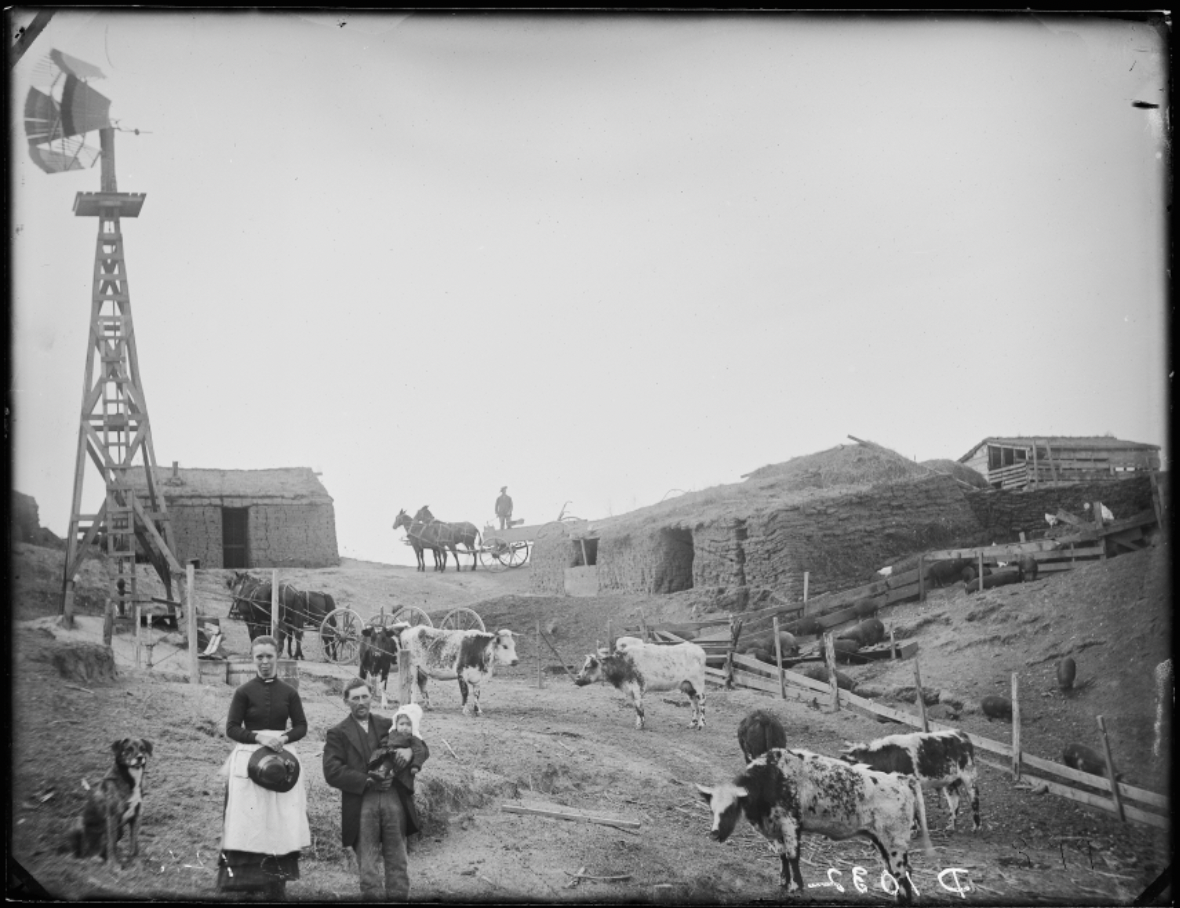
"Jorns family homestead in Dry Valley, Custer County, Nebraska, 1886." (Butcher, History Nebraska)
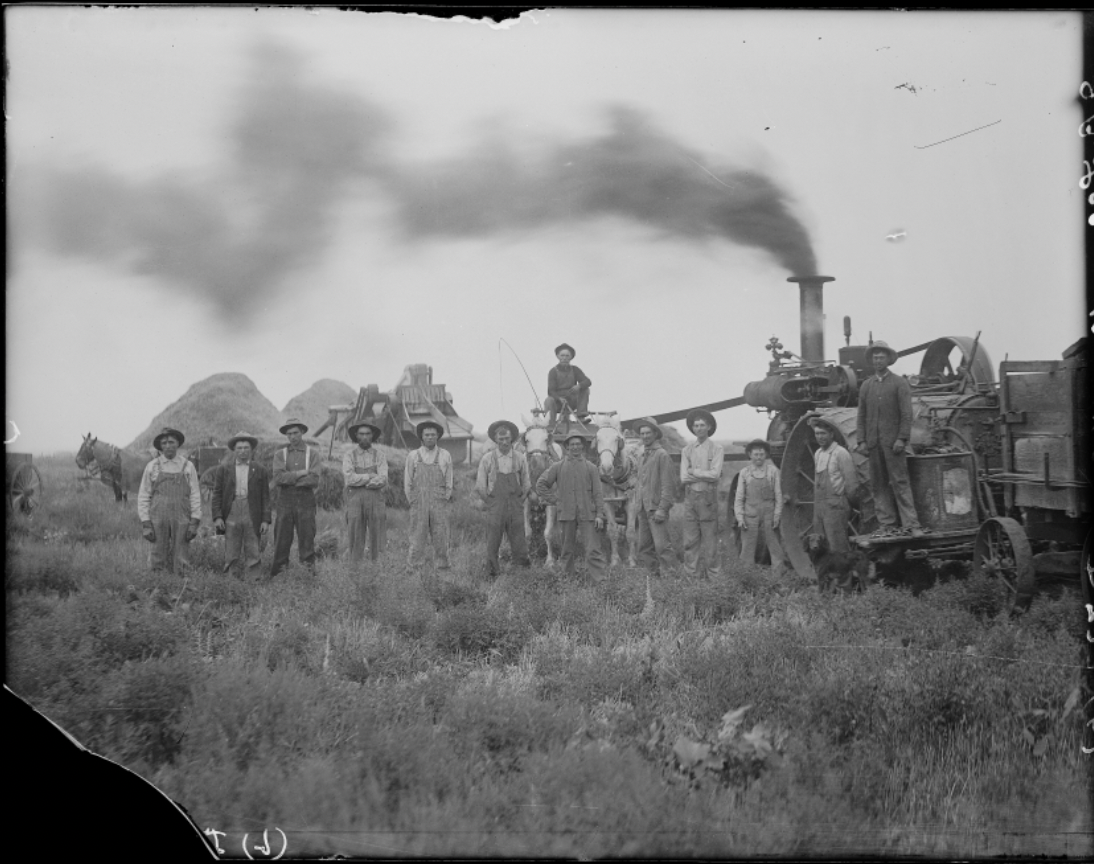
"Farm scene; threshing on J.B. Lee farm north of Shelton, Nebraska, 1910." (Butcher, History Nebraska)
Approximately 270 million acres of land in 30 states was settled under this act, which embedded the family farm tradition and the American dream into the fabric of rural American life (Wensley, 2020).