"As horses were replaced with small tractors and then bigger tractors, and as threshing machines yielded to combines, small family farms began to grow."
-Jerry Webb, Farm Talk (Lancaster Farming, 16 August 1980)
20th century family farms changed greatly due to electrification and mechanization, which increased production, decreased farm labor, and prompted a rural-to-urban population shift of job-seeking, displaced farm workers. Later, this growth met with price volatility that triggered two farm crises in the 1930s and 1980s.
(Lancaster Farming, 19 January 1974)
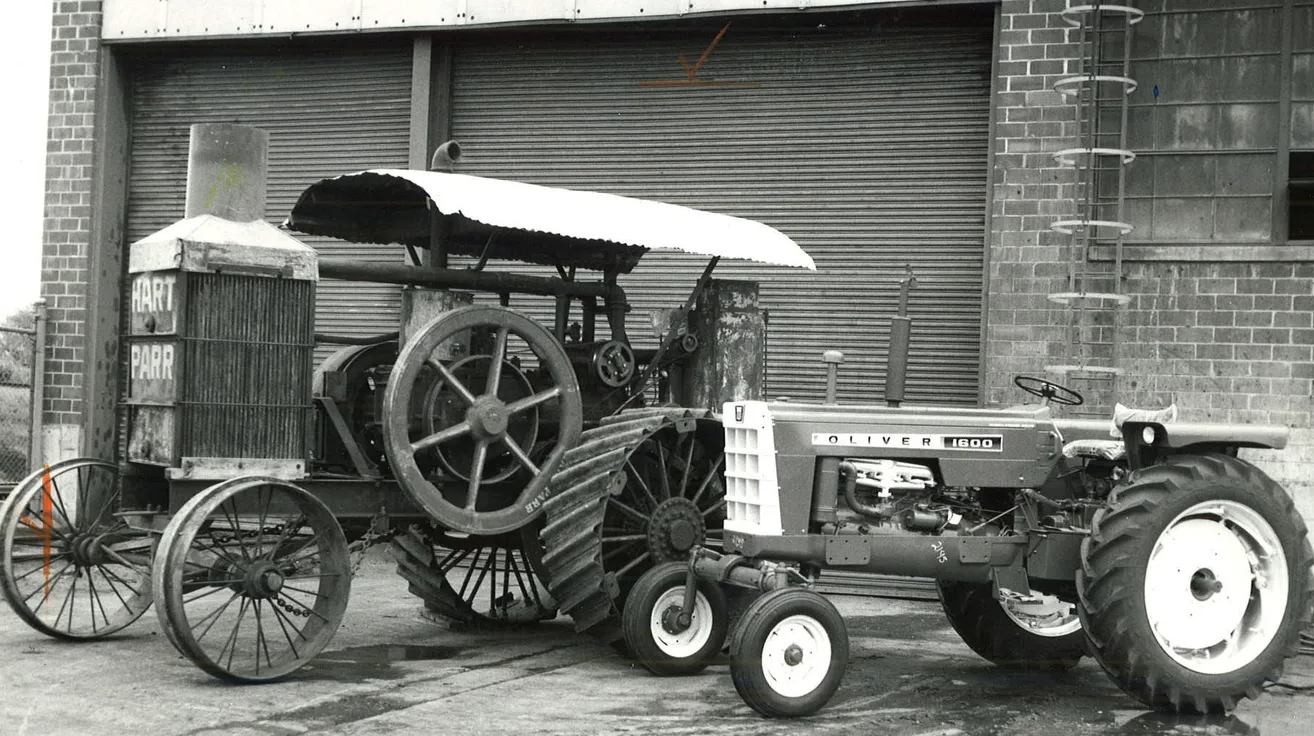
"This 1964 photo shows the progress made in tractors between 1913, when the Hart-Parr '60' was made and 1964, when the Oliver 1600 was built." (Des Moines Register Photo Archive)
1930s Farm Crisis
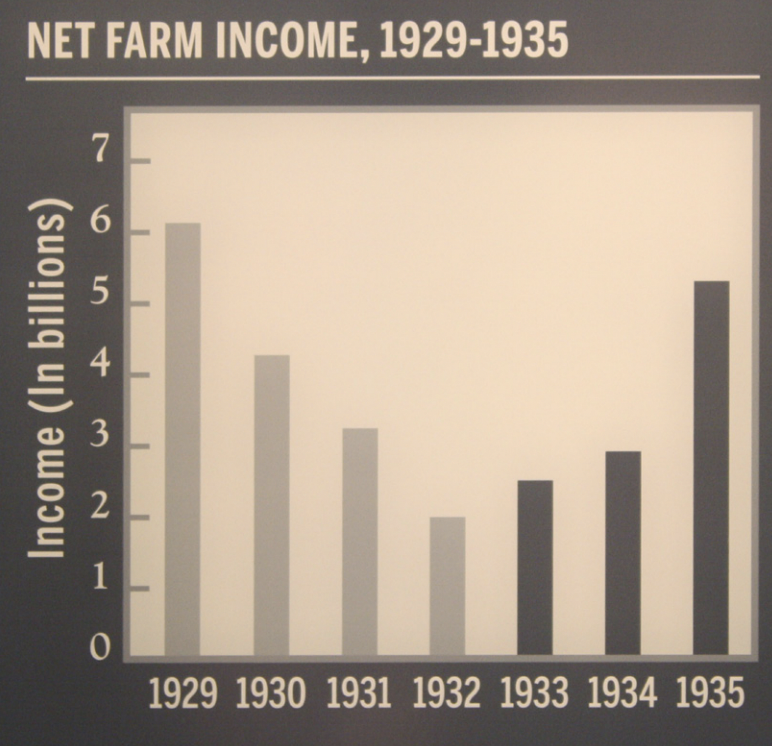
When the 1929 stock market crash thrust the U.S. into the Great Depression, an already struggling post-World War I farm economy completely collapsed from bank failures and a commodity price free fall, which triggered farm foreclosures and a nationwide farm crisis.
"For us another threshing time has come and gone. One of the poorest crops ever. We have followed good farming practices, better than the average neighbor has, and our yield has been discouraging. Market reports this evening carry the news that wheat prices are down twelve cents, corn six cents and oats fifteen cents today."
-The Depression Diary of Iowa farmer, Elmer Powers, 1932-1933 (University of Northern Iowa, 14 September 1932)
"Farmers' income, 1929 to 1935" (Franklin D. Roosevelt Presidential Library and Museum)
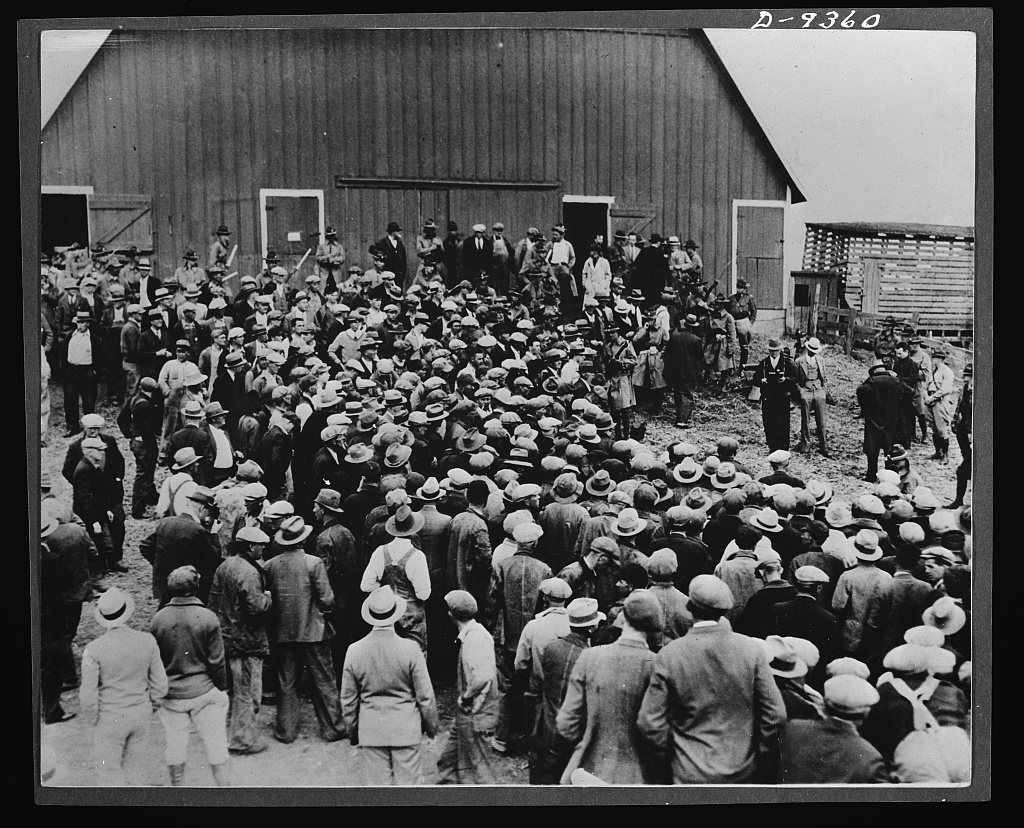
"Aftermath of inflation--a foreclosure tale in Iowa in the early 1930s when 'the bottom fell out of everything.' Military police were on hand to keep farmers from preventing the auction." (Library of Congress, c. 1930s)
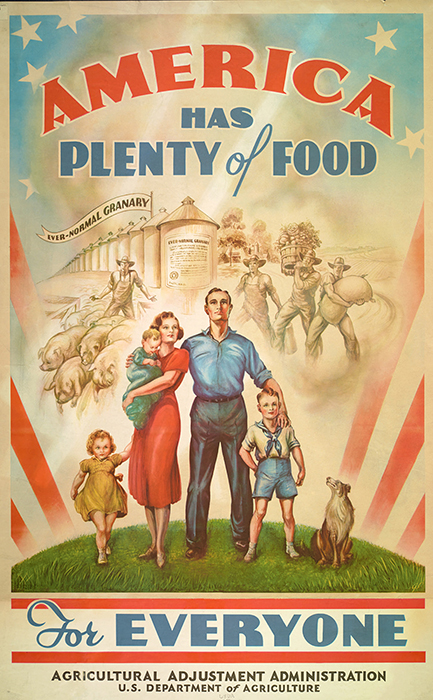
With the nation's population unified by crisis and one-third engaged in farming, President Roosevelt focused first on the farm economy. His New Deal policies introduced government subsidies for farmers to reduce production and government loans to refinance farm mortgages that kept the rural American dream alive and stimulated the overall economy.
"...if we can greatly increase the purchasing power of the tens of millions of our people who make a living from farming...we shall greatly increase the consumption of those goods which are turned out by industry..."
-President Franklin Roosevelt, Third Fireside Chat, 24 July 1933 (Franklin D. Roosevelt Presidential Library and Museum)
"Agricultural Adjustment Administration Poster" (Franklin D. Roosevelt Presidential Library and Museum, c. 1930)
Post-World War II
Roosevelt's government programs and agricultural technology advancements increased productivity and created surpluses, which prompted farm consolidation and further changes in the post-war farm economy.
"Agriculture is in the midst of a far-reaching scientific and technological revolution which is shaking the very foundation of its traditional institutional patterns."
-Earl Butz, Dean of Agriculture Purdue University (American Society of Farm Managers and Rural Appraisers, 9 June 1958)