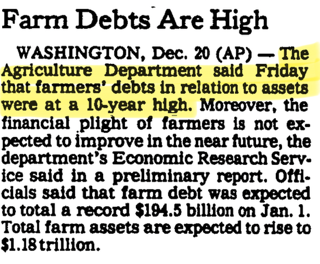
(New York Times, 21 December 1981)
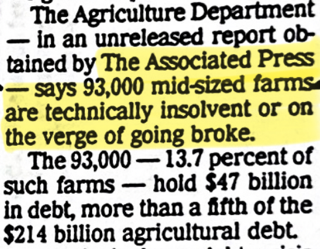
(USA Today, 11 March 1985)
-U.S. Senator (IA) Charles Grassley (Personal Interview, 30 January 2024)
Financial Fallout
1977 Crop Failure (Des Moines Register Photo Archive)
Lending Changes
By the mid-eighties, farm debt hit new heights and the value of farmland used as loan collateral dropped to record lows. This dire situation made lenders unwilling to extend credit and issue new loans to farmers incapable of making payments on existing debt. To recoup losses and remain solvent, lenders forced delinquent farmers into foreclosure and repossessed their farms.
(New York Times, 21 December 1981)
(USA Today, 11 March 1985)
-U.S. Senator (IA) Charles Grassley (Personal Interview, 30 January 2024)
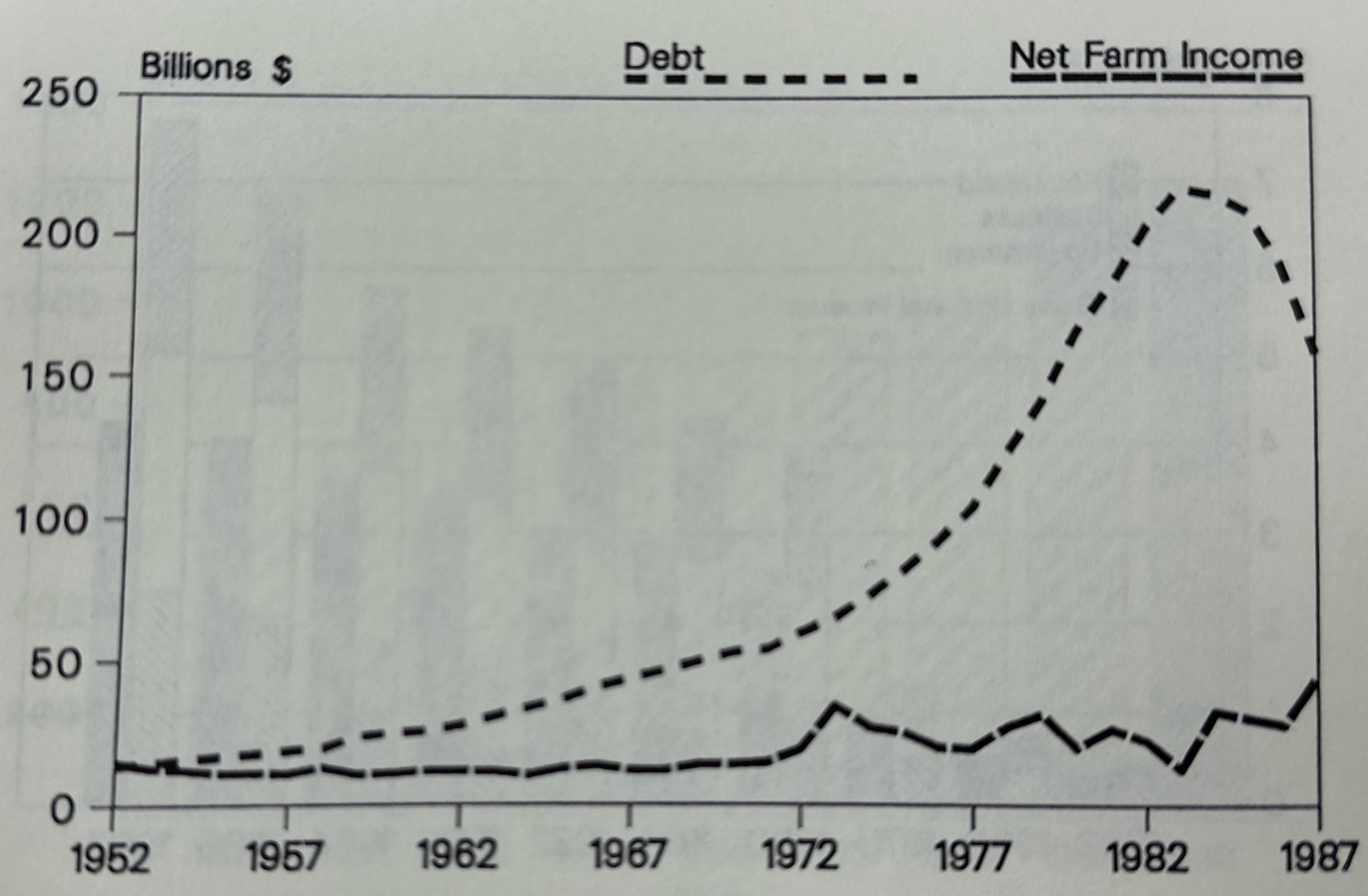
"Net Farm Income and Debt" (The Farm Debt Crisis of the 1980s, USDA, c. 1990s)
"Is our government hoping to wipe out all small farmers? At this rate we'll only watch the Federal Land Bank swallow our home. Where can we turn? What can we do?"
-Lois Paulsen, Granville, Iowa, Letter to Governor Branstad (State Historical Society of Iowa, 6 November 1985)
Foreclosure
The farm crisis created a turning point for family farms as rising debt and monetary loss forced a nationwide average of 250 foreclosures daily. Farm families watched helplessly as their farms and belongings were auctioned off and they were forced off the land.
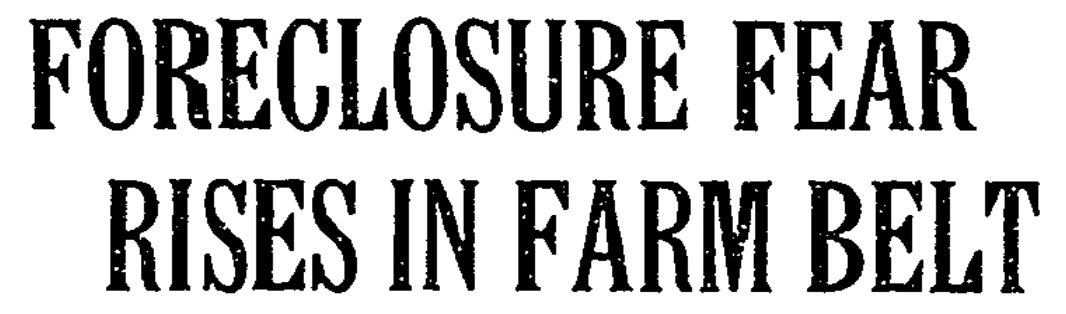
(New York Times, 16 January 1983)
(Farm Crisis Strategies For Survival, Wisconsin PBS, 18 April 1985)
"I booked four [auction] sales last night on the phone and listed two more today. I'd say that's five times as many as I was handling a year ago."
-Richard Hixson, Vice President of the Iowa State Bank and farm auctioneer, Knoxville, Iowa (New York Times, 28 March 1982)
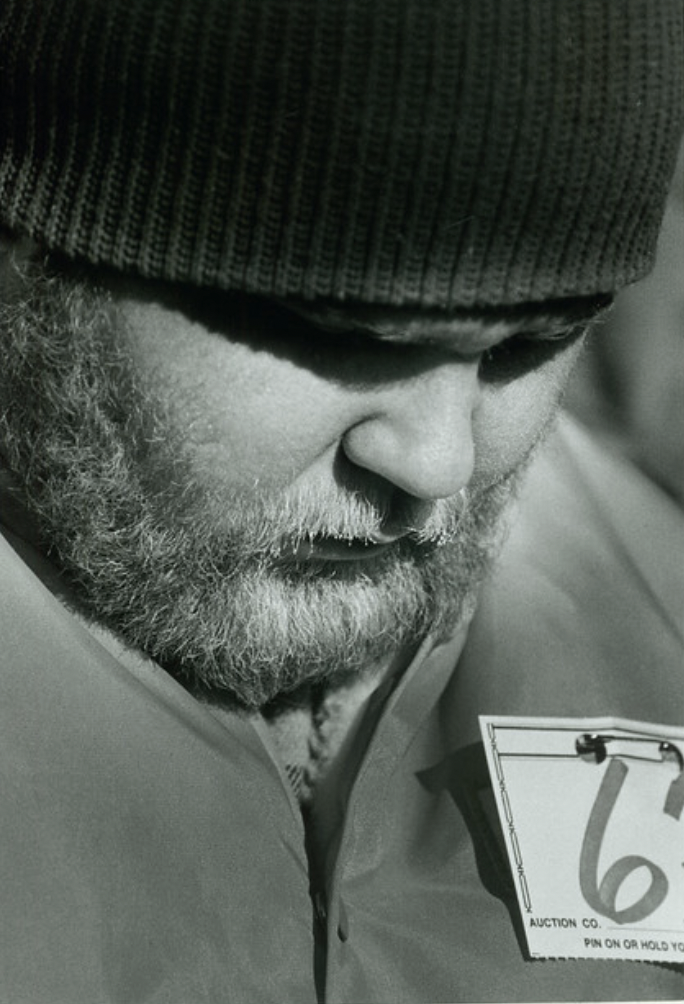
"Bidder in crowd at auction on Ken Lewis farm (may be family member)." (Gillette, State Historical Society of Iowa, 19 December 1985)

(New York Times, 10 February 1985)
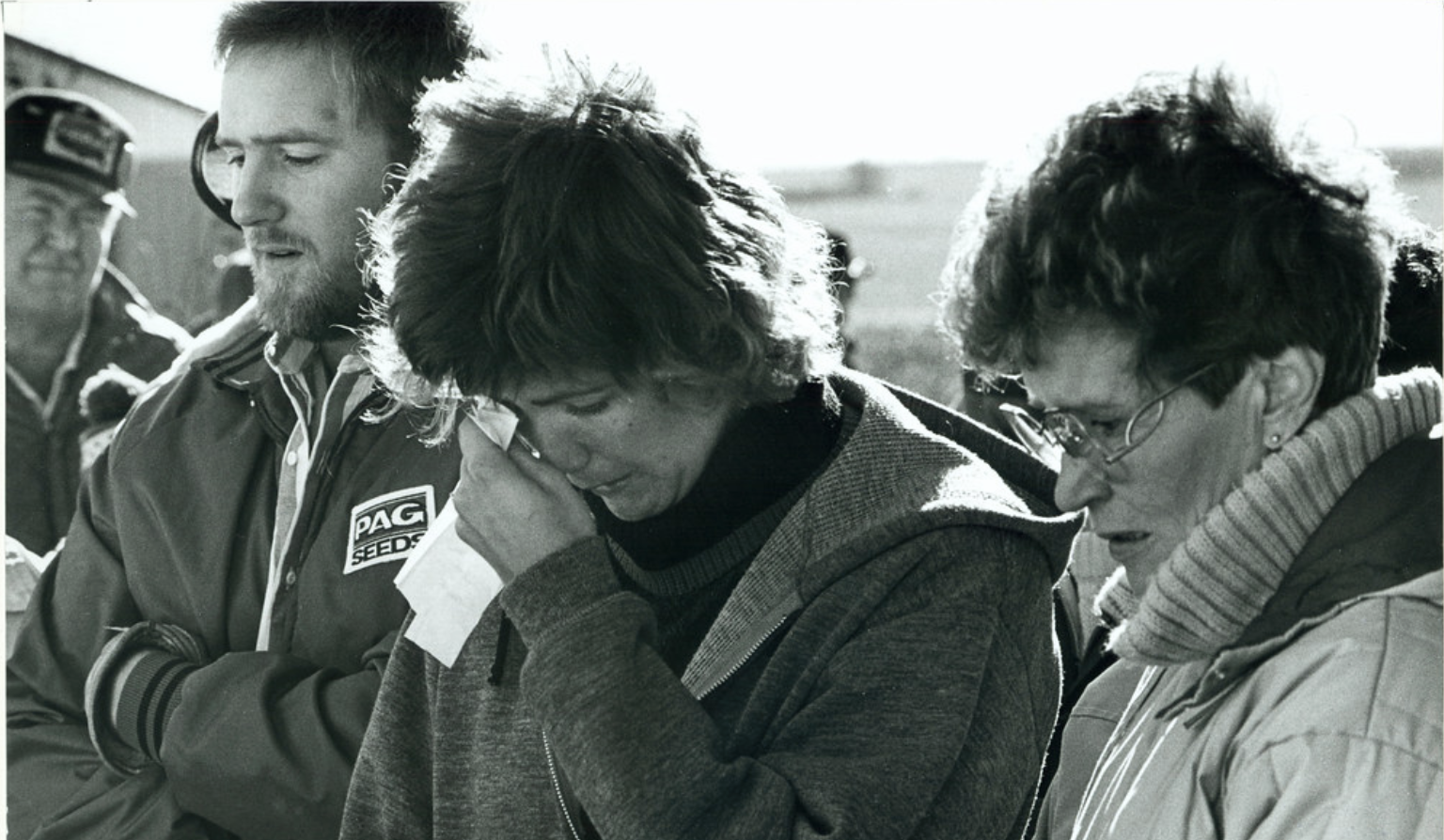
"Eviction from a family farm: Vogel family, Guthrie County, November 8, 1986. The family was staying until forced off their land. A foreclosure sale had claimed the farm the previous March." (Gillette, State Historical Society of Iowa)
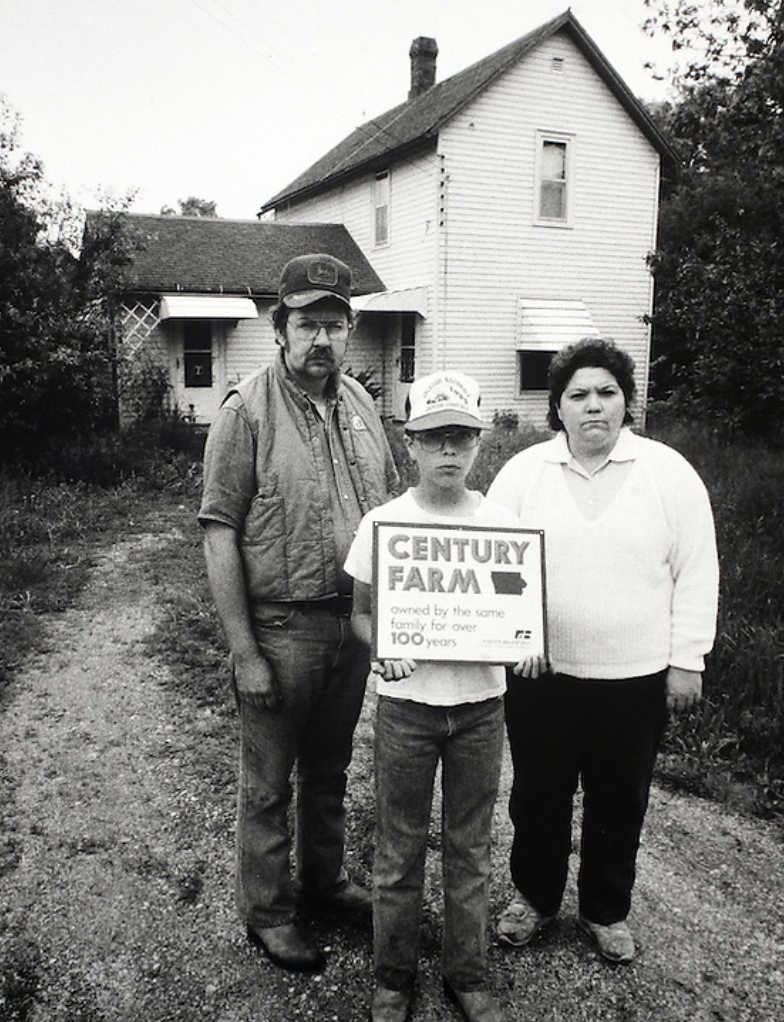
(Peterson, Pulitzer Prize Farm Crisis Collection, 1986)
"In the 1930s, everyone in America suffered—urban people, the rich banker, the poor farmer. Everybody lost massively. Everybody was living close to survival. And it meant for kind of a national unity. With the farm crisis in the 80s, basically it was only the farmer. And this meant the farmer was alone in an island of difficulty."
-Former U.S. Representative (IA) Jim Leach (The Farm Crisis, Iowa PBS, 1 July 2013)
Beyond losing income, farmers forced off generational family farms lost the only way of life they'd known. Many experienced mental health issues due to feelings of shame and failure, which provoked a rise in suicides and domestic violence that further decimated struggling farm families.
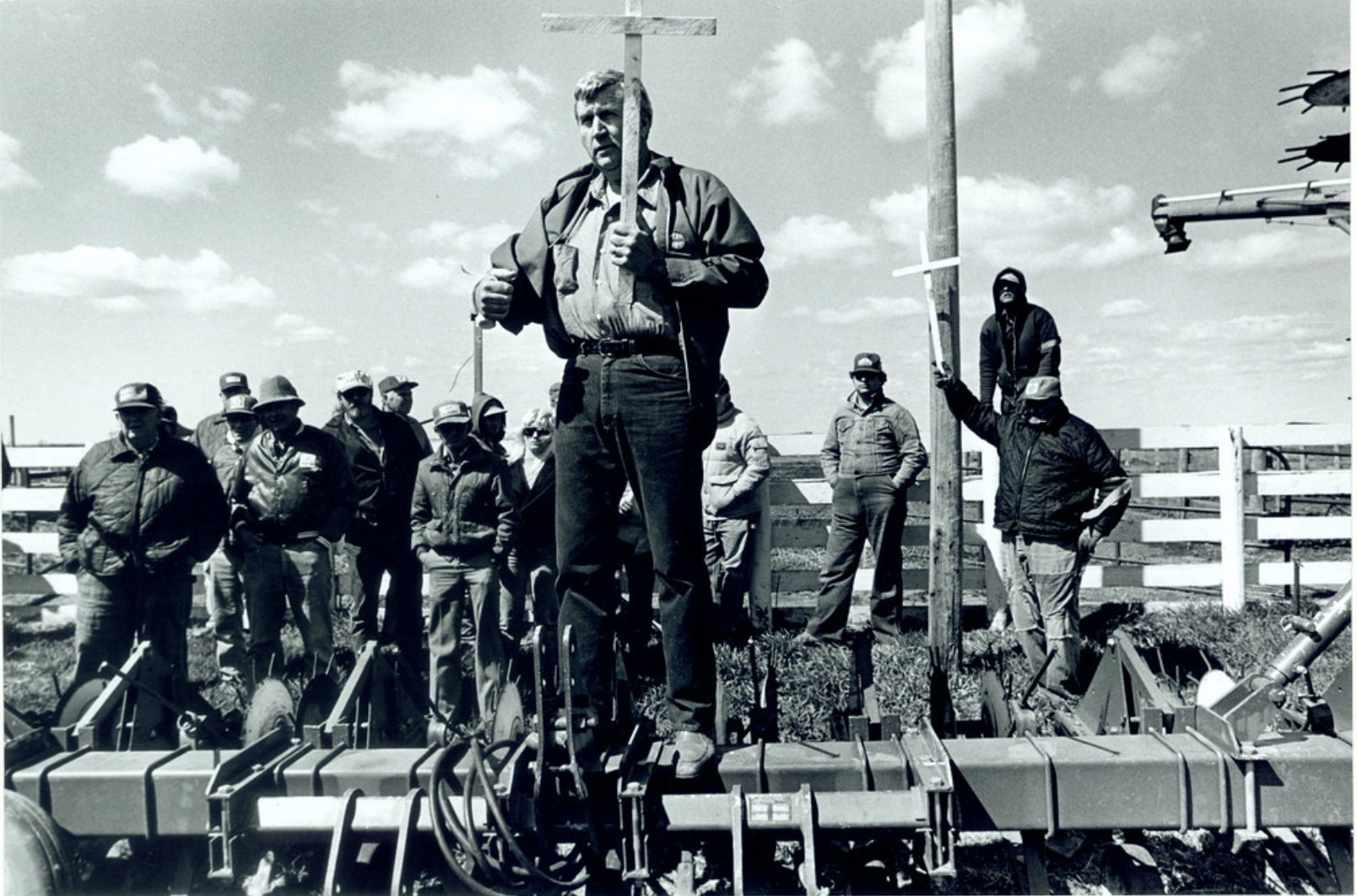
"Attendees at farm foreclosure auction. Story City, Iowa. 1985 or 1986. Crosses were used to indicate machinery that the evicted farmer wished to keep so that competitive bids would be kept low." (Gillette, State Historical Society of Iowa)
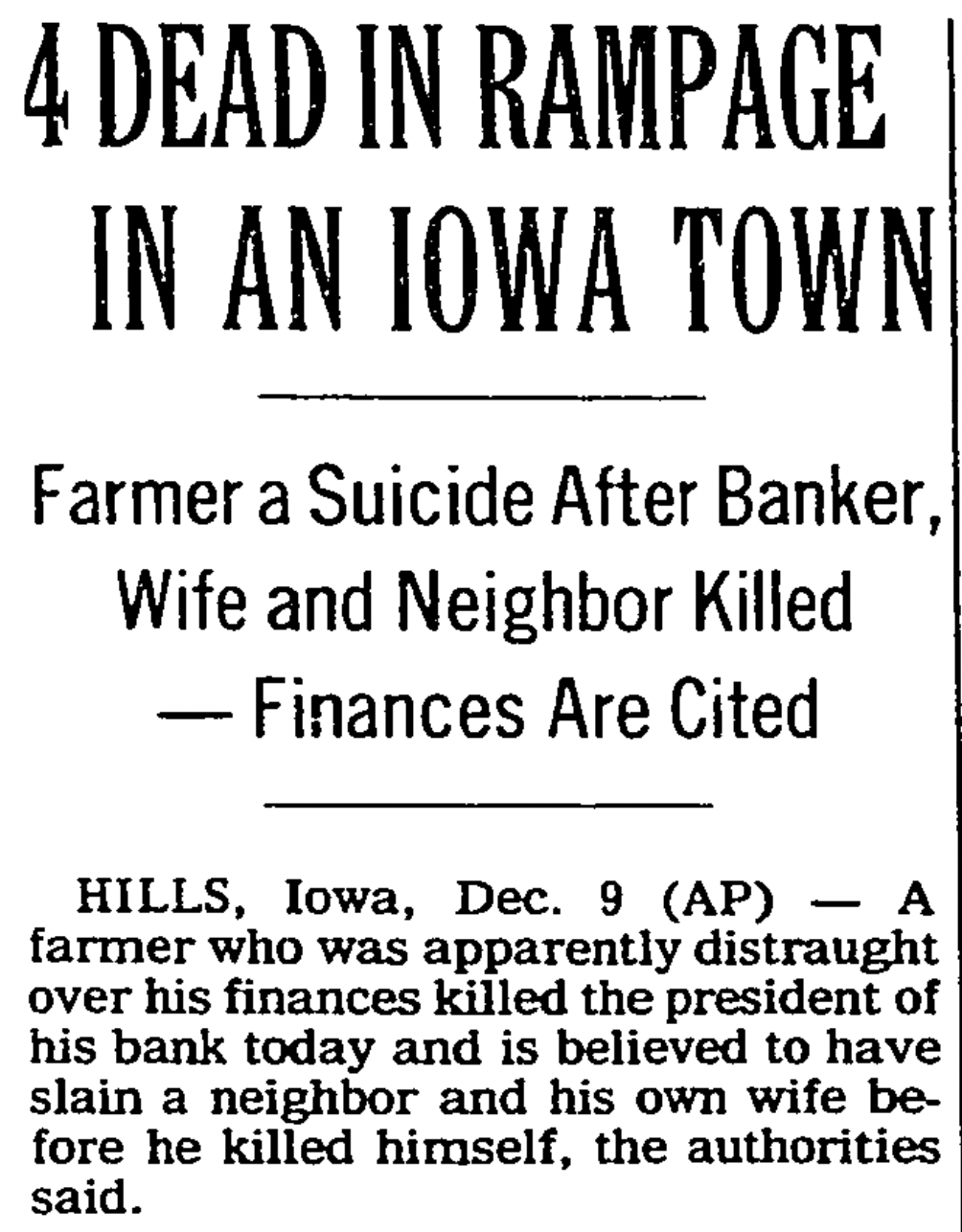
(New York Times, 10 December 1985)

(Hutchinson News, 23 February 1986)
"There is a certain pride in farming, and the shame of failure is just overwhelming. Death seemed easier than facing it."
-Mike Hrabe, Kansas wheat grower (Hutchinson News, 23 February 1986)