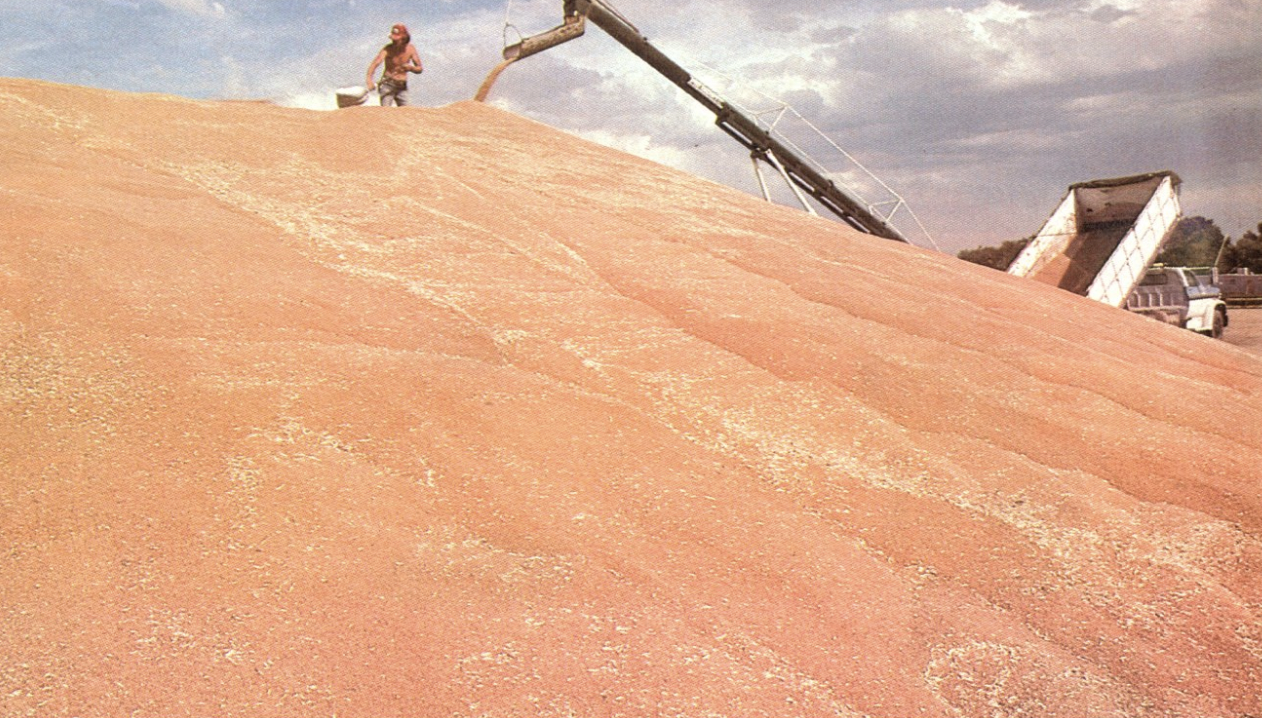
Agricultural boom turned to bust as unexpected foreign market competition, combined with harmful economic and political policies, caused grain surpluses, plummeting commodity prices, and a full-on farm crisis.
Economics
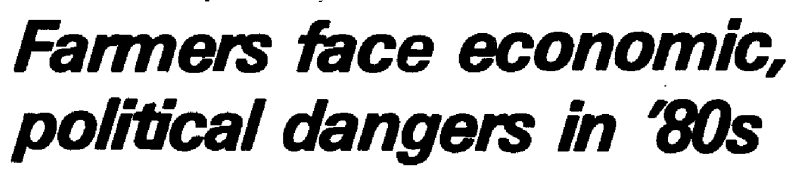
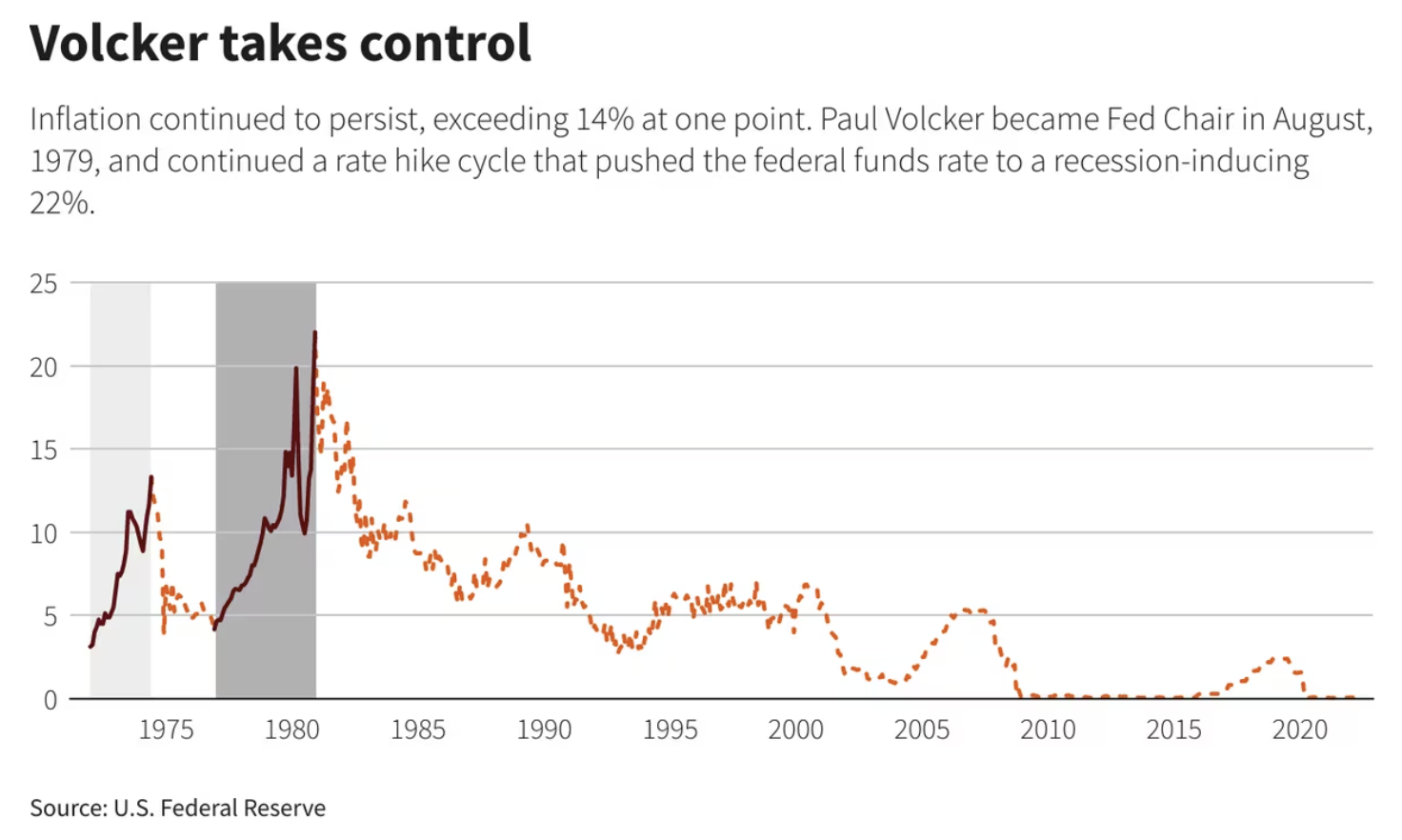
In 1979, the Federal Reserve unexpectedly increased interest rates to combat high inflation. Rate hikes and low commodity prices made it nearly impossible for farmers to cover operating expenses and refinance loans.
(The Daily Press, 3 January 1980)
"Interest Rate Chart" (U.S. Federal Reserve, 16 March 2022)
"They said I had nothing to worry about—that rates had varied only a fraction of a point since 1970. My rate went from 7 percent to 18.5 percent."
-Jim White, Farmer, Pleasantville, Iowa (The Atlantic, July 1985)
Politics
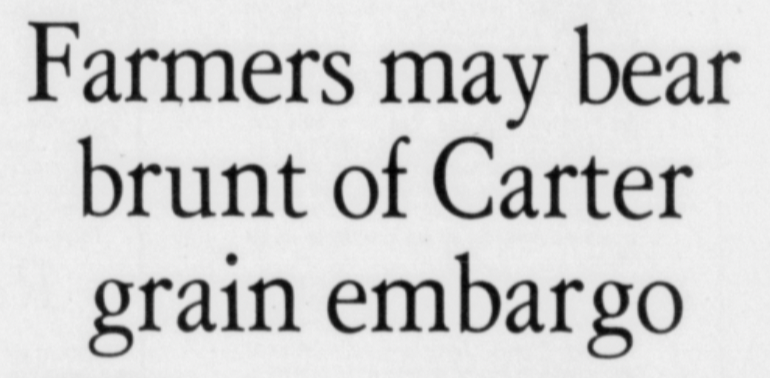
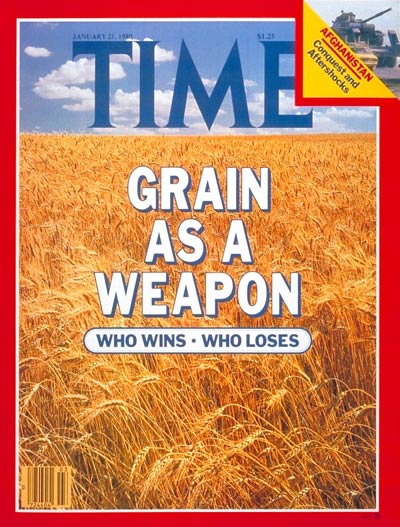
Uncertainty continued in 1980, as President Carter enacted a grain embargo against the Soviets when they invaded Afghanistan. Thus, 17 million tons of embargoed grain remained stateside without a market, which left farmers unable to sell crops and make loan payments.
(Havre Daily News, 8 January 1980)
(TIME, 21 January 1980)
"Golden mountains of grain in the Midwest are an object of the world's wonder, but some storage piles are by now three years old." (Davaz, TIME, 21 January 1980)
"We think of ourselves as patriotic. We want to do what we can. But we shouldn't have to go broke being patriotic."
-Lysle Davidson Jr., Wheat farmer, Johnson City, Kansas (TIME, 21 January 1980)