Victories and Conflicts
Water Rights Victory
The 1909 Garfield Permit faced significant opposition, leading to the 1913 Raker Act, which approved the creation of the dam given the city’s devastating situation. However, the bill also included many conditions that the city must follow as their environmental responsibility.
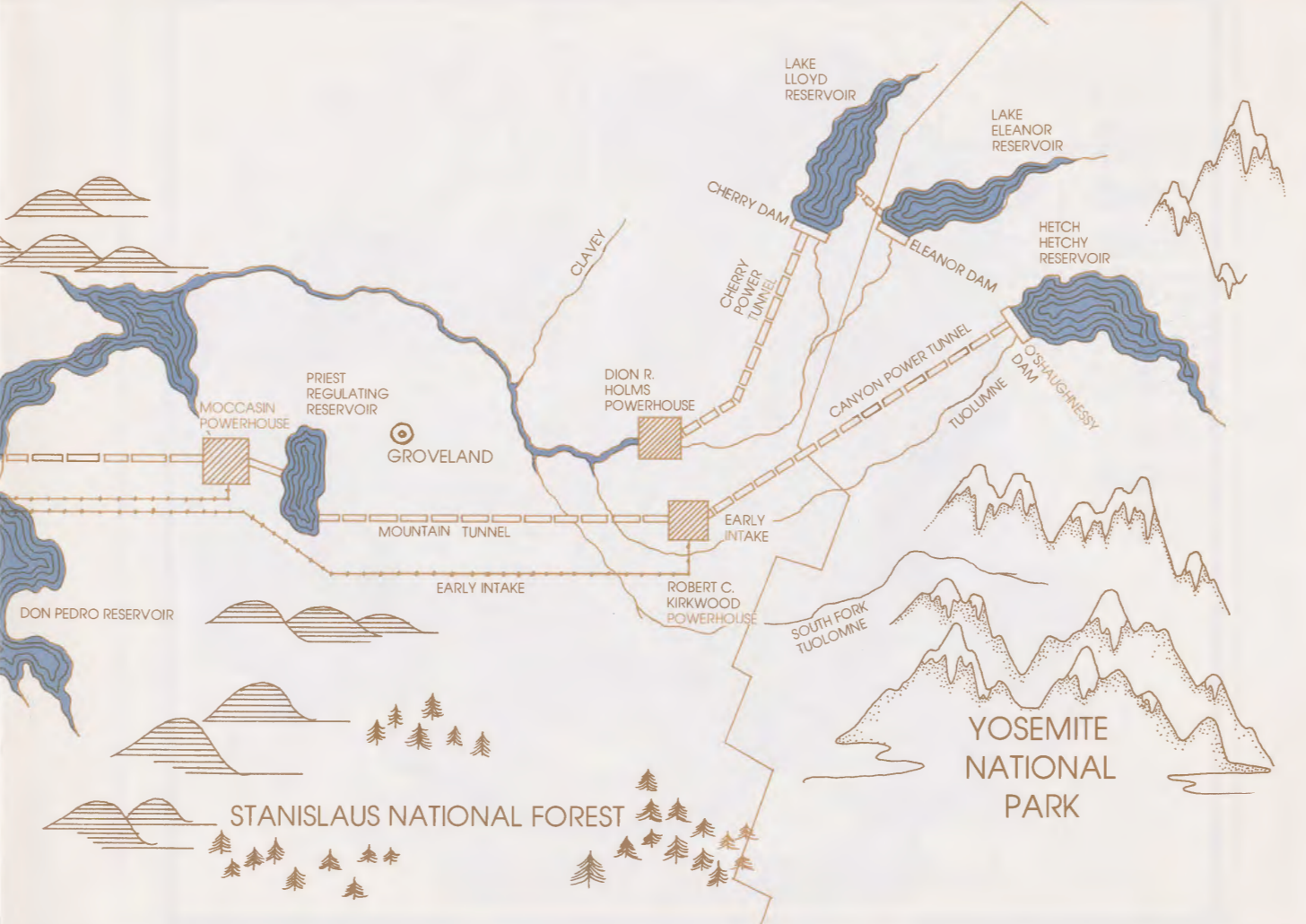
(San Francisco Water and Power: A History of the Municipal Water Department and Hetch Hetchy System. 1985, Internet Archive (1157188221))
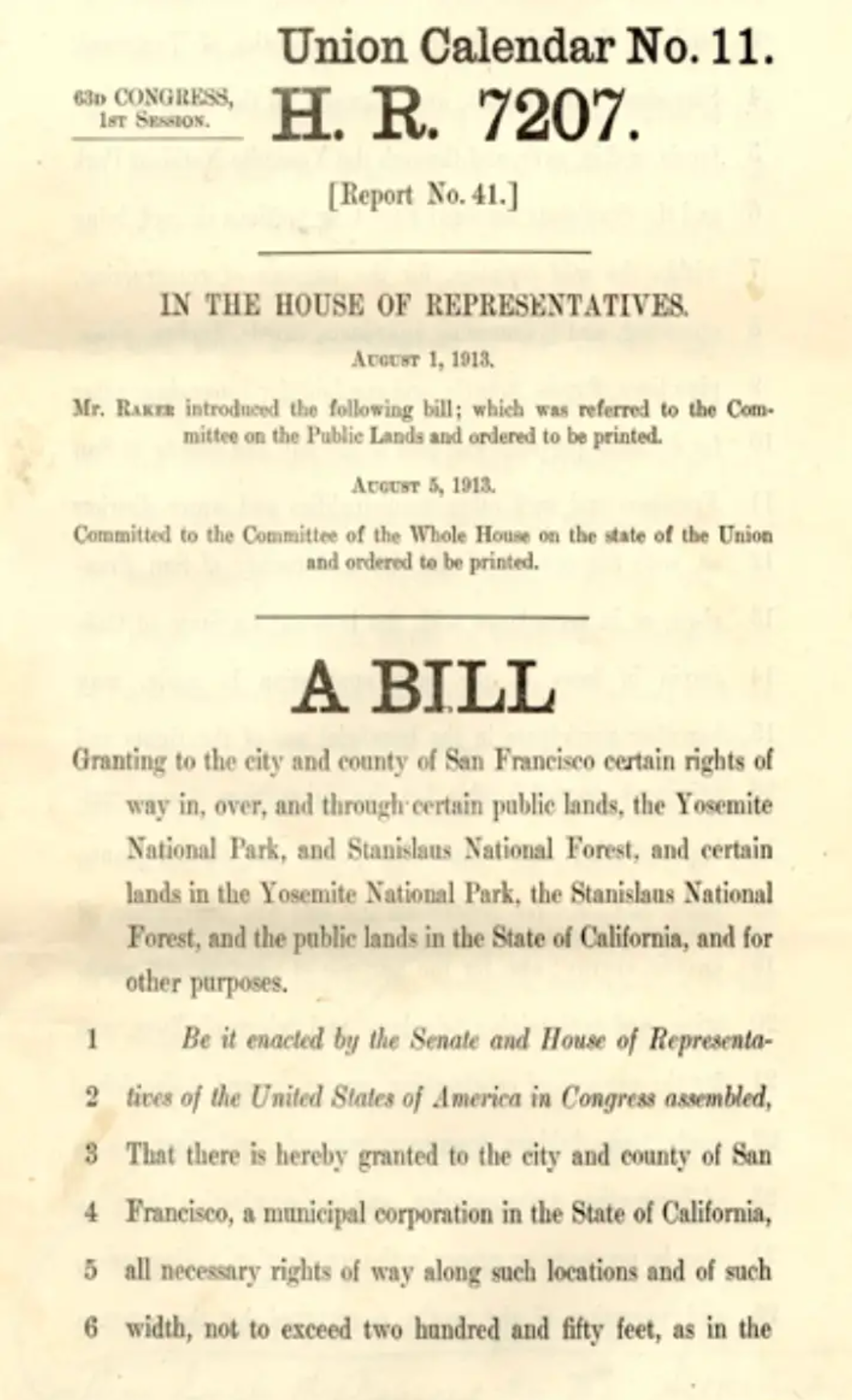
(H.R. 7207, The Raker Bill. 1913, National Archives (RG233))
“An act Granting to ... San Francisco … in the Hetch Hetchy Valley and Lake Eleanor Basin … the rights … shall not be sold, assigned, or transferred to any private person, corporation, or association … If … the sanitary regulations … provide … to guard the purity of the water … the grantee shall construct on the north side of the Hetch Hetchy … and a road or trail to Lake Eleanor and Cherry Valley … a road along the southerly slope of Smiths Peak from Hog Ranch past Harden Lake to a junction with the old Tioga Road.”
(Hetch Hetchy Reservoir Site, 1913).
Support
Most San Francisco residents, some cultural and religious groups, and people across America supported the Raker Bill to protect rights to clean and affordable water in San Francisco.
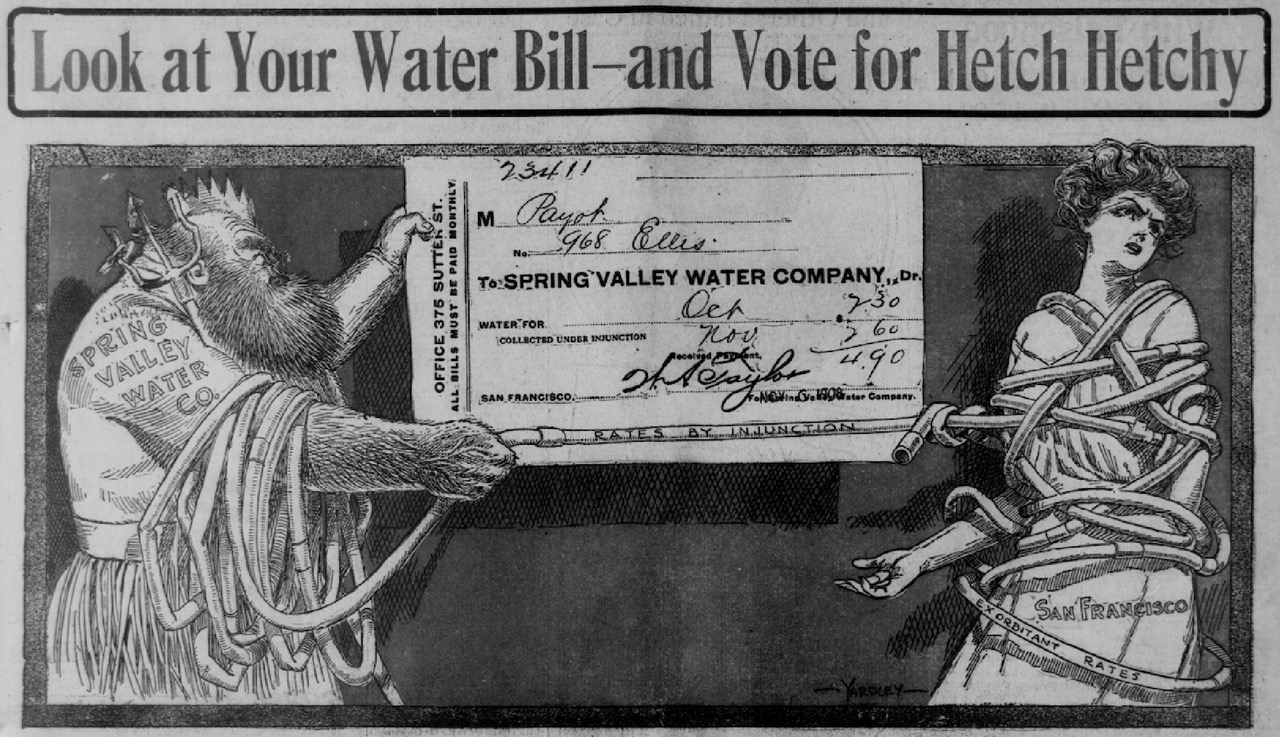
(Look at Your Water Bill-and Vote for Hetch Hetchy. 1908, Library of Congress. (85066387))
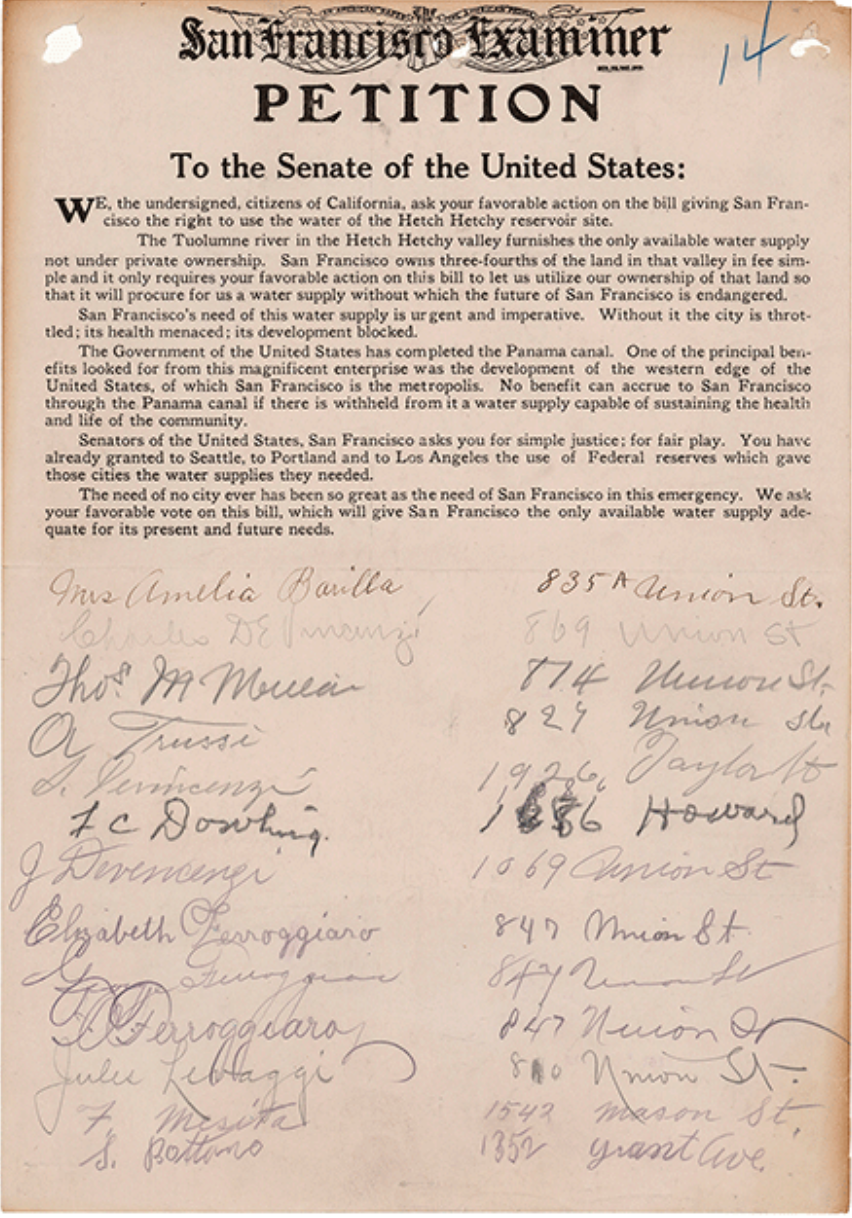
(San Francisco Examiner Petition to the Senate of the United States Supporting the Raker Bill. 1913, National Archives (7268086)
“Hetch Hetchy is the only adequate available water supply ... Suggested alternative supplies are either inadequate or involve an expenditure of money which the city cannot ... meet, due to the heavy financial burden ... as a result of restoring public buildings ... destroyed in the fire of 1906.”
(Petition from San Francisco Swedish Clubs Supporting the Raker Bill, 1913).
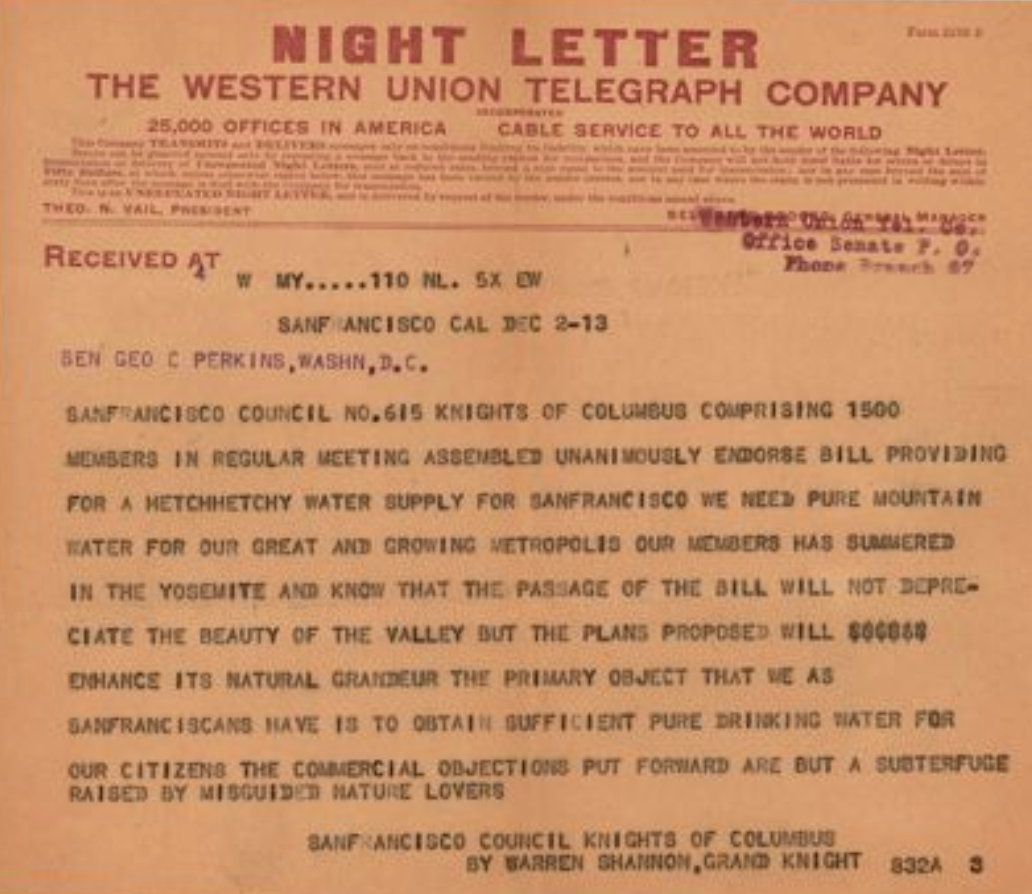
(Telegram from the San Francisco Council No. 615, Knights of Columbus
Supporting the Raker Bill. 1913, National Archives (7268080))
"Six thousand women voters of San Francisco … face to face with the water problem of San Francisco for many years … many whose homes in San Francisco are without semblance of fire protection … health is endangered … the Raker Bill is a just and honorable bill protecting persons … ”
(Telegram from the Executive Board of the San Francisco District of the California Federation of Women's Clubs Supporting the Raker Bill, 1913).
Opposition
However, environmental groups and other opponents believed San Francisco could find other sources. They criticized the dam for ruining Yosemite by flooding beautiful land and limiting public access to the “other half of Yosemite.” Farmers in California’s Central Valley also didn’t like sharing legal water rights with San Francisco.
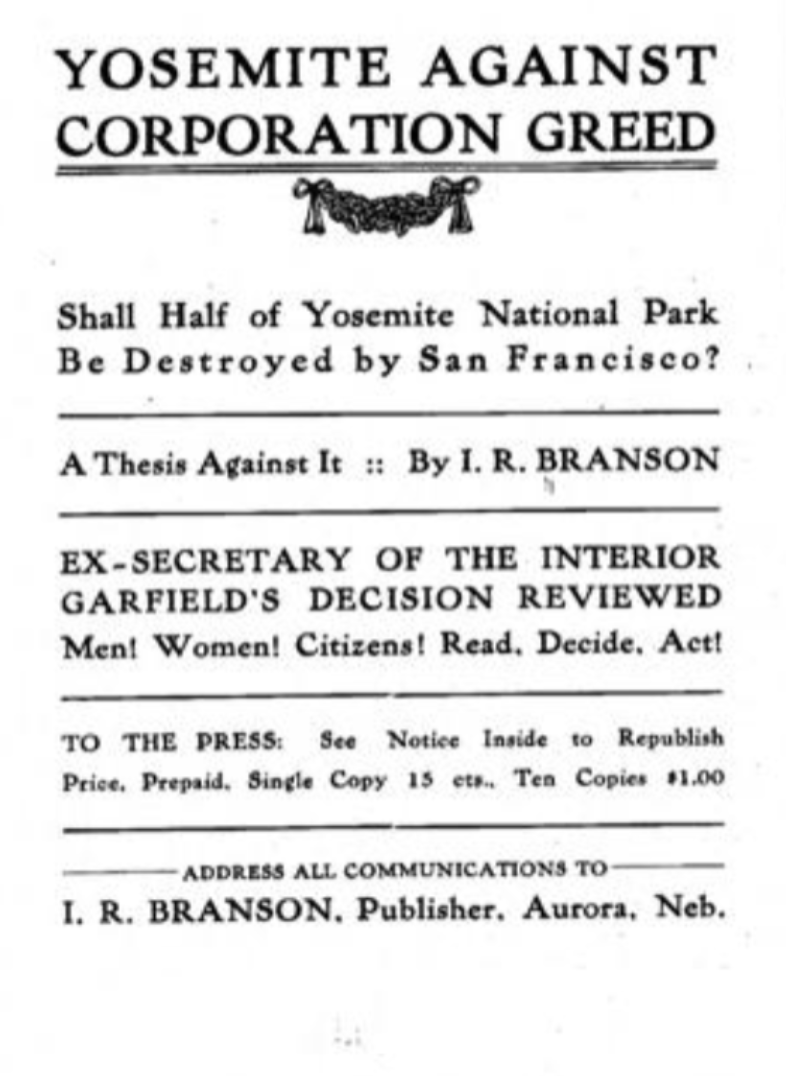
(Yosemite Against Corporate Greed; Shall Half of Yosemite National Park Be Destroyed by San Francisco? A Thesis Against it. 1909, Library of Congress (09020253))
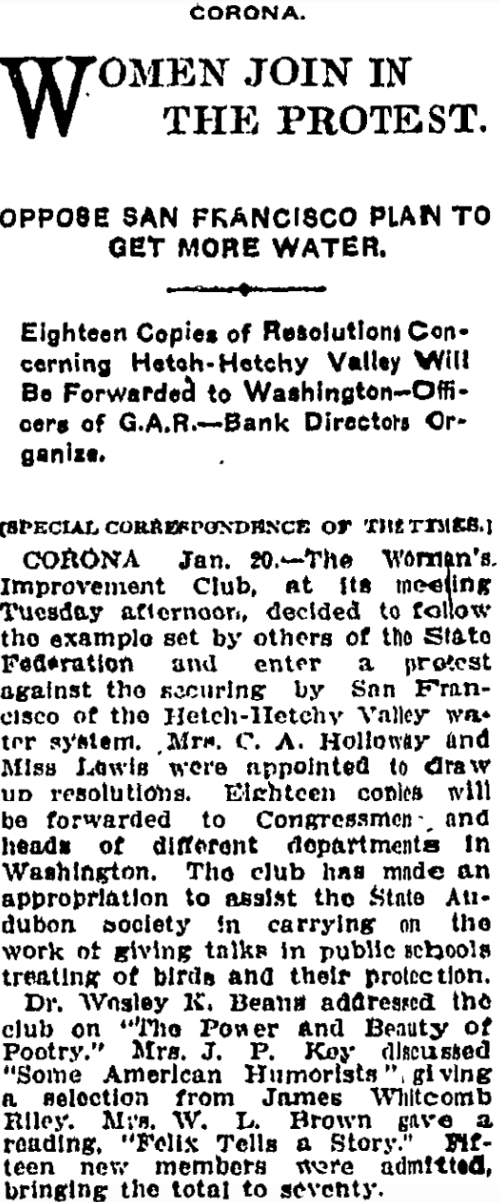
(Women Join in the Protest: Oppose San Francisco Plan to Get More Water, 1910)
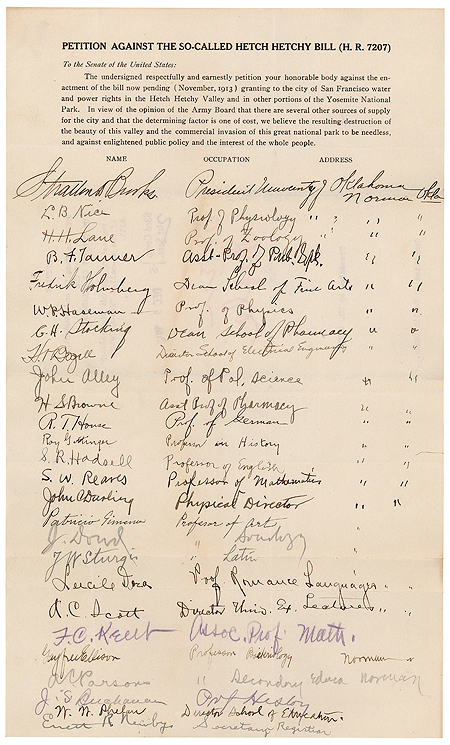
(The U.S. Senate, Record Group 46, Petition from the University of Oklahoma Against the So-Called Hetch Hetchy Bill. 1913, National Archives (7268075))
“Reports of United States army engineers … shown … that San Francisco can secure an adequate supply of water for its own use from other sources … the waters … is one of paramount importance to the very life of every county ... ”
(Protest Against Diversion of Waters from Lands Requiring Irrigation, 1913).
“The Yosemite National Park is not only the greatest … playground in California, but … It belongs to the American people and in world wide interest … San Francisco may … doubled by adding to present nearby sources … water.”
(Petition from the Society for the Preservation of National Parks Against Granting San Francisco the Hetch Hetchy Valley, 1913).
Environmental Responsibility Victory
The controversial Raker Act sparked modern conservationism and resulted in the creation of the National Park Service (NPS) which balances rights to natural resources and environmental responsibilities. An official federal department finally existed to manage protected historical sites and national parks.
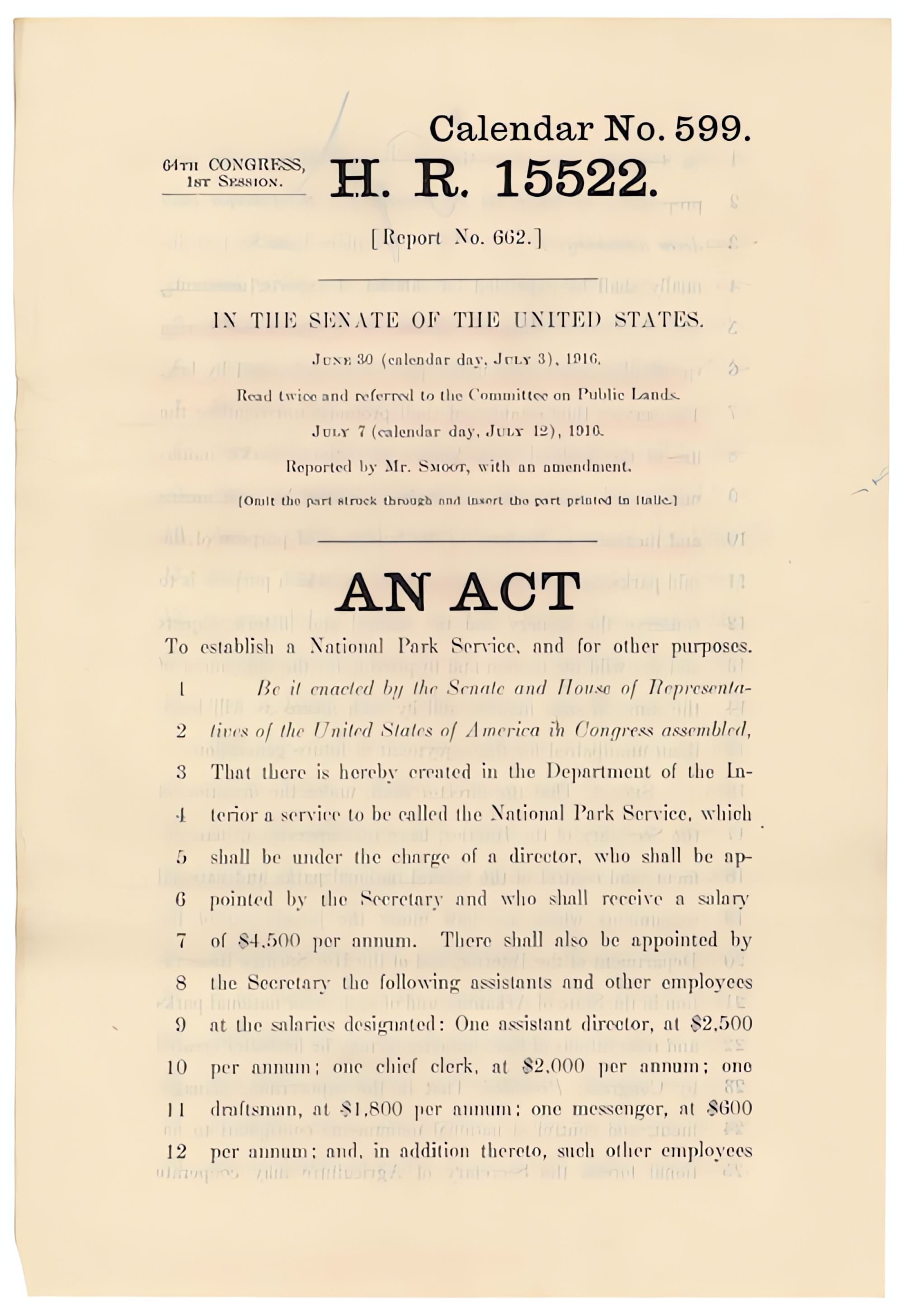
(National Park Service (NPS) Organic Act of 1916,
National Archives (RG 46))
“An Act to Establish a National Park Service … shall ... regulate the use of the federal areas known as national parks … purpose is to conserve the scenery and the natural and historic objects and the wild life therein and to provide ... them unimpaired for the enjoyment of future generations.”
(An Act To establish a National Park Service, and for other purposes, 1916).